Artwork
Flore des Jardiniers, Amateurs et Manufacturiers: Polyanthus or Cluster Narcissus
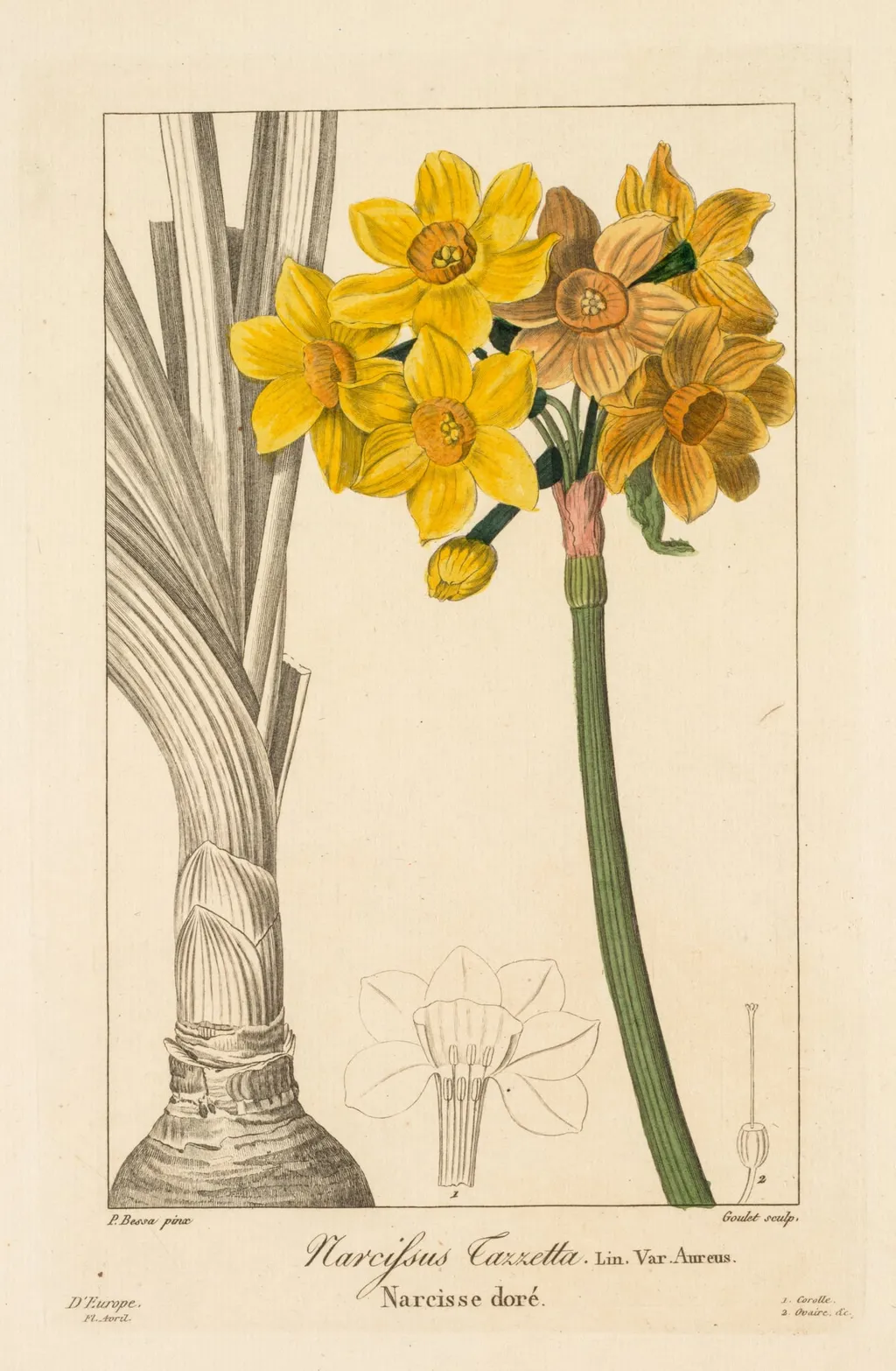
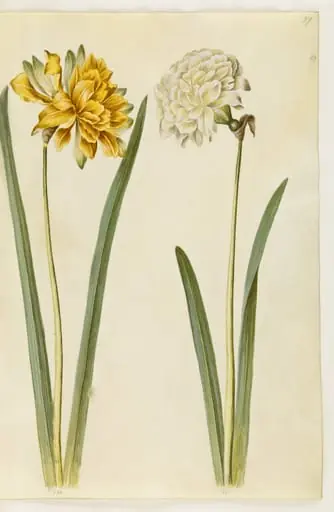
Flore des Jardiniers, Amateurs et Manufacturiers: Polyanthus or Cluster Narcissus is a print by the Romanticist artist Pancrace Bessa. It dates from 1836 and is held in the collection of the Cleveland Museum of Art.
About this work
Overview
Created in 1836 by French botanical illustrator Pancrace Bessa, this print is one of many in the series Flore des Jardiniers, Amateurs et Manufacturiers.
Created in 1836 by French botanical illustrator Pancrace Bessa, this print is one of many in the series Flore des Jardiniers, Amateurs et Manufacturiers. Bessa, trained under Gerard van Spaendonck and active in Parisian artistic circles, specialized in precise depictions of cultivated flora. The work was produced as part of a larger publication aimed at gardeners and horticultural enthusiasts, emphasizing accuracy over ornamentation.
Subject & Meaning
The illustration depicts a cluster of polyanthus narcissus, a cultivated form of daffodil known for its multiple blooms per stem. Rendered in naturalistic detail, the flowers—bright yellow and orange with defined central cups—are shown alongside a single bloom and a bulb with its wrapped base, suggesting the plant’s growth cycle. The inclusion of reproductive structures like stamens underscores a scientific intent, valuing botanical truth over aesthetic idealization.
Technique & Style
Bessa employed fine, controlled linework and subtle tonal gradations to capture the texture of petals and the translucency of leaves. Light and shadow are used sparingly but effectively to model form, avoiding dramatic chiaroscuro in favor of even, descriptive illumination. The background sketch of a solitary flower and bulb provides contextual depth, reinforcing the illustration’s role as a botanical record rather than a decorative piece.
History & Provenance
The print originated from a multi-volume publication commissioned to document ornamental plants popular in early 19th-century French horticulture. Bessa contributed to this series during the later years of his career, following his regular exhibitions at the Paris Salons between 1806 and 1831. The work reflects the growing public interest in cultivated species and the rise of specialized botanical publishing in post-Revolutionary France.
Context
During the 1830s, botanical illustration in France was increasingly tied to scientific documentation and horticultural commerce. Institutions and private collectors sought accurate depictions of new cultivars, and artists like Bessa bridged the gap between art and science. This print aligns with a tradition of detailed plant studies that prioritized identification and classification, distinct from the more romanticized floral paintings of earlier eras.
Legacy
Bessa’s illustrations, including this one, remain valuable references for botanists and historians of plant cultivation. Though less celebrated than contemporaries like Redouté, his work exemplifies the quiet rigor of 19th-century botanical art. These prints helped standardize visual records of garden plants, influencing both scientific literature and the public’s understanding of cultivated flora.
Artist & collection
Artist
Pancrace Bessa (1 January 1772 – 11 June 1846) was a French natural history artist, best known for his botanical illustrations.

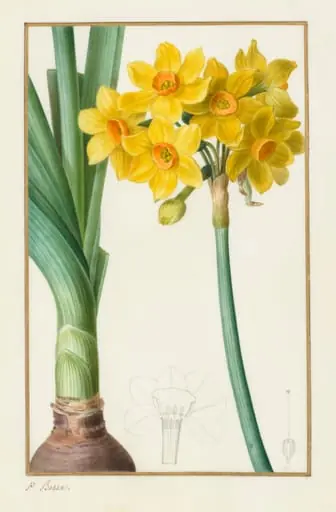
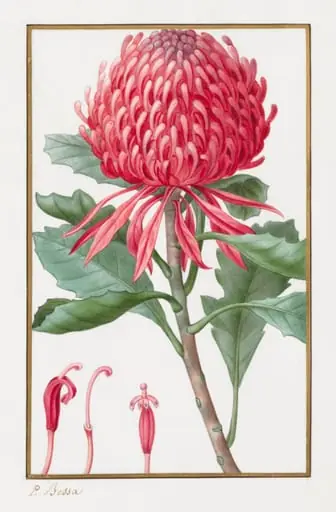
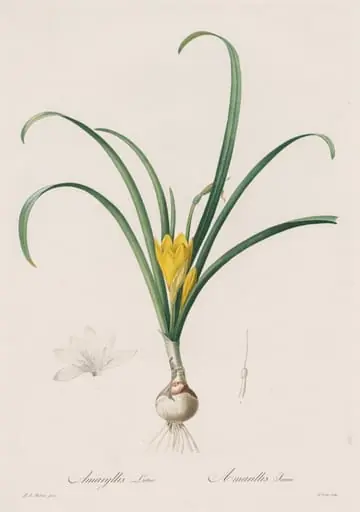 Les Liliacées: Amaryllis Lutes
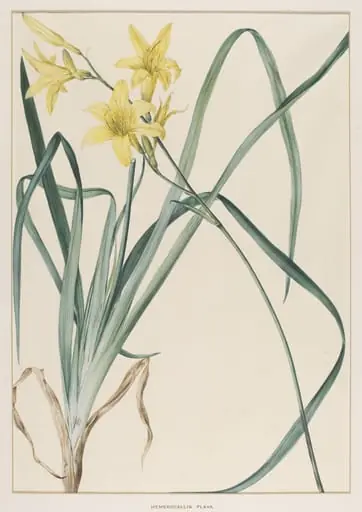 Hemerocallis Flava
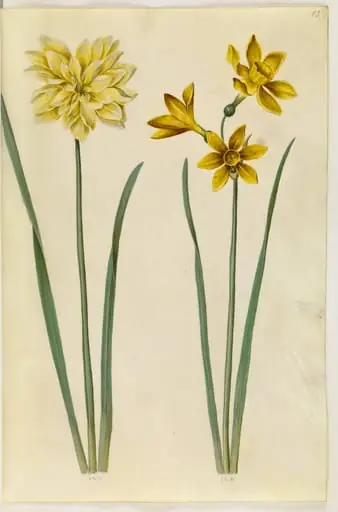 Narcissus pseudonarcissus (påskelilje); Narcissus tazetta aureus (guld-tazet)
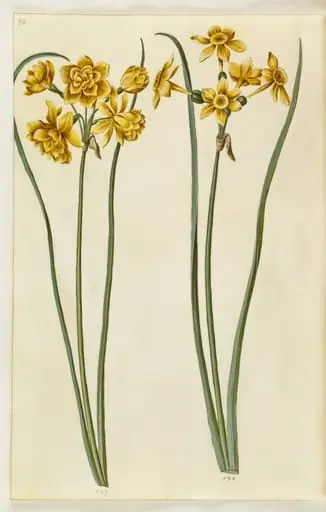 Narcissus jonquilla (siv-narcis)
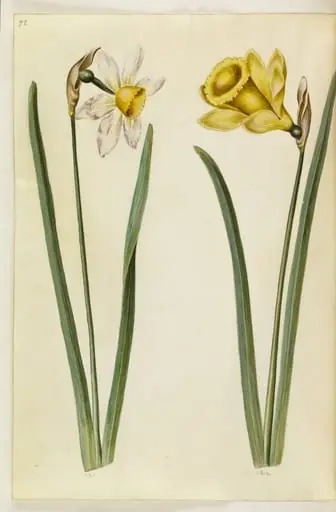 Narcissus ×incomparabilis (have-narcis); Narcissus pseudonarcissus (påskelilje)
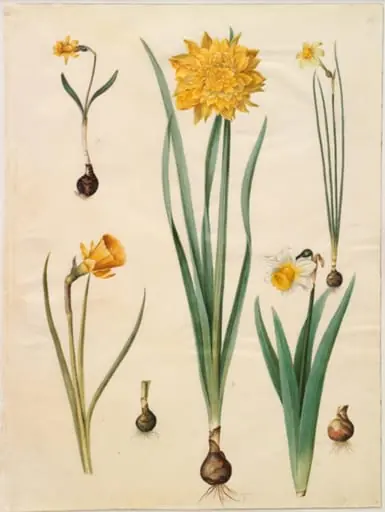 Narcissus pseudonarcissus minor; Narcissus pseudonarcissus (påskelilje); Narcissus ×tenuior; Narcissus bulbocodium (krinoline-narcis); Narcissus pseudonarcissus bicolor (tofarvet påskelilje)
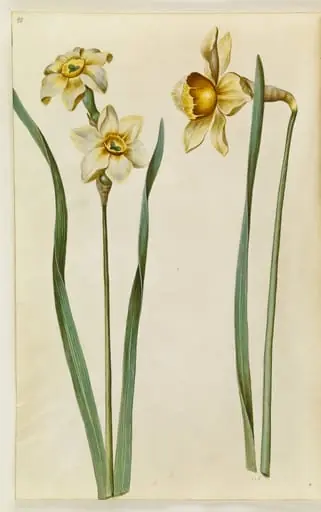 Narcissus ×medioluteus (toblomstret narcis); Narcissus ×incomparabilis (have-narcis)
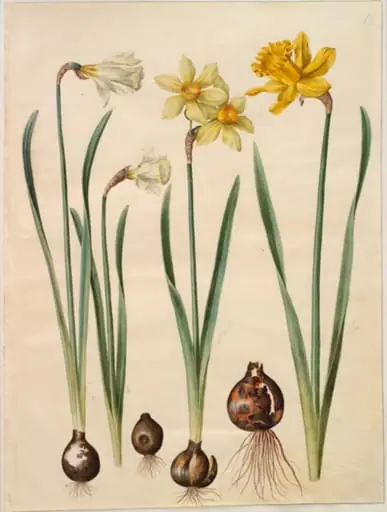 Narcissus pseudonarcissus moschatus (moskus-narcis); Narcissus ×medioluteus (toblomstret narcis); Narcissus pseudonarcissus major (stor påskelilje)
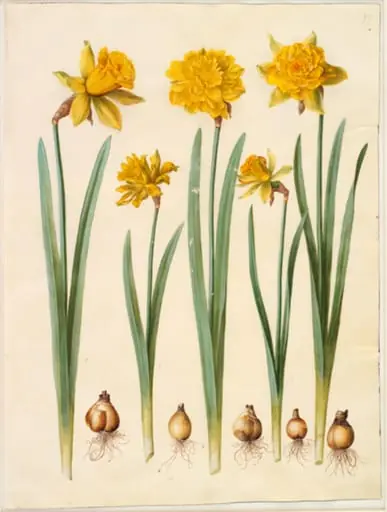 Narcissus pseudonarcissus
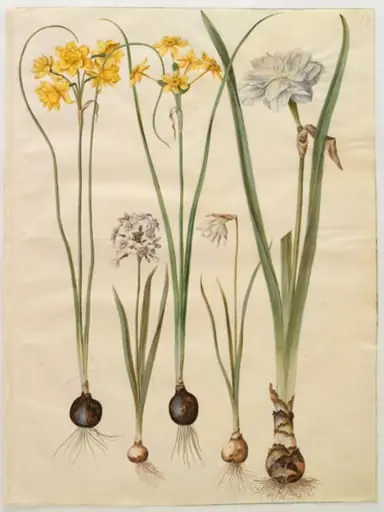 Narcissus jonquilla (siv-narcis); Narcissus tazetta (tazet); Narcissus pseudonarcissus moschatus (moskus-narcis); Narcissus poeticus (pinselilje)
 Narcissus pseudonarcissus (påskelilje)