Artwork
Sculpture - Chariot-race and horse-race, on a Sarcophagus (now in the Vatican Museum)
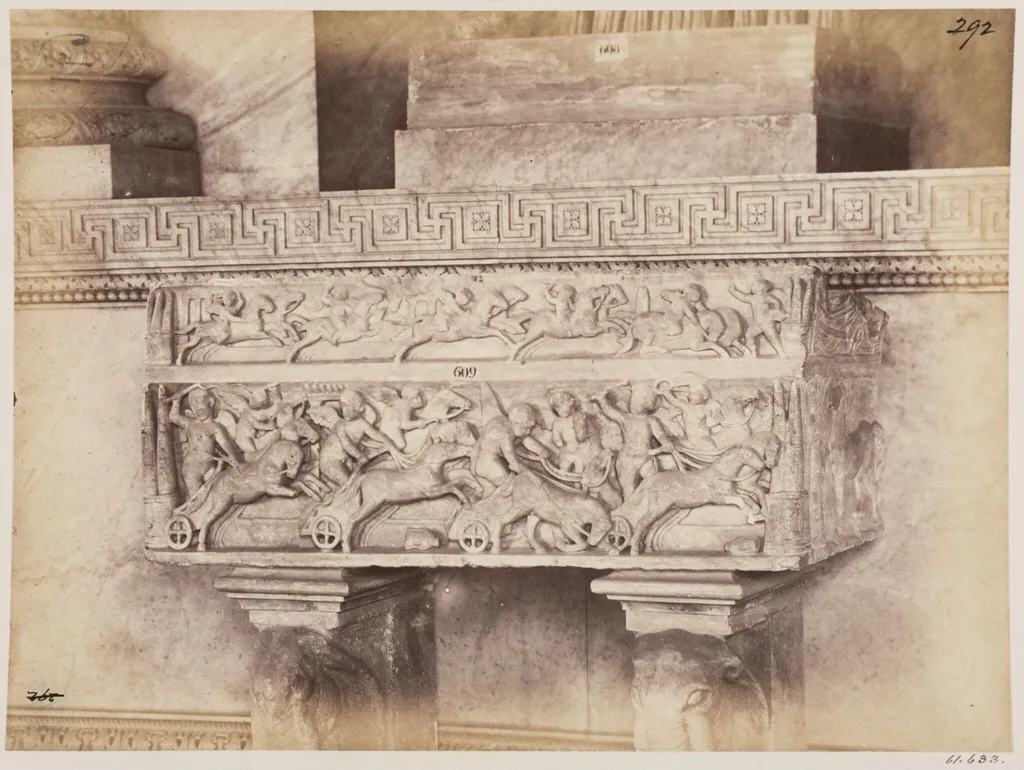
Sculpture - Chariot-race and horse-race, on a Sarcophagus (now in the Vatican Museum) is a photographic photography by the Impressionist artist John Henry Parker. It dates from 1866 and is held in the collection of the Victoria and Albert Museum.
About this work
Overview
The image was produced between 1864 and 1879 as part of a systematic survey of Rome’s antiquities, directed by John Henry Parker.
A 19th-century photograph captures a Roman sarcophagus now held in the Vatican Museums, its surface adorned with relief carvings of two racing scenes: a chariot contest and a mounted horse race. The image was produced between 1864 and 1879 as part of a systematic survey of Rome’s antiquities, directed by John Henry Parker. The photograph serves as a documentary record, preserving the sarcophagus’s condition before modern conservation efforts.
Subject & Meaning
The relief depicts two forms of public spectacle—chariot and horse racing—common in Roman entertainment. These scenes likely symbolize the vigor and competition of life, possibly reflecting ideals of endurance or triumph over death. Such imagery on sarcophagi often conveyed a sense of motion and vitality, contrasting with the stillness of burial and affirming the deceased’s active role in the world they left behind.
Technique & Style
The carving employs shallow relief with overlapping figures to suggest depth and motion. Horses and riders are rendered in energetic poses, limbs extended, drapery flowing, conveying a sense of speed. The surface shows signs of weathering, with fine details softened by time. The composition is dense and rhythmic, typical of late Roman funerary art, where narrative clarity was prioritized over naturalistic precision.
History & Provenance
The sarcophagus was documented during a comprehensive photographic campaign of Roman antiquities led by John Henry Parker. Local photographers captured it in situ, likely in a collection or excavation site before its transfer to the Vatican. The resulting images were later compiled into Parker’s multi-volume publications, which became foundational references for 19th-century Roman archaeology and influenced museum curation practices.
Context
Racing scenes on sarcophagi were popular in the second and third centuries CE, particularly among wealthy Roman families. These motifs connected the deceased to public life and civic virtues, aligning burial art with the spectacles of the amphitheater and circus. The sarcophagus reflects a broader trend in Roman funerary culture that sought to immortalize the deceased through association with celebrated communal activities.
Legacy
The photograph contributed to the preservation and scholarly understanding of Roman funerary art during a period of growing archaeological interest. It helped standardize visual documentation practices and provided access to artifacts for audiences beyond Rome. Today, such images remain vital for studying the condition and iconography of classical sculptures before later alterations or losses.
Artist & collection
Artist
John Henry Parker liked to explore old churches in Rome. He'd photograph the sculptures and carvings he found. One thing that stands out is his attention to detail - he'd capture tiny parts of bigger pieces, like the…

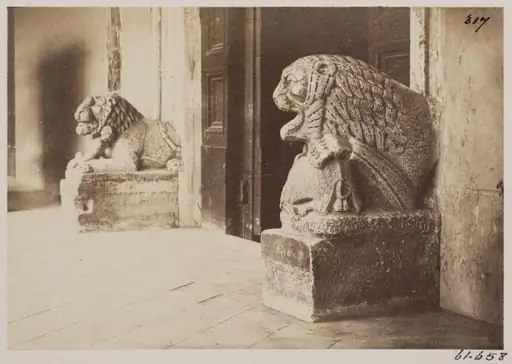 Sculptures - Lions at the Door of the Church of S. Lorenzo
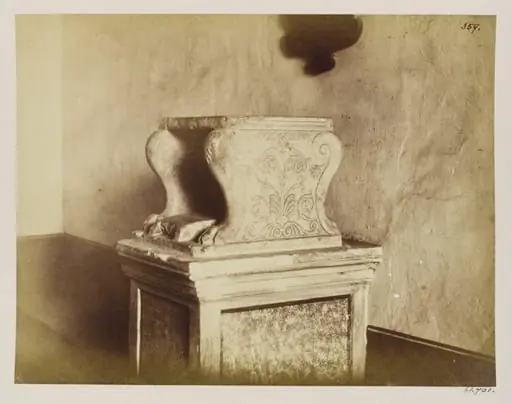 Sculptures - Marble Seat of S. Gregory in the Church of S. Stefano Rotondo, with Shallow Carving, c. A.D. 590.
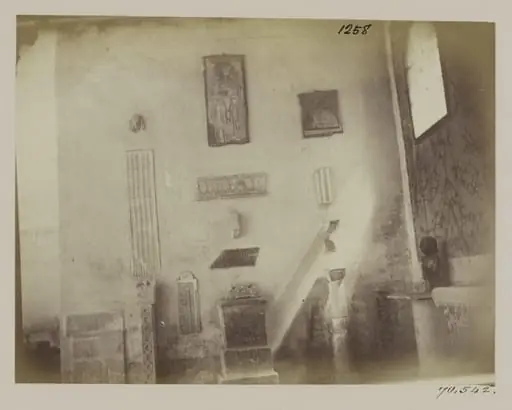 Church of S. Giorgio in Velabro - Fragments of marble sculpture, Tombs, &c., from the old Church, built into the wall.
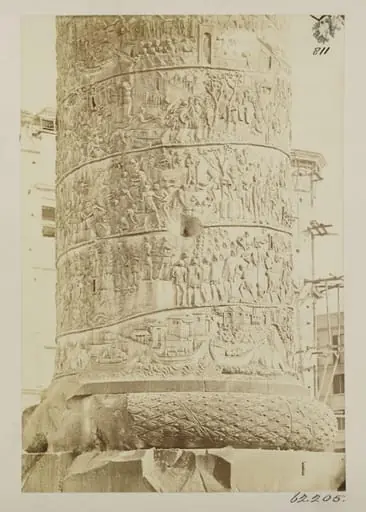 Sculptures - Details of Sculpture from Trajan's Column.
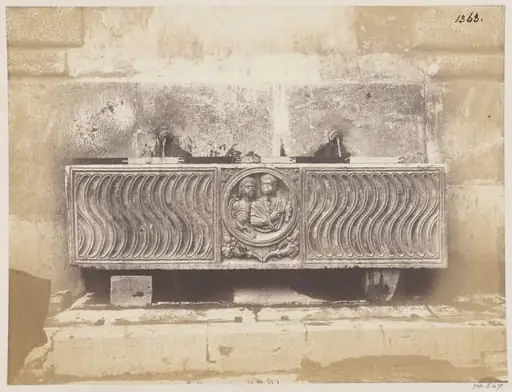 Sculpture - Sarcophagus of the fourth century made into a fountain, near the Church of S. Maria, in the Piazza del Popolo
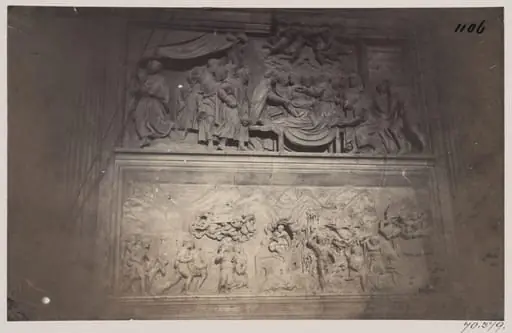 Out of Rome - House of the Blessed Virgin at Loreto. Sculpture of the Santissima Casa carried by Angels, A.D. 1520
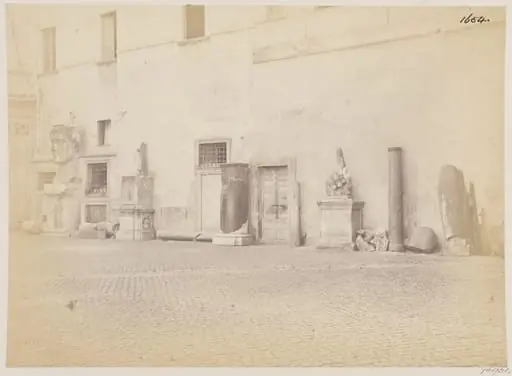 Sculpture - View on the left side of the Court-yard of the Palazzo de' Conservatori on the Capitol, shewing fragments of colossal Statues
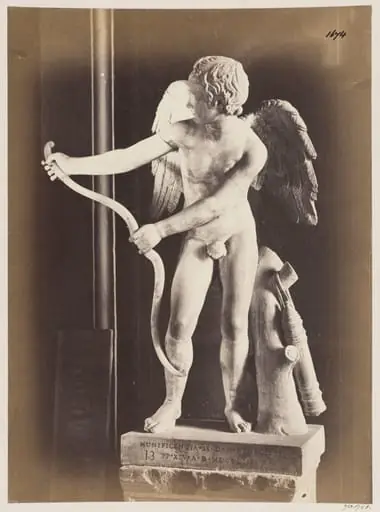 Sculpture - Statue of Cupid with his bow, in the Capitoline Museum.
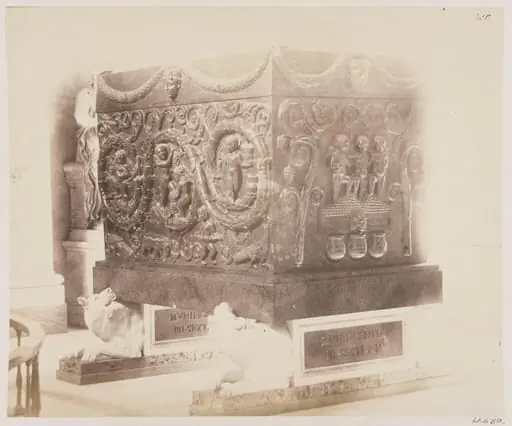 Sculpture - Sarcophagus of Porphyry of S. Constantia, A.D. 350
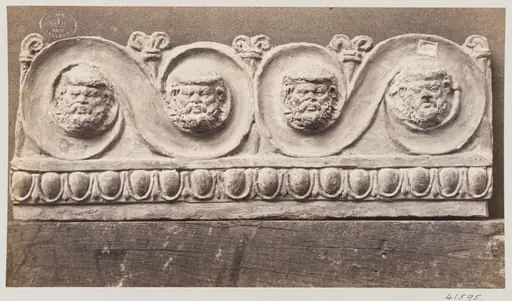 Bas-relief scroll with four masques in terra cotta
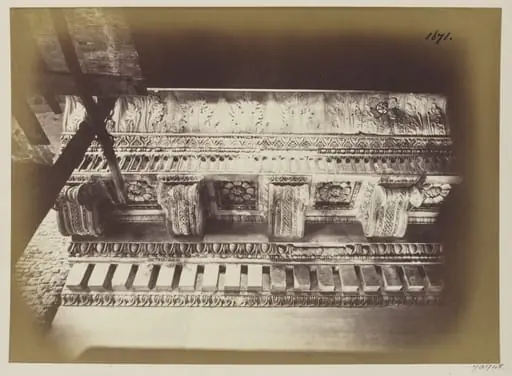 Sculpture - Architectural Details - Cornice of the Temple of Concord on the Clivus Capitolinus, now in the Tabularium.
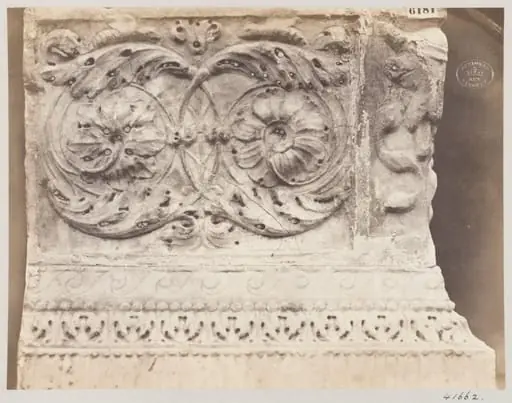 Marble portion of a sacophagus ornamented with bas-relief foliage
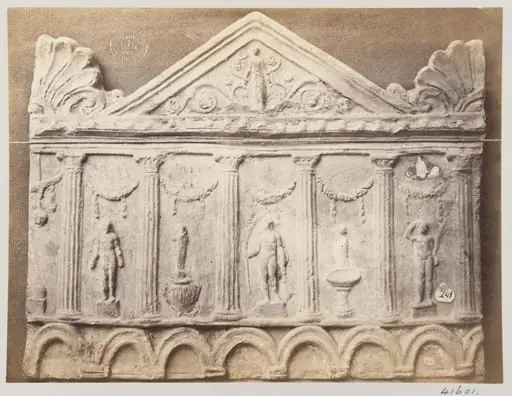 Bas-relief of the Temple of Hercules in terra cotta
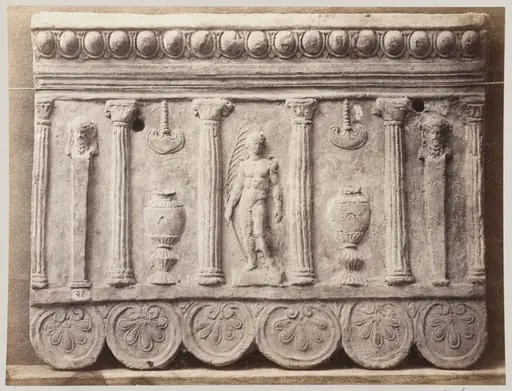
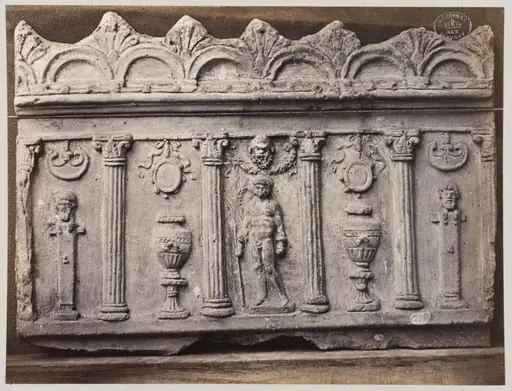 Bas-relief of a figure with bust, vessels and columns in terra cotta
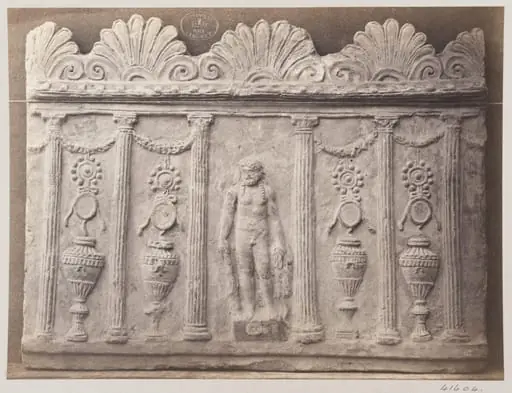 Bas-relief of Temple of Hercules in terra cotta
 Bas-relief portion of a frieze of Hercules the conqueror in terra cotta