Artwork
Sculptures - Sarcophagus, with a Sculpture of the third century, representing the Portrait of the deceased surrounded by Minerva and the Muses, now the Tomb of Monsignor Spinelli in the Church of the Priorato on the Aventine
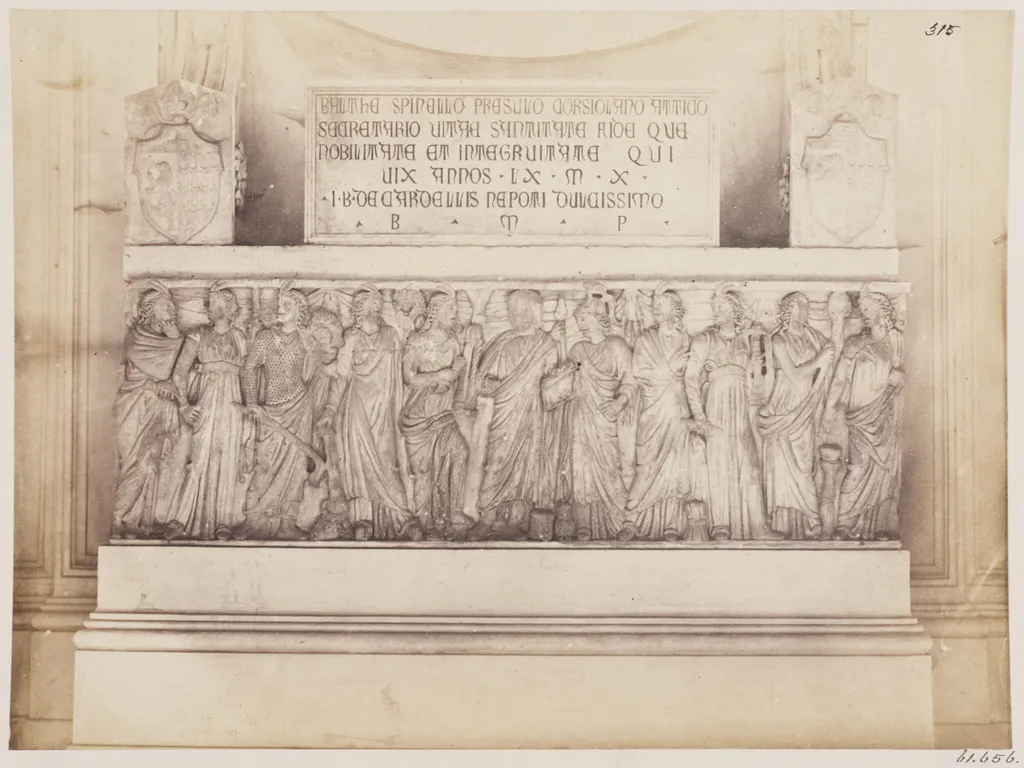
Sculptures - Sarcophagus, with a Sculpture of the third century, representing the Portrait of the deceased surrounded by Minerva and the Muses, now the Tomb of Monsignor Spinelli in the Church of the Priorato on the Aventine is a photographic photography by the Impressionist artist John Henry Parker. It dates from 1867 and is held in the collection of the Victoria and Albert Museum.
About this work
Overview
The photograph depicts a third‑century Roman sarcophagus that now functions as the burial site of Monsignor Spinelli within the Church of the Priorato on Rome’s Aventine Hill. Carved from stone, the tomb bears a central portrait of the deceased, accompanied by a procession of nine draped figures.
Subject & Meaning
The surrounding figures are identified as the goddess Minerva and the nine Muses, classical symbols of wisdom and the arts. Their presence underscores the deceased’s association with intellectual or cultural pursuits, a common motif in elite Roman funerary art.
Technique & Style
The sarcophagus is executed in high relief, with the portrait rendered in a naturalistic manner typical of late imperial sculpture. The attendant figures are stylized, each holding attributes such as scrolls or books that denote their respective domains.
History & Provenance
The tomb was repurposed for Monsignor Spinelli, a 19th‑century cleric, and photographed between 1864 and 1879 as part of a large documentary project overseen by John Henry Parker. The image forms part of a collection of over 3,300 photographs of Roman monuments, now partly held by the Victoria and Albert Museum.
Context
During the 19th century, systematic photographic recording of Rome’s ancient and early‑modern heritage aimed to preserve visual information amid urban change. This sarcophagus, originally a pagan funerary monument, illustrates the continuity of reuse of classical artifacts within Christian settings.
Artist & collection
Artist
John Henry Parker liked to explore old churches in Rome. He'd photograph the sculptures and carvings he found. One thing that stands out is his attention to detail - he'd capture tiny parts of bigger pieces, like the…

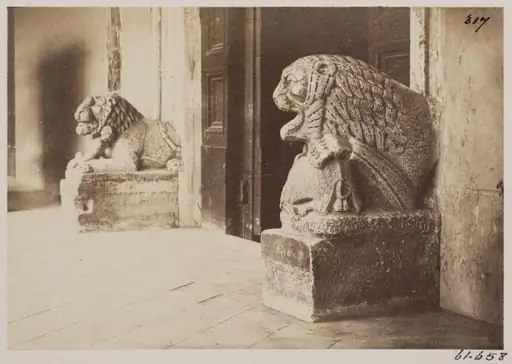 Sculptures - Lions at the Door of the Church of S. Lorenzo
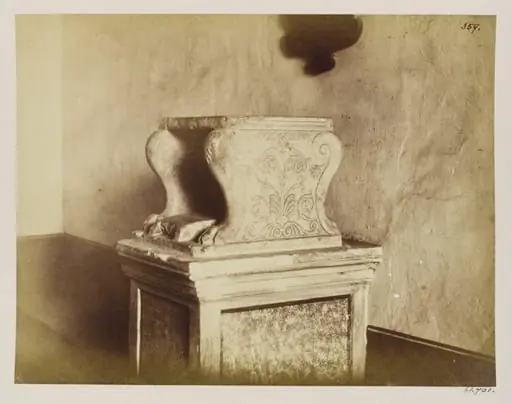 Sculptures - Marble Seat of S. Gregory in the Church of S. Stefano Rotondo, with Shallow Carving, c. A.D. 590.
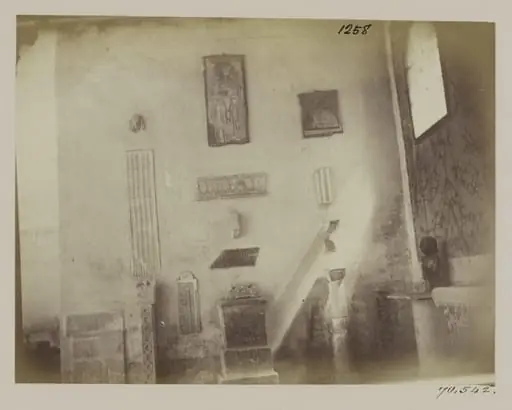 Church of S. Giorgio in Velabro - Fragments of marble sculpture, Tombs, &c., from the old Church, built into the wall.
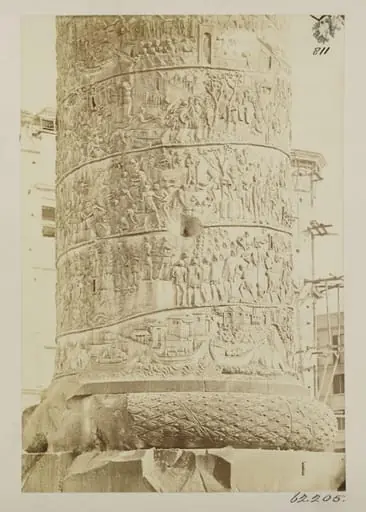 Sculptures - Details of Sculpture from Trajan's Column.
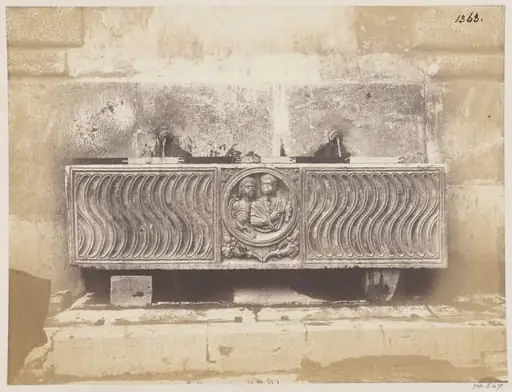 Sculpture - Sarcophagus of the fourth century made into a fountain, near the Church of S. Maria, in the Piazza del Popolo
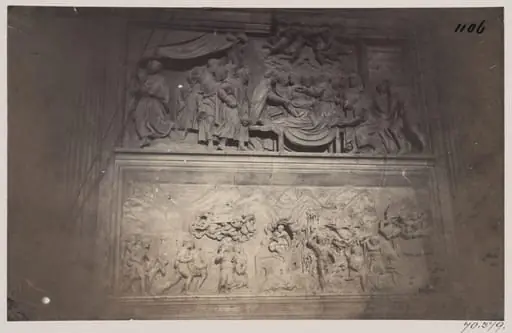 Out of Rome - House of the Blessed Virgin at Loreto. Sculpture of the Santissima Casa carried by Angels, A.D. 1520
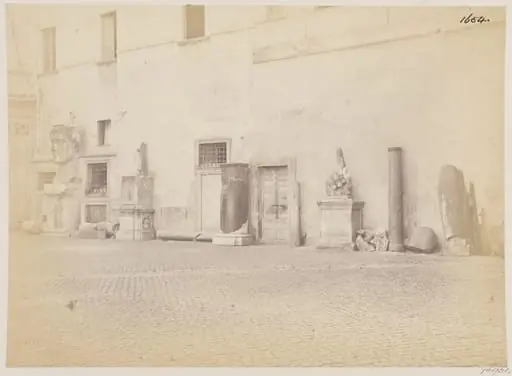 Sculpture - View on the left side of the Court-yard of the Palazzo de' Conservatori on the Capitol, shewing fragments of colossal Statues
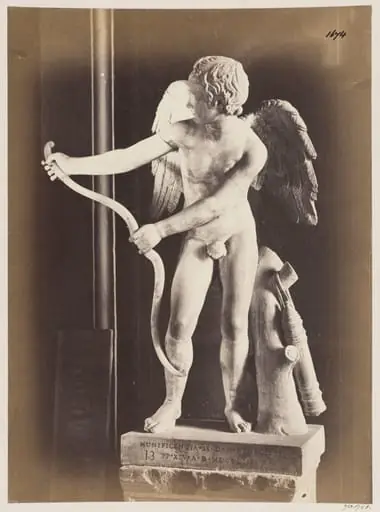 Sculpture - Statue of Cupid with his bow, in the Capitoline Museum.
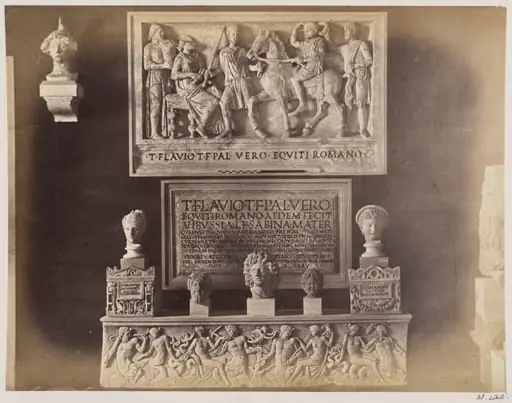 Sculpture - Tomb of Titus Flavius Verus, now in the Lateran Museum, with the Inscription of the Aedes Veri
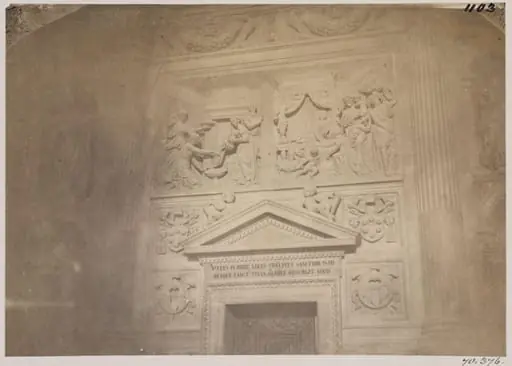 Out of Rome - House of the Blessed Virgin at Loreto. Sculpture of the Nativity over a Doorway, with the Arms of the Medici, Leo X., A.D. 1520
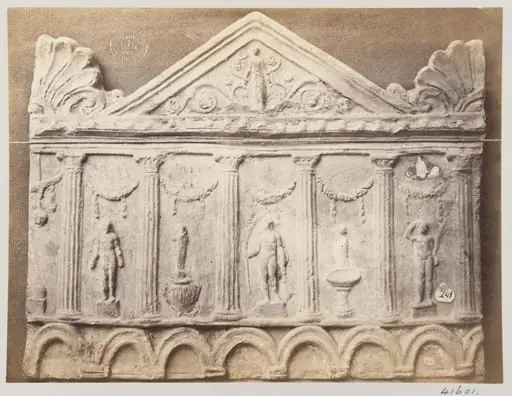 Bas-relief of the Temple of Hercules in terra cotta
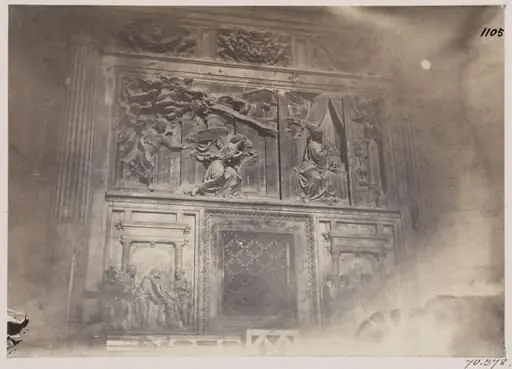 Out of Rome - House of the Blessed Virgin at Loreto. Sculpture of the Annunciation, A.D. 1520
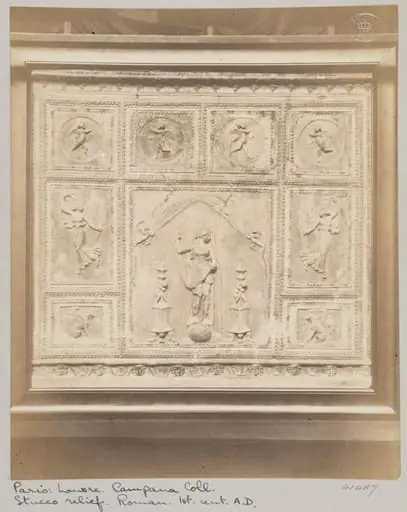 Venus standing on a ball surrounded by Ambrini, two figures of Victory and two griffins, bas-relief in coloured stucco
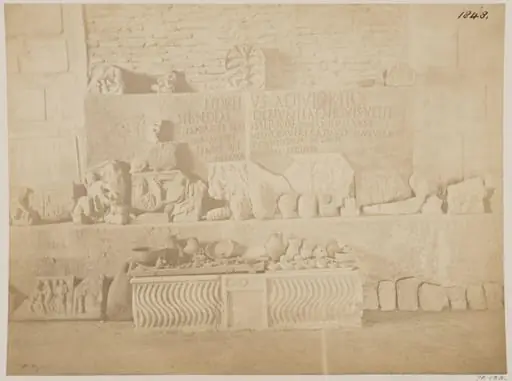 Ostia - View in the Museum
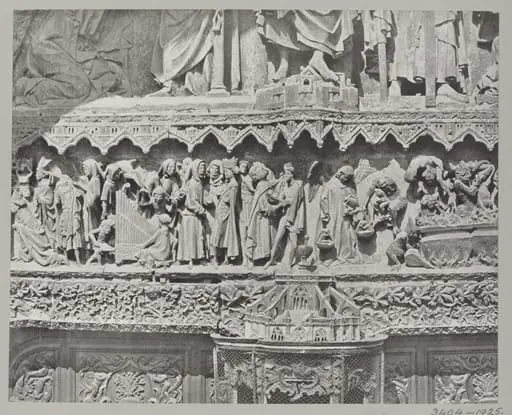 Detail of the carving of the tympanum, León Cathedral