Artwork
Sinai
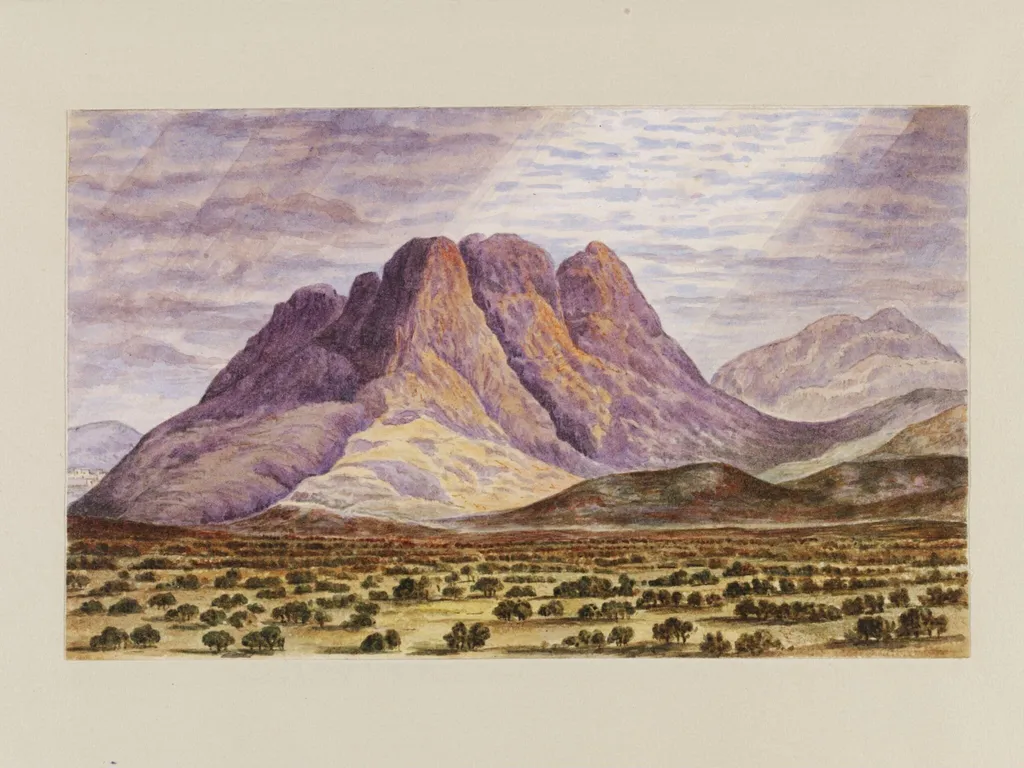
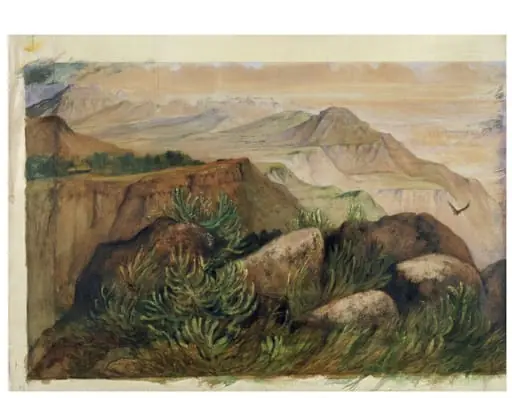
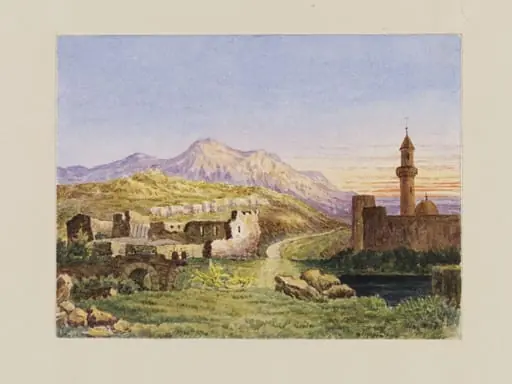
Sinai is a watercolor work on paper by the Romanesque artist Mary Parker. It dates from 1825 and is held in the collection of the Victoria and Albert Museum.
About this work
Overview
The work belongs to a small body of 19th-century British female artists who documented foreign scenery through personal observation.
Created in 1825, *Sinai* is a watercolour by Mary (Lady Leighton) Parker, capturing a landscape thought to reflect her early travels in the Levant prior to marriage. The work belongs to a small body of 19th-century British female artists who documented foreign scenery through personal observation. Its modest scale and medium align with domestic artistic practice of the period, rather than grand academic traditions.
Subject & Meaning
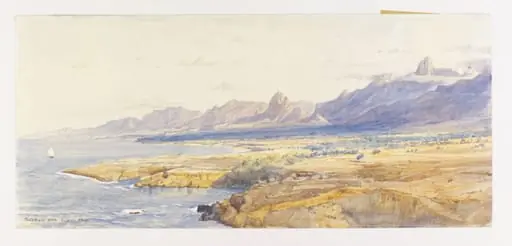
The composition presents a distant mountain range in muted purples and yellows, flanked by rolling hills and sparse vegetation in the foreground. Though titled *Sinai*, the scene likely represents a generalized Orientalist vision rather than a precise topographical record. The absence of human figures and architectural elements suggests a contemplative, almost solitary engagement with the land, evoking quiet reverence rather than narrative.
Technique & Style
Executed in watercolour, the painting employs translucent washes to suggest atmospheric depth and soft light. Colours are restrained, avoiding bold contrasts, yet layered subtly to differentiate terrain and distance. The brushwork is delicate, with minimal detail in the foreground and blurred edges in the distance, enhancing the ethereal quality typical of amateur watercolourists of the era.
History & Provenance
The work was once in the collection of Alister Mathews of Bournemouth, acquired in November 1961 for three pounds and five shillings. Its earlier provenance remains undocumented, though its survival suggests it was preserved within private circles. The modest purchase price reflects its status as a personal, non-commercial work rather than a sought-after artistic object at the time of acquisition.
Context
Parker’s journey to the region occurred during a period when British travelers, especially women, began documenting the Middle East with increasing frequency. Though not part of official expeditions, such sketches contributed to a growing visual archive of the Orient. Her work aligns with the broader trend of amateur watercolourists who recorded landscapes as personal mementos rather than public statements.
Legacy
*Sinai* remains a quiet example of early 19th-century female artistic practice, offering insight into how women engaged with travel and landscape beyond formal institutions. While not widely exhibited or studied, it contributes to the understudied corpus of women’s travel art, preserving a personal perspective on a region then largely filtered through male-dominated narratives.
Artist & collection
Artist
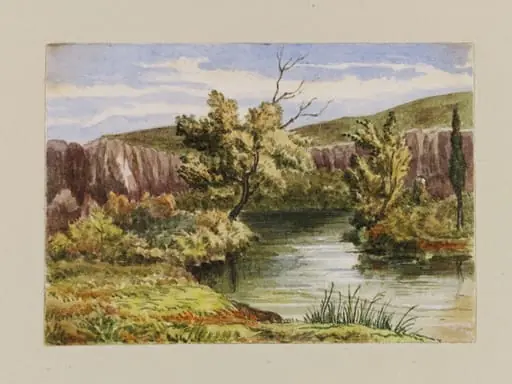
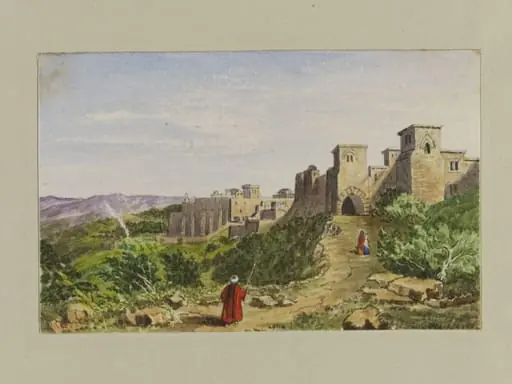
Mary Parker painted quiet watercolours of biblical sites in the 1820s. Her sheets show Carmel’s cliffs, the road to Emmaus, Sinai’s slopes, the river Jordan, and Bethlehem’s rooftops—all done in soft washes of color.…

![Tiberais [sic], by Mary Parker](https://artifactworldgallery.com/img/mary-parker--tiberais-sic--e6f3a288c102ee52-w320.webp)