Artwork
Kermanshah, Iran
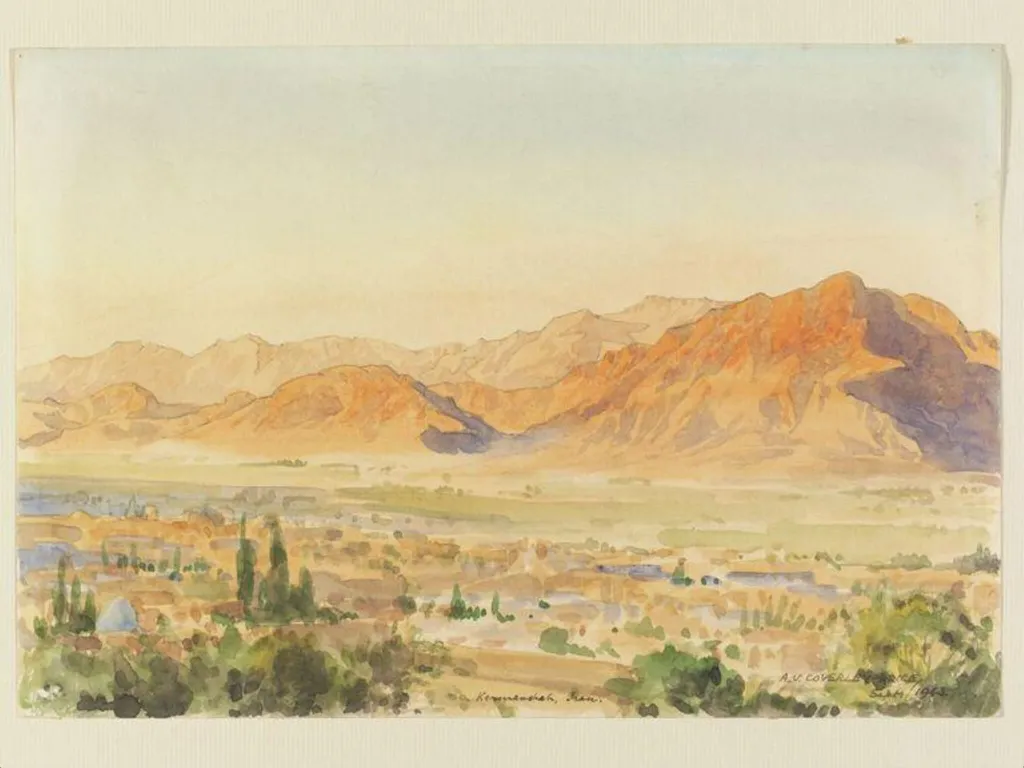
Kermanshah, Iran is a watercolor work on paper by the Orientalist artist A. Victor Coverley-Price. It dates from 1943 and is held in the collection of the Victoria and Albert Museum. Created in 1943, this watercolour by A.
About this work
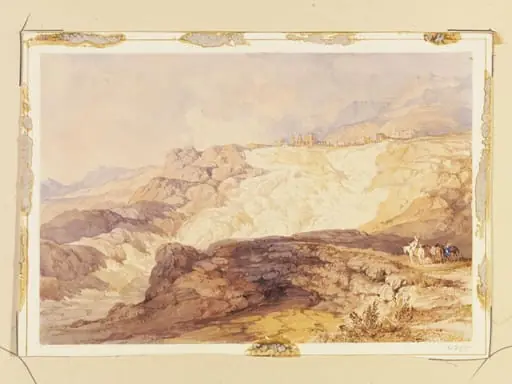
This painting shows a quiet valley with rolling hills in the background. The mountains fade into soft orange and purple hues. Down below, a winding river cuts through fields and small clusters of trees.
The artist signed it in the corner: *"A.V. Coverley-Price, 1943."* The colors feel light and airy, like a warm day.
Next, check out the Victoria and Albert Museum to see more works like this.
Overview
It was originally part of a group of watercolours focused on Egypt and the Middle East, likely assembled for exhibition purposes.
Created in 1943, this watercolour by A. Victor Coverley-Price depicts a tranquil valley in Kermanshah, Iran. Executed in delicate washes, the work captures the quiet landscape with a sense of stillness and atmospheric depth. It was originally part of a group of watercolours focused on Egypt and the Middle East, likely assembled for exhibition purposes. The artist’s signature and date appear in one corner, confirming authorship and provenance.
Subject & Meaning
The scene portrays a serene Iranian valley, with undulating hills receding into distant mountains bathed in soft orange and purple tones. A winding river meanders through cultivated fields and scattered trees, suggesting agricultural life in a remote region. The composition avoids human figures, emphasizing solitude and the quiet rhythm of the natural environment, reflecting a contemplative rather than documentary intent.
Technique & Style
Coverley-Price employed light, transparent watercolour washes to build subtle gradations of colour and form. The sky and mountains blend gently, creating a hazy, luminous effect, while the river and foliage are rendered with loose, fluid strokes. The palette is restrained yet warm, avoiding sharp contrasts. This approach reflects a British watercolour tradition focused on atmospheric tone over detailed realism.
History & Provenance
The painting was likely produced during or shortly after Coverley-Price’s travels in the Middle East, possibly in connection with wartime documentation or personal study. A former label on its reverse identified it as part of an exhibition of regional watercolours, though the exhibition’s full context remains undocumented. Its current location and ownership history are not publicly recorded beyond its known creation date and artist.
Context
In 1943, British artists and travellers often documented regions of the Middle East during wartime, when access to such areas was limited but culturally significant. Coverley-Price’s work aligns with a broader trend of watercolour studies made by military personnel, colonial officials, and amateur artists seeking to record landscapes beyond Europe. These works served both personal and institutional interests in regional geography.
Legacy
Though not widely exhibited or published, the painting contributes to a modest body of 20th-century British watercolours depicting the Middle East. Its quiet observation offers a personal counterpoint to more overtly political or ethnographic imagery of the period. As a preserved example of amateur artistic engagement with the region, it remains a quiet testament to individual perception during a turbulent era.
Artist & collection
Artist
Watercolour stains always dried darker than he wanted, so A. Victor Coverley-Price kept a hair-dryer in his bag and a smirk on his face. The machine roared while he sketched Tehran, Isfahan, and Kermanshah, leaving only…

![`River. 3 Mile [N] of Saboua Nubia "On the Nile", by George de Sausmarez](https://artifactworldgallery.com/img/george-de-sausmarez--river-3-mile-n-of-saboua-nubia-on-the-nile--4584718b99edc50f-w320.webp)