Artwork
Evening, Arizona
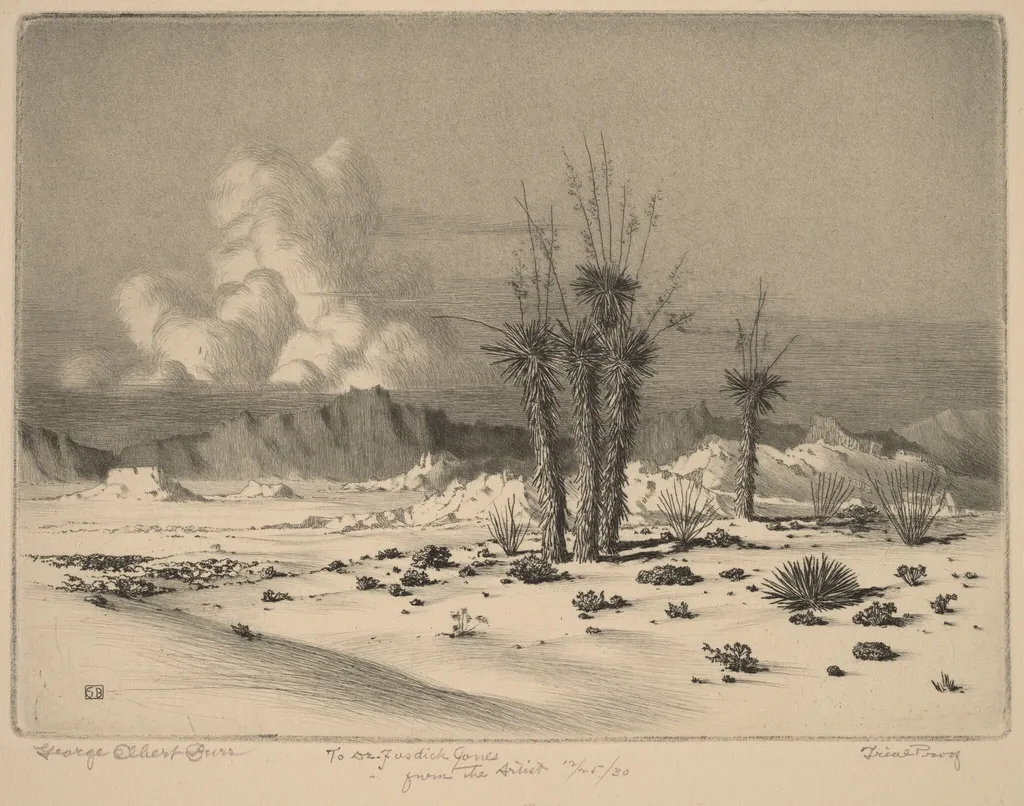
Evening, Arizona is an ink print by George Elbert Burr. It dates from 1930 and is held in the collection of the National Gallery of Art.
About this work
The artist used fine lines to create texture—notice how the sand looks grainy and the clouds feel soft.
This print shows a desert scene at dusk. Two tall cacti stand in the middle, their spiky shapes sharp against the flat ground. In the distance, dark mountains fade into a smoky sky, with a few clouds hanging low.
The artist used fine lines to create texture—notice how the sand looks grainy and the clouds feel soft. The signature says it’s from 1930, and the title is *Evening, Arizona*.
Next, look up etching, drypoint, aquatint to see how these techniques make marks like this.
Overview
Created in 1930, *Evening, Arizona* is a black‑and‑white print that combines etching, drypoint, and aquatint on wove paper. The work captures a twilight desert landscape, centered by two towering cacti that rise sharply from a flat expanse, while distant mountains dissolve into a muted, cloud‑filled sky.
Subject & Meaning
The composition presents a quiet, transitional moment in the American Southwest, emphasizing the stark silhouettes of vegetation against an expansive horizon. The solitary cacti and fading peaks suggest both the endurance of the desert environment and the subtle shift from day to night, inviting contemplation of solitude and vastness.
Technique & Style
Burr employed a layered approach: etched lines define the overall structure, drypoint adds delicate, velvety edges to the cacti and clouds, and aquatint supplies tonal washes that render the grainy sand and atmospheric depth. The interplay of crisp linear marks with soft tonal fields creates a balanced visual texture.
History & Provenance
George Elbert Burr, an American printmaker noted for his depictions of western terrain, signed and dated the piece in 1930. The print has circulated among private collections of early 20th‑century American prints and appears in several exhibition catalogues documenting Burr’s contribution to desert imagery.
Context
Produced during a period when American artists were increasingly documenting regional landscapes, the work reflects the broader interest in the Southwest’s unique topography. Burr’s focus on precise line work and tonal nuance aligns with contemporary printmaking trends that sought to convey both realism and mood.
Own this work as a print
Artist & collection

Artist
George Elbert Burr (April 14, 1859 – November 17, 1939 ) was an American printmaker and painter best known for his etchings and drypoints of the desert and mountain regions of the American West.

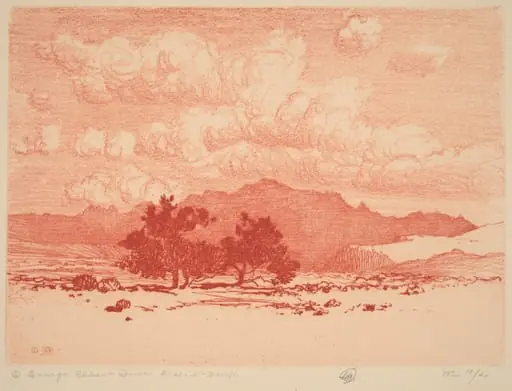
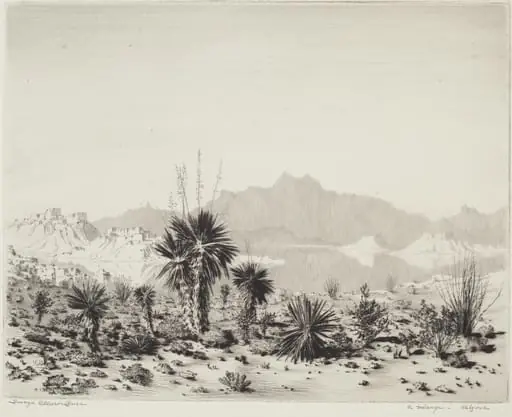 A Mirage, Arizona
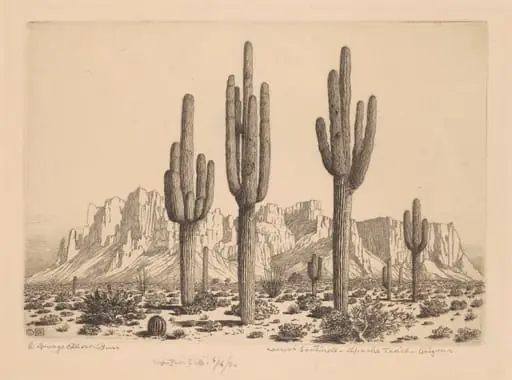 Desert Sentinels, Apache Trail, Arizona
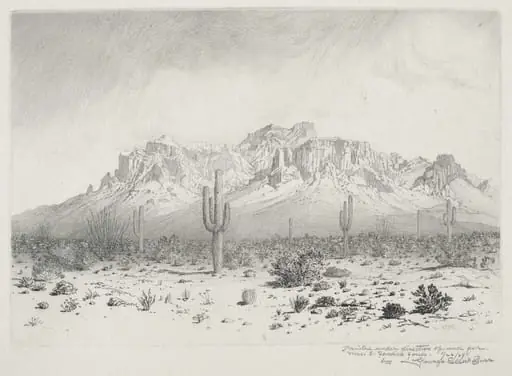 Superstition Mountain, Apache Trail, Arizona (no.1)
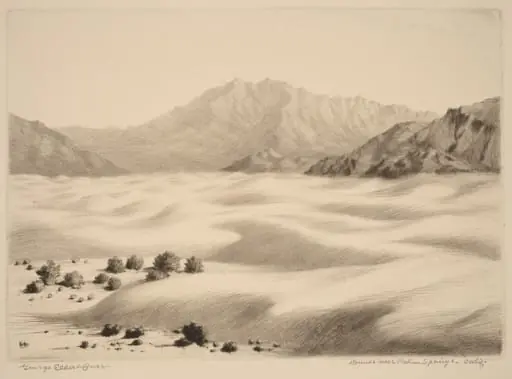 Dunes near Palm Springs, California (no.2)
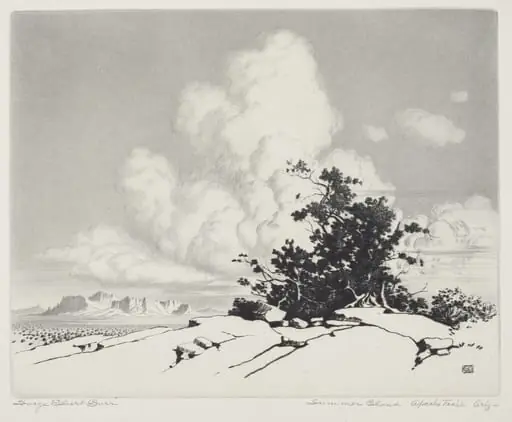 Summer Cloud, Apache Trail, Arizona
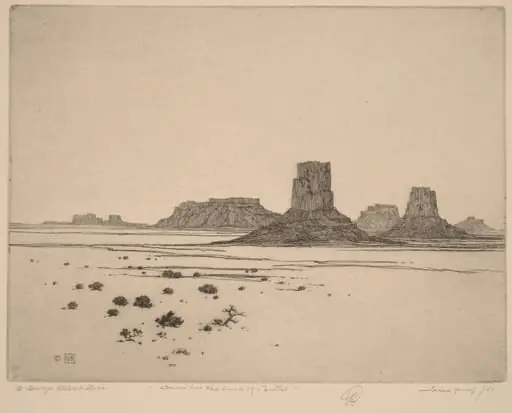 Dawn in the Land of the Buttes
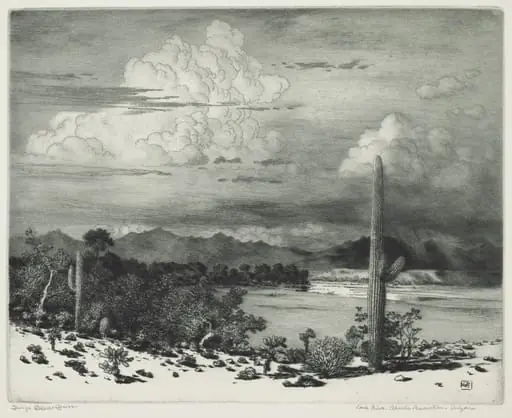 Verde River, Apache Reservation, Arizona
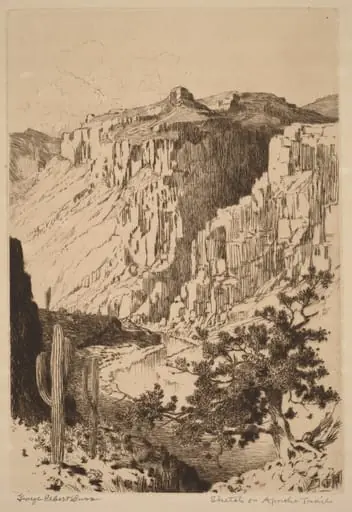 Sketch on Apache Trail, Arizona
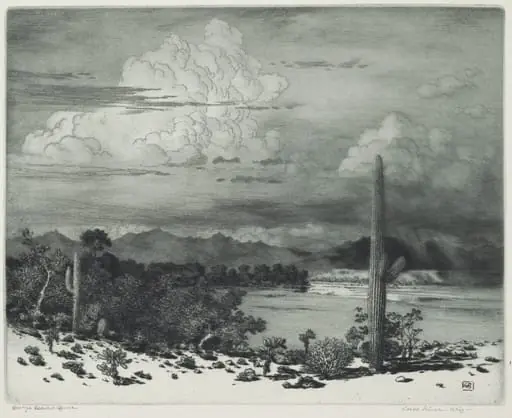 Verde River, Arizona
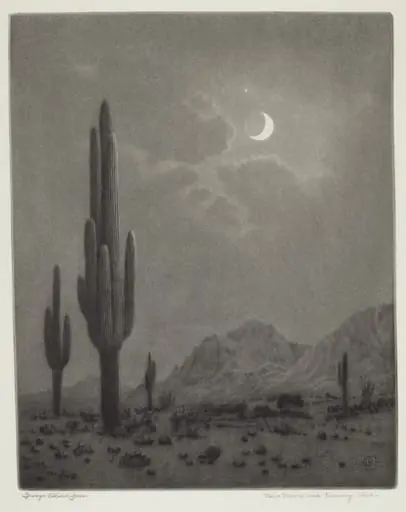 New Moon and Evening Star
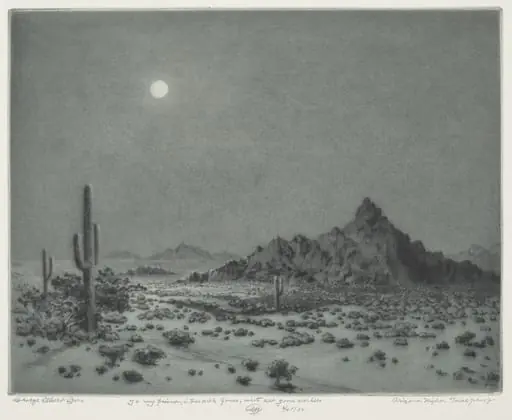 Arizona Night