Artwork
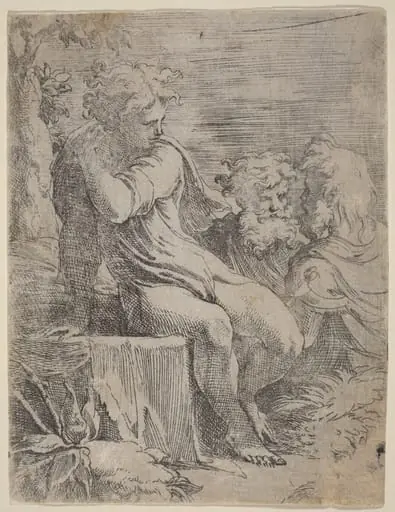
The Boy and Two Old Men
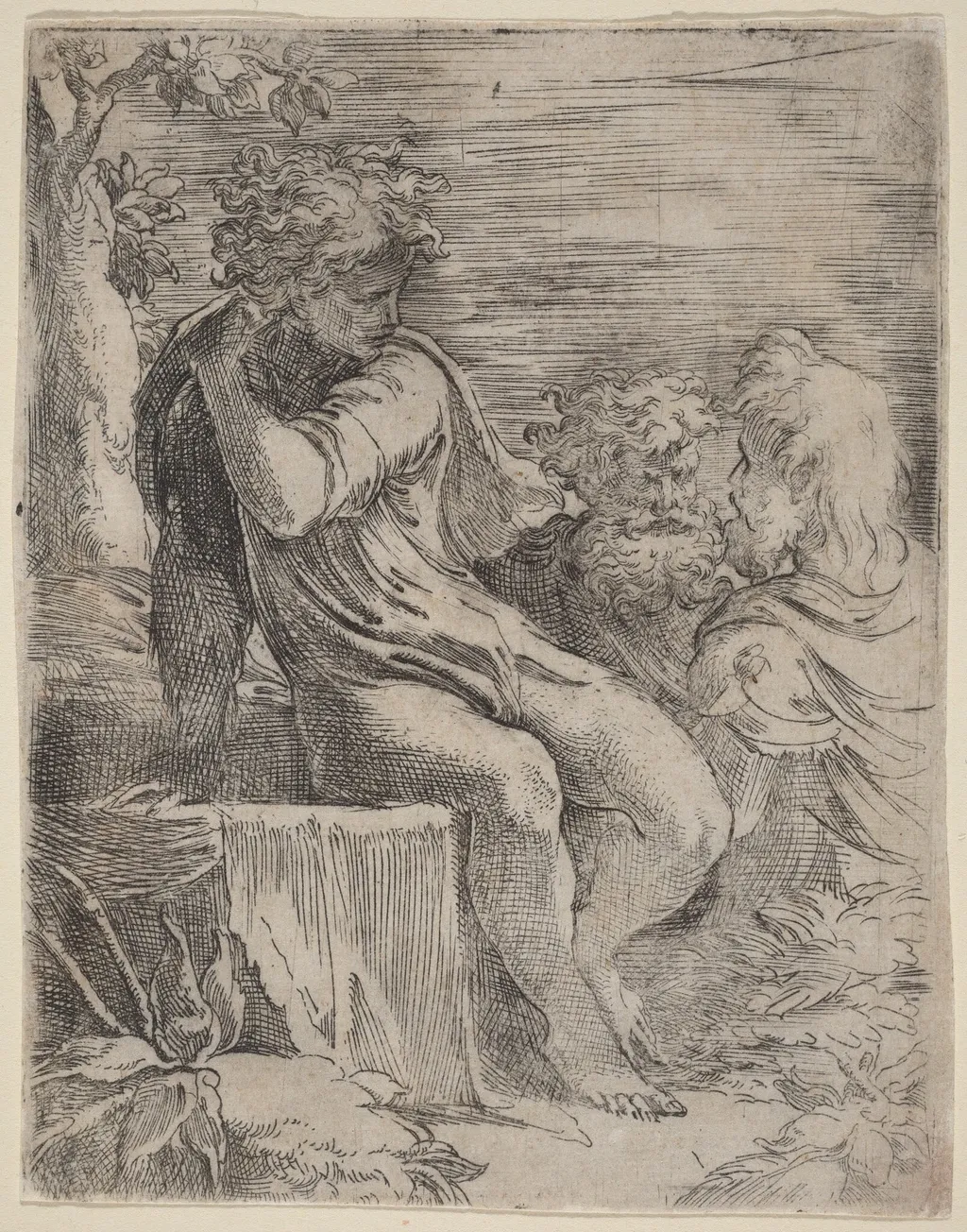
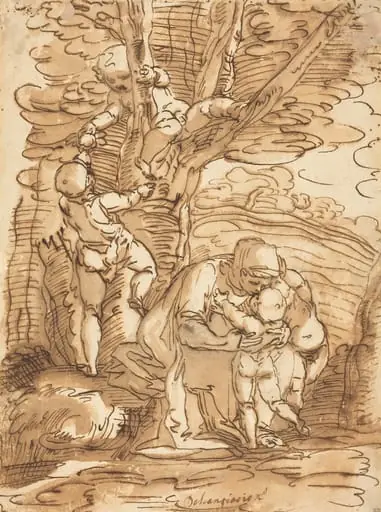
The Boy and Two Old Men is an ink print by the Renaissance artist Parmigianino. It dates from 1522 and is held in the collection of the National Gallery of Art.
About this work
Overview
Created in 1522, *The Boy and Two Old Men* is an early etching by Girolamo Francesco Maria Mazzola, known as Parmigianino, a pivotal figure in the Mannerist movement. This work showcases his distinctive artistic voice, characterized by elongated forms and sensuous rendering of the human figure.
Subject & Meaning
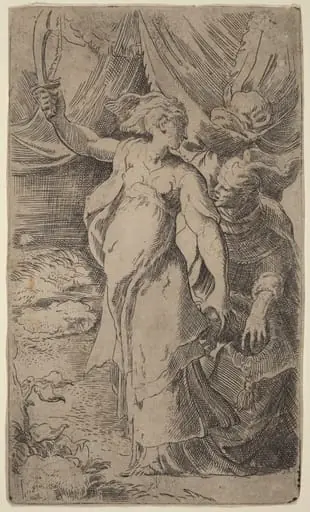
The etching portrays a youthful figure seated on a tree stump, engaged with two elderly men. Their contrasting ages and attire—a simple tunic for the boy, long robes for the elders—may symbolize the intersection of innocence, wisdom, and the passage of time.
Technique & Style
Parmigianino employed chiaroscuro to achieve a profound sense of depth and volume. The strong contrast between light and dark accentuates the physicality of the figures, highlighting the youthful smoothness of the boy’s features against the aged, lined faces of the men.
History & Provenance
While specific provenance details are not provided, the etching is known to have been created during Parmigianino’s early career, a period marked by his activity in major Italian art centers including Florence, Rome, Bologna, and Parma.
Context
*The Boy and Two Old Men* emerges from the Renaissance, a cultural and artistic movement emphasizing classical ideals and humanism. However, the work’s stylistic tendencies, particularly its use of elongated forms, point towards the forthcoming Mannerist movement.
Artist & collection

Artist
Girolamo Francesco Maria Mazzola (11 January 1503 – 24 August 1540), also known as Francesco Mazzola or, more commonly, as Parmigianino (UK: , US: , Italian: ; "the little one from Parma"), was an Italian Mannerist…