Artwork
Maria of Austria, Infanta of Spain
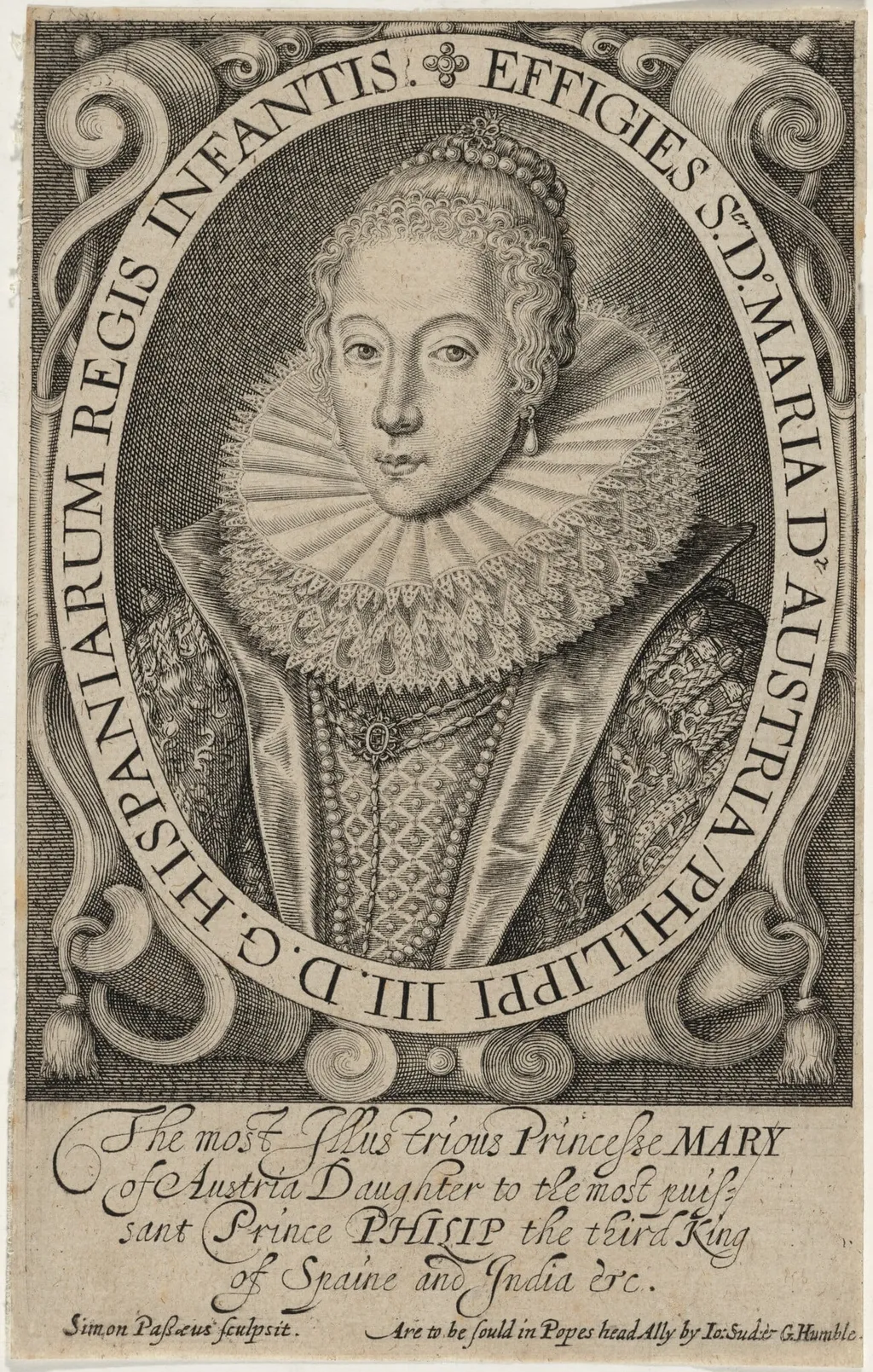
Maria of Austria, Infanta of Spain is an ink print by the Renaissance artist Simon van de Passe. It dates from 1621 and is held in the collection of the National Gallery of Art.
About this work
Overview
Rendered in fine line work, the portrait presents her in formal court attire, framed within an oval border inscribed with Latin identifiers.
This 1621 engraving by Simon van de Passe depicts Maria of Austria, daughter of King Philip III of Spain. Rendered in fine line work, the portrait presents her in formal court attire, framed within an oval border inscribed with Latin identifiers. The composition follows the tradition of royal portraiture in early 17th-century Europe, emphasizing status through precise detail and controlled composition rather than expressive flourish.
Subject & Meaning
Maria of Austria, as an infanta, held a prominent position within the Habsburg dynasty. The engraving underscores her royal lineage through formal dress and the inclusion of 'INFANTIS' and 'REGIS'—Latin terms affirming her status as daughter of the king. The restrained expression and symmetrical pose convey dignity and dynastic continuity, typical of portraits intended for circulation among noble courts.
Technique & Style
Van de Passe employed fine cross-hatching to model volume and texture, particularly in the folds of Maria’s dress and the soft contours of her face. The intricate patterns on her garment are rendered with meticulous line work, while the ruffled collar and curly hair are defined through delicate, controlled strokes. The oval frame and typographic border reflect the conventions of engraved portraiture used for dissemination among European elites.
History & Provenance
Created in 1621, the engraving was likely produced for diplomatic or familial distribution, common among Habsburg networks. Simon van de Passe, a Dutch engraver working in the service of European royalty, specialized in such portraits. The print’s survival in multiple institutional collections suggests its use as a standardized image of royal identity, circulated to affirm political alliances and lineage.
Context
This work emerged during a period when engraved portraits served as key tools for projecting royal authority across territories. The Habsburgs, with their vast holdings, relied on such images to maintain visibility and legitimacy. Van de Passe’s style, rooted in Northern Renaissance traditions, blended realism with symbolic formality, aligning with broader trends in courtly representation across early modern Europe.
Legacy
The engraving exemplifies the role of printmaking in shaping royal imagery before photography. Van de Passe’s technique influenced later portrait engravers, and works like this helped standardize the visual language of nobility. Though not widely known today, such prints remain vital sources for understanding how dynastic identity was visually constructed and disseminated in the 17th century.
Artist & collection

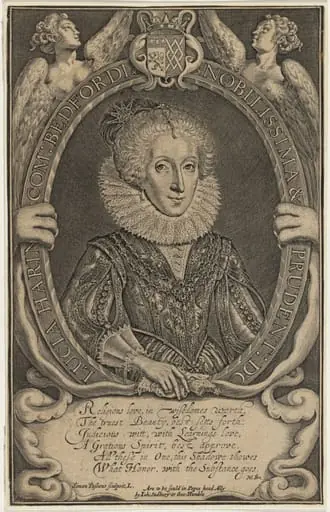 Lucia Harrington, Countess of Bedford
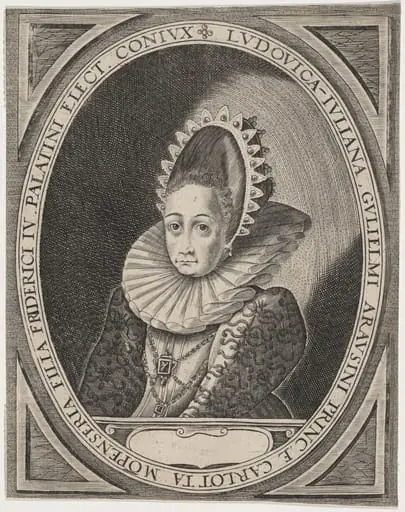 Louise Juliana, Wife of Frederick IV
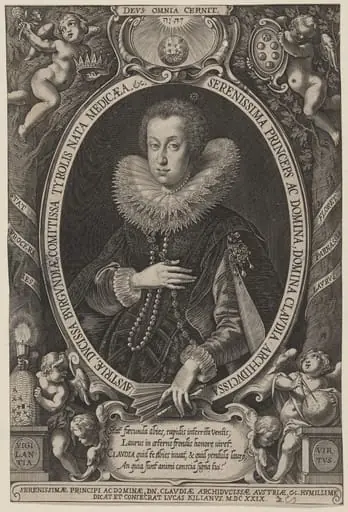 Claudia de Medici, Wife of Leopold of Austrian Tyrol
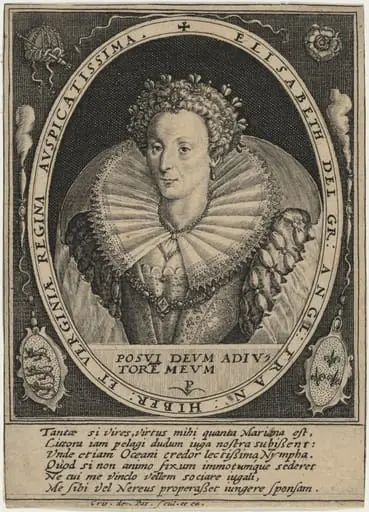 Elizabeth, Queen of England
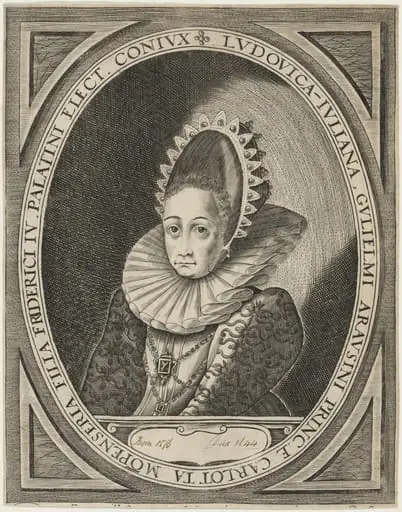 Louise Juliana, Wife of Frederick IV
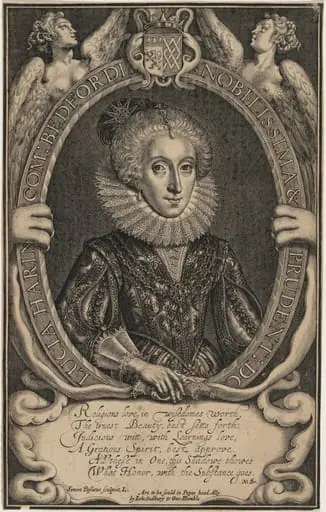 Lucia Harrington, Countess of Bedford
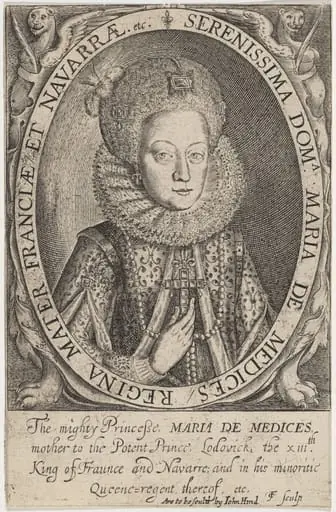 Marie de Medici, Wife of Henry IV of France
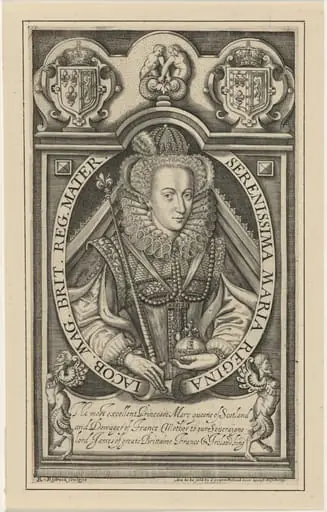 Mary, Queen of Scots
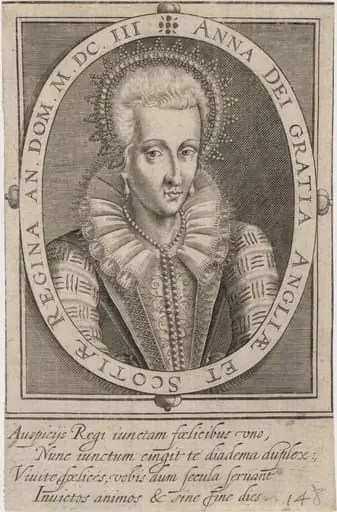 Anne of Denmark, Queen of James I