Artwork
Maurice of Nassau, Prince of Orange
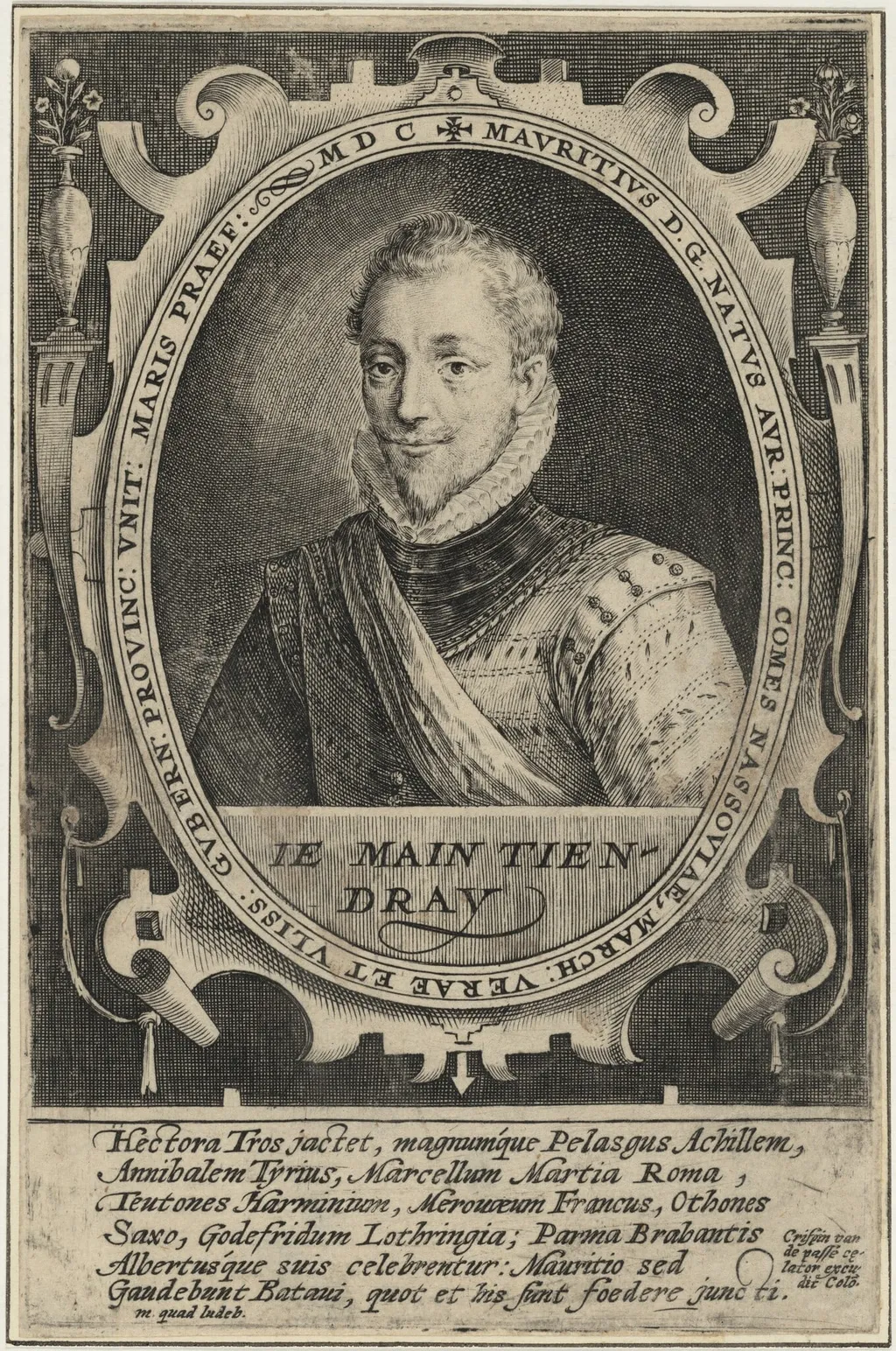
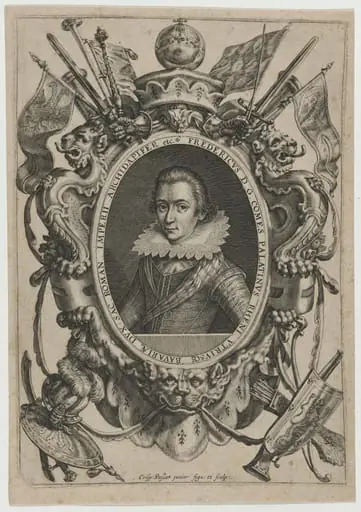
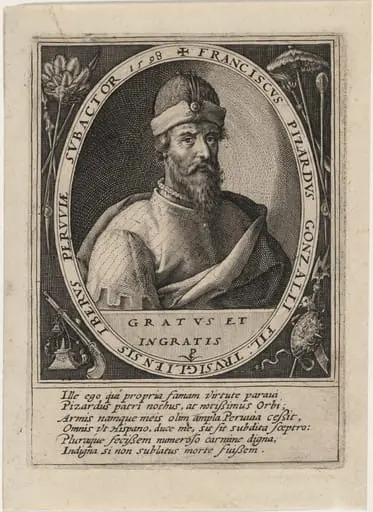
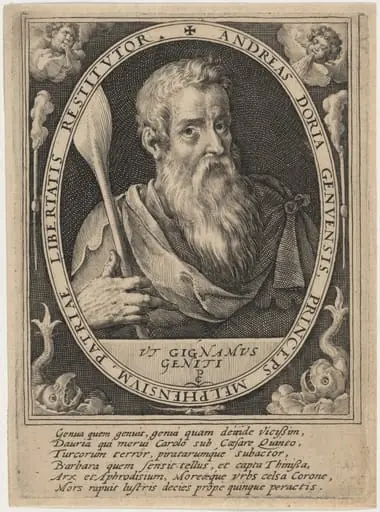
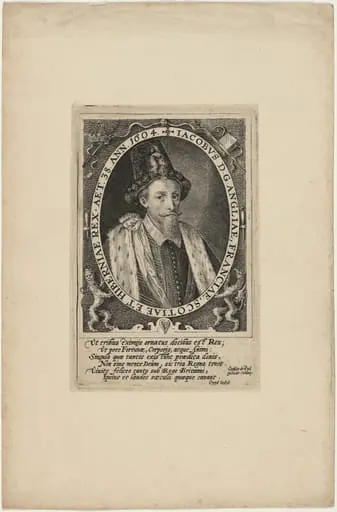
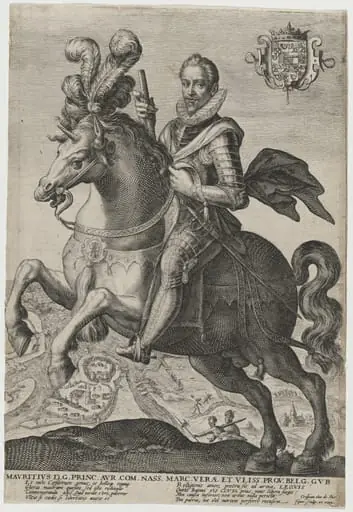
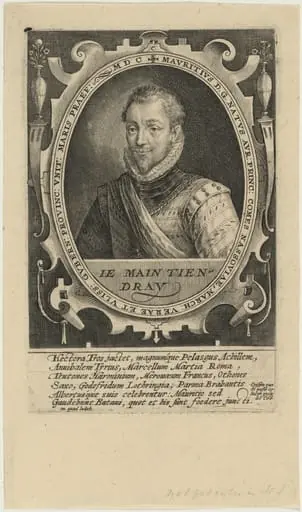
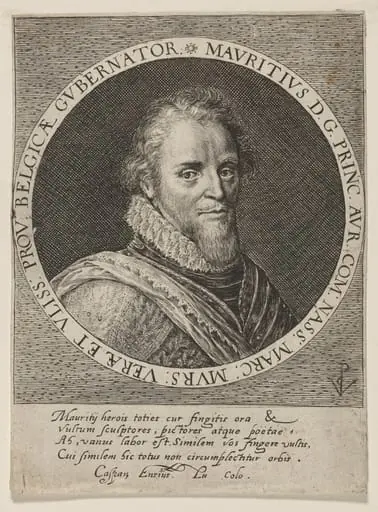
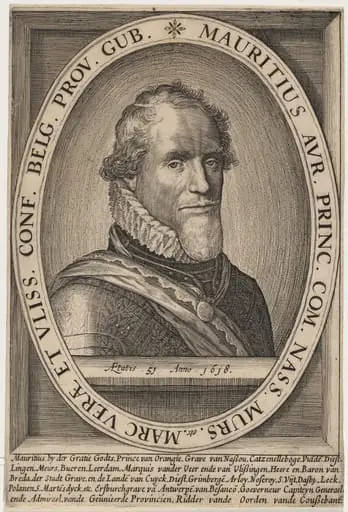
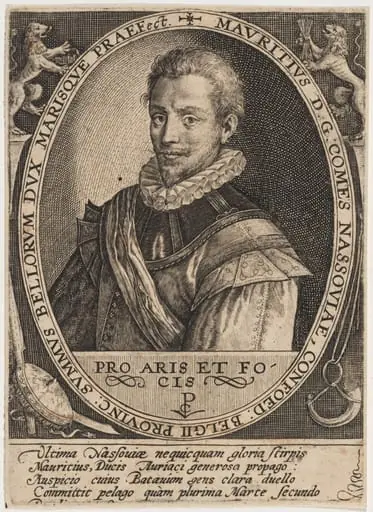
Maurice of Nassau, Prince of Orange is an ink print by the Baroque artist Crispijn van de Passe I. It dates from 1600 and is held in the collection of the National Gallery of Art.
About this work
Overview
This 1600 engraving by Crispijn van de Passe I portrays Maurice of Nassau, Prince of Orange, in a bust-length format. The subject is rendered in meticulous detail, characteristic of the Baroque period, with a neutral expression, distinctive hairstyle, and attire reflective of the era.
Subject & Meaning
The engraving captures Maurice of Nassau, a pivotal figure in Dutch history, known for his military leadership during the Dutch Revolt. The portrait's neutrality may suggest an official or commemorative purpose, presenting the prince in a dignified, authoritative light.
Technique & Style
The work showcases Passe's mastery of engraving techniques, notably cross-hatching, which achieves depth and texture. The dark, mottled background contrasts with the detailed, high-contrast rendering of the subject's face, hair, and clothing, emphasizing the prince's presence.
History & Provenance
Created in 1600 by Crispijn van de Passe I, the engraving's provenance is not detailed here, though its creation coincides with the height of Maurice's influence during the Dutch Revolt.
Context
The piece is emblematic of Baroque portraiture, where detailed, realistic depictions of prominent figures were valued for their informational and symbolic significance. It reflects the era's artistic and political climate.
Legacy
As a work by Crispijn van de Passe I, it contributes to the artist's reputation for precise, expressive engravings of notable contemporaries, though the specific legacy of this portrait in terms of direct influence or exhibition history is not specified.
Artist & collection

Artist
Crispijn van de Passe I (1564–1637) was an artist, born in Arnemuiden.