Artwork
Mehmed II, Sultan of Turkey
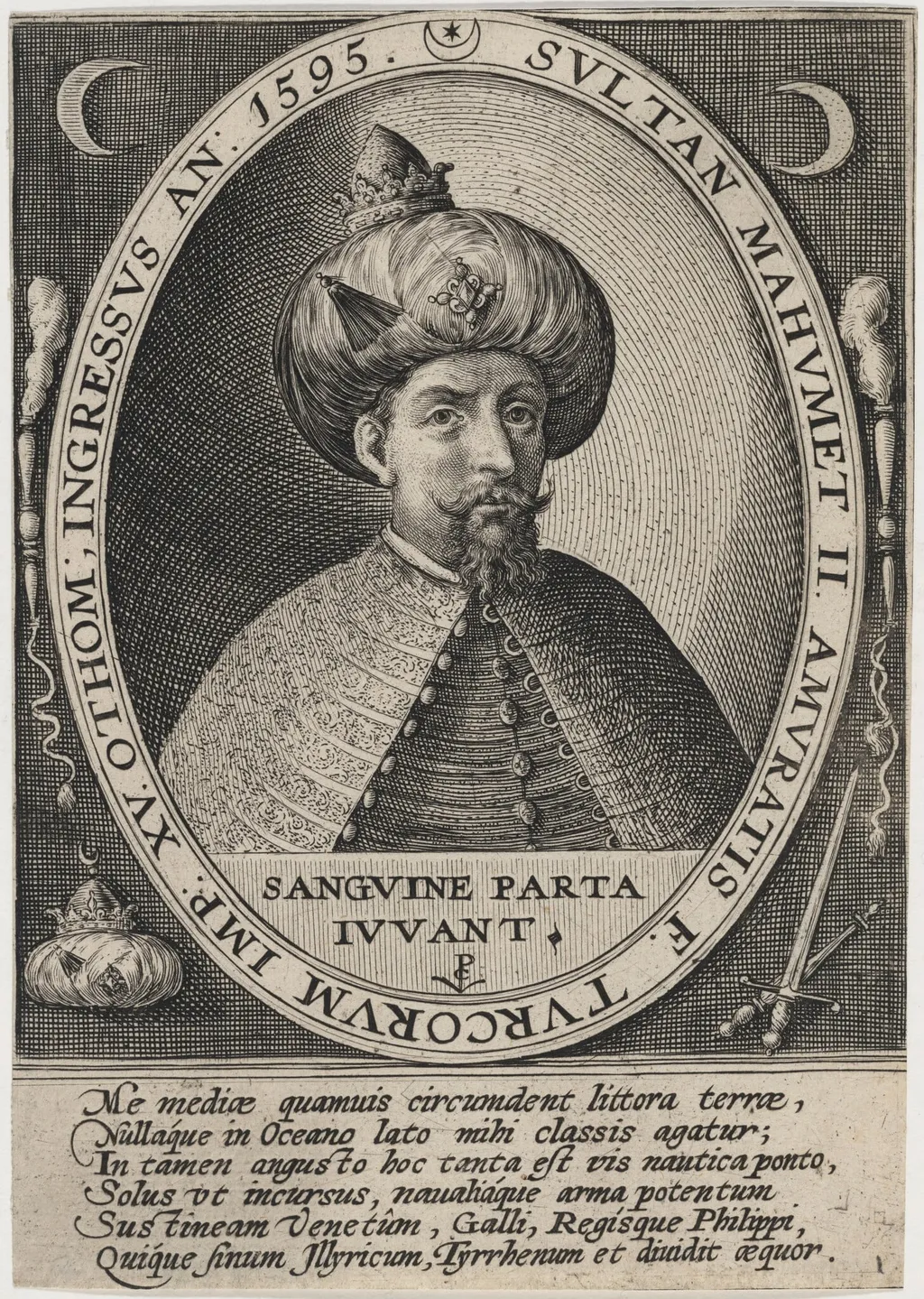
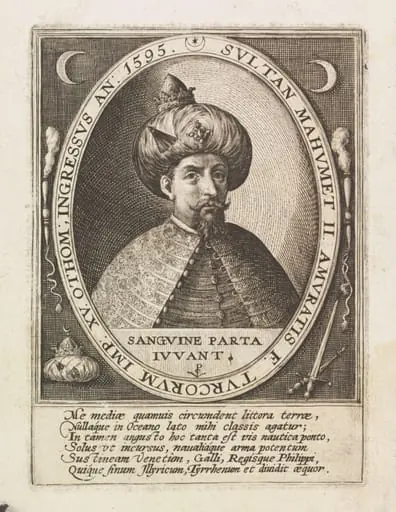
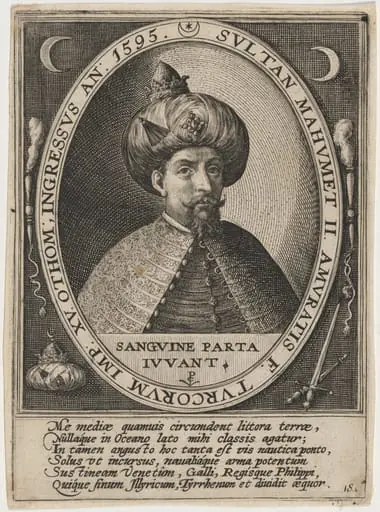
Mehmed II, Sultan of Turkey is an ink print by the Renaissance artist Crispijn van de Passe I. It dates from 1595 and is held in the collection of the National Gallery of Art.
About this work
Overview
An engraving by Crispijn van de Passe I, dated 1595, depicts Mehmed II, the Ottoman sultan who conquered Constantinople in 1453.
An engraving by Crispijn van de Passe I, dated 1595, depicts Mehmed II, the Ottoman sultan who conquered Constantinople in 1453. Rendered in fine linear detail, the portrait presents the ruler in formal attire, facing the viewer with composed authority. The work belongs to a broader European tradition of depicting foreign sovereigns as both exotic and formidable, produced for audiences unfamiliar with Ottoman court culture.
Subject & Meaning
Mehmed II is portrayed with a long beard, mustache, and an elaborate turban crowned by a small pointed hat, symbols of imperial status in the Ottoman tradition. His direct gaze and still posture convey solemn dignity, aligning with European expectations of Eastern rulers as both powerful and enigmatic. The image functions less as a likeness and more as a symbolic representation of Ottoman authority, tailored for a Western viewership seeking to visualize a distant empire.
Technique & Style
Van de Passe employed fine engraving lines and cross-hatching to model the textures of fabric, fur trim, and the turban’s folds. The dark, subtly textured background enhances the three-dimensionality of the figure without distracting from it. The precision of the lines emphasizes the richness of the garments and the gravity of the face, reflecting Northern European printmaking conventions adapted to portray non-European subjects with formal gravitas.
History & Provenance
Created in the Netherlands in 1595, the engraving was part of a series of portraits of world rulers produced by van de Passe for a European market. These prints circulated among scholars, diplomats, and collectors as visual references for distant powers. Though based on earlier descriptions or secondhand sources, the image became a widely reproduced archetype of Mehmed II in Western visual culture.
Context
In late 16th-century Europe, interest in the Ottoman Empire was heightened by political tensions and trade. Portraits like this one served as both documentation and propaganda, framing Ottoman leaders as formidable yet distant figures. Van de Passe’s work reflects the era’s fascination with foreign rulers, blending factual observation with inherited stereotypes to construct an image that satisfied European curiosity and political imagination.
Legacy
The engraving contributed to the enduring visual stereotype of Mehmed II in Western art, influencing later depictions long after the original historical context faded. Though not a portrait from life, its formal clarity and symbolic weight ensured its repetition in printed collections and historical texts, embedding it as a standard reference for how a Turkish sultan was imagined across centuries.
Artist & collection

Artist
Crispijn van de Passe I (1564–1637) was an artist, born in Arnemuiden.

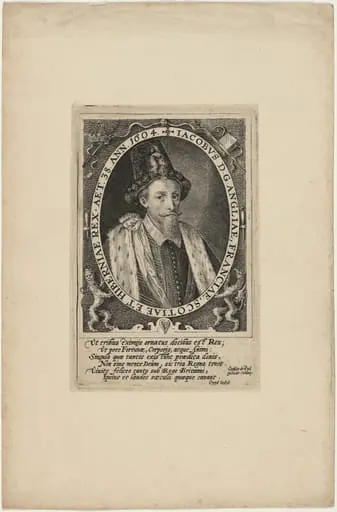
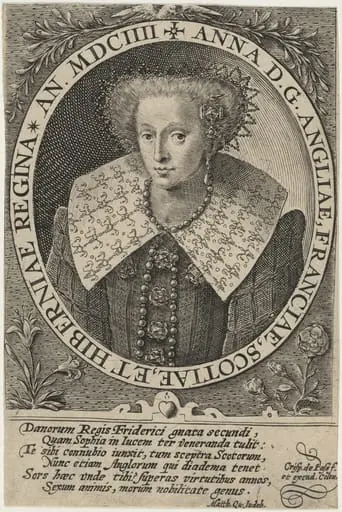
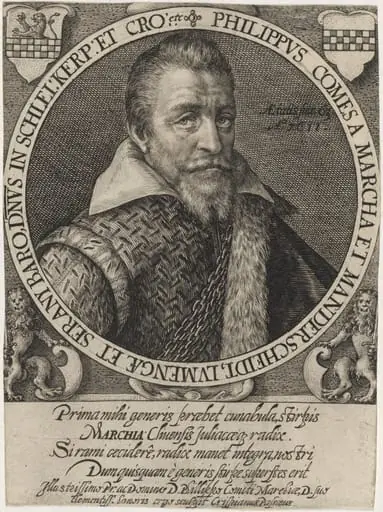
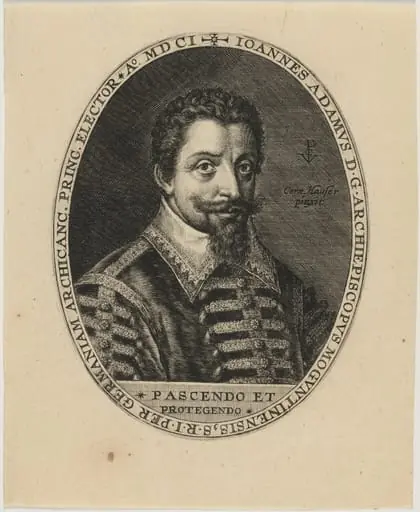
 Turkish sultans, sultanas and other historical figures
 Turkish sultans, sultanas and other historical figures
 Turkish sultans, sultanas and other historical figures
 Turkish sultans, sultanas and other historical figures
 Turkish sultans, sultanas and other historical figures
 Turkish sultans, sultanas and other historical figures
 Turkish sultans, sultanas and other historical figures
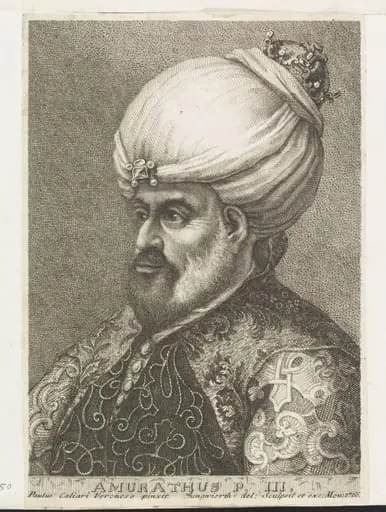 Turkish sultans, sultanas and other historical figures
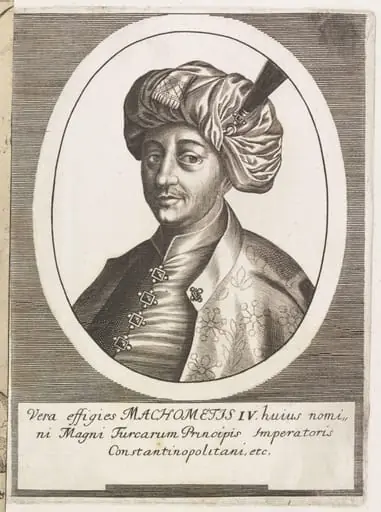 Turkish sultans, sultanas and other historical figures
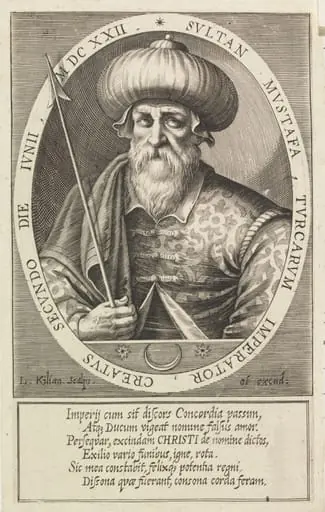 Turkish sultans, sultanas and other historical figures
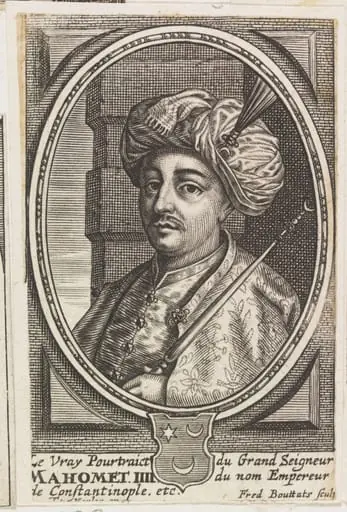 Turkish sultans, sultanas and other historical figures
 Mehmed II, Sultan of Turkey