Artwork
The Seven Maccabean Brothers Killed by Antiochus
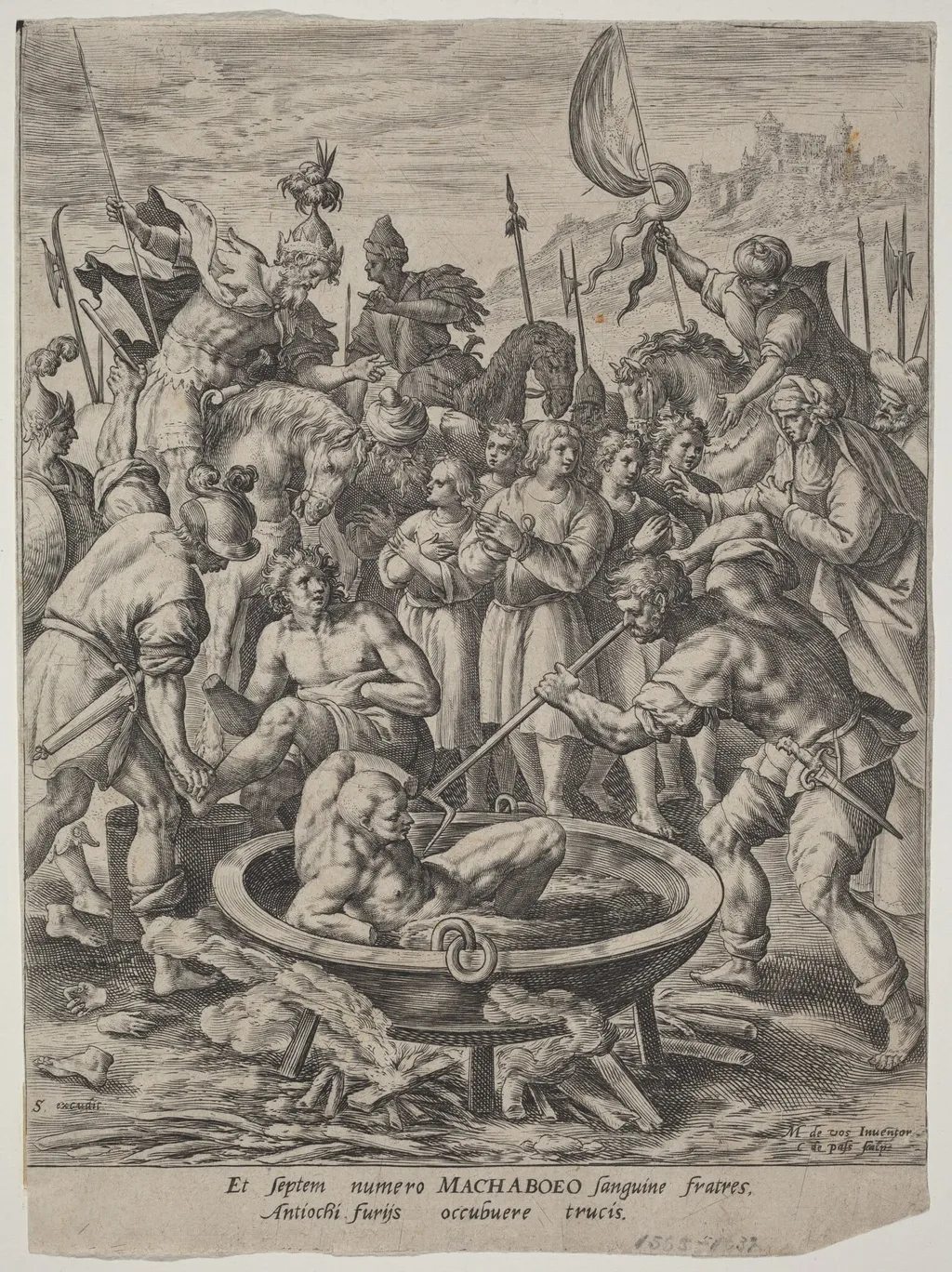
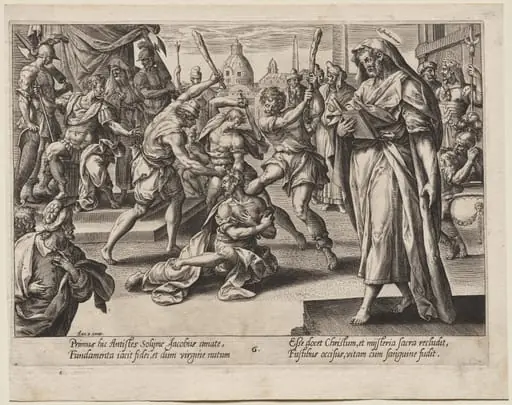
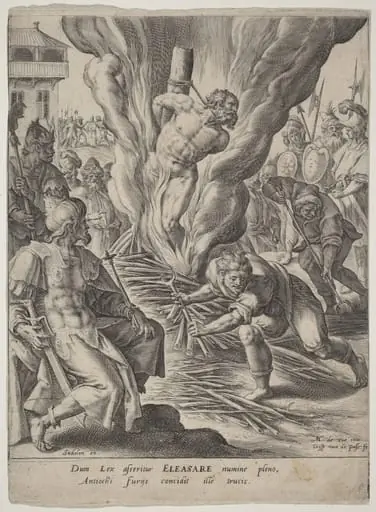
The Seven Maccabean Brothers Killed by Antiochus is an ink print by the Renaissance artist Crispijn van de Passe I. It dates from 1591 and is held in the collection of the National Gallery of Art.
About this work
Overview
Crispijn van de Passe I’s 1591 engraving, titled The Seven Maccabean Brothers Killed by Antiochus, portrays a violent episode from the Jewish revolt against Seleucid oppression. Executed on laid paper, the print captures a moment when the brothers are being forced into a boiling cauldron, a scene meant to illustrate martyrdom and steadfast faith.
Subject & Meaning
The composition centers on a group of men in plain tunics and cloaks, some bearing swords and spears, gathered around a large cauldron. Two figures lower a victim into the vessel while others watch, conveying the tension between cruelty and resolve. The work functions as an allegorical reminder of sacrifice for religious conviction.
Technique & Style
Van de Passe employs fine cross‑hatching and intricate line work to model forms and suggest depth. The careful rendering of textures—fabric folds, metal gleam, and the cauldron’s surface—creates a realistic atmosphere. The dense network of lines produces subtle shading, enhancing the dramatic intensity of the scene.
History & Provenance
Created in the late sixteenth century, the engraving reflects the period’s interest in biblical and historical subjects for moral instruction. It was produced in the Dutch printmaking workshop of van de Passe I, whose family was known for disseminating religious imagery across Europe. The print has survived in several museum collections, indicating its wide circulation.
Context
The image draws on the narrative of the Maccabean revolt, a story popular in Reformation and Counter‑Reformation art for its themes of resistance against tyrannical rule. By depicting Antiochus’s order to execute the brothers, the work aligns with contemporary Protestant emphasis on martyrdom and fidelity to divine law.
Artist & collection

Artist
Crispijn van de Passe I (1564–1637) was an artist, born in Arnemuiden.