Artwork
The Calvary
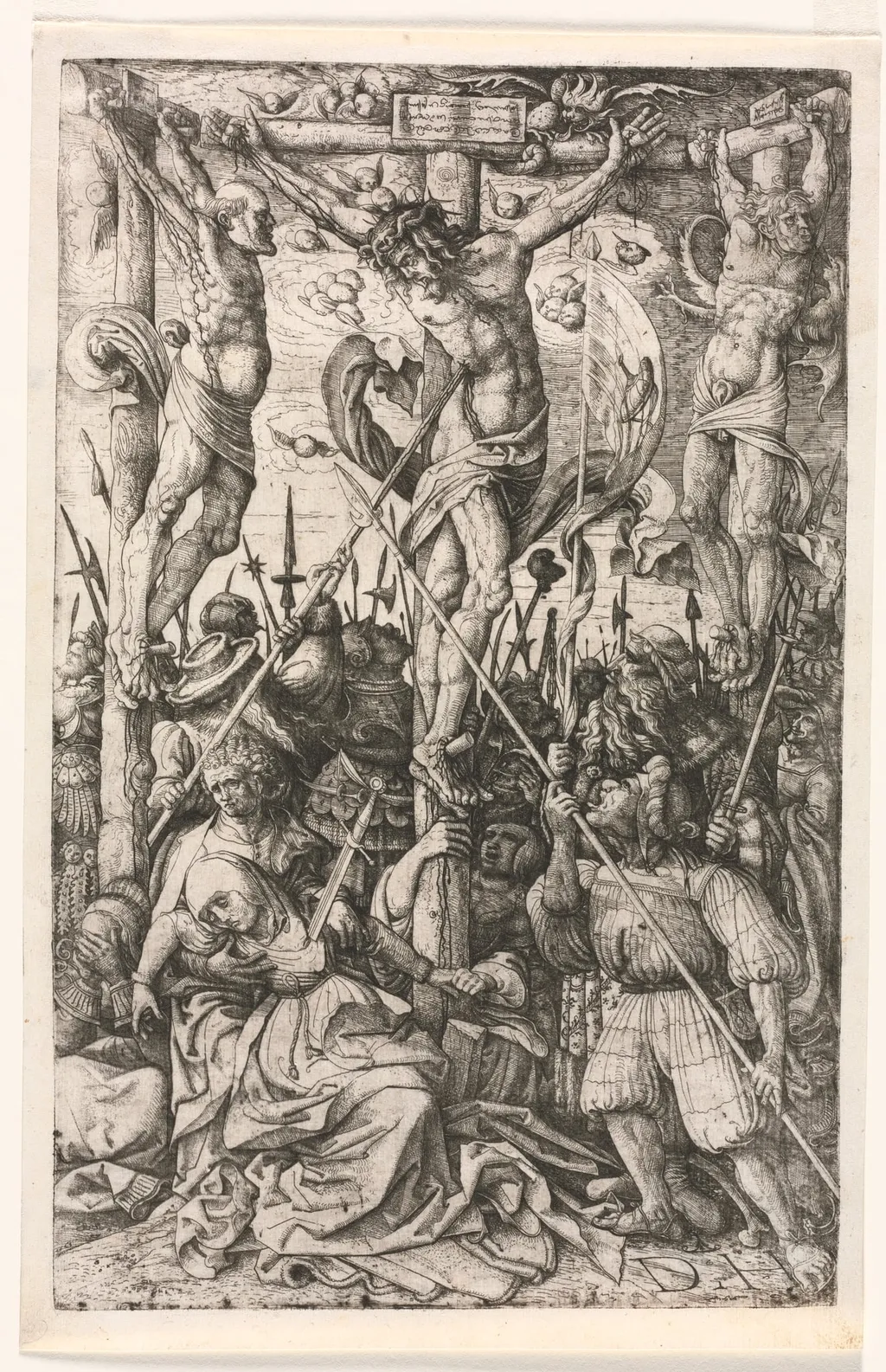
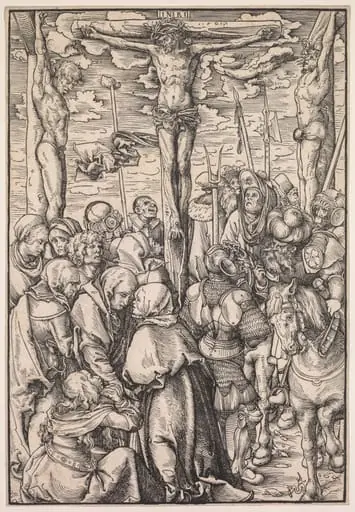
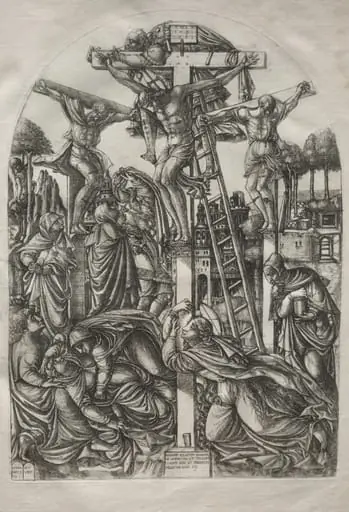
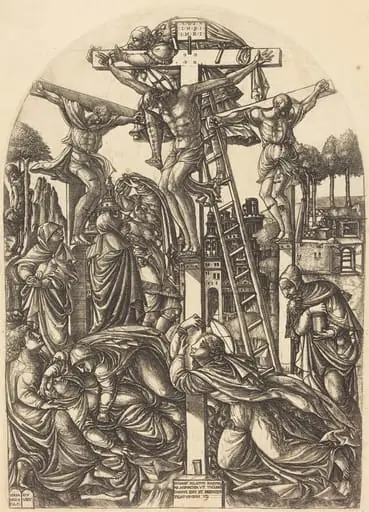
The Calvary is a print by the Renaissance artist Daniel Hopfer. It dates from 1520 and is held in the collection of the Cleveland Museum of Art.
About this work
Overview
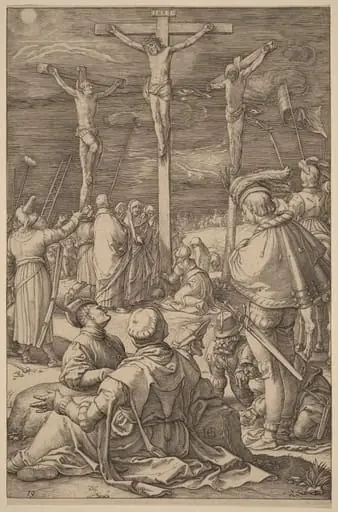
The work titled The Calvary is an early etching that depicts a group of onlookers gathered before three crosses positioned on a hill, the central cross rising highest. The image is rendered in dense, dark lines that result from the acid‑etched metal surface, producing a stark contrast on the paper.
Technique & Style
The artist employed hand‑scratched lines on an iron plate, which were then exposed to acid to bite the design into the metal.
The artist employed hand‑scratched lines on an iron plate, which were then exposed to acid to bite the design into the metal. This method, less labor‑intensive than traditional engraving, allowed for freer drawing but required iron or steel because the acids of the period would quickly corrode copper. The resulting rust‑prone plates limited production runs, making each impression relatively scarce.
Context
Etching on iron and steel dates back to at least the early 15th century, yet documented use for decorative armor or prints in Italy and Germany does not appear before the late 1400s. By around 1500, workshops such as Daniel Hopfer’s in Augsburg began exploiting iron plates for printmaking, marking a transition toward the technique’s broader adoption.
History & Provenance
Because of the technical challenges posed by rusting plates, only a modest number of early iron etchings were produced, including six known works by Albrecht Dürer. The Calvary belongs to this limited early output, predating the shift around 1550 when copper plates, more resistant to acid, became the standard medium for etching.
Artist & collection

Artist
Daniel Hopfer (c. 1470 – 1536) was a German artist who is widely believed to have been the first to use etching in printmaking, at the end of the 15th century. He also worked in woodcut. Although his etchings were…

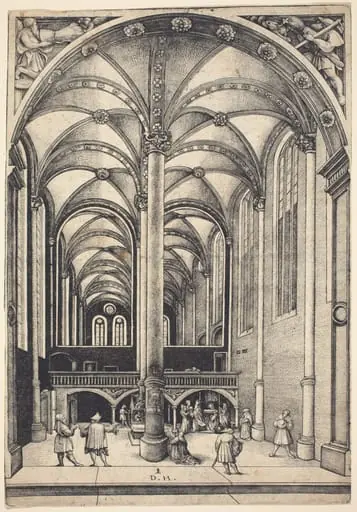 Interior of the Church of Saint Maria Magdalena with the Parable of the Offering of the Widow
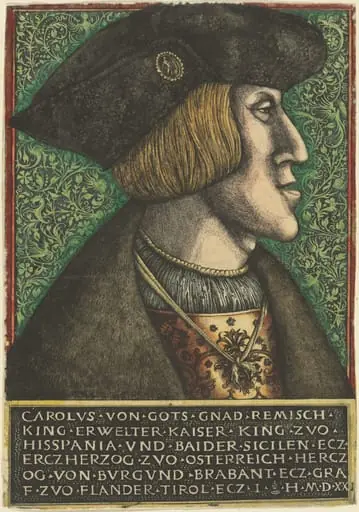 Emperor Charles V
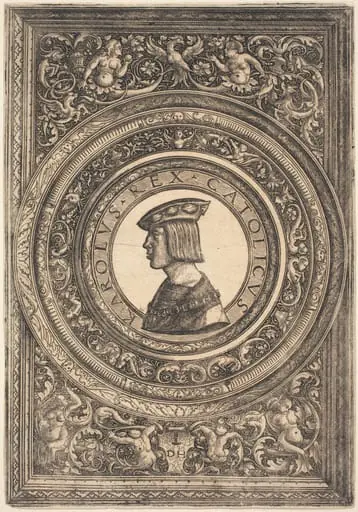 Emperor Charles V
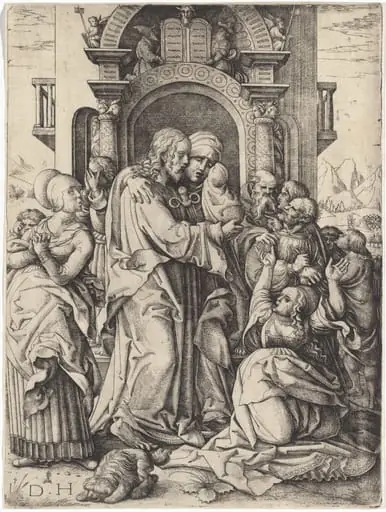 The Virgin Mary Taking Leave of Christ
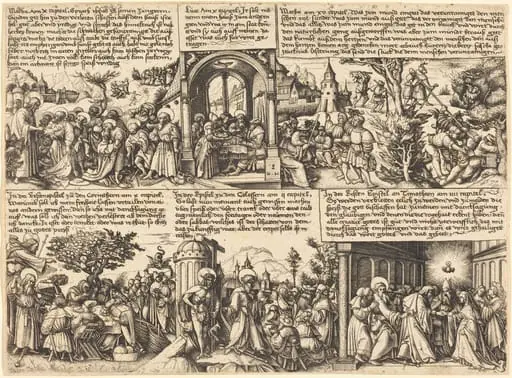 Jesus Christ Giving the Mission to the Apostles and Other New Testament Scenes
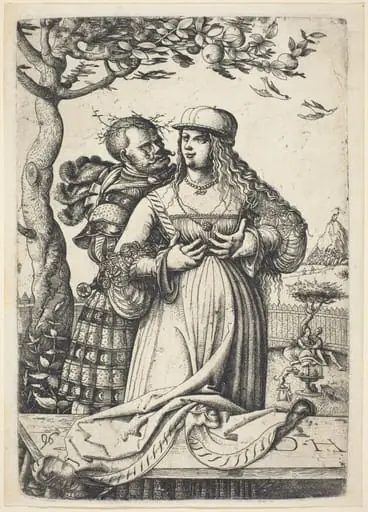 Soldier Embracing a Woman
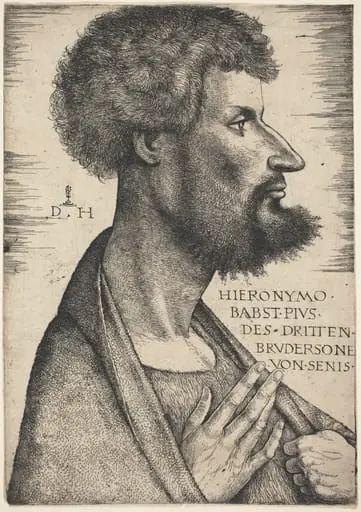 Girolamo da Siena
 The Virgin and Child with Saint Anne by a Portal