Artwork
Anne Bill
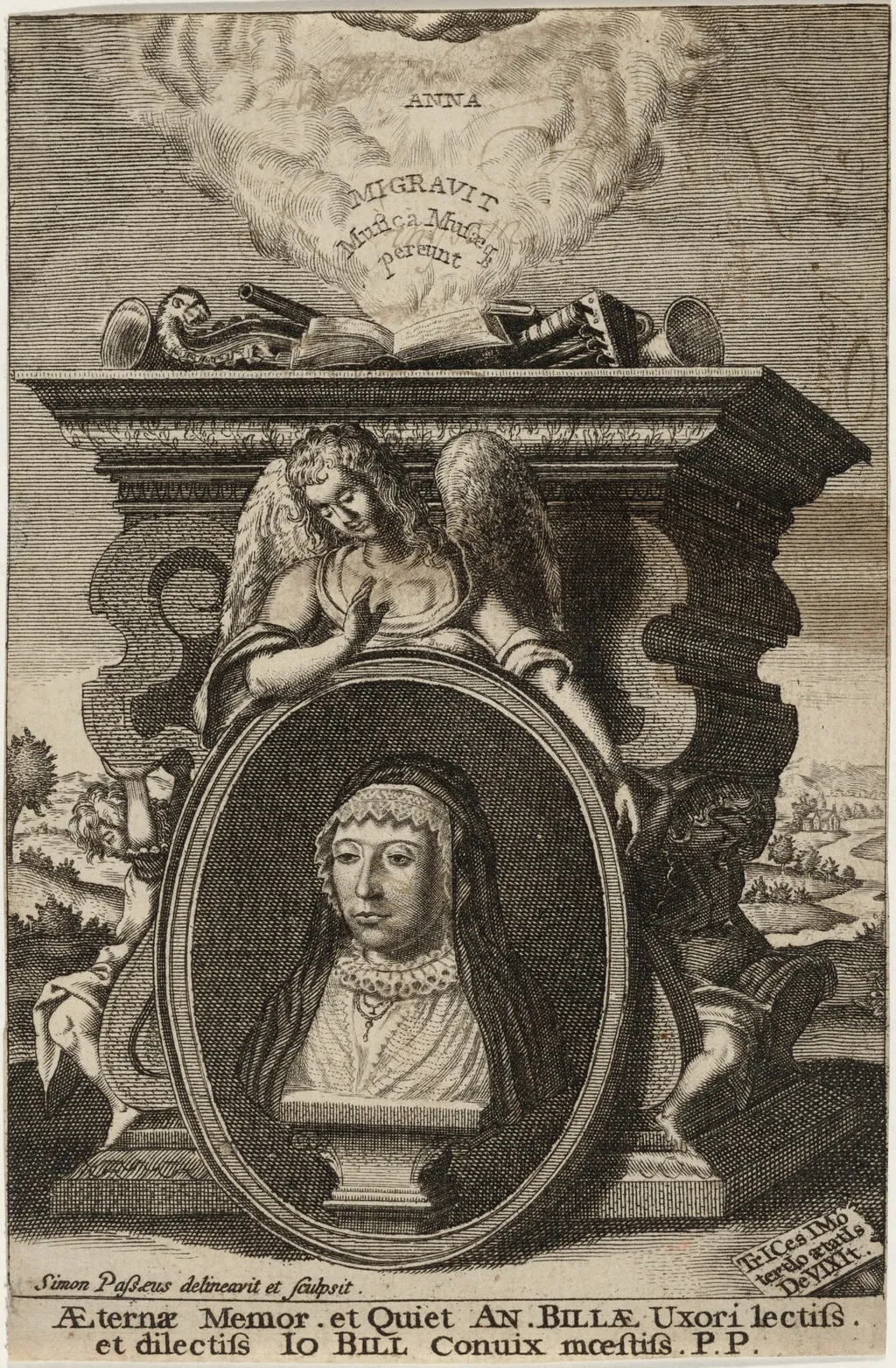
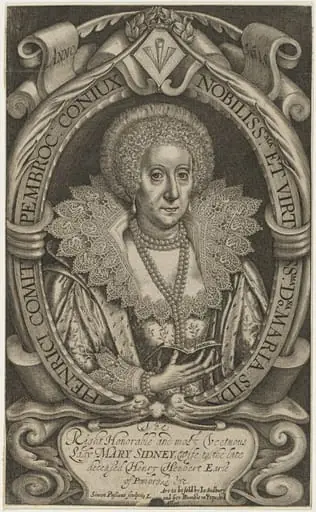
Anne Bill is an ink print by the Renaissance artist Simon van de Passe. It dates from 1621 and is held in the collection of the National Gallery of Art.
About this work
Overview
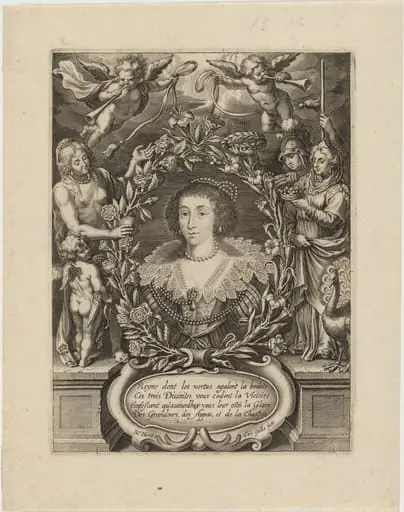
Simon van de Passe's 1621 engraving, Anne Bill, presents a intricately framed portrait of a woman, supplemented by symbolic elements and vignettes that extend its meaning beyond a simple likeness.
Subject & Meaning
The central subject, a woman's face, is contextualized by motifs suggesting themes of remembrance and legacy. Winged cherubs, a draped cloth, and the inscription 'Anna Migravit' (Anna has departed) imply a commemorative or memorial intent.
Technique & Style
Characterized by fine lines and ornate borders, the engraving showcases Passe's mastery of the medium. The interplay of detailed, small-scale scenes (bird on cannon, sailing ship) with the central portrait demonstrates a blend of precision and compositional complexity.
History & Provenance
Created in 1621 by Simon van de Passe, specific details about the engraving's original commission, ownership history, or exhibition record are not provided in the available information.
Context
Emerging from the early 17th century, Anne Bill reflects the period's penchant for symbolic and allegorical elements in portraiture. The use of Latin text ('Anna Migravit') further situates it within a culturally and linguistically refined European context.
Legacy
While the engraving's direct influence or fame is not highlighted in the provided details, it contributes to the broader understanding of van de Passe's oeuvre and the evolution of symbolic portraiture in early modern European art.
Artist & collection