Artwork
Charles I, King of England
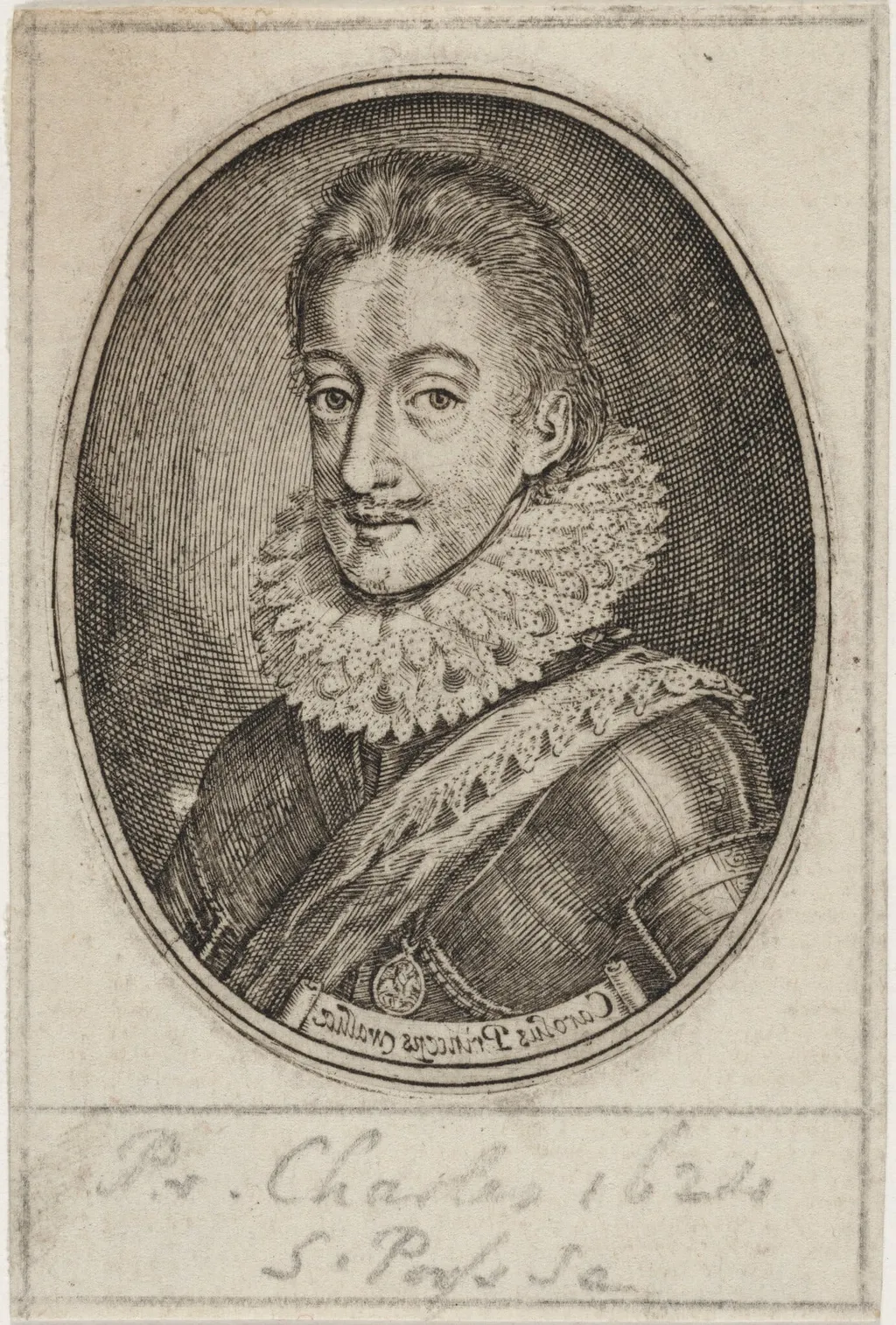
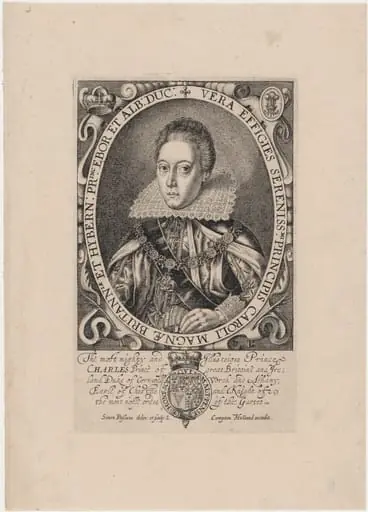
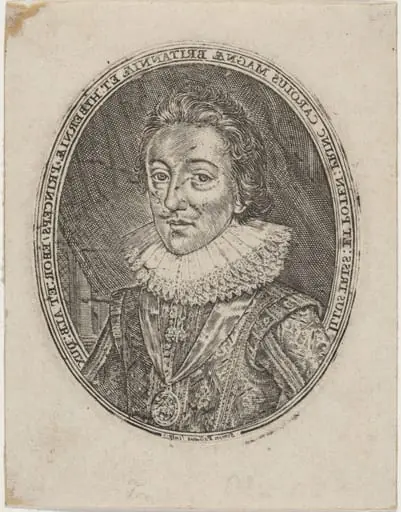
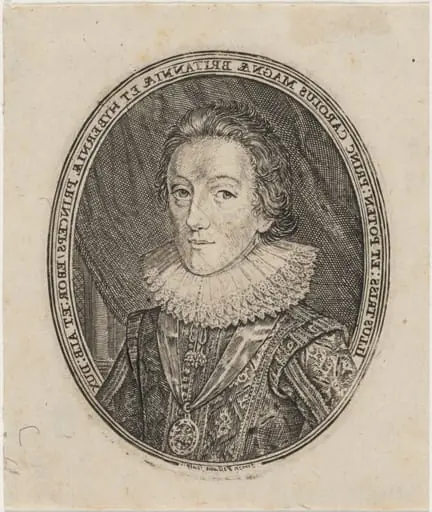
Charles I, King of England is an ink print by the Baroque artist Simon van de Passe. It dates from 1616 and is held in the collection of the National Gallery of Art.
About this work
Overview
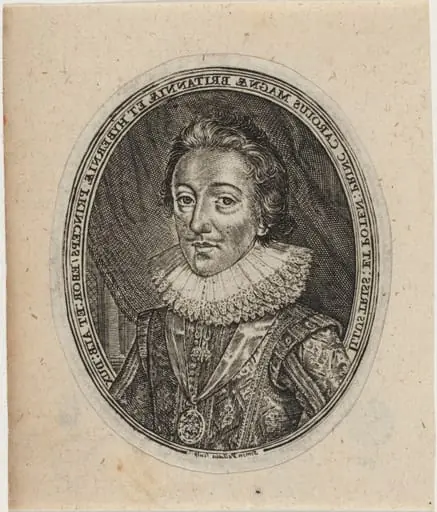
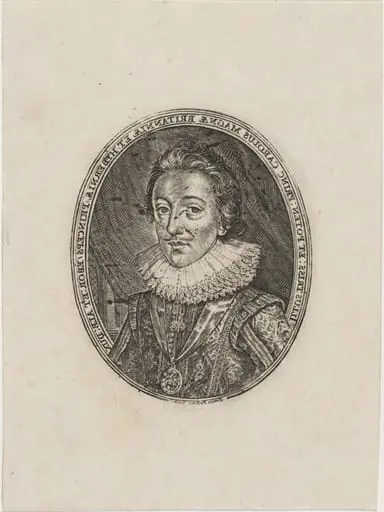
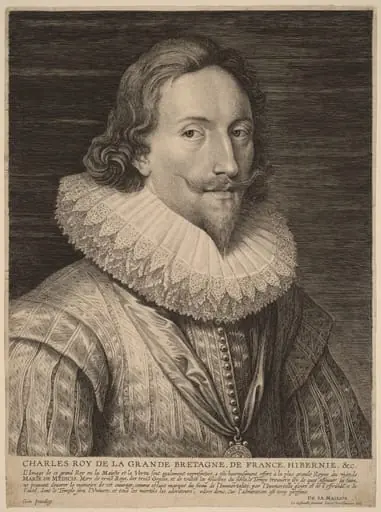
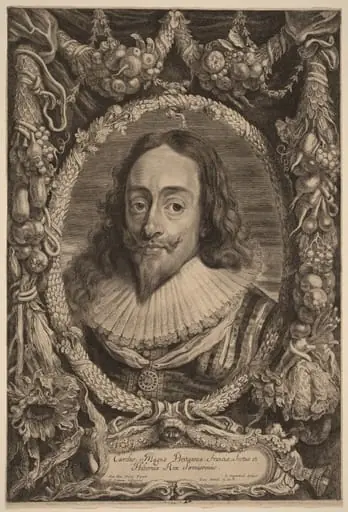
This 1616 engraving presents a portrait of Charles I, King of England, rendered in black and white. The image is confined within a circular frame and set against an unadorned background. The monarch is depicted with short, curled hair, a neatly trimmed beard, a ruffled collar, and a patterned jacket, accented by a chain and pendant at his throat.
Subject & Meaning
The work focuses on the youthful king, emphasizing his regal bearing through formal attire and ornamental accessories. The inclusion of the chain and pendant underscores his status, while the plain backdrop directs attention solely to the sitter’s visage and dress, reinforcing the portrait’s function as a straightforward representation of royal authority.
Technique & Style
Simon van de Passe employed fine, intersecting lines to model the figure, a method known as cross‑hatching. This technique creates subtle gradations of tone, giving the face and clothing a sense of volume and texture despite the monochrome medium. The meticulous line work reflects the precision typical of early seventeenth‑century printmaking.
History & Provenance
The engraving derives from a silver medal originally struck by van de Passe, a noted engraver active in the Netherlands and England. The print was likely produced to disseminate the king’s likeness beyond the limited circulation of the medal, serving both commemorative and propagandistic purposes during Charles I’s early reign.
Context
Created shortly after Charles I’s accession in 1625, the portrait aligns with contemporary practices of circulating royal images to affirm sovereignty. Engravings such as this were affordable alternatives to painted portraits, enabling a broader audience to recognize the monarch’s image across England and abroad.
Artist & collection