Artwork
James I of England
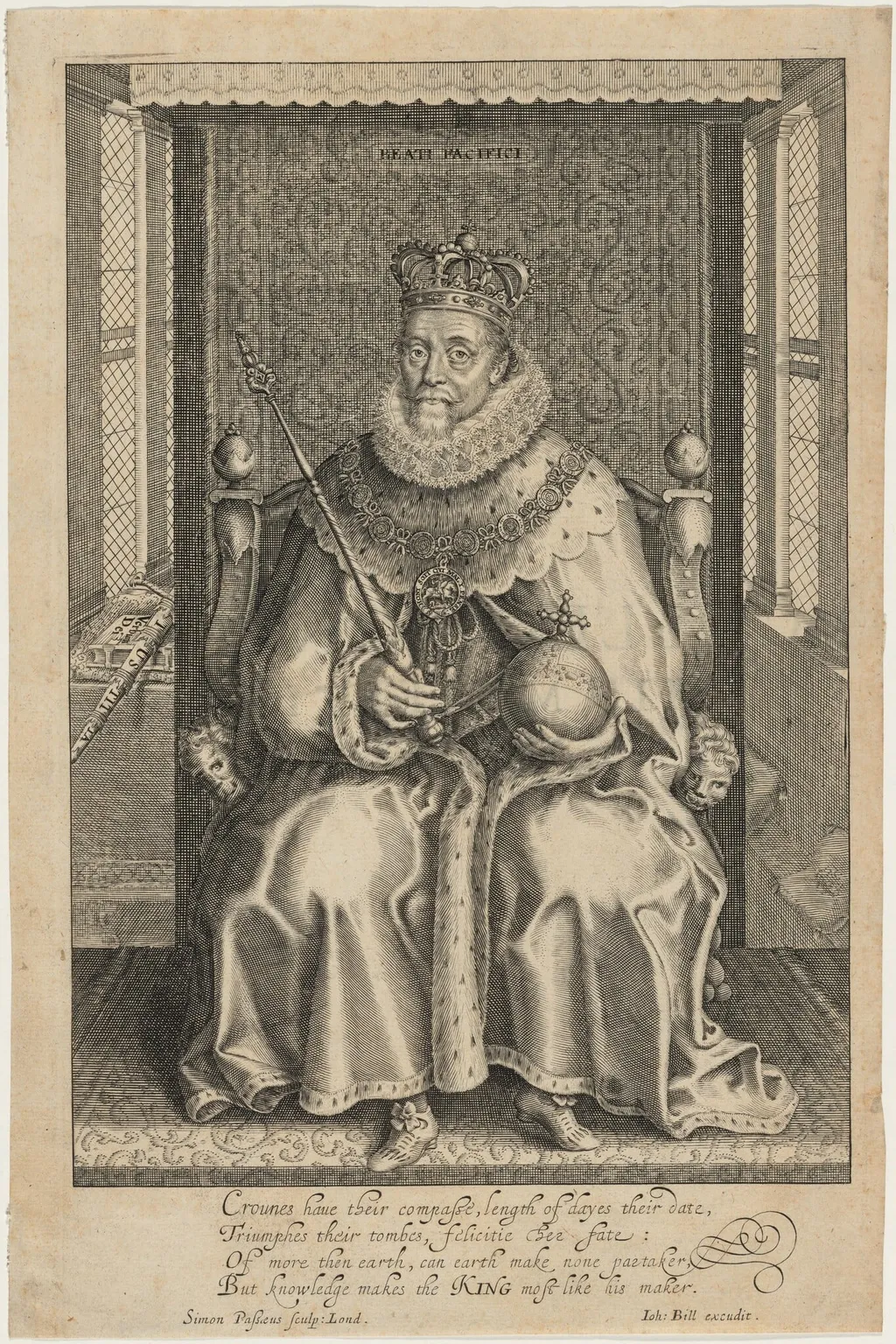
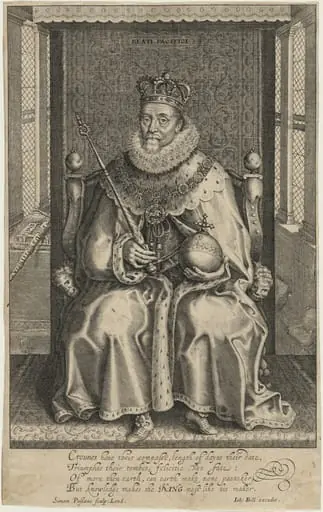
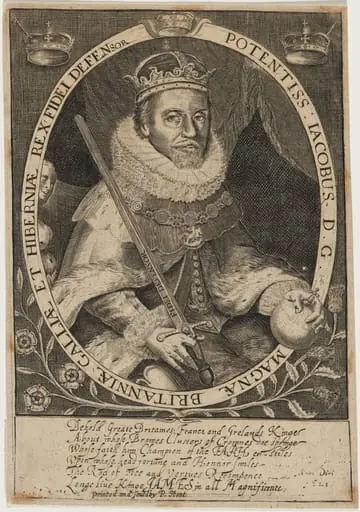
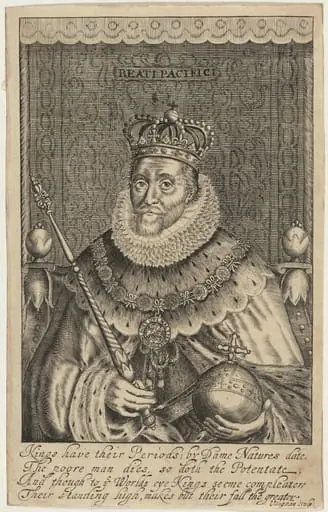
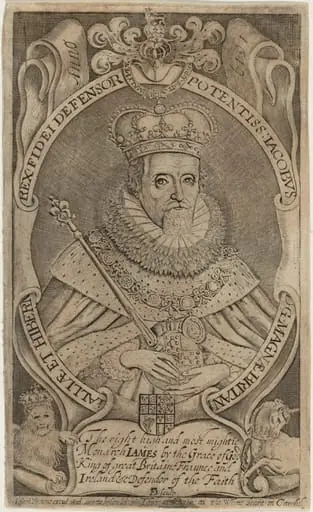
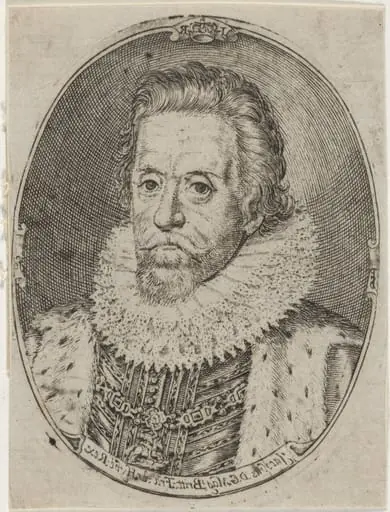
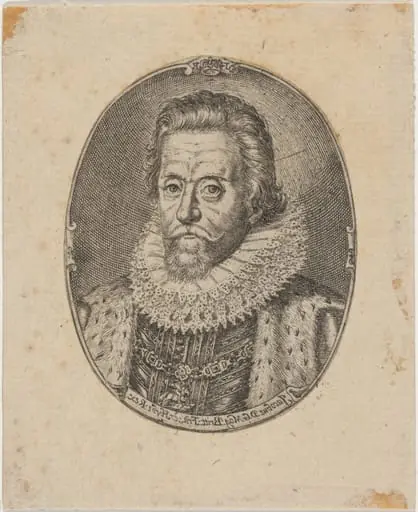
James I of England is an ink print by the Baroque artist Simon van de Passe. It dates from 1616 and is held in the collection of the National Gallery of Art.
About this work
Overview
The composition follows the conventions of early 17th-century portraiture, emphasizing authority through symbolic objects and elaborate detail.
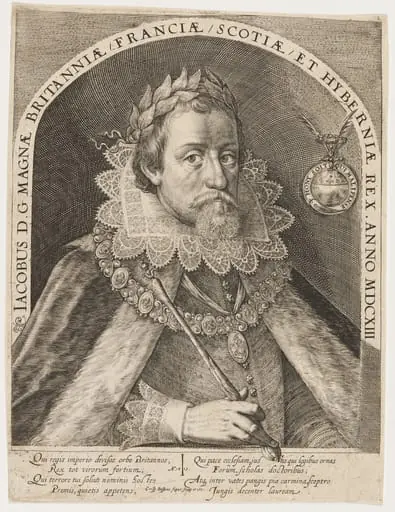
This 1616 engraving by Simon van de Passe depicts James I of England in formal regalia. Executed in black ink on paper, the print captures the king seated on a throne, adorned with royal symbols. The composition follows the conventions of early 17th-century portraiture, emphasizing authority through symbolic objects and elaborate detail. The work was produced using the engraving technique, which involves incising lines into a metal plate for ink transfer.
Subject & Meaning
James I is portrayed with a crown, scepter, and globe—emblems of divine right and global sovereignty. A lion rests at his feet, symbolizing strength and royal lineage. The ornate curtain and patterned background frame the figure as if in a stage setting, reinforcing his elevated status. A Latin poem at the base extols his rule, blending textual praise with visual iconography to affirm monarchical legitimacy.
Technique & Style
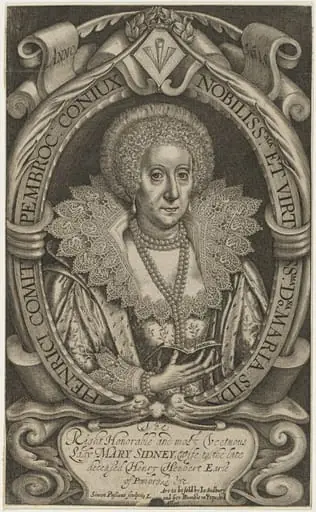
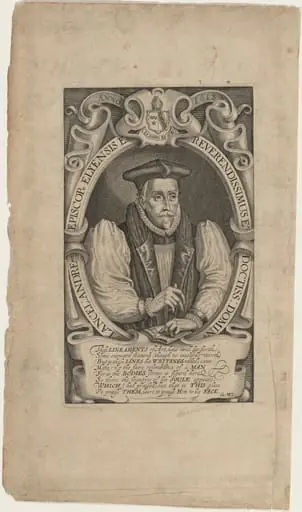
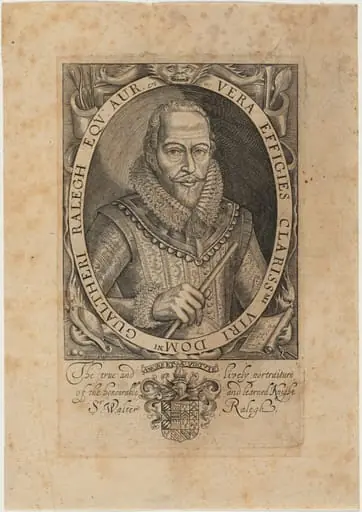
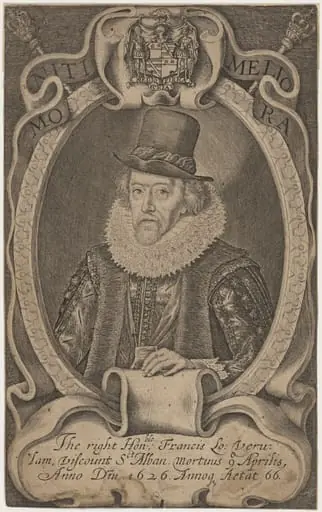
Van de Passe employed fine, controlled lines to render textures: the plush folds of velvet, the sheen of fur trim, and the metallic gleam of the scepter. Shading is achieved through cross-hatching, typical of Northern European engraving traditions. The precision of the lines reflects the artist’s skill in translating three-dimensional form into flat, intricate detail, a hallmark of printmaking at the time.
History & Provenance
Created in 1616, the engraving was likely produced for distribution among nobility and diplomatic circles to project royal imagery across Europe. Simon van de Passe, a Dutch engraver working in England, was known for his portraits of royalty. The print’s survival in multiple institutional collections suggests it was widely circulated and valued as a tool of political representation during James’s reign.
Context
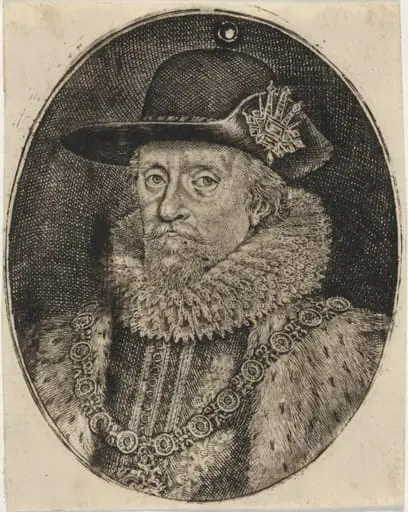
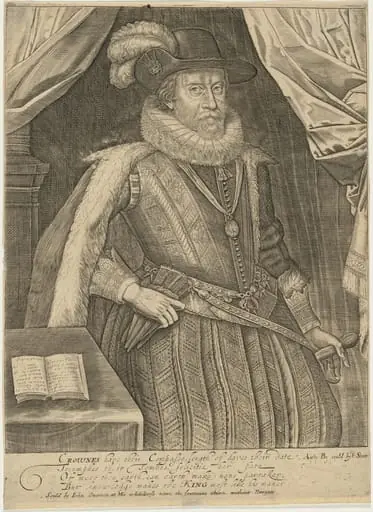
In the early 1600s, engraved portraits served as key instruments of political messaging, especially before widespread photography. Van de Passe’s work aligns with a broader trend of using print to disseminate royal likenesses, reinforcing the monarch’s presence beyond the court. The fusion of classical symbolism and detailed realism reflects the era’s blend of Renaissance ideals and emerging print culture.
Legacy
The engraving remains a representative example of Jacobean portraiture in print. It illustrates how visual propaganda was crafted through disciplined technique and symbolic language. While not unique in its iconography, its craftsmanship and historical context make it a valuable artifact for understanding how monarchy was visually sustained in the early modern period.
Artist & collection