Artwork
Mary Sidney, Countess of Pembroke
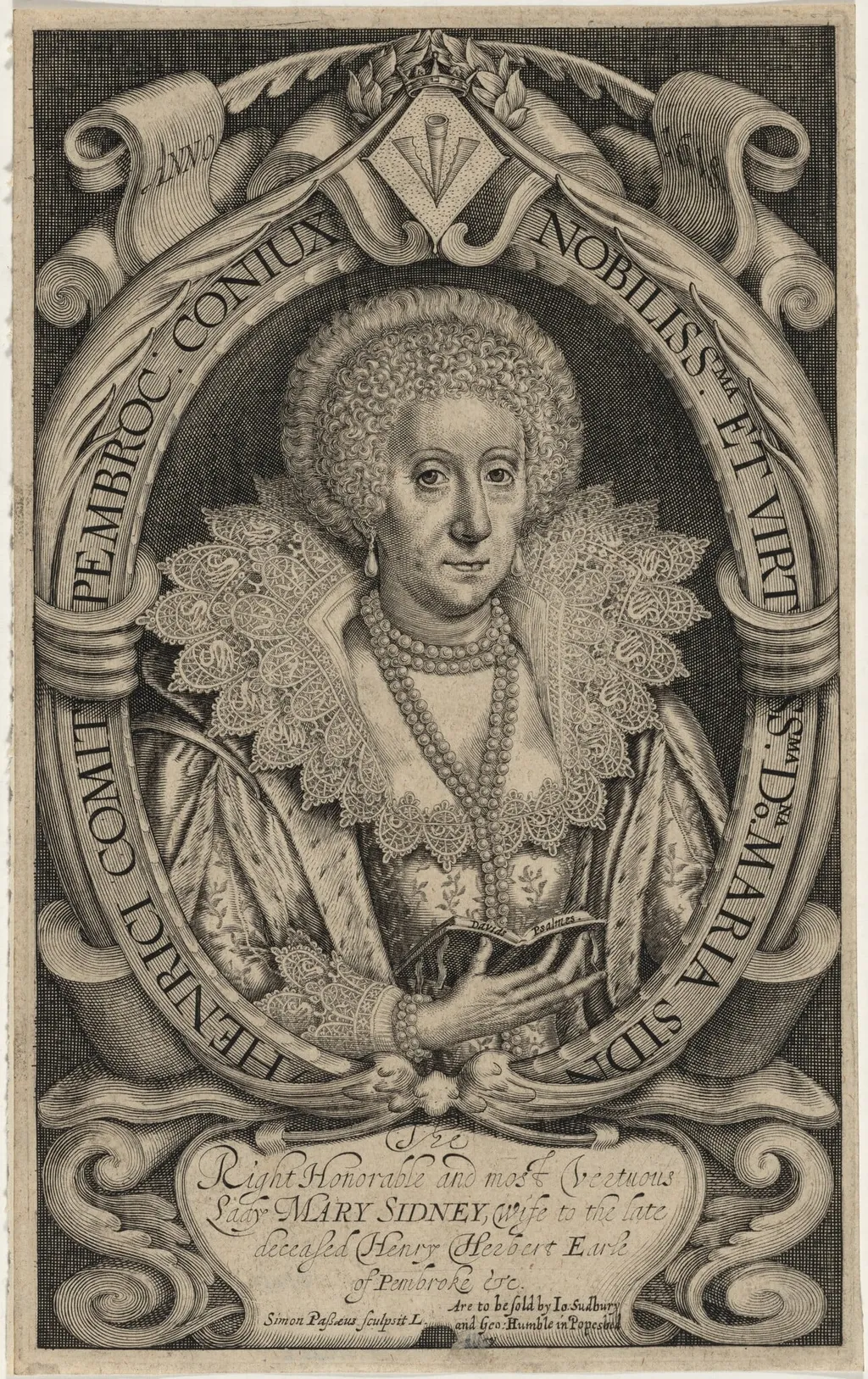
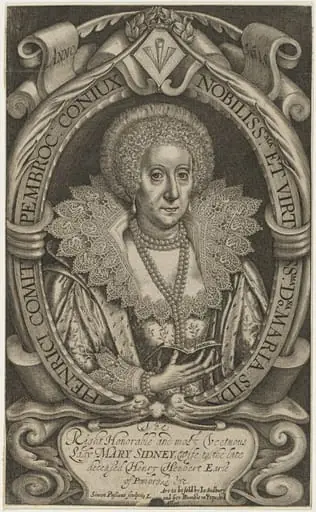
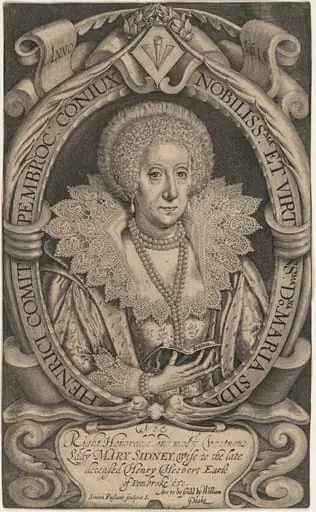
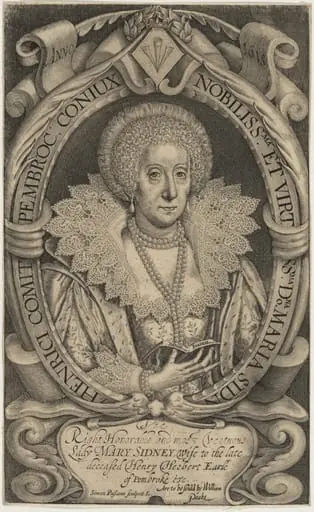
Mary Sidney, Countess of Pembroke is an ink print by the Renaissance artist Simon van de Passe. It dates from 1621 and is held in the collection of the National Gallery of Art.
About this work
Overview
The composition is enclosed within a decorative border bearing her name and titles, typical of printed portraiture in early 17th-century Europe.
This 1621 engraving by Simon van de Passe portrays Mary Sidney, Countess of Pembroke, as a learned noblewoman. Rendered in fine line work, the portrait emphasizes her status through formal attire and symbolic props. The composition is enclosed within a decorative border bearing her name and titles, typical of printed portraiture in early 17th-century Europe. The image was likely produced for circulation among elite circles, affirming her cultural prominence.
Subject & Meaning
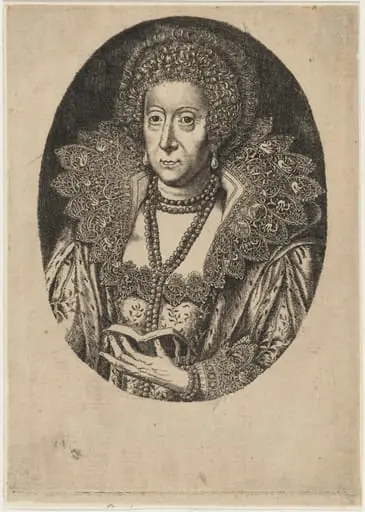
Mary Sidney is depicted holding a book, signaling her intellectual engagement and literary patronage. Her elaborate lace collar reflects aristocratic fashion and meticulous attention to detail, reinforcing her social standing. The inclusion of her full title in the border underscores her identity as a figure of political and cultural influence. The portrait does not idealize but presents her with dignified realism, aligning with Renaissance ideals of virtue and erudition.
Technique & Style
Van de Passe employed fine cross-hatching to model form and suggest texture, particularly in the lace collar and the binding of the book. The engraving’s precision reflects the technical mastery of Dutch printmaking traditions. Lines are controlled and deliberate, avoiding excess while conveying subtle tonal variations. The border’s ornamental framing is rendered with equal care, integrating text and imagery into a cohesive visual structure.
History & Provenance
Created in 1621, the engraving was produced during the later years of Mary Sidney’s life, possibly to commemorate her literary legacy. It was likely issued in limited numbers for distribution among her network of scholars and patrons. The print survives in several institutional collections, indicating its early recognition as a significant representation of a prominent female intellectual of the period.
Context
In early 17th-century England, printed portraits of noblewomen were rare, especially those highlighting intellectual achievement. Mary Sidney’s reputation as a translator and patron of the arts made her an exceptional subject. Van de Passe, a Flemish engraver working in England, was known for producing portraits of European elites, making this work part of a broader transnational tradition of aristocratic representation.
Legacy
The engraving remains one of the few contemporary visual records of Mary Sidney, offering insight into how female intellectuals were visually constructed in their time. It influenced later depictions of learned women and contributed to the enduring association between female authorship and refined portraiture. As a printed artifact, it helped sustain her reputation beyond her lifetime.
Artist & collection