Artwork
Mary Sidney, Countess of Pembroke
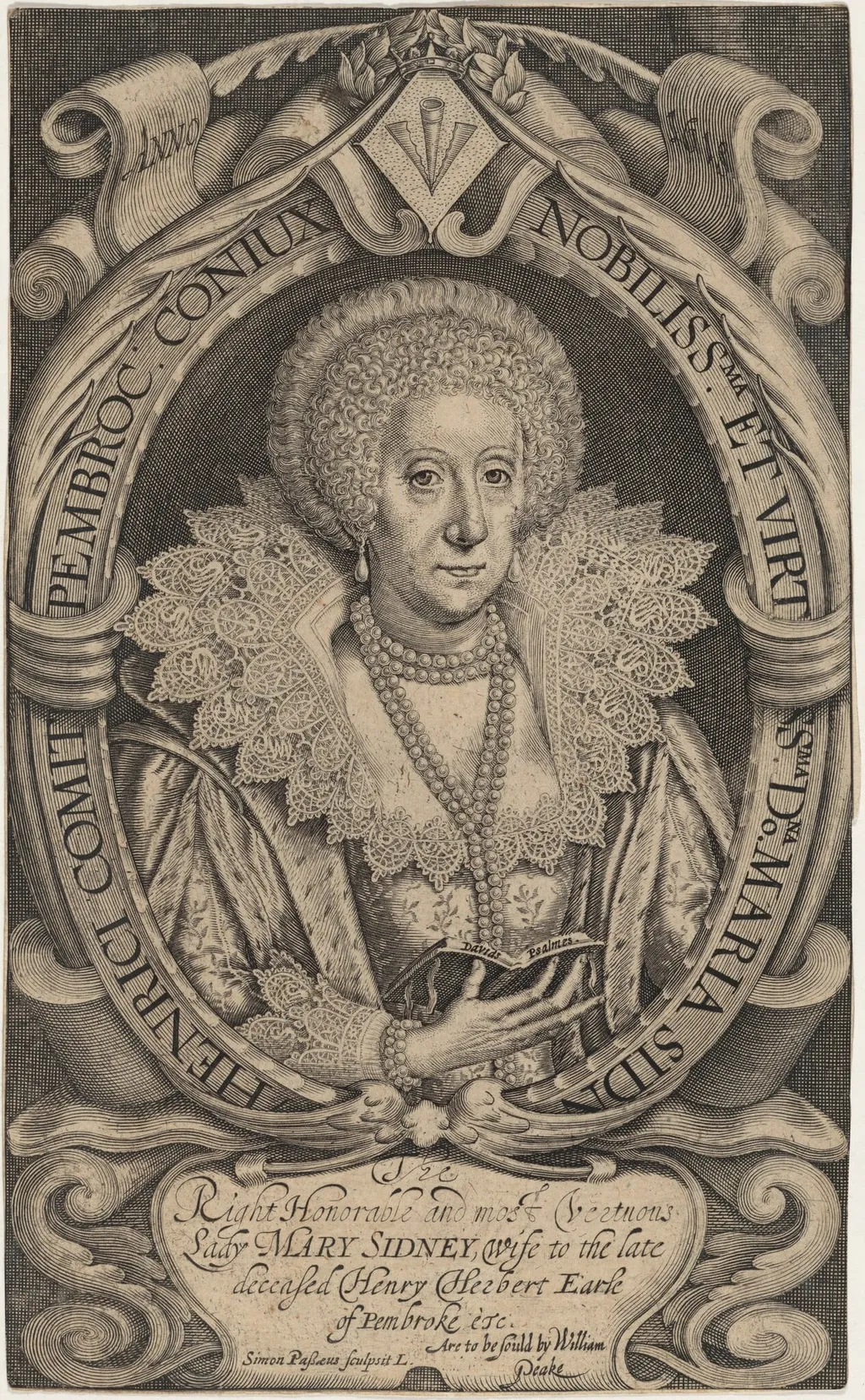
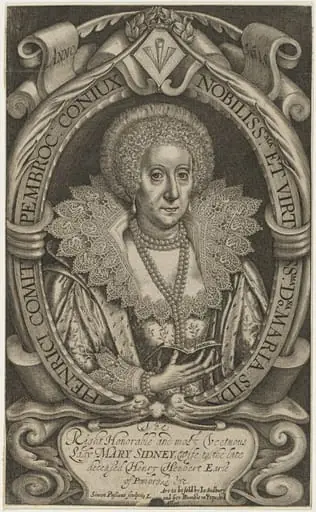
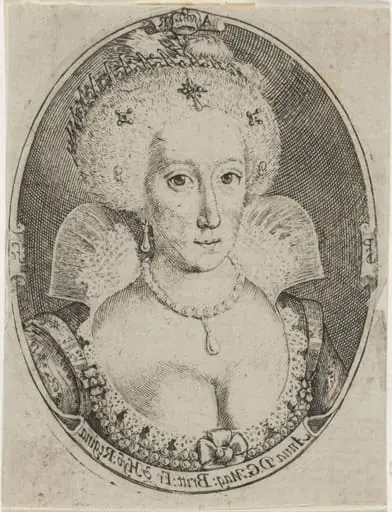
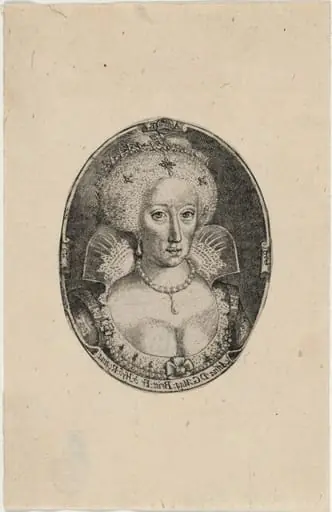
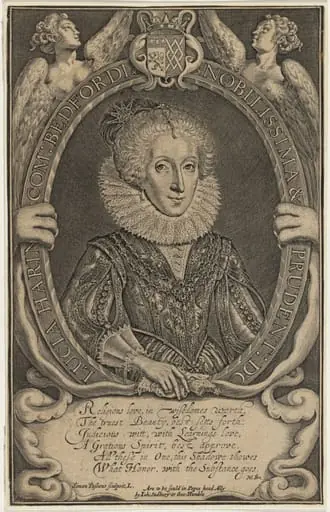
Mary Sidney, Countess of Pembroke is an ink print by the Baroque artist Simon van de Passe. It dates from 1618 and is held in the collection of the National Gallery of Art.
About this work
Overview
The technique relies on fine, intersecting lines to model form and texture, typical of early 17th-century printmaking.
This 1618 engraving by Simon van de Passe depicts Mary Sidney, Countess of Pembroke, in formal attire. Rendered in monochrome, the portrait emphasizes her status through detailed clothing and inscribed honorifics. The technique relies on fine, intersecting lines to model form and texture, typical of early 17th-century printmaking. It was produced as a reproductive image, likely for distribution among elite circles.
Subject & Meaning
Mary Sidney is portrayed with regal composure, her identity affirmed by Latin inscriptions labeling her as 'Nobilissima Femina' and 'Comitissa Pembrocensis.' The elaborate jewelry and lace reflect her aristocratic position, while the restrained expression conveys dignity rather than emotion. The image functions as a visual testament to her social standing and intellectual reputation, aligning her with classical ideals of noble womanhood.
Technique & Style
Van de Passe employed cross-hatching to achieve tonal variation and three-dimensionality in fabric, hair, and facial features. The precision of fine, parallel lines creates texture in her ruffled cuffs and layered necklaces, while the background scrolls frame the portrait with ornamental flourish. The style reflects Northern European engraving traditions, prioritizing clarity and detail over expressive brushwork, suited to the medium’s reproductive purpose.
History & Provenance
Created in 1618, the engraving was made during the later years of Mary Sidney’s life, possibly to commemorate her cultural influence. Simon van de Passe, a Dutch artist known for portrait prints, produced it in the Netherlands. It was likely circulated among patrons and scholars, serving as a portable token of her legacy. No early ownership records are widely documented, but its survival suggests continued interest in her figure.
Context
In early 17th-century England, portraiture in print was a tool for shaping public perception of noblewomen, especially those with literary or political influence. Mary Sidney, a noted translator and patron of the arts, was among the few women of her time whose intellectual contributions were publicly acknowledged. This engraving situates her within a tradition of elite female representation, blending personal identity with inherited status.
Legacy
The engraving remains one of the few contemporary visual records of Mary Sidney, preserving her likeness for later generations. It contributes to the historical understanding of how noblewomen were visually codified in print culture. While not widely reproduced today, it continues to be referenced in scholarly studies of early modern women, gender, and the material culture of literary patronage.
Artist & collection