Artwork
Sir Francis Bacon
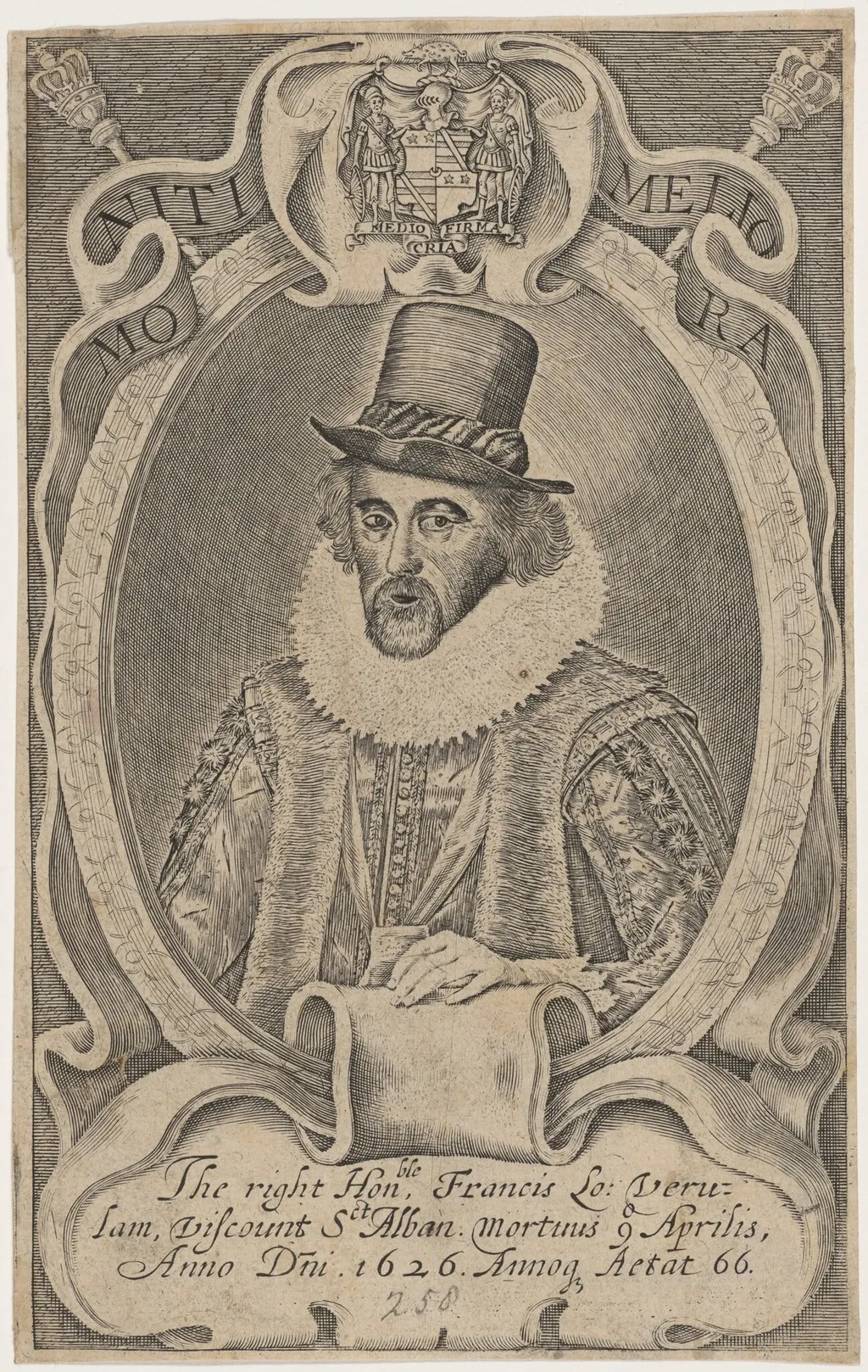
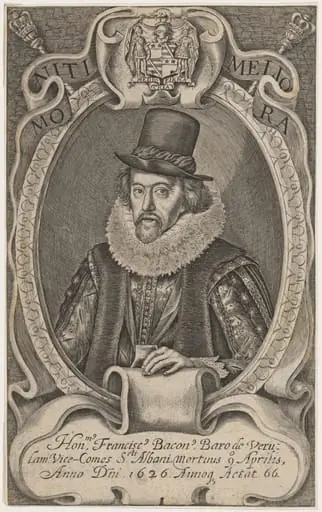
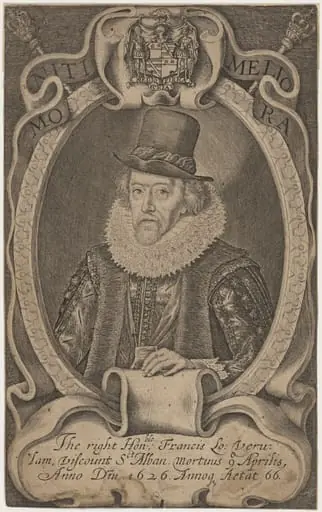
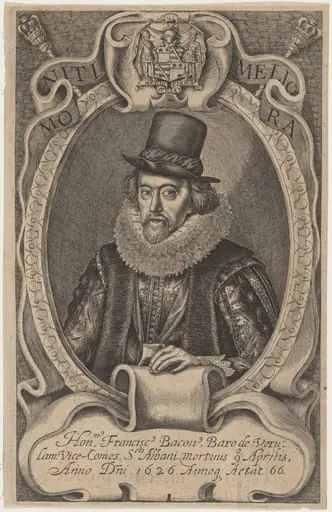
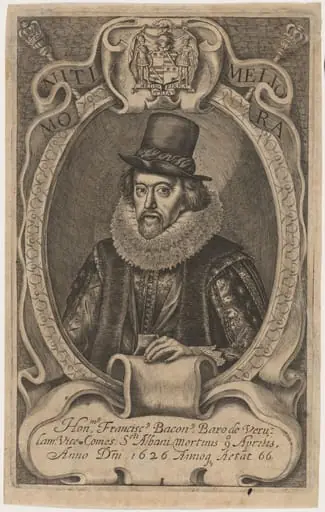
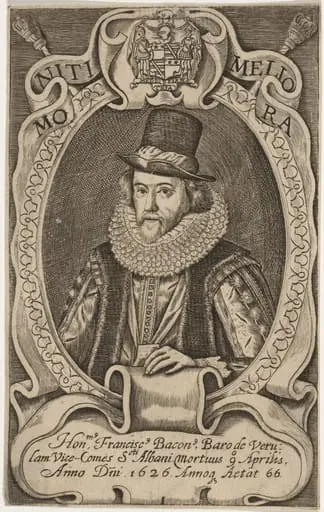
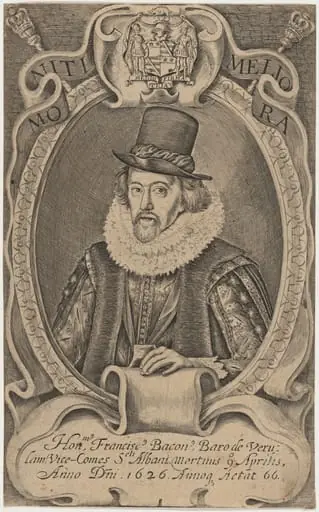
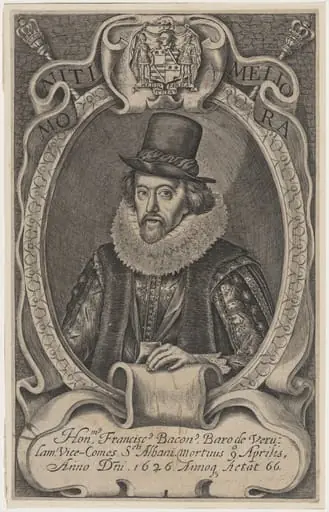
Sir Francis Bacon is an ink print by the Renaissance artist Simon van de Passe. It dates from 1621 and is held in the collection of the National Gallery of Art.
About this work
The artist used fine lines to create shadows and texture, which makes the portrait look detailed even though it’s just ink on paper.
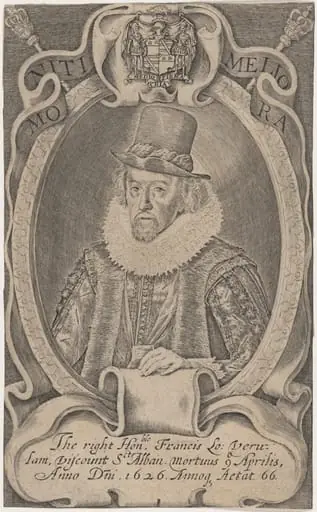
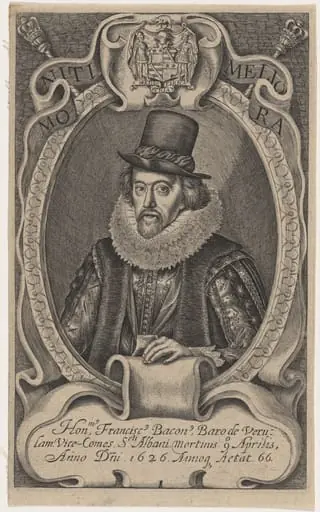
This is a black-and-white portrait of a serious-looking man with a thick beard and a wide-brimmed hat. He’s wearing a fur collar and holding a book or paper in his hands. Above his head is a coat of arms with a shield and two small figures standing on it. The edges of the picture are decorated with swirling lines and tiny details.
The text at the bottom names the man as "Sir Francis Bacon" and says he died in 1626 at age 66. The artist used fine lines to create shadows and texture, which makes the portrait look detailed even though it’s just ink on paper.
If you like this style, look up engraving to see how artists create images with just lines and shading.
Overview
This black-and-white print, created in 1621 by Simon van de Passe, depicts Sir Francis Bacon as a scholarly figure. Executed in engraving, the portrait captures Bacon in formal attire with a fur collar and wide-brimmed hat, holding a written document. The composition includes heraldic elements above his head and ornamental borders framing the image. Inscriptions identify the subject and note his death in 1626 at age sixty-six, anchoring the portrait in historical record.
Subject & Meaning
The portrait presents Bacon not as a nobleman in ceremonial dress, but as a thinker engaged with knowledge. His grip on a book or document suggests intellectual labor, aligning with his public identity as a philosopher and statesman. The inclusion of a coat of arms reinforces his status and lineage, while the solemn expression and restrained posture convey dignity and gravitas, reflecting the values of early modern English intellectual life.
Technique & Style
Van de Passe employed fine, precise lines to model form and texture, using cross-hatching and delicate stippling to render the fur collar, facial hair, and fabric folds. The absence of color emphasizes tonal gradation, relying entirely on ink density to suggest depth. The decorative border, filled with swirling motifs and minute details, reflects the Mannerist tradition of ornamental framing common in engraved portraiture of the period.
History & Provenance
Created in 1621, the engraving was made during Bacon’s lifetime, likely to accompany published works or circulate among his contemporaries. Simon van de Passe, a Dutch engraver active in England, was known for producing portraits of prominent figures. The print’s survival in multiple institutional collections suggests it was widely reproduced and valued as a reliable likeness, possibly used in posthumous biographical accounts after Bacon’s death in 1626.
Context
In early 17th-century England, engraved portraits served as tools of legacy and authority, especially for figures who shaped political and scientific thought. Bacon’s role as Lord Chancellor and philosopher made him a natural subject for such imagery. The inclusion of heraldry and scholarly props aligns with conventions used to legitimize intellectual authority, mirroring similar portraits of humanist scholars across Europe at the time.
Legacy
This engraving became one of the most enduring visual representations of Bacon, referenced in later biographies and academic publications. Its precise line work and formal composition influenced subsequent portrait prints of intellectuals. Though not the only likeness of Bacon, its clarity and symbolic elements ensured its longevity as a standard image in the visual record of early modern science and philosophy.
Artist & collection