Artwork
Sir Francis Bacon
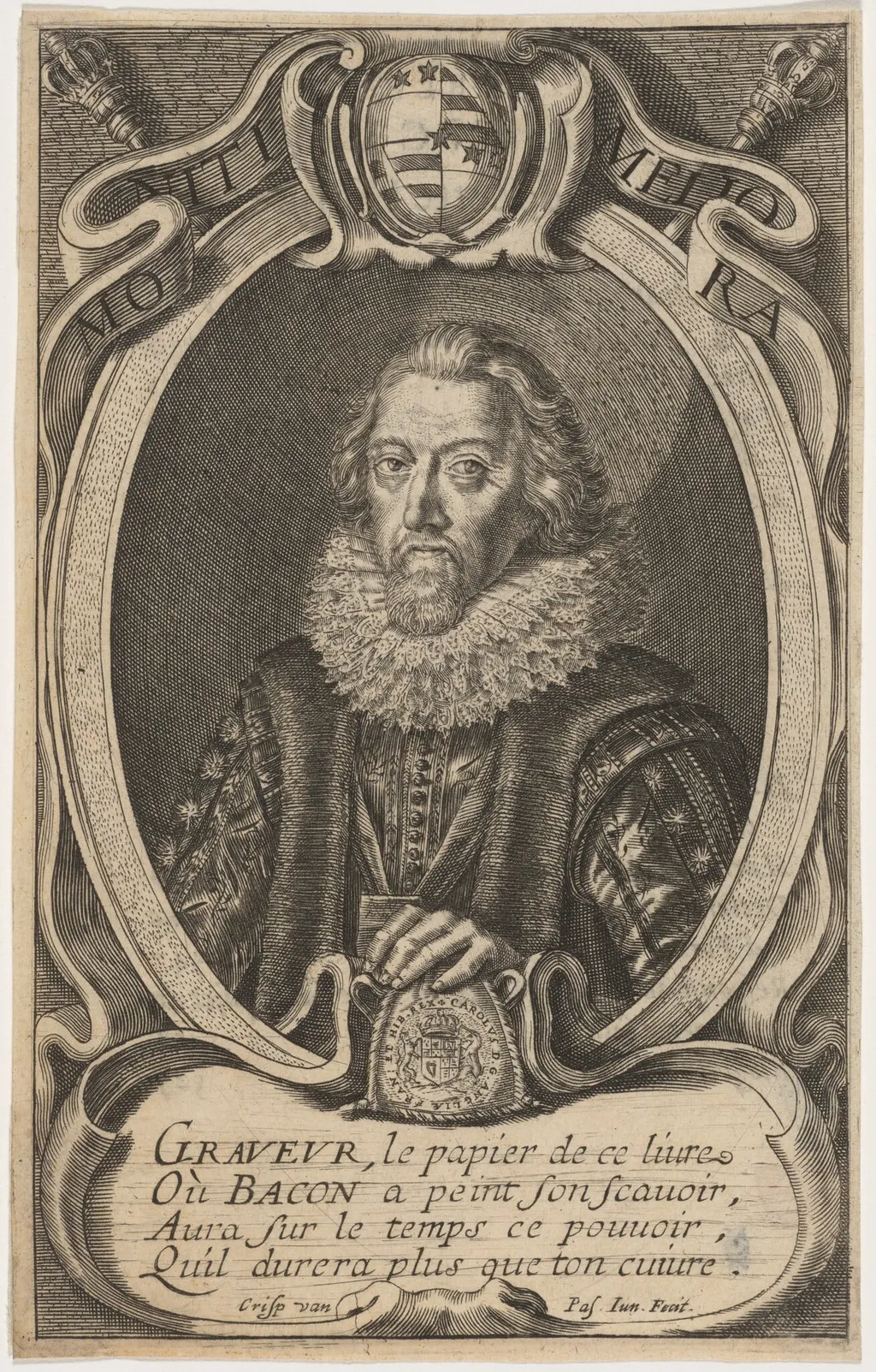
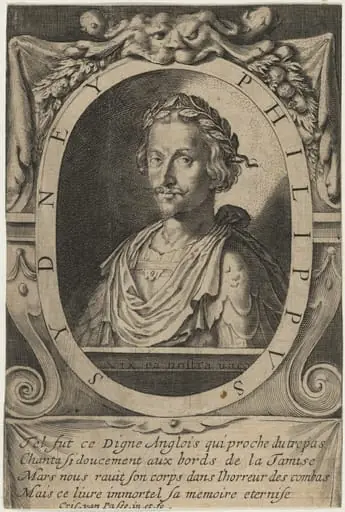
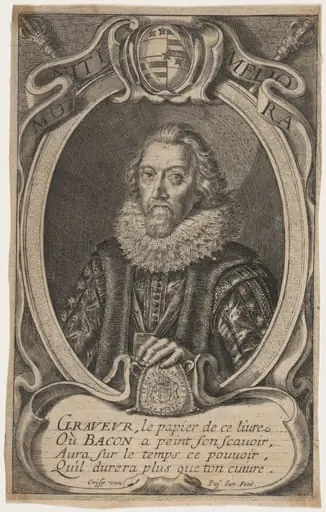
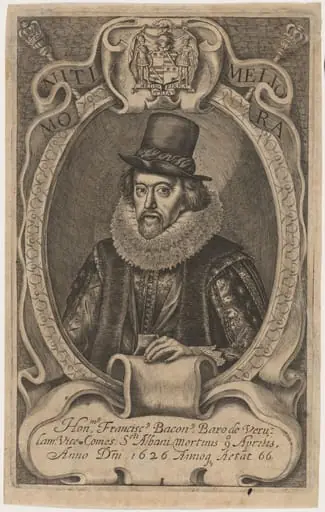
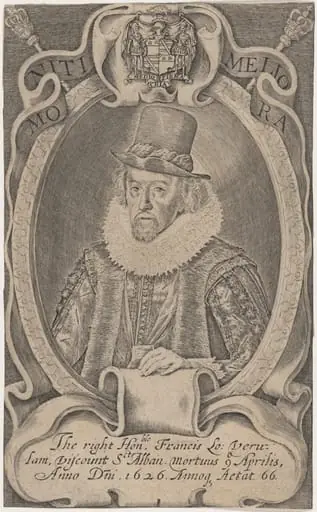
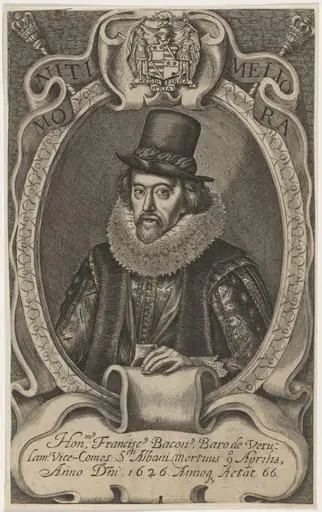
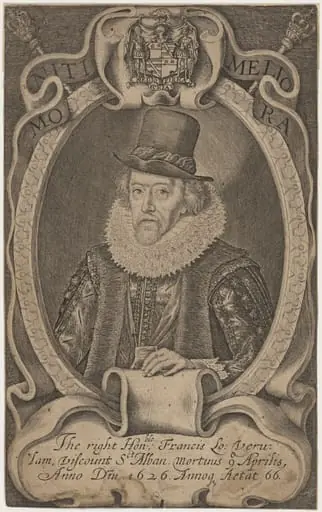
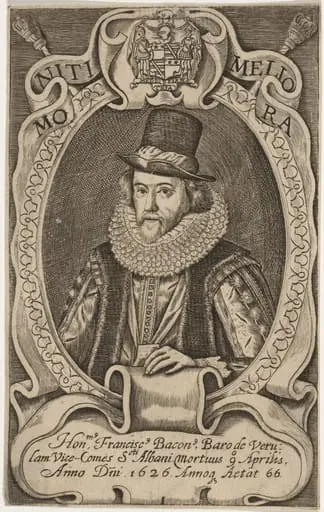
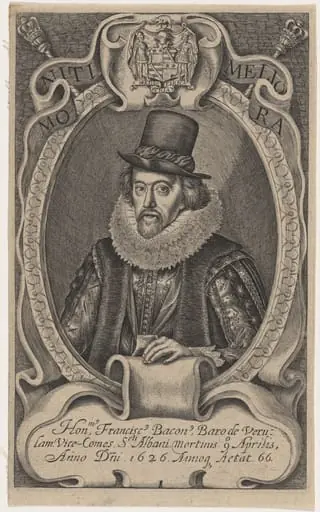
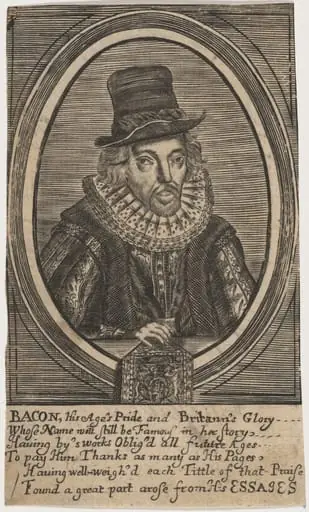
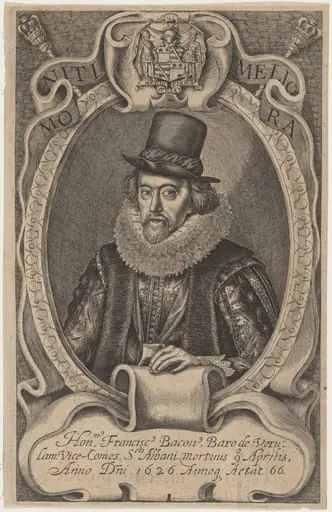
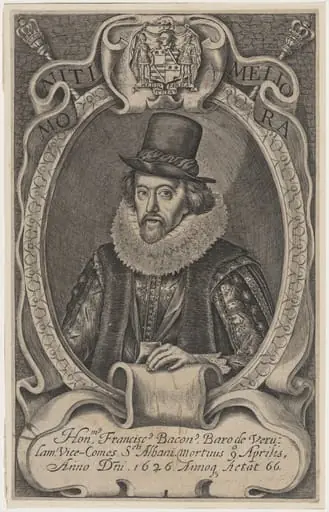
Sir Francis Bacon is an ink print by the Renaissance artist Crispijn van de Passe II. It dates from 1634 and is held in the collection of the National Gallery of Art.
About this work
Overview
The technique relies on precise cross-hatching to model volume and texture, characteristic of early 17th-century Northern European printmaking.
An engraving from 1634 by Crispijn van de Passe II depicts Sir Francis Bacon, the English philosopher and statesman. Rendered in fine linear detail, the portrait presents Bacon in formal attire against a muted background. The technique relies on precise cross-hatching to model volume and texture, characteristic of early 17th-century Northern European printmaking. The image serves as a commemorative likeness, intended for dissemination among scholarly and elite circles.
Subject & Meaning
Bacon is portrayed with a solemn expression, his long hair and beard reflecting contemporary scholarly ideals. He holds a small circular object, likely a medal or seal, symbolizing his intellectual authority and official status. The dignified posture and restrained demeanor align with the era’s conception of the learned man—rational, composed, and elevated by knowledge. The portrait does not emphasize wealth but rather the gravitas of his intellectual legacy.
Technique & Style
The engraving employs fine, controlled lines and layered cross-hatching to achieve tonal gradation and three-dimensionality. Van de Passe’s meticulous handling of texture is evident in the lace collar, fabric folds, and the subtle rendering of facial features. The dark background isolates the figure, focusing attention on his form and expression. This method reflects the precision valued in Dutch and Flemish printmaking traditions of the period.
History & Provenance
Created in 1634, the engraving was produced during Bacon’s posthumous rise in influence, nearly two decades after his death. Van de Passe, known for his portraits of notable figures, likely worked from an earlier painting or drawing. The print was circulated among European intellectuals, contributing to Bacon’s visual identity in scholarly circles. Its survival in multiple institutional collections attests to its enduring relevance as a historical document.
Context
In the early 1600s, engraved portraits functioned as both personal memorials and tools for disseminating reputations across borders. Bacon, though a controversial political figure, was increasingly revered for his contributions to empirical philosophy. Van de Passe’s image aligns with a broader trend of portraying thinkers as solemn, authoritative figures—bridging the humanist tradition with the emerging scientific ethos of the age.
Legacy
The engraving remains one of the most widely reproduced images of Bacon, shaping his visual representation for centuries. Its clarity and restraint influenced later portraiture of philosophers and scientists. Though not an original likeness, it became the standard iconographic reference, embedded in textbooks and scholarly publications, anchoring Bacon’s public image in the collective memory of Western intellectual history.
Artist & collection