Artwork
James I, King of England
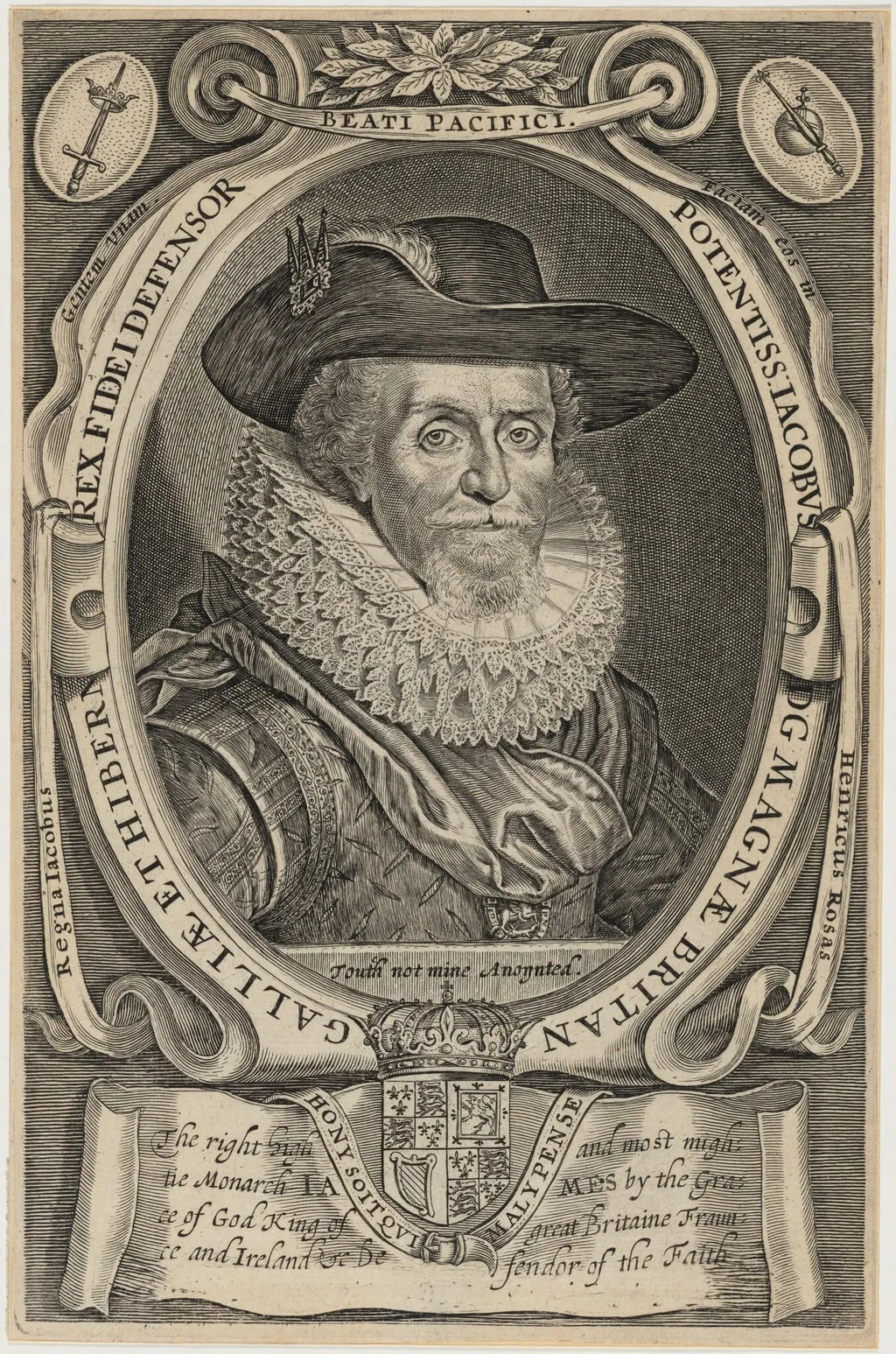
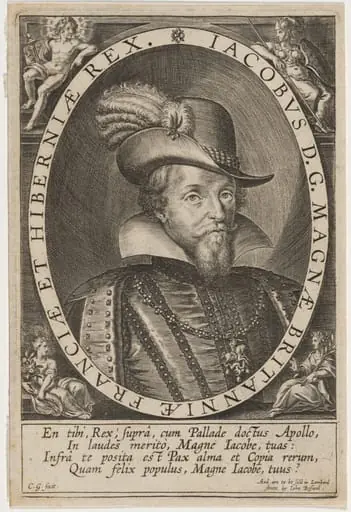
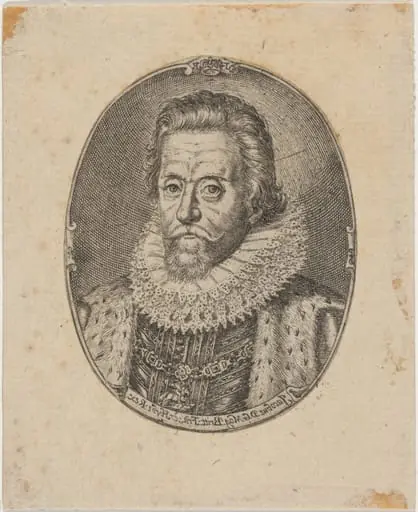
James I, King of England is an ink print by the Baroque artist Willem de Passe. It is held in the collection of the National Gallery of Art.
About this work
Overview
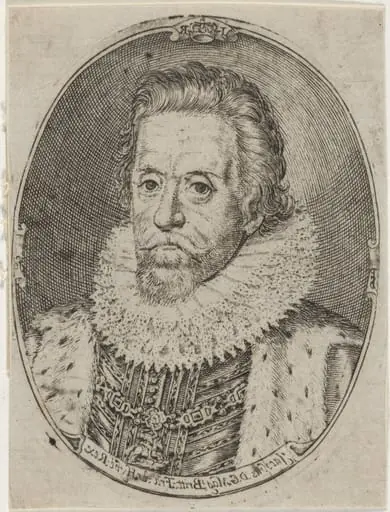
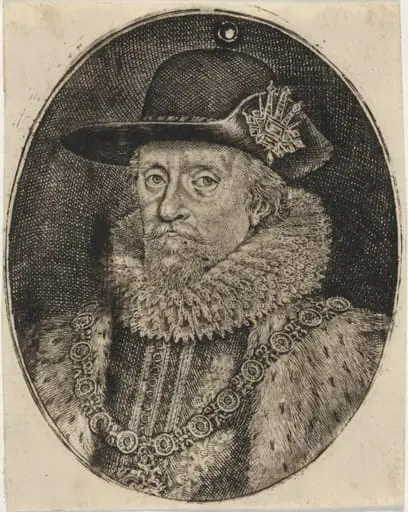
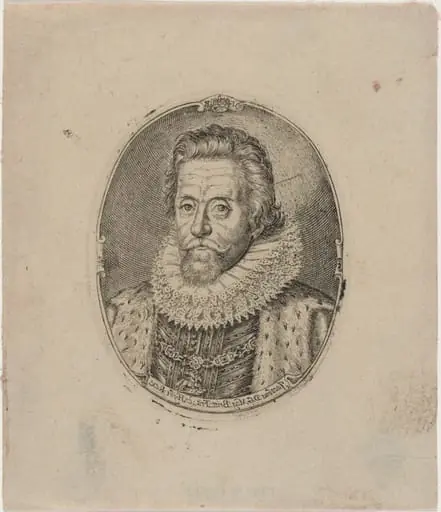
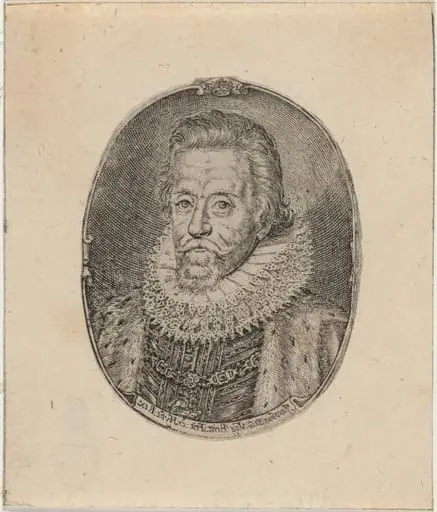
This 1653 engraving by Willem de Passe depicts James I of England, produced decades after his death.
This 1653 engraving by Willem de Passe depicts James I of England, produced decades after his death. Executed in fine linear detail, the portrait follows the conventions of early modern royal imagery, emphasizing authority through formal dress and composed demeanor. The work belongs to the print tradition used to disseminate monarchic likenesses across Europe, relying on meticulous engraving techniques to capture texture and presence.
Subject & Meaning
James I is portrayed in full regalia, wearing a wide-brimmed hat, a high lace collar, and a dark, patterned jacket with visible fastenings. His direct gaze and still posture convey solemn dignity, aligning with the expected iconography of sovereign power. Surrounding inscriptions and heraldic symbols reinforce his royal status, though their legibility is diminished over time. The image functions as a static, authoritative representation rather than a personal likeness.
Technique & Style
The portrait is rendered in fine-line engraving, a method requiring precise incisions on a metal plate to produce detailed tonal gradations. De Passe employs dense cross-hatching to suggest fabric texture and shadow, characteristic of Northern European printmaking traditions. The dark background isolates the figure, heightening focus on the intricate lace and embroidery, reflecting the Baroque era’s emphasis on ornate detail and controlled drama.
History & Provenance
Created in 1653, the engraving was made long after James I’s 1625 death, likely as part of a series of royal portraits commissioned for collectors or institutions. Willem de Passe, a Dutch engraver with ties to English courts, had previously produced similar images during James’s reign. This later version may have served to preserve or reassert monarchical imagery during the turbulent years following the English Civil War.
Context
In mid-17th century Europe, engraved portraits of monarchs circulated widely among elites, functioning as both political statements and collectible objects. De Passe’s work reflects the persistence of Stuart iconography despite the temporary collapse of the monarchy. The style echoes continental practices, where royal authority was visually codified through costume, posture, and symbolic embellishment, even in the absence of living subjects.
Legacy
The engraving remains a documented example of how royal imagery was maintained and reproduced after a monarch’s death. It illustrates the role of printmakers in shaping public perception of power during periods of political instability. Though not widely exhibited today, it contributes to the historical record of how monarchy was visually sustained through print culture in early modern Europe.
Artist & collection

![James I, King of England [top half], by Simon van de Passe](https://artifactworldgallery.com/img/simon-van-de-passe--james-i-king-of-england-top-half--6310c3c902e313b9-w320.webp)
![James I, King of England [top half], by Simon van de Passe](https://artifactworldgallery.com/img/simon-van-de-passe--james-i-king-of-england-top-half--2627f50172001474-w320.webp)