Artwork
Lady Jane Grey
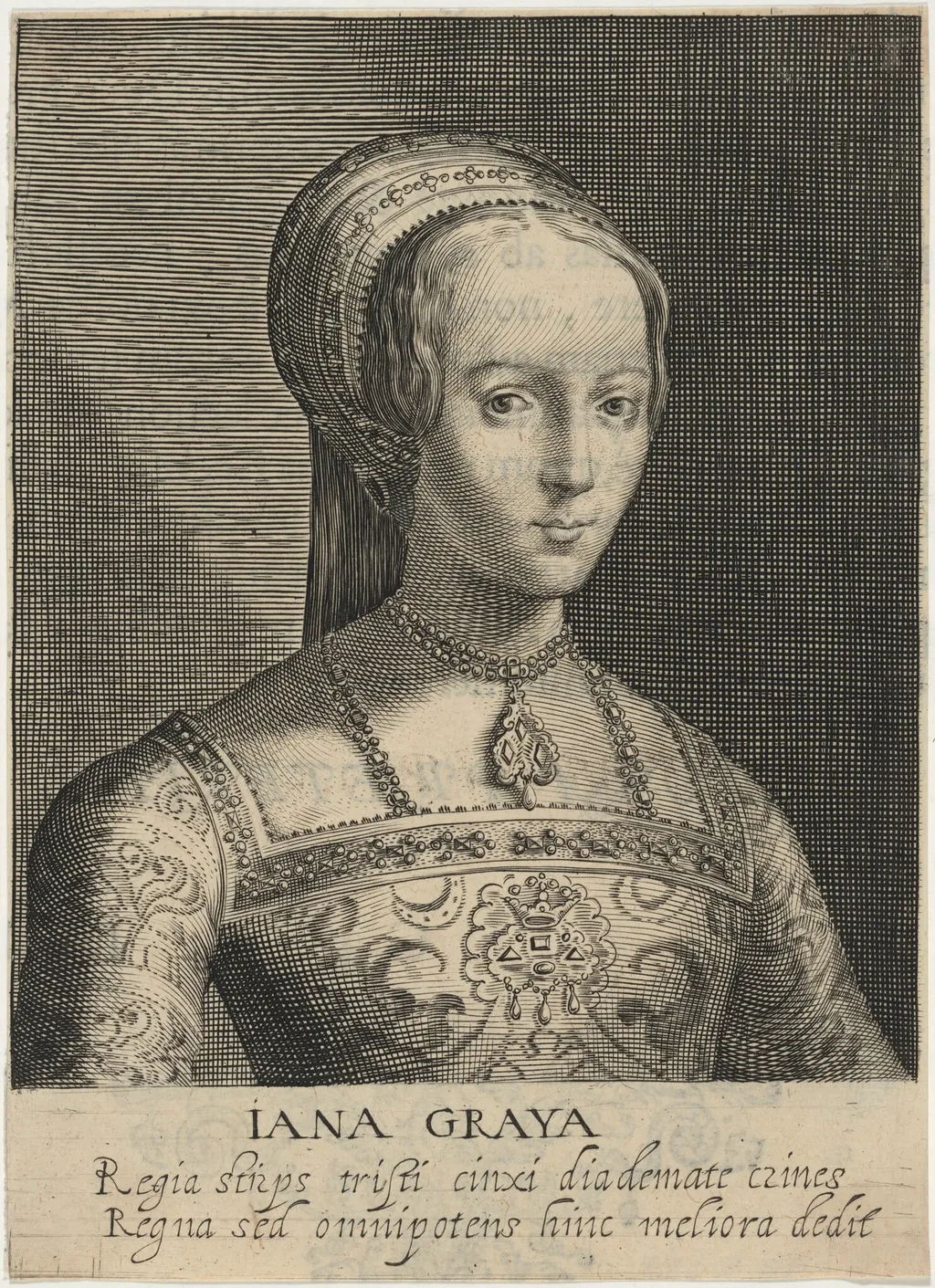
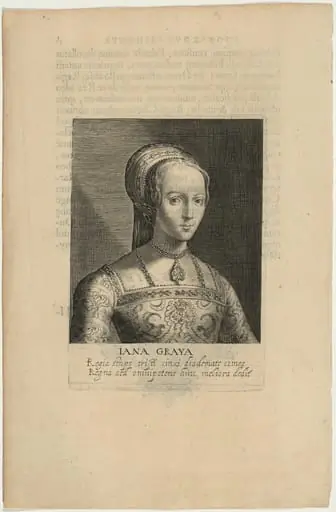
Lady Jane Grey is an ink print by the Baroque artist Willem de Passe. It dates from 1620 and is held in the collection of the National Gallery of Art.
About this work
Next, look up engraving to see how artists create detailed images like this using only lines.
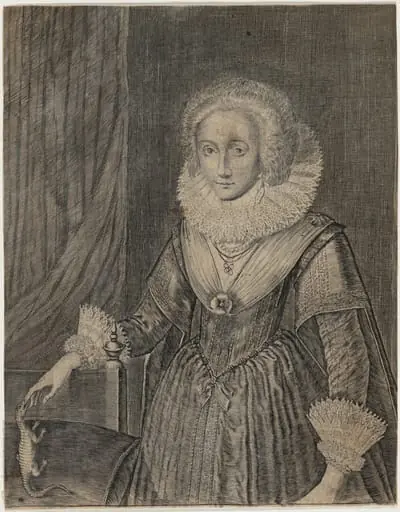
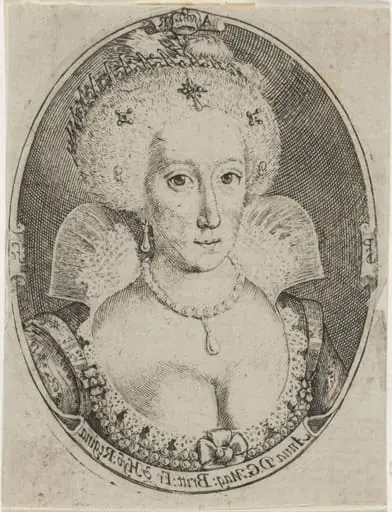
This is a black-and-white portrait of a woman with a serious expression. She wears a high-collared dress with intricate patterns and a necklace of small circles. Her hair is pulled back under a decorative headpiece, and the background is plain.
The name "Iana Graya" is written below her, along with some Latin text. This is actually a portrait of Lady Jane Grey, printed in 1620.
Next, look up engraving to see how artists create detailed images like this using only lines.
Overview
Willem de Passe’s 1620 engraving presents a solemn portrait of Lady Jane Grey. Rendered in stark black and white, the image captures the young noblewoman’s dignified bearing, framed against an unadorned backdrop that focuses attention on her attire and expression.
Subject & Meaning
The sitter, identified by the inscription “Iana Graya,” is the brief‑reigned Queen of England, Lady Jane Grey. Her serious gaze and modest pose reflect the tragic brevity of her political role and the piety often associated with her legacy.
Technique & Style
De Passe employed the intaglio method, incising fine lines into a copper plate to achieve intricate textures. The high‑collared dress is rendered with delicate hatching, while the necklace of small circles and the ornamental headpiece demonstrate the artist’s skill in conveying materiality through line alone.
History & Provenance
Printed in 1620, the engraving circulated shortly after Jane Grey’s execution, serving both as a commemorative image and a means of disseminating her likeness across Europe. Copies of the print were likely distributed among collectors of portraiture and political memorabilia.
Context
The work belongs to a period when portrait prints functioned as portable biographies, offering visual narratives of notable figures. De Passe, a prominent Dutch engraver working in England, contributed to a broader market for such images, which reinforced contemporary notions of authority and virtue.
Artist & collection