Artwork
Aurora's Tryst with Time Interrupted
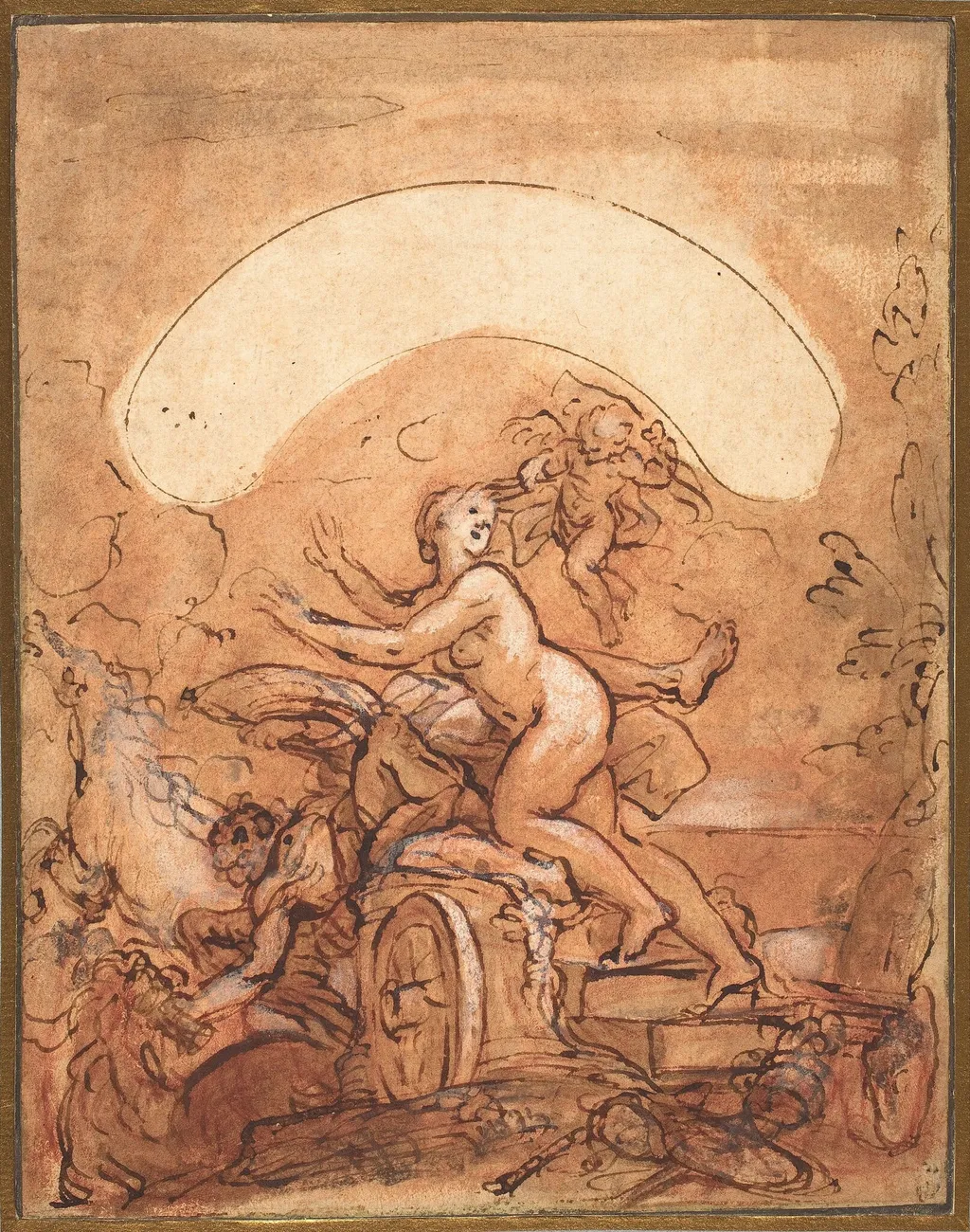
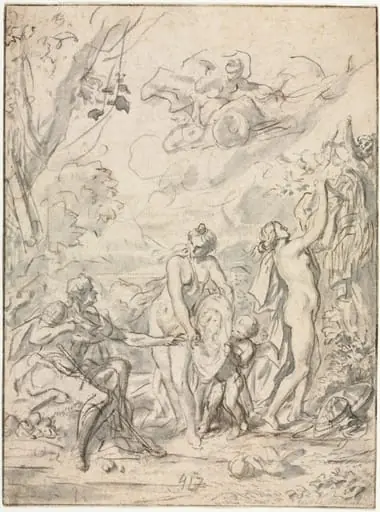
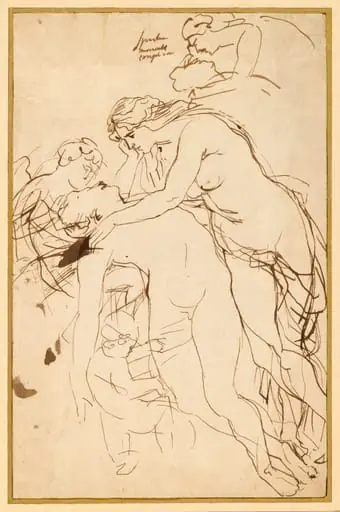
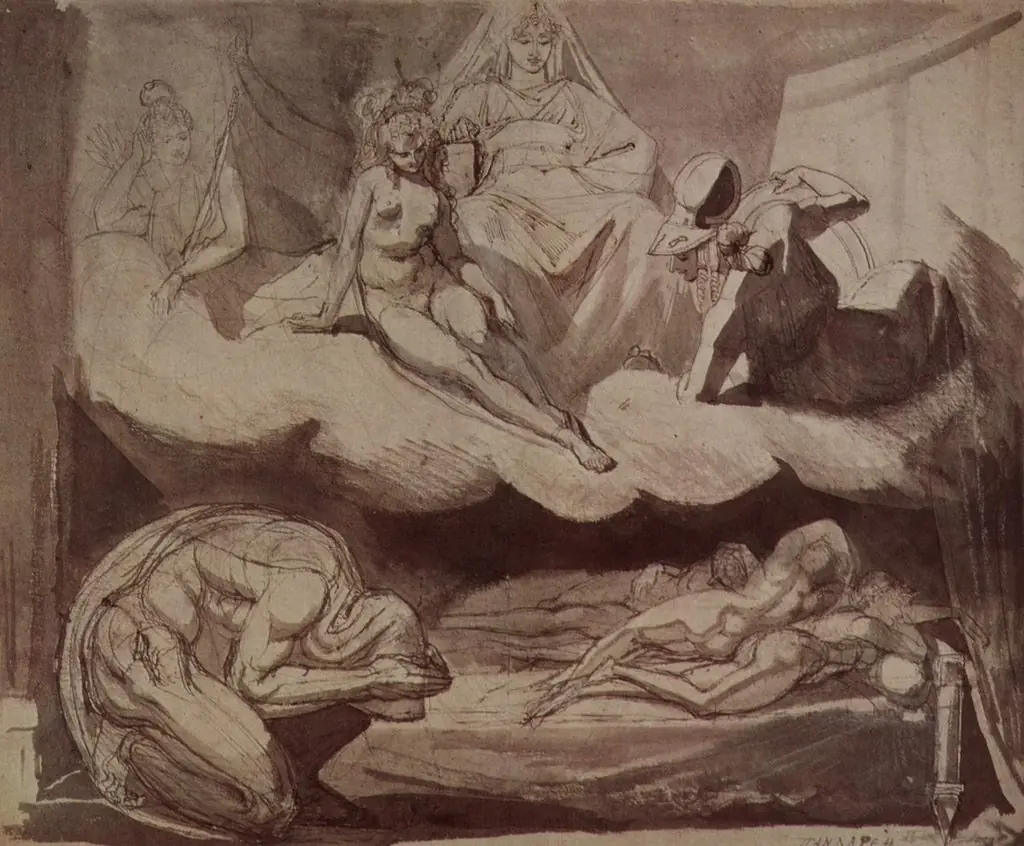
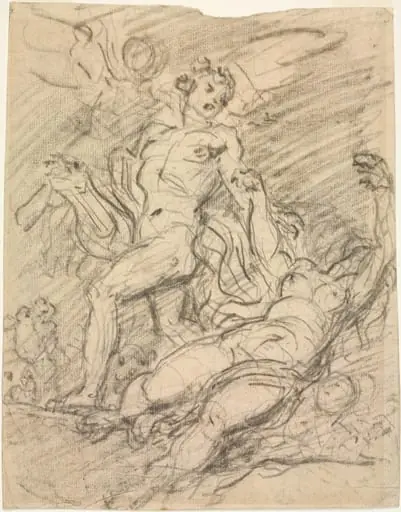
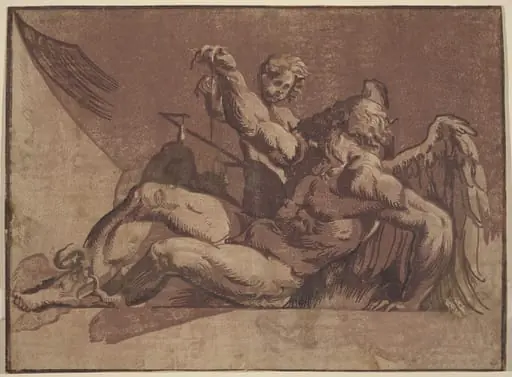
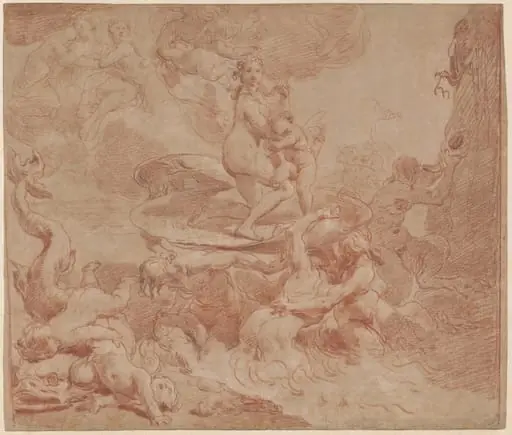
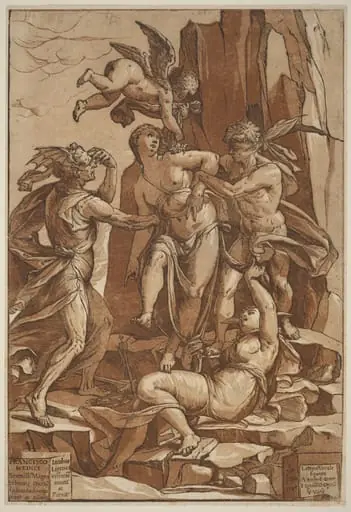
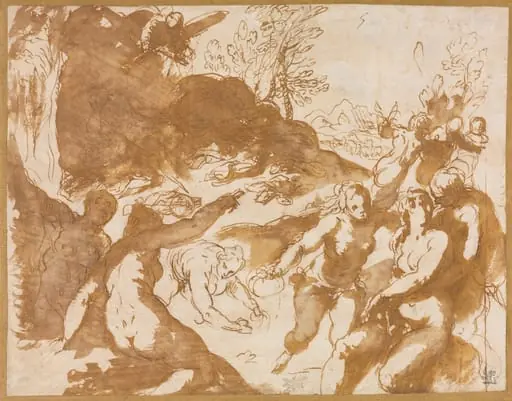
Aurora's Tryst with Time Interrupted is an ink drawing by the Baroque artist Giuseppe Passeri. It dates from 1700 and is held in the collection of the National Gallery of Art.
About this work
Overview
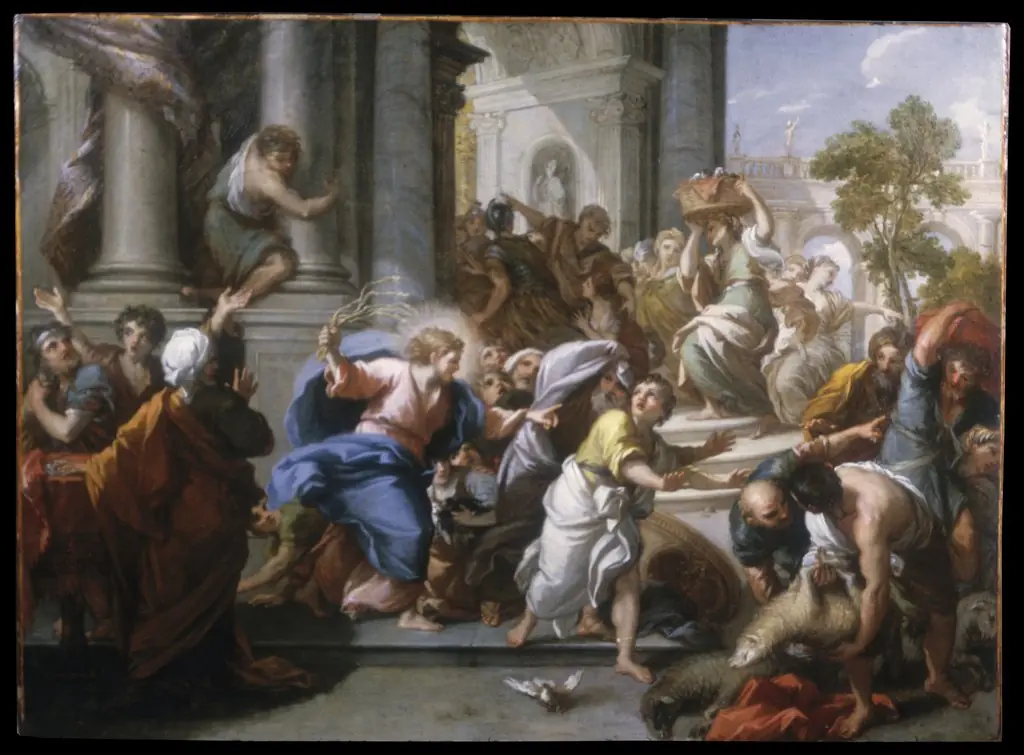
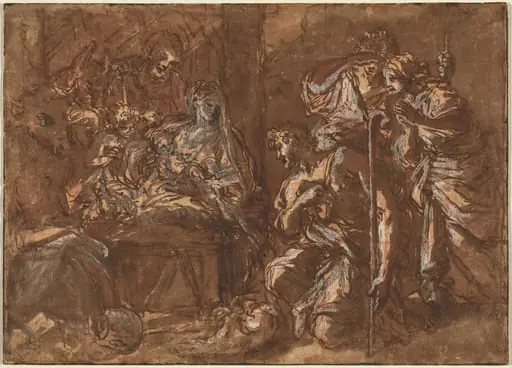
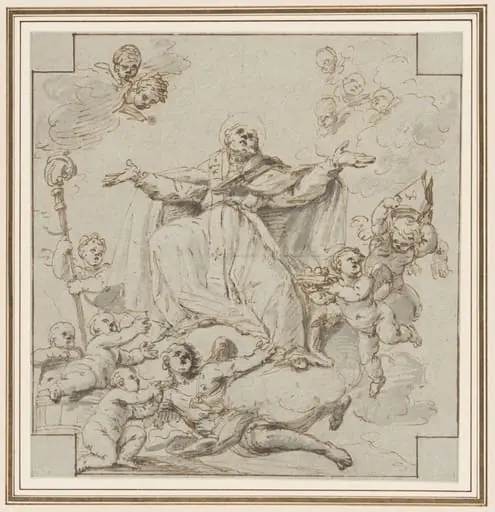
Created circa 1700 by Giuseppe Passeri, this drawing combines pen and brown ink with washes of brown and red, accented by red and black chalk and touches of white gouache on laid paper. Though primarily known for religious frescoes in Roman churches, Passeri turned here to mythological subject matter, demonstrating his versatility in draftsmanship and his engagement with classical themes prevalent in early 18th-century Rome.
Subject & Meaning
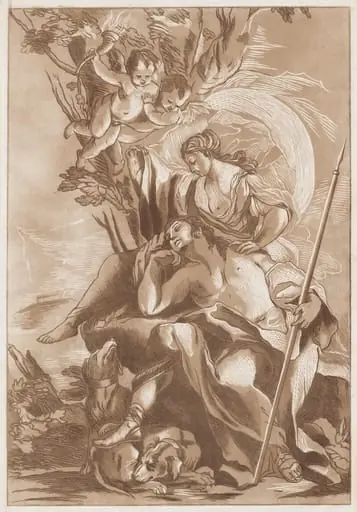
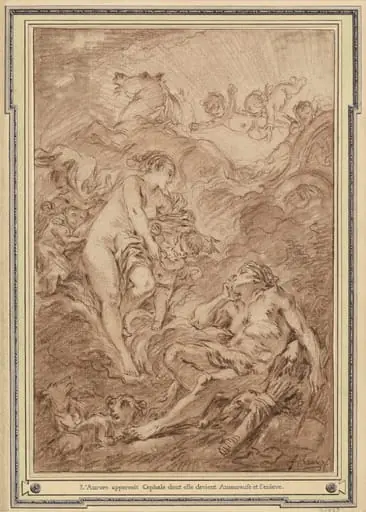
The scene depicts Aurora, the Roman goddess of dawn, engaged in a momentary encounter with Time, personified as a figure halting her passage.
The scene depicts Aurora, the Roman goddess of dawn, engaged in a momentary encounter with Time, personified as a figure halting her passage. The interruption suggests a pause in the natural order, evoking themes of transience and celestial order. Unlike Passeri’s ecclesiastical works, this piece draws from Ovidian myth, reflecting a broader intellectual interest in allegory among Roman artists of the period.
Technique & Style
Passeri employed a layered approach: ink lines define form, washes establish tone, and chalk adds texture and depth. White gouache highlights key areas—faces, drapery, and celestial elements—enhancing luminosity. The technique mirrors Roman academic traditions, where drawings served as preparatory studies or autonomous works, valued for their expressive precision and material richness.
History & Provenance
The drawing’s early ownership is undocumented, but its materials and style align with Roman studio practices of the time. It likely originated as an independent study or presentation piece, not a sketch for a larger commission. No record of its presence in Passeri’s known patrons’ collections survives, though its survival suggests it was preserved by a collector appreciative of refined draftsmanship.
Context
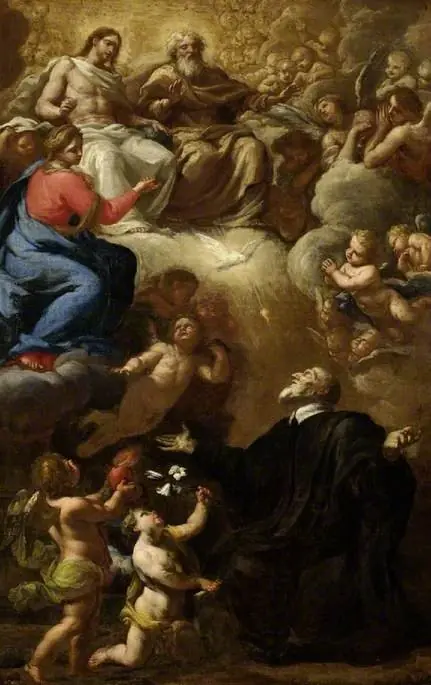
While Passeri was commissioned for altarpieces and frescoes in churches like Santa Caterina a Magnanapoli, this drawing reveals a parallel engagement with secular mythology. Such works were common among Roman artists who balanced religious duties with humanist interests, drawing from antiquity to explore allegory, emotion, and movement outside ecclesiastical constraints.
Legacy
The drawing stands as a rare surviving example of Passeri’s non-religious work, offering insight into his draftsmanship beyond large-scale frescoes. It contributes to understanding how Baroque artists in Rome navigated multiple genres, using intimate media to explore classical narratives with technical finesse, even when their public commissions remained firmly ecclesiastical.
Artist & collection
Artist
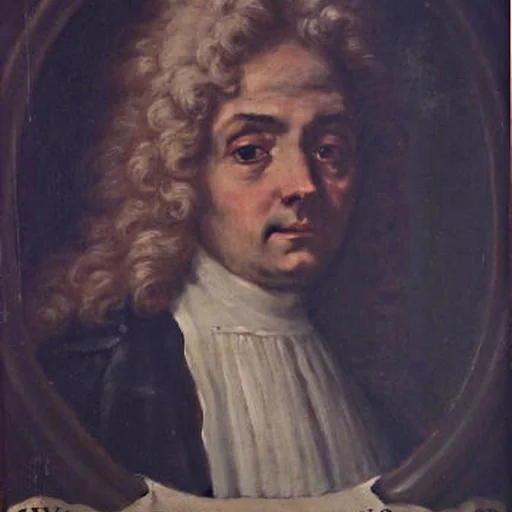
Giuseppe Passeri (12 March 1654 – 2 November 1714) was an Italian painter of the Baroque period, active in his native city of Rome.