Artwork
Le pate d'anguilles
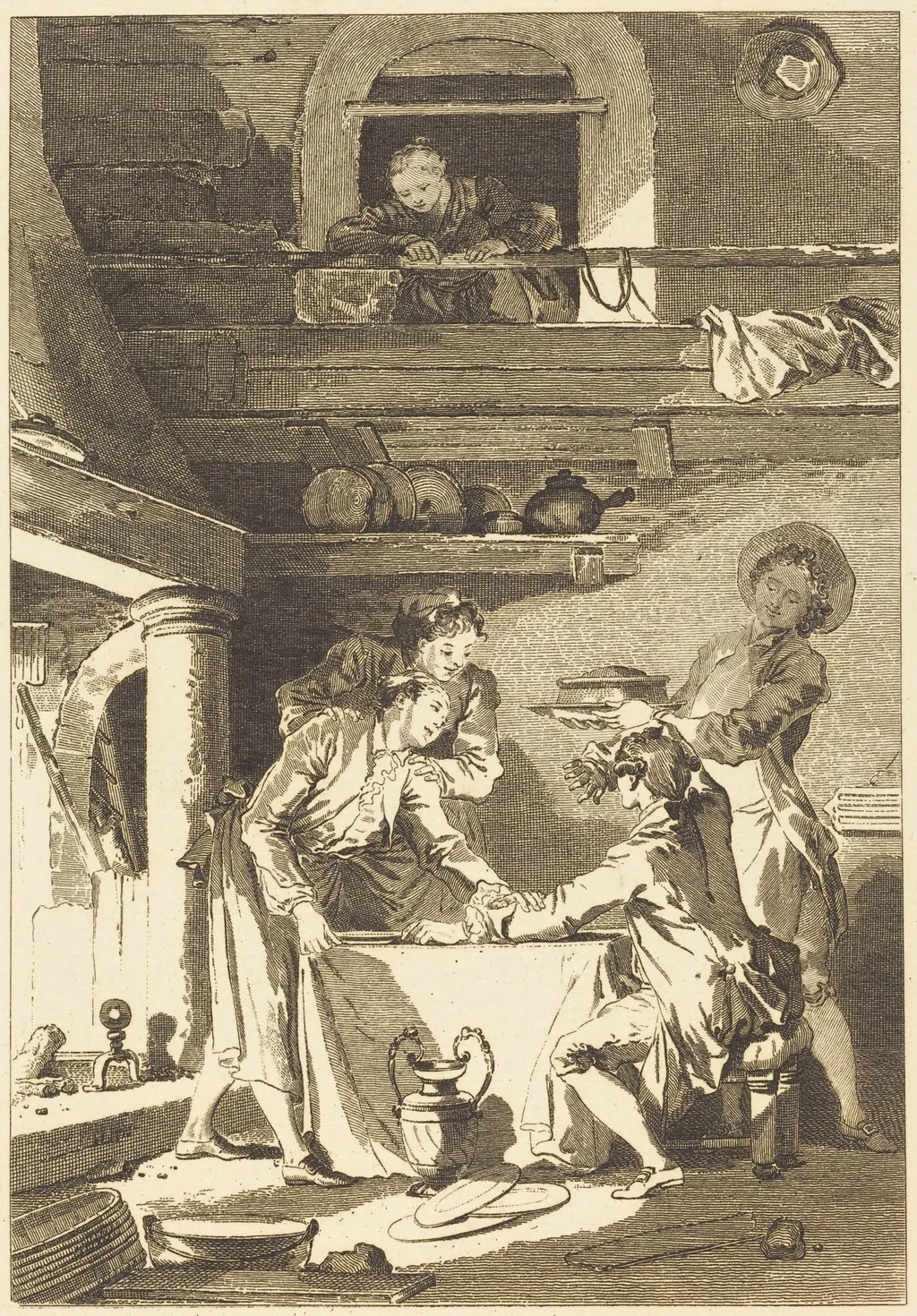
Le pate d'anguilles is an ink print by the Baroque artist Charles Emmanuel Patas. It dates from 1773 and is held in the collection of the National Gallery of Art.
About this work
Overview
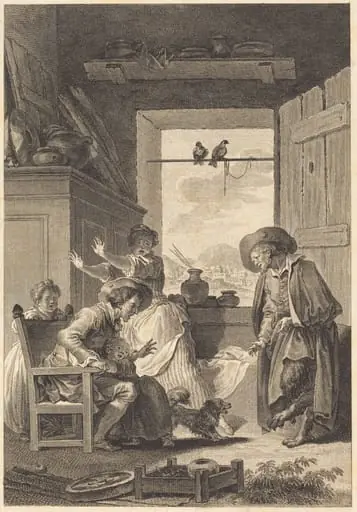
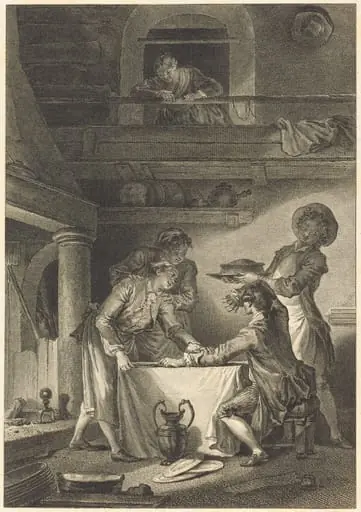
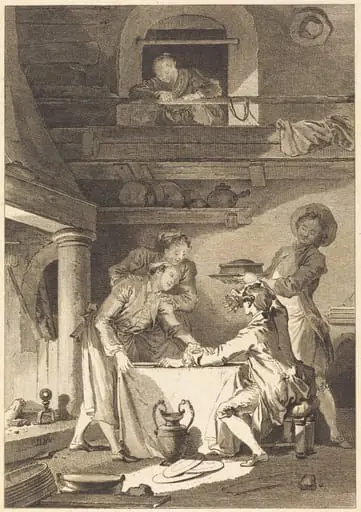
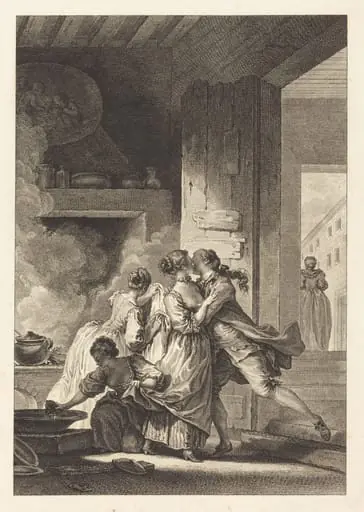
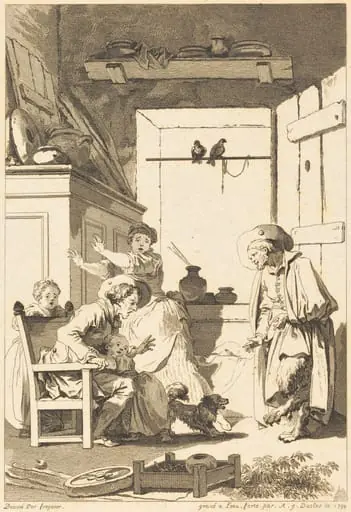
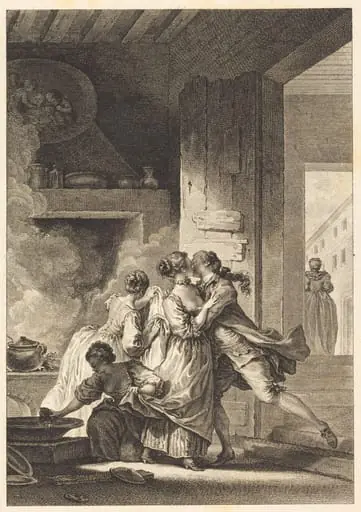
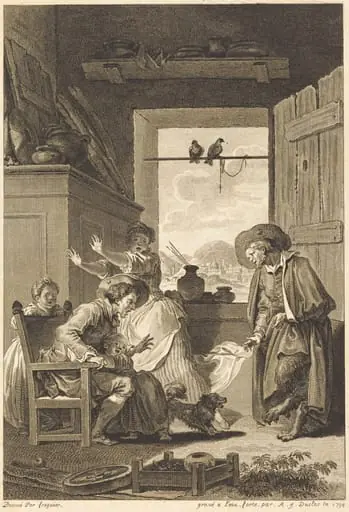
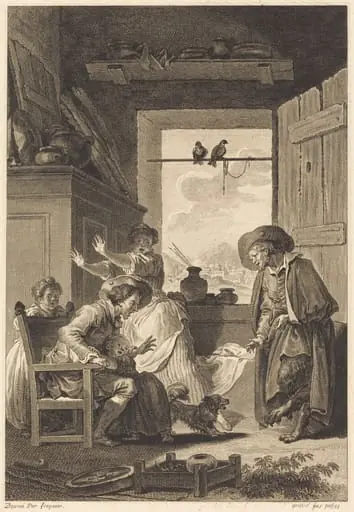
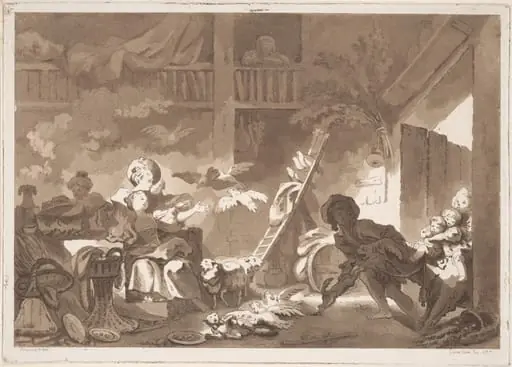
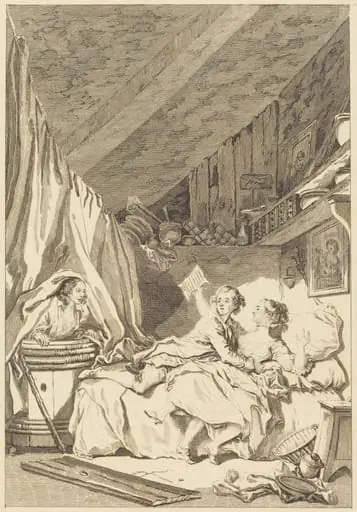
Created in 1773, this etching by Charles Emmanuel Patas depicts a cramped kitchen interior. The composition centers on three figures—a woman, a child seated in a tub, and another child leaning over a counter—amid a cluttered setting of pots, a broom, a cat, and assorted kitchen implements. Dim illumination and pronounced textures give the scene a tactile quality.
Subject & Meaning
The work’s title, *Le pâté d'anguilles*, translates to “eel pie,” suggesting a culinary focus or perhaps a subtle reference to a specific dish prepared in the depicted kitchen. The interaction between the woman and the child, as well as the curious onlooker at the window, may hint at domestic routines and the social dynamics of food preparation in an 18th‑century household.
Technique & Style
Patas employed the traditional etching process, incising fine lines into a metal plate to render delicate details such as the woman’s loose hair, the cat’s fur, and the worn texture of the table surface. The contrast between light and shadow is achieved through varied line density, creating a sense of depth within the cramped space.
History & Provenance
The print originates from the late Enlightenment period, a time when French artists increasingly explored everyday subjects. While specific ownership records are scarce, the piece is catalogued among Patas’s known works from the 1770s, reflecting his interest in genre scenes.
Context
Domestic interiors and kitchen scenes were common motifs in 18th‑century French art, serving both as moral exemplars and as documentation of daily life. Patas’s choice of a kitchen setting aligns with contemporary genre traditions that emphasized realism and the observation of ordinary activities.
Artist & collection