Artwork
Soeur Jeanne
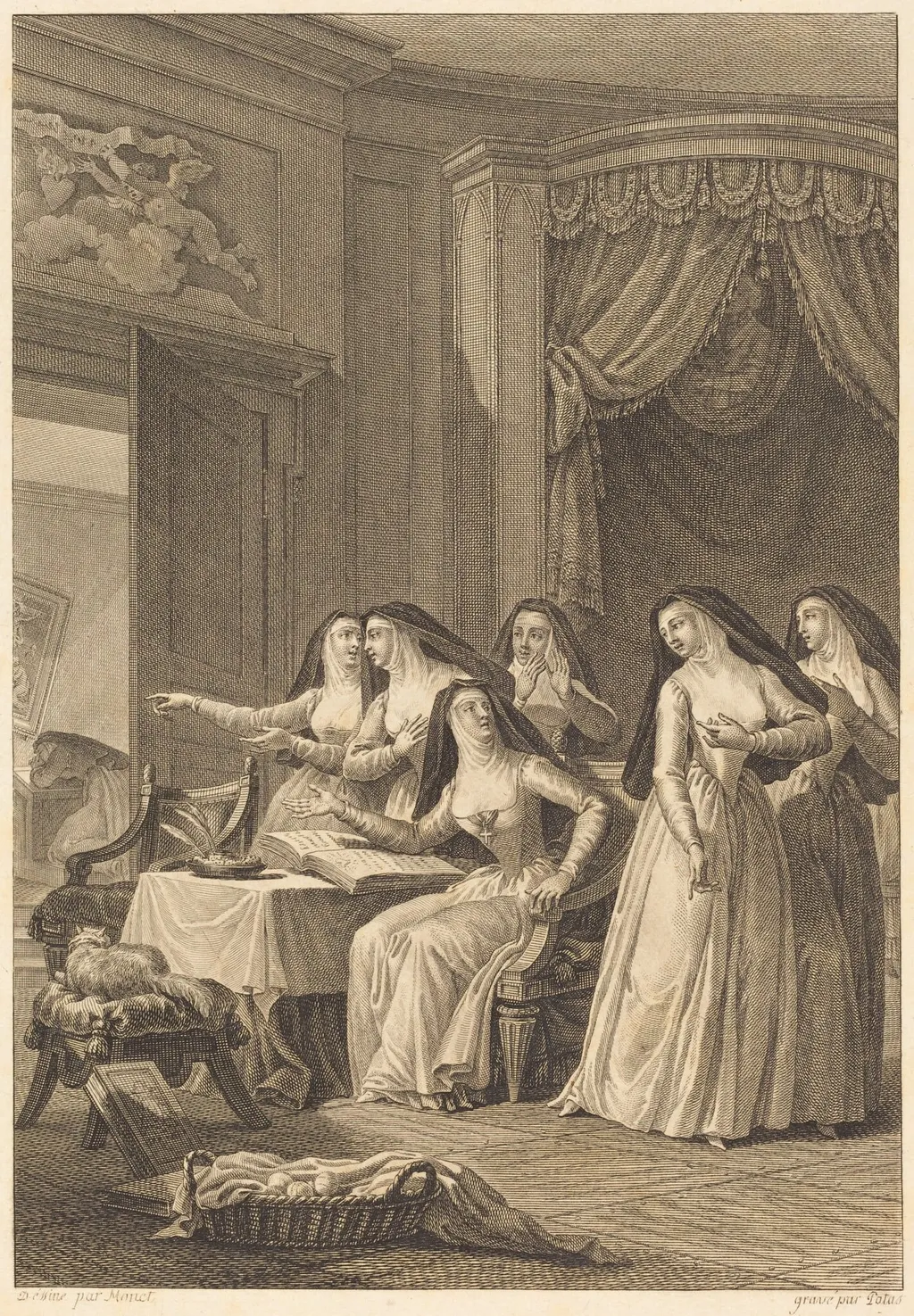
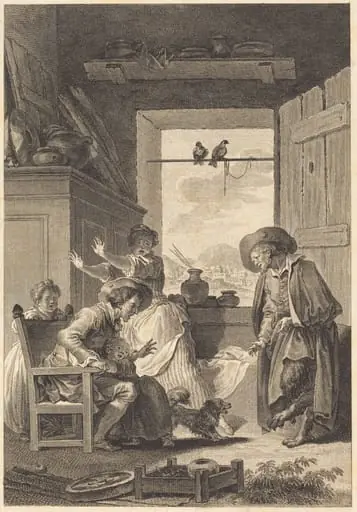
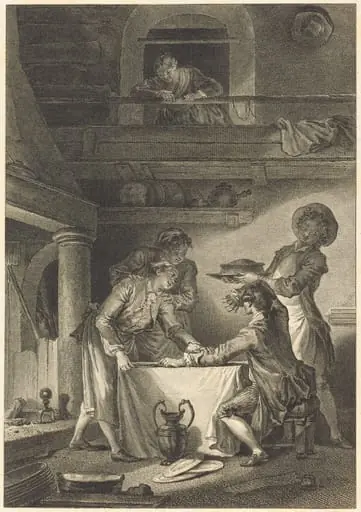
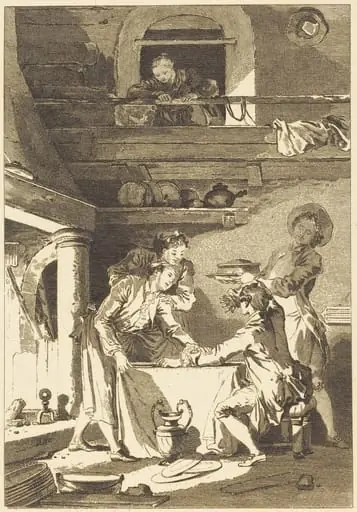
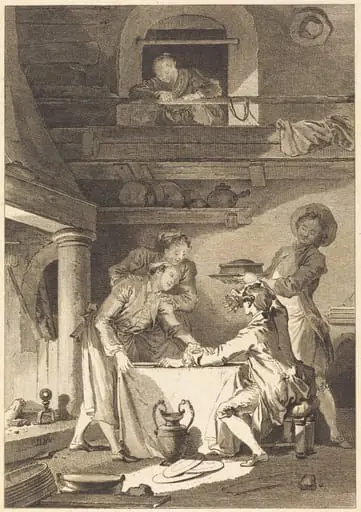
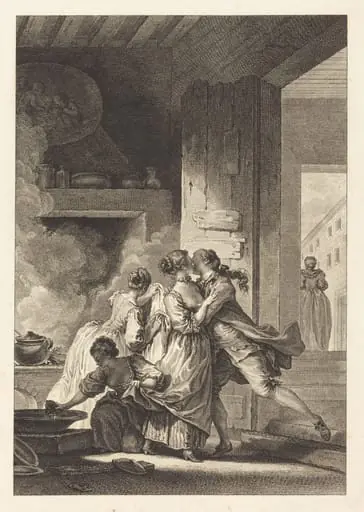
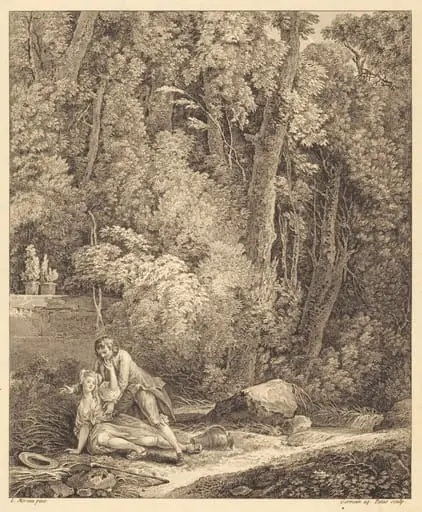
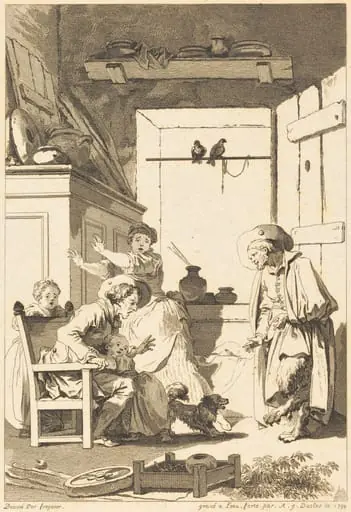
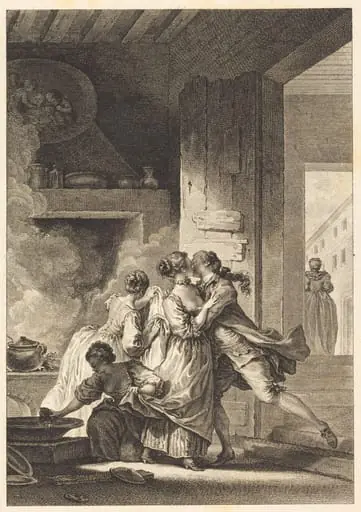
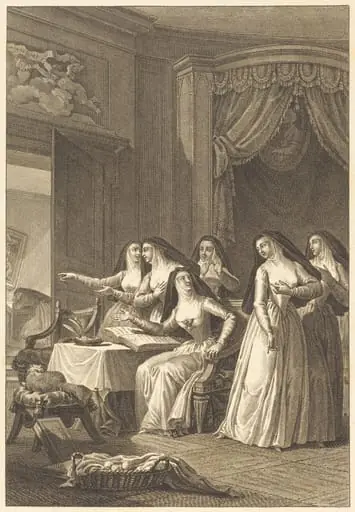
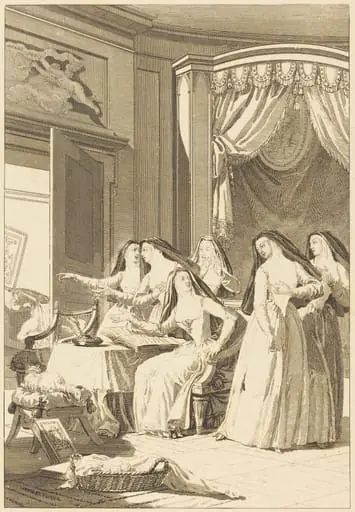
Soeur Jeanne is an ink print by the Baroque artist Charles Emmanuel Patas. It dates from 1773 and is held in the collection of the National Gallery of Art.
About this work
Overview
The composition emphasizes stillness and introspection, with light falling subtly across the figures and a basket of bread as a central element.
Soeur Jeanne is a 1773 print by Charles Emmanuel Patas, executed in etching, drypoint, and aquatint. It depicts a quiet interior scene with five women and a child, gathered around a table in a modest room. The composition emphasizes stillness and introspection, with light falling subtly across the figures and a basket of bread as a central element. The work belongs to the tradition of religiously inflected domestic imagery common in late 18th-century French printmaking.
Subject & Meaning
The scene portrays a moment of communal reflection, likely tied to acts of charity or spiritual devotion. One woman kneels beside a basket of bread, while another gestures toward it, and a third holds an open book—possibly scripture. The child on the floor suggests vulnerability or care. The absence of overt symbolism invites interpretation: the bread may represent sustenance, humility, or the Eucharist, framing the women’s actions as quiet acts of faith.
Technique & Style
Patas employed etching, drypoint, and aquatint to achieve nuanced tonal gradations and soft textures. The dim interior is rendered through delicate line work and subtle ink washes, enhancing the atmosphere of intimacy. The figures are defined by restrained contours, with facial expressions suggested rather than detailed. The technique prioritizes mood over drama, aligning with the subdued emotional tone of the scene.
History & Provenance
Created in 1773, Soeur Jeanne was produced during a period when religious themes were frequently adapted for private print collections. The work was likely circulated among educated French audiences interested in moral or devotional imagery. Its survival in institutional collections suggests early recognition of its technical refinement, though its original commission or patron remains undocumented.
Context
In pre-Revolutionary France, prints like this reflected a growing interest in domestic piety and the role of women in spiritual life. Monastic and charitable communities were often idealized in art, and scenes of humble service resonated with Enlightenment-era values of compassion. Patas’s work aligns with this trend, offering a quiet counterpoint to grand historical or mythological subjects.
Legacy
Soeur Jeanne endures as an example of understated narrative printmaking in late 18th-century France. While not widely reproduced or celebrated in its time, it contributes to the broader understanding of how religious themes were rendered in intimate, everyday settings. Its technical precision and emotional restraint continue to inform studies of print culture and gendered spirituality in the period.
Artist & collection