Artwork
Le paysan
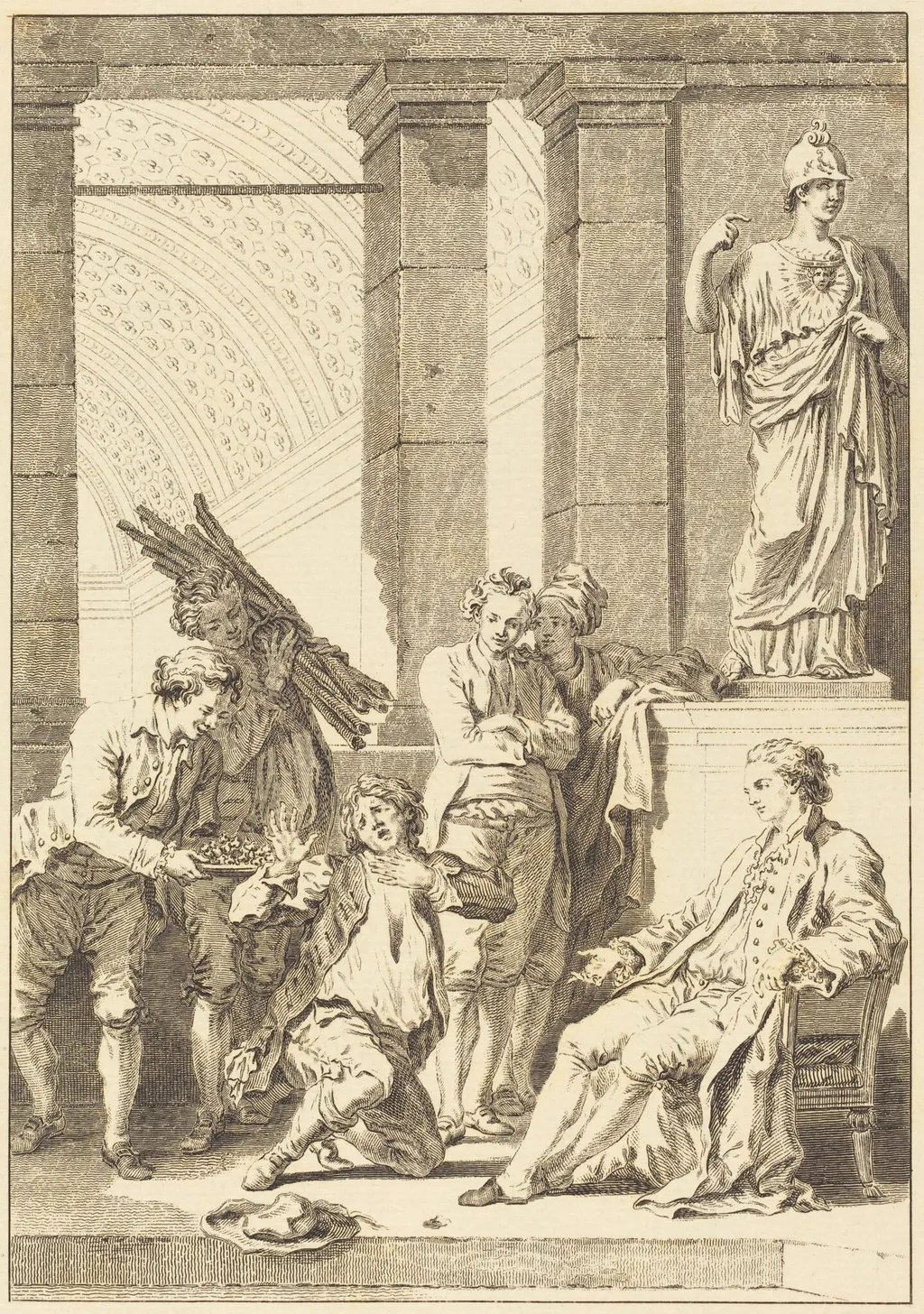
Le paysan is an ink print by the Baroque artist Charles Louis Lingée. It dates from 1784 and is held in the collection of the National Gallery of Art.
About this work
Overview
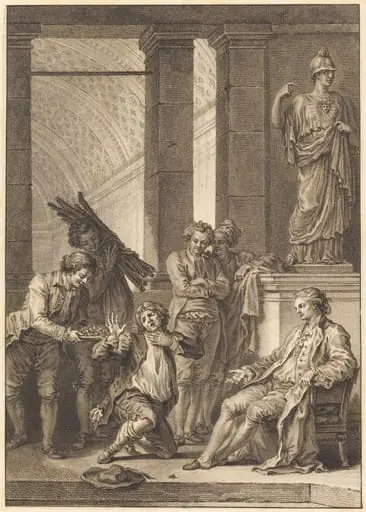
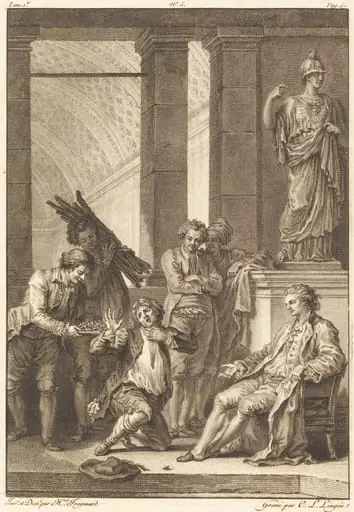
Charles Louis Lingée’s 1784 etching titled *Le paysan* presents a communal scene centered on a sculpted female figure. The composition gathers several figures around the statue, creating a tableau that balances individual gestures with a shared focus on the central monument.
Subject & Meaning
The work depicts villagers or peasants assembled before a pedestal‑borne statue of a woman, suggesting a ritual of admiration or reverence. One figure offers a bowl of fruit, while another sits and gazes upward, indicating both offering and contemplation within the group.
Technique & Style
Executed in the fine lines of etching, Lingée renders intricate architectural details, such as a richly carved archway in the background, alongside the delicate rendering of human forms. The contrast between the crisp lines of the stone arch and the softer shading of the figures enhances the scene’s depth.
History & Provenance
Created in 1784, the print belongs to Lingée’s late‑eighteenth‑century output, a period when French printmakers often explored genre scenes of rural life. The etching’s provenance traces through several European collections before entering its present museum holdings.
Context
*Le paysan* reflects the Enlightenment‑era interest in the dignity of ordinary people and the moralizing potential of public art. The inclusion of a statue within a communal setting aligns with contemporary debates about civic virtue and the role of art in public morality.
Legacy
While not as widely reproduced as Lingée’s urban subjects, this etching contributes to the broader understanding of how eighteenth‑century French artists visualized rural communities interacting with symbolic art forms.
Artist & collection


 Le glouton
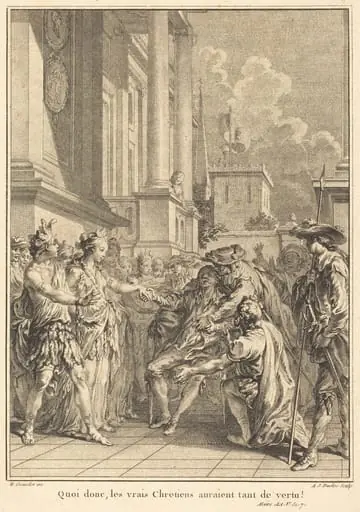 Quoi donc, les vrais Chretiens auraient tant de vertu!
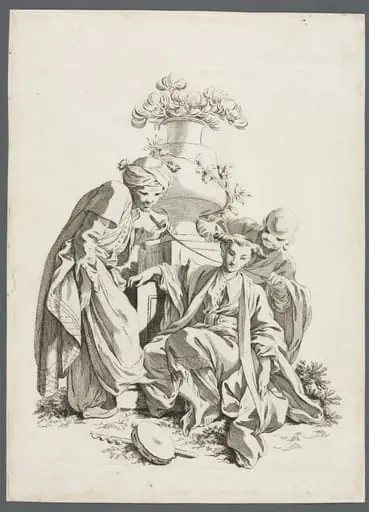 The Senses: Touch (after Boucher)
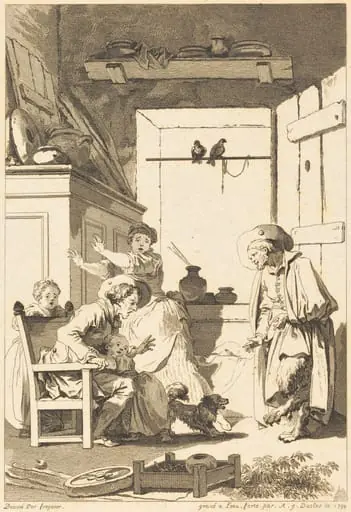 Belphegor
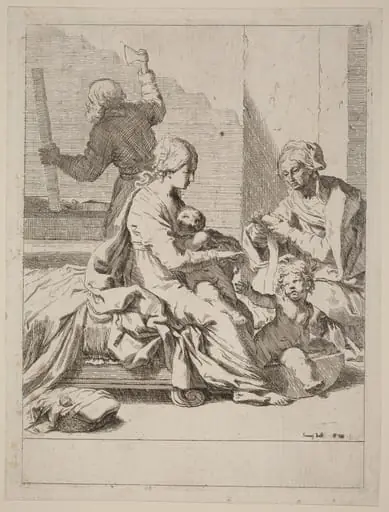 The Holy Family with Saint Elizabeth and Saint John the Baptist
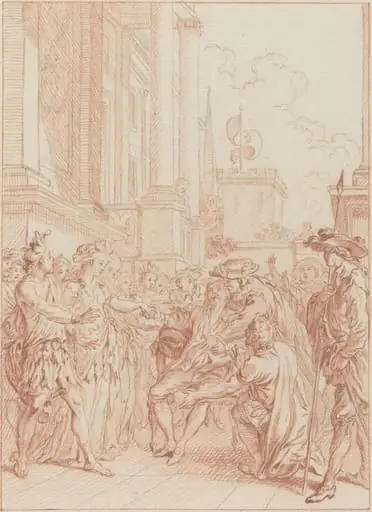 Quoi donc, les vrais Chrétiens auraient tant de vertu
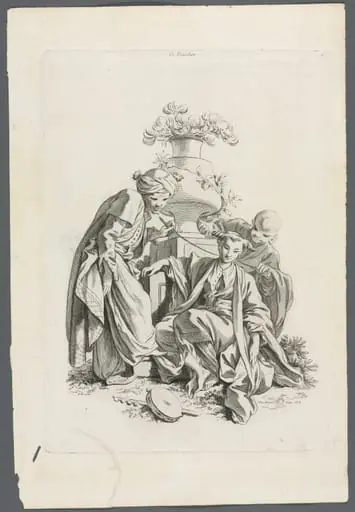 The Senses: Touch (after Boucher)
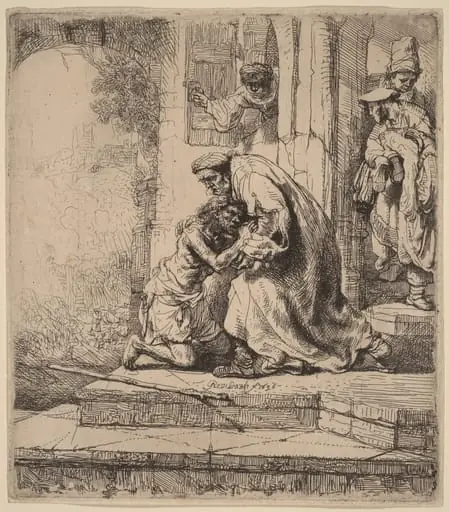 The Return of the Prodigal Son
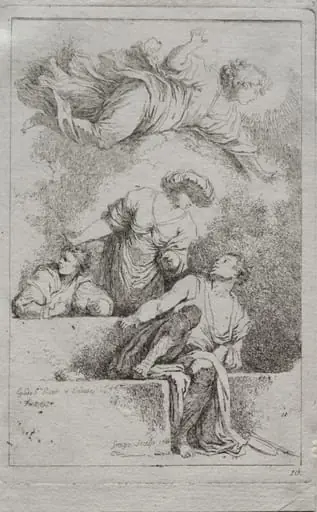 The Disciples at the Tomb