Artwork
Soeur Jeanne
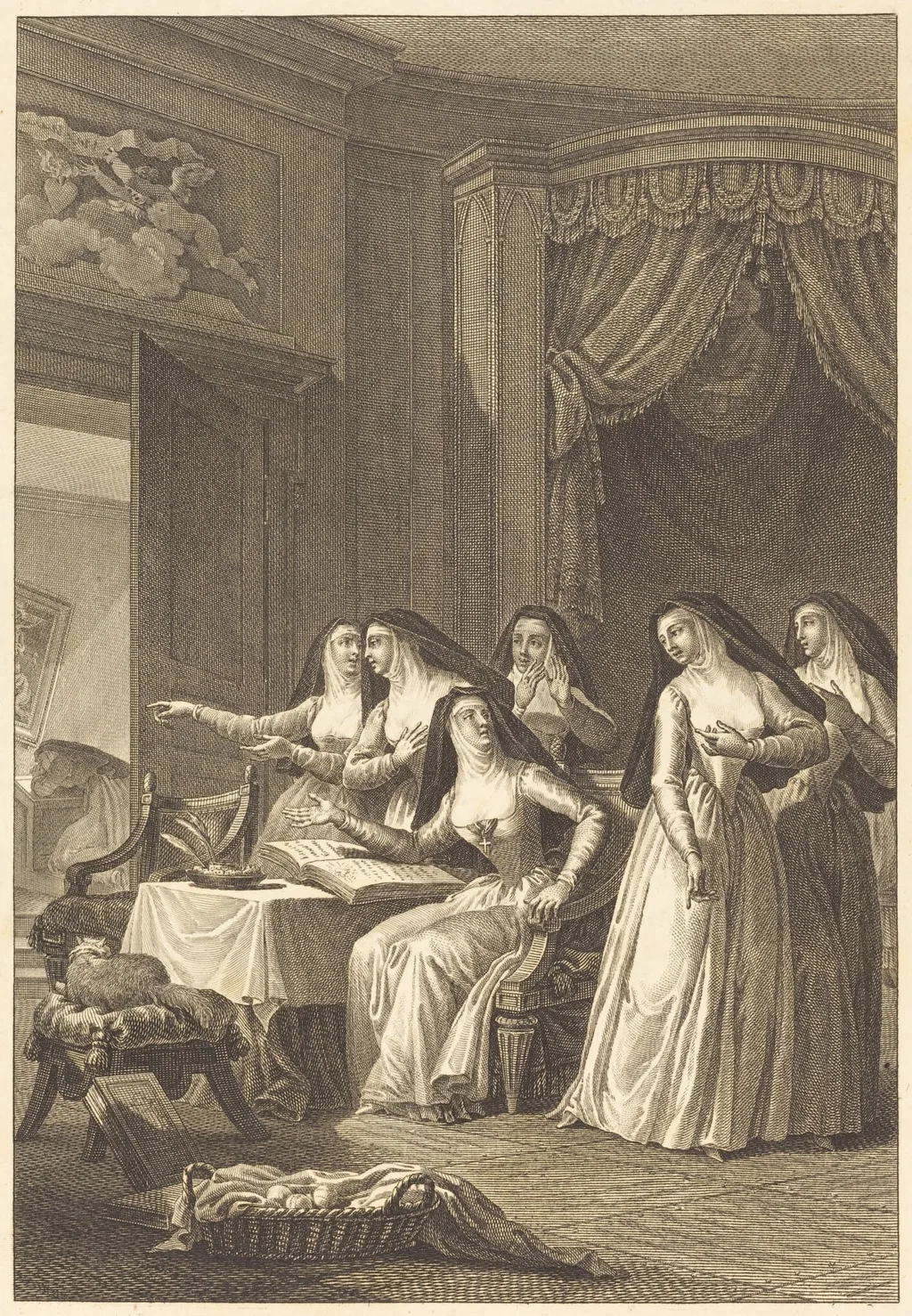
Soeur Jeanne is an ink print by the Baroque artist Charles Emmanuel Patas. It dates from 1773 and is held in the collection of the National Gallery of Art.
About this work
Overview
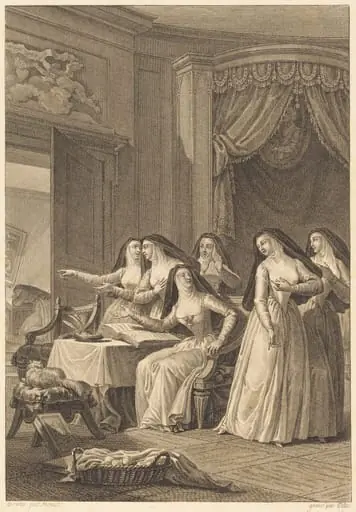
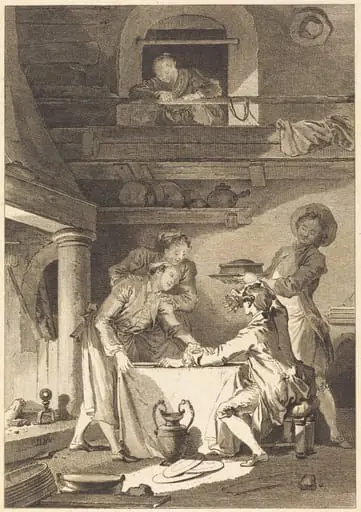
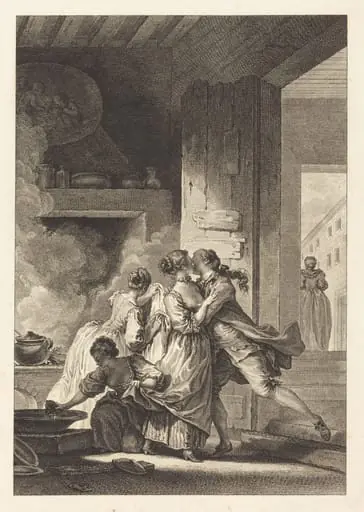
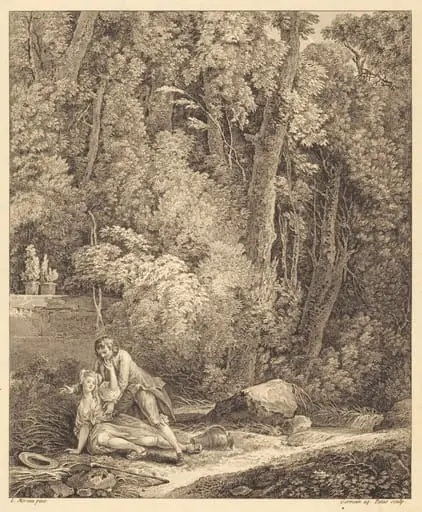
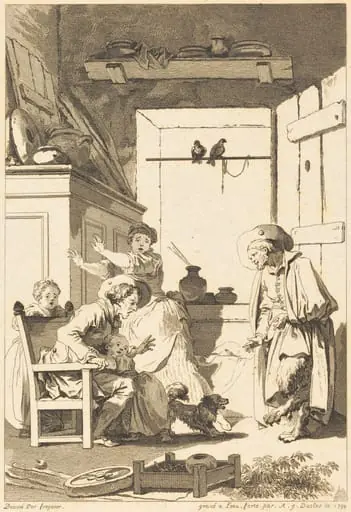
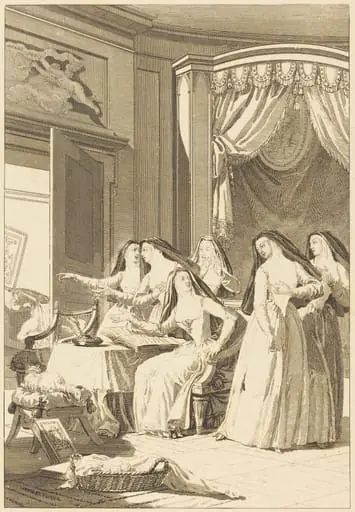
Soeur Jeanne is an etching and engraving produced by Charles Emmanuel Patas in 1773. It portrays a quiet interior scene within a convent, capturing a moment of stillness among a group of nuns. The work belongs to the printmaking tradition of the late 18th century and reflects Patas’s interest in intimate religious life, rendered with fine linear detail and subtle tonal contrasts.
Subject & Meaning
The image shows several nuns gathered around a table, one seated while others stand nearby, engaged in silent communion. Their postures suggest reflection rather than active conversation. A basket of fruit on the floor introduces a modest, earthly element amid their austere surroundings, hinting at themes of simplicity, nourishment, and the quiet rhythms of monastic existence.
Technique & Style
Patas employed fine-line etching and engraving to achieve delicate textures in fabric, wood, and drapery. The composition is tightly framed, emphasizing the figures’ stillness. Light falls softly across the scene, modeling forms without dramatic contrast. The style aligns with late Baroque sensibilities, prioritizing restraint and psychological nuance over theatricality.
History & Provenance
Created in 1773, the print likely circulated among collectors interested in religious and domestic scenes. Patas, active in France during the reign of Louis XVI, produced numerous prints of monastic life, often commissioned or distributed through ecclesiastical networks. The work’s survival in institutional collections suggests early recognition of its quiet craftsmanship.
Context
In the decades before the French Revolution, depictions of religious communities grew in popularity among urban elites seeking moral and spiritual respite. Patas’s prints offered a glimpse into cloistered life, balancing reverence with human warmth. This work reflects a broader cultural interest in the private rituals of faith, distinct from public liturgical imagery.
Legacy
Soeur Jeanne remains a representative example of 18th-century French printmaking focused on religious interiors. While Patas is not widely known today, his works contribute to the understanding of how monastic life was visually interpreted outside of grand ecclesiastical art. The print’s endurance in museum holdings underscores its value as a document of everyday devotion.
Artist & collection