Artwork
No te aha oe riri (Why Are You Angry?)
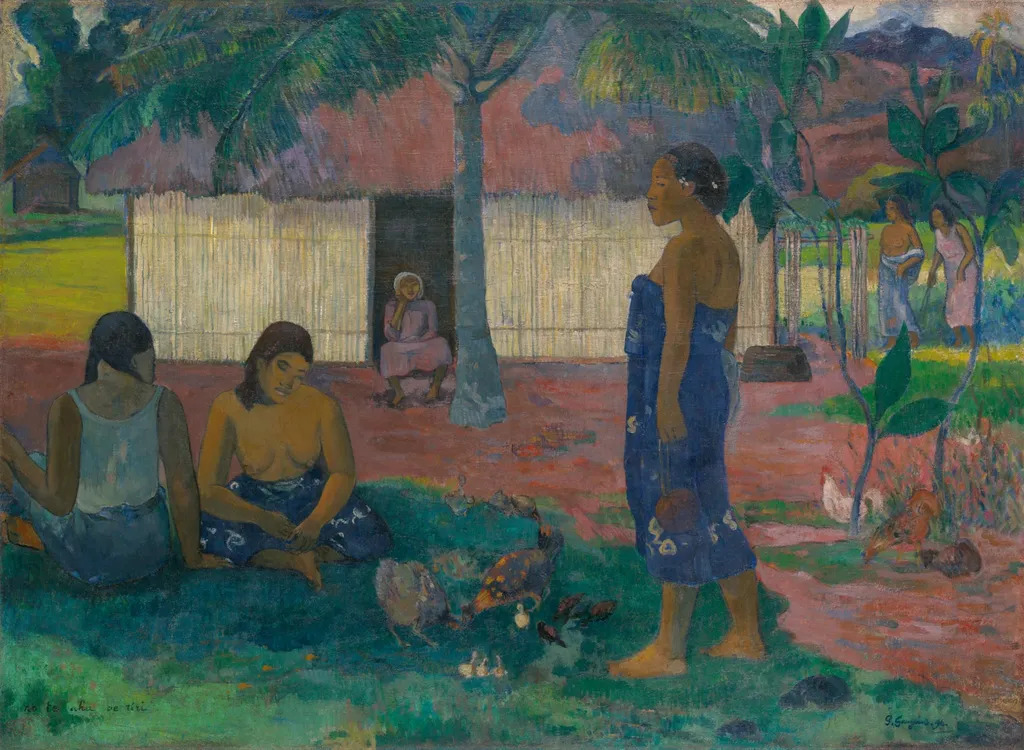
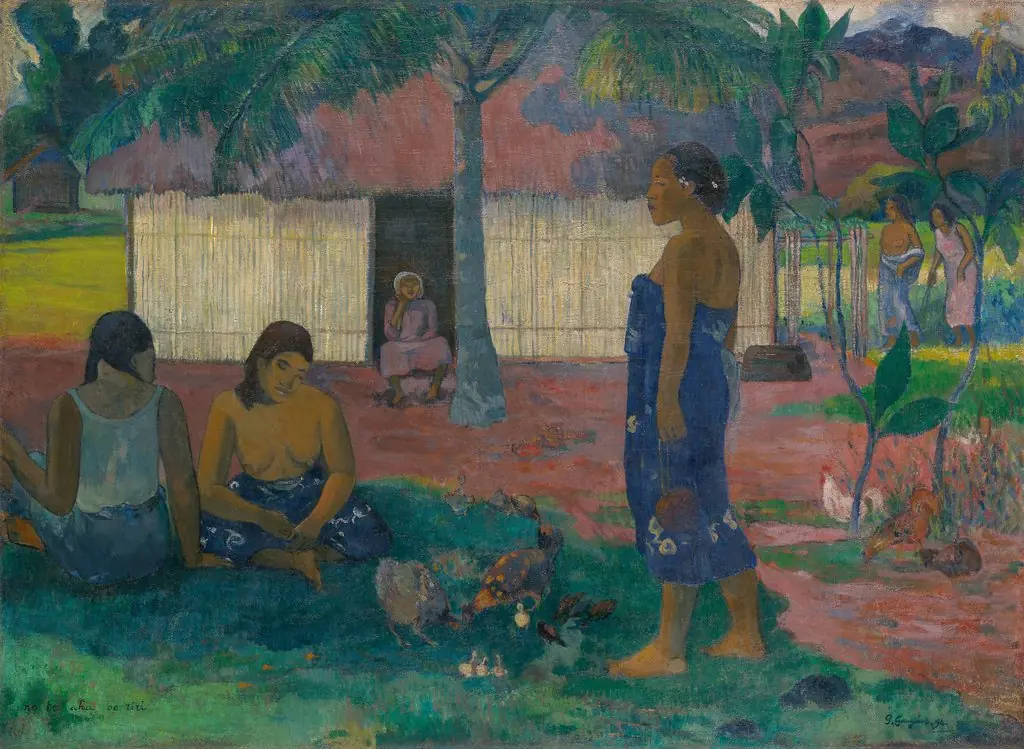
No te aha oe riri (Why Are You Angry?) is an oil painting by the Impressionist artist Paul Gauguin. It dates from 1896 and is held in the collection of the Art Institute of Chicago.
About this work
Overview
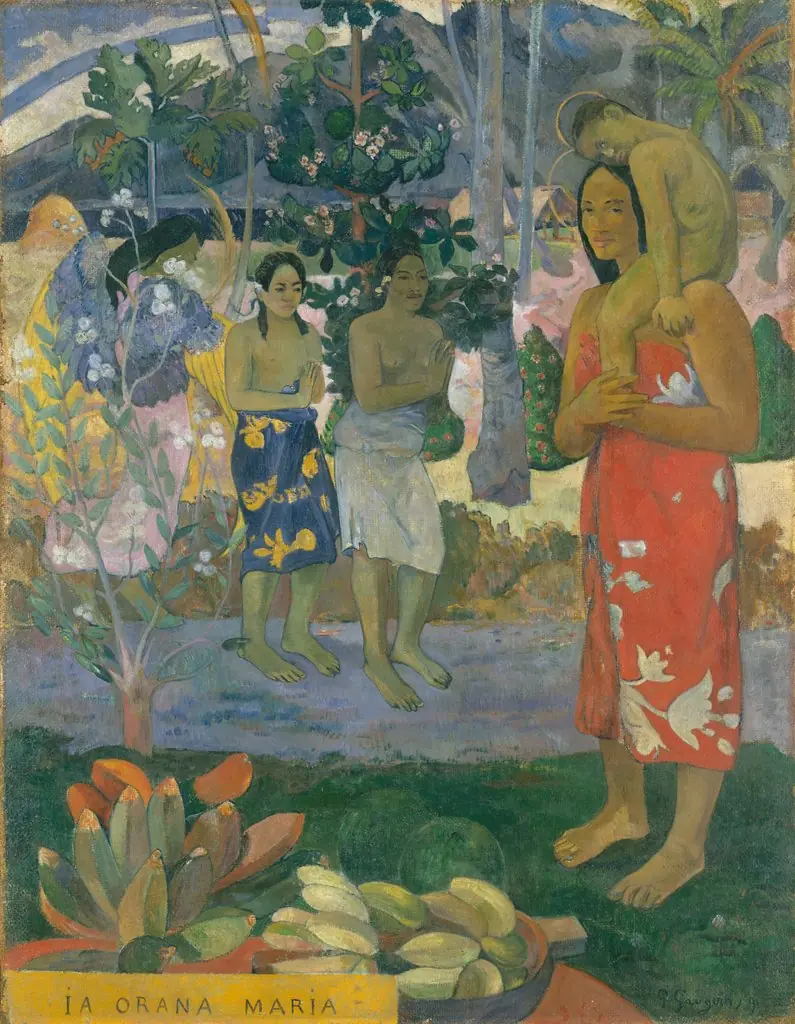
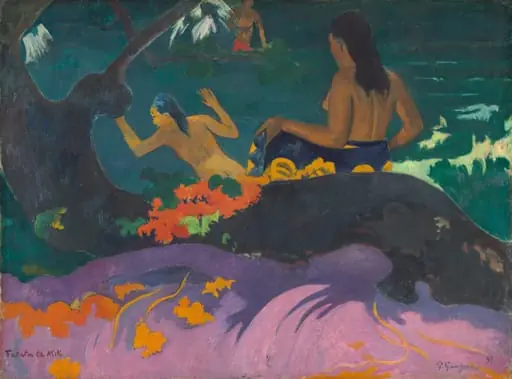
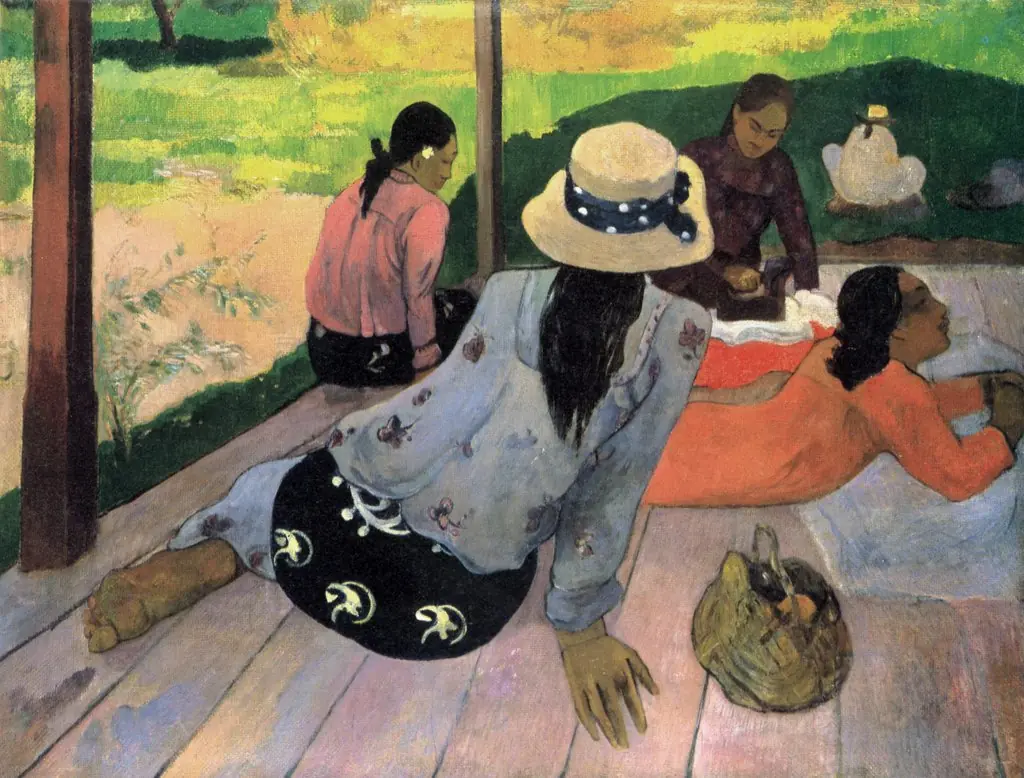
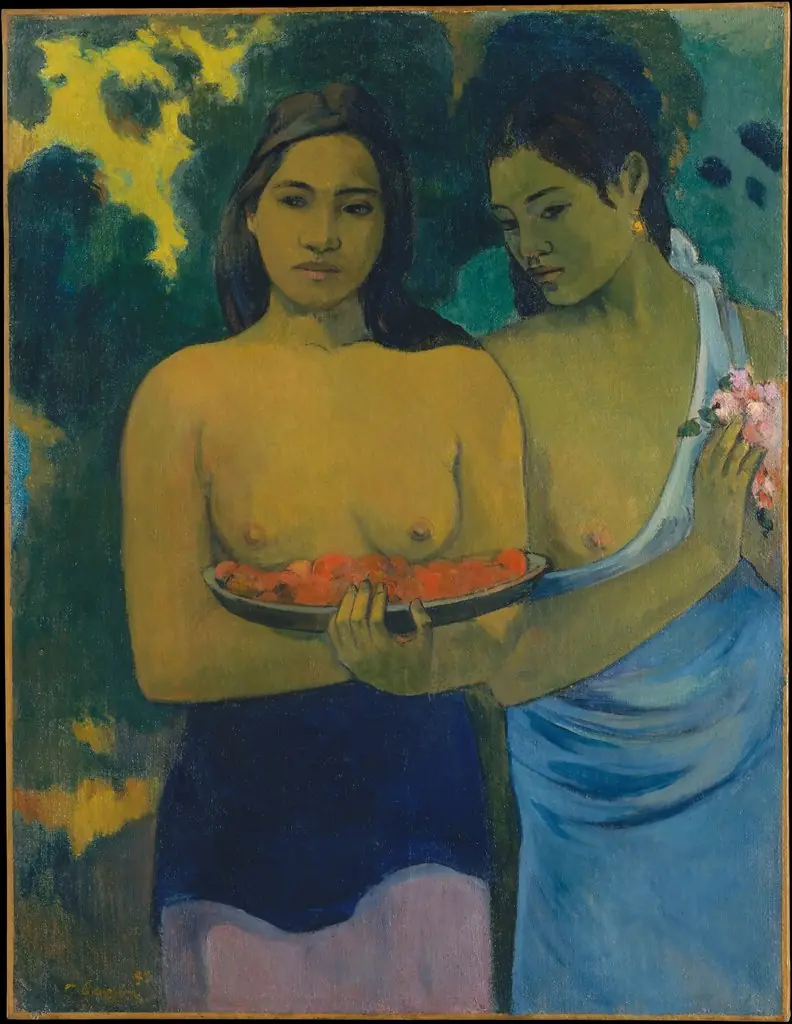
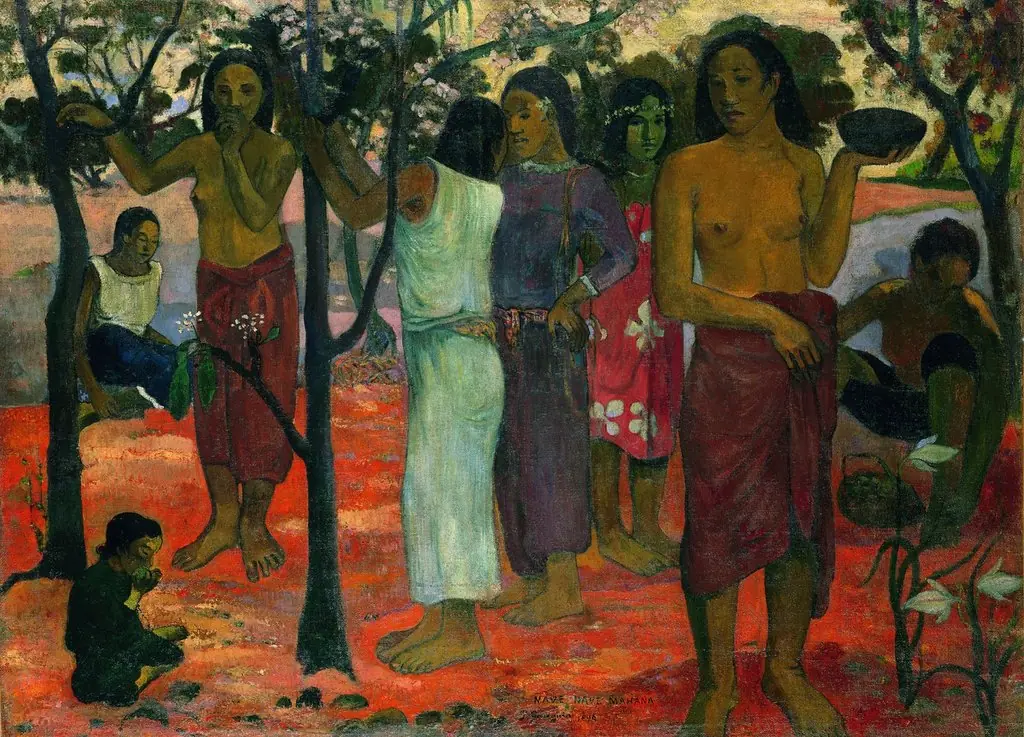
Created in 1897, this oil painting on jute canvas measures a considerable size and was among several works Paul Gauguin dispatched to France that year. The composition presents a group of women of different ages situated in an outdoor setting rendered with vivid, saturated hues and simplified forms, giving the scene a decorative, almost otherworldly atmosphere.
Subject & Meaning
), adds an ambiguous layer of inquiry, leaving it unclear whether the question is directed at a figure within the scene or at the viewer.
The figures appear engaged in ordinary activities, yet the surrounding environment is stylized rather than naturalistic, producing a dreamlike tableau that resists a straightforward narrative. The title, rendered in Tahitian as “No te aha oe riri?” (Why are you angry?), adds an ambiguous layer of inquiry, leaving it unclear whether the question is directed at a figure within the scene or at the viewer.
Technique & Style
Gauguin employs bold, flat colors and reduced shapes, emphasizing decorative pattern over detailed modeling. The use of oil on a jute support contributes a textured surface, while the overall handling suggests a flattened perspective typical of his post‑Impressionist phase, bordering on the decorative qualities later associated with the cloisonnism movement.
History & Provenance
The canvas was part of a batch sent from Tahiti to France in 1897, reflecting Gauguin’s practice of sending finished works back to the European market. Its subsequent ownership trail remains modestly documented, with the painting entering public collections in the early twentieth century, where it has been exhibited as an example of the artist’s late Tahitian period.
Own this work as a print
Artist & collection
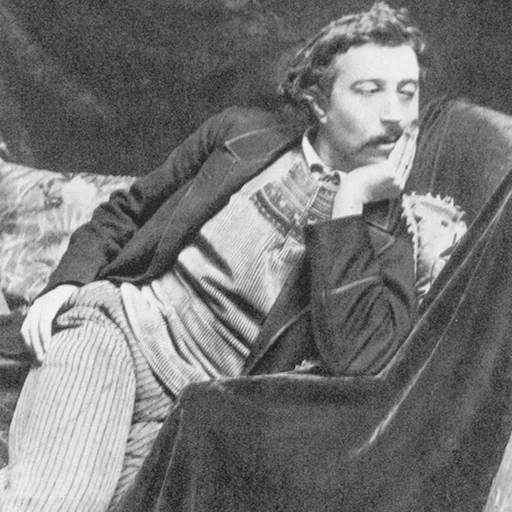
Artist
Eugène Henri Paul Gauguin (; French: ; 7 June 1848 – 8 May 1903) was a French painter, sculptor, printmaker, ceramist, and writer, whose work has been primarily associated with the Post-Impressionist and Symbolist movements.