Artwork
L'europe peut dormir tranquille ...
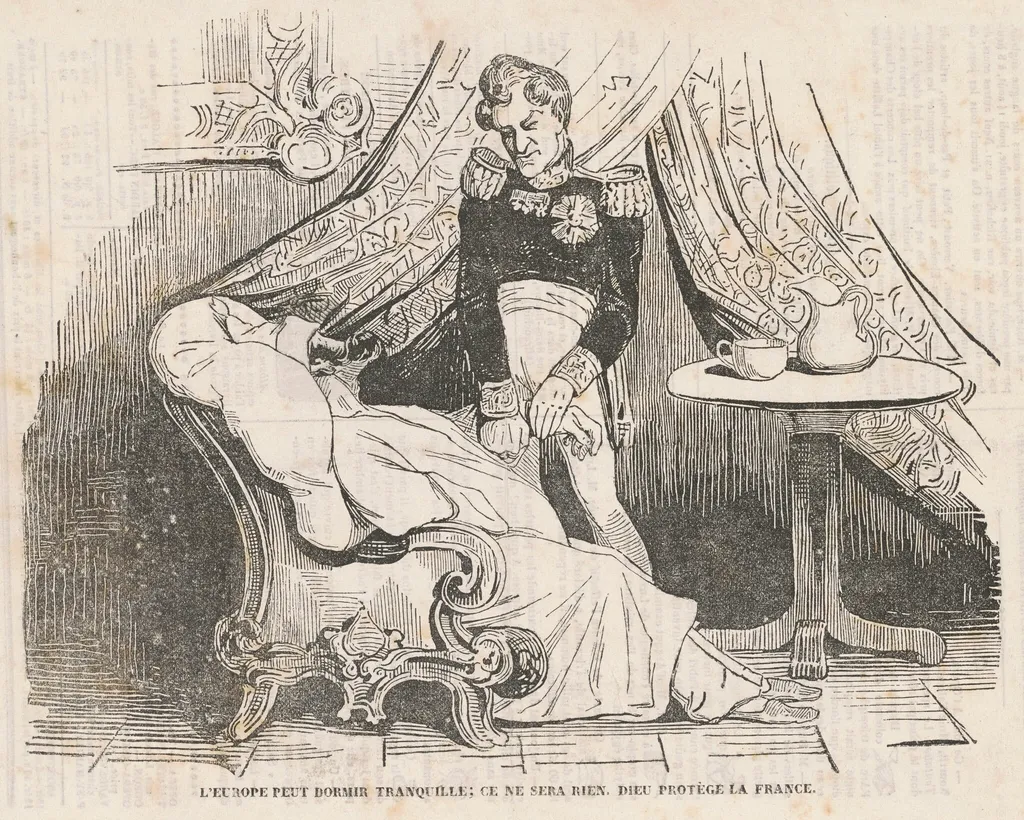
L'europe peut dormir tranquille ... is an ink print by the Romanticist artist Honoré Daumier. It dates from 1834 and is held in the collection of the National Gallery of Art.
About this work
Overview
L'europe peut dormir tranquille is a lithograph by Honoré Daumier, created as part of his satirical series critiquing French political authority.
L'europe peut dormir tranquille is a lithograph by Honoré Daumier, created as part of his satirical series critiquing French political authority. The image presents two figures in a static, almost theatrical composition: one relaxed, the other rigidly alert. Though rendered with simple lines, the print conveys layered social commentary through posture and attire, characteristic of Daumier’s approach to visual satire.
Subject & Meaning
The reclining man, dressed in formal evening wear, appears asleep or indifferent, while a soldier in a tall hat stands over him, saber raised in a gesture of threat or vigilance. The title, suggesting Europe can rest peacefully, ironically undercuts the soldier’s aggressive stance. Daumier uses this juxtaposition to question the legitimacy and necessity of military posturing in peacetime governance.
Technique & Style
Daumier employed lithography to achieve bold contrasts and fluid, expressive lines. The figures are rendered with minimal detail, relying on silhouette and gesture to communicate character. The flatness of the composition and lack of background emphasize the psychological tension between the two figures, enhancing the print’s cartoon-like immediacy while retaining political gravity.
History & Provenance
Created in the 1840s during the July Monarchy, the print was likely published in a liberal periodical, where Daumier regularly contributed political caricatures. Though exact publication records are sparse, the work aligns with his broader output targeting state power and public complacency. It circulated among urban readers familiar with the regime’s contradictions.
Context
Daumier’s work emerged amid rising censorship and political unrest in France. His prints often targeted the bourgeoisie and military elite, using humor to expose hypocrisy. In this piece, the soldier’s presence suggests a state perpetually on guard, even when no threat exists — a critique of authoritarian posturing during a period of relative calm.
Legacy
The lithograph exemplifies Daumier’s influence on later political cartoonists and social realists. Its economy of form and layered irony became a model for visual critique. Though not widely exhibited in his lifetime, it gained recognition in the 20th century as a key example of 19th-century print satire, preserved in major collections for its sharp social observation.
Artist & collection
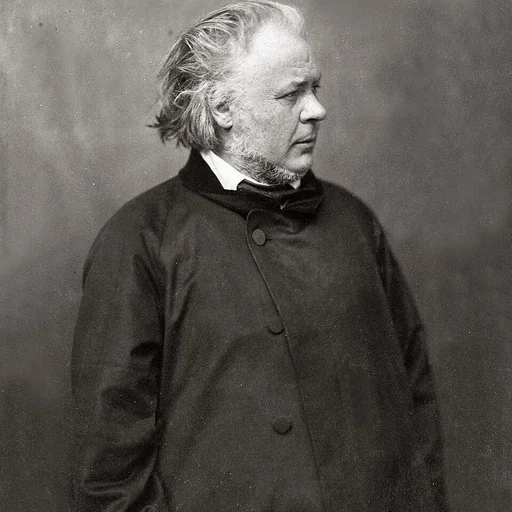
Artist
Honoré-Victorin Daumier was a French painter, sculptor, and printmaker, whose many works offer commentary on the social and political life in France, from the Revolution of 1830 to the fall of the Second French Empire in 1870.









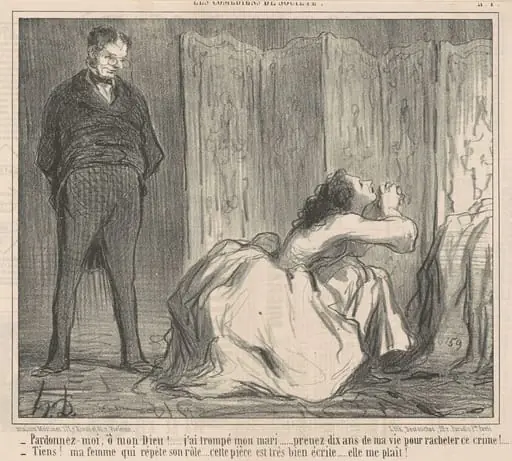 Pardonnez-moi, o mon dieu! ...
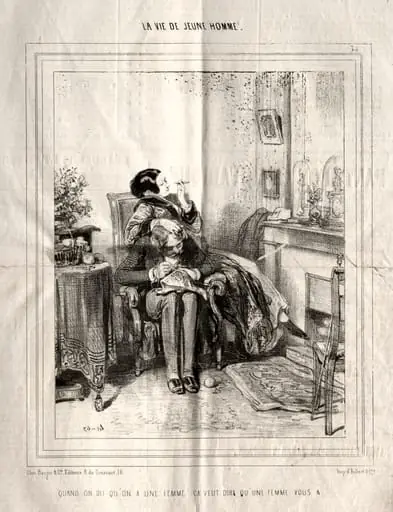 La Vie de Jeune Homme
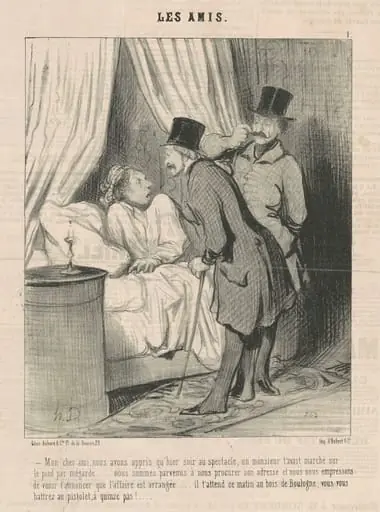 Mon cher ami, nous avons appris ...
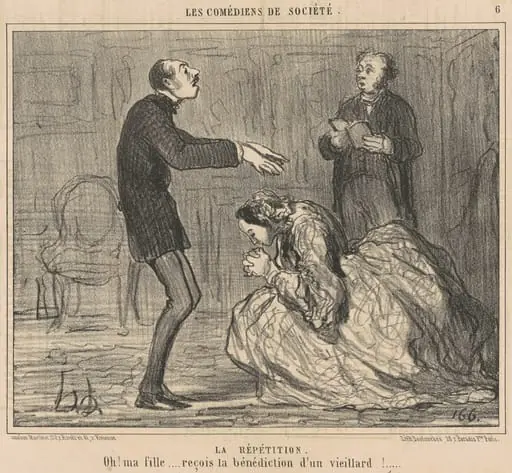 La répétition
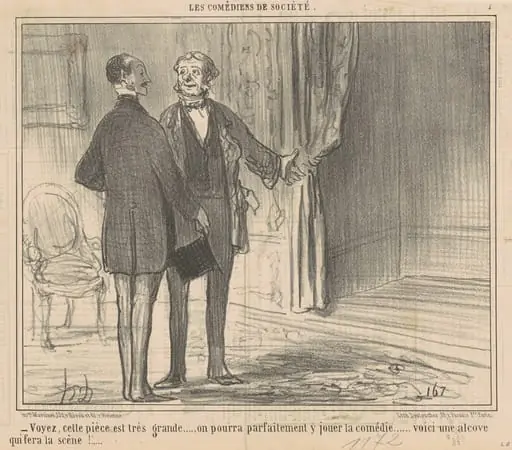 Voyez, cette pièce est très grande ...
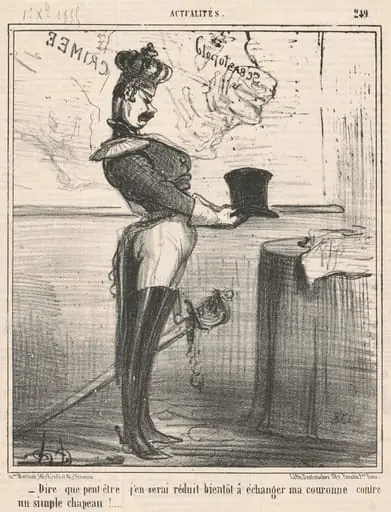 Dire que peut-être j'en serai réduit ...
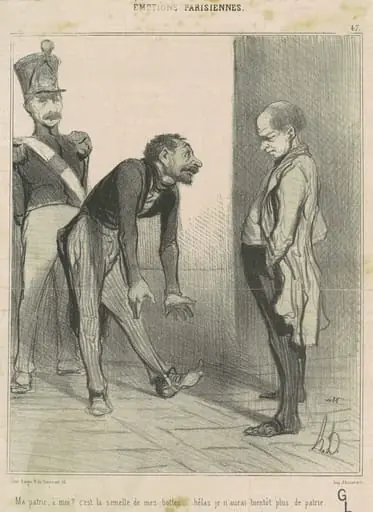 Ma patrie, a moi?...
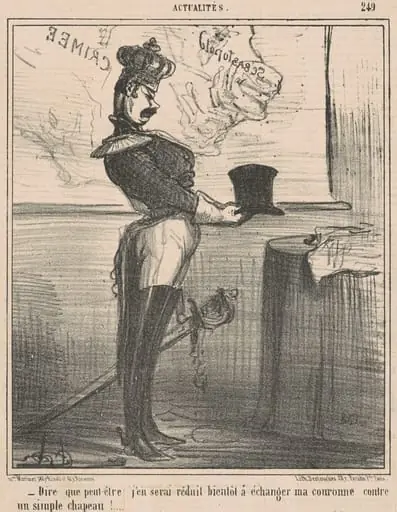 Dire que peut-être j'en serai réduit ...
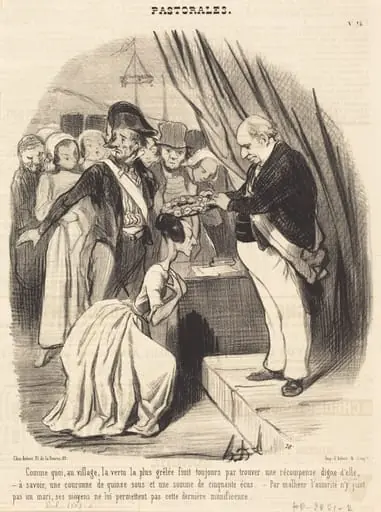 Comme quoi, au village, la vertu la plus grêlée...
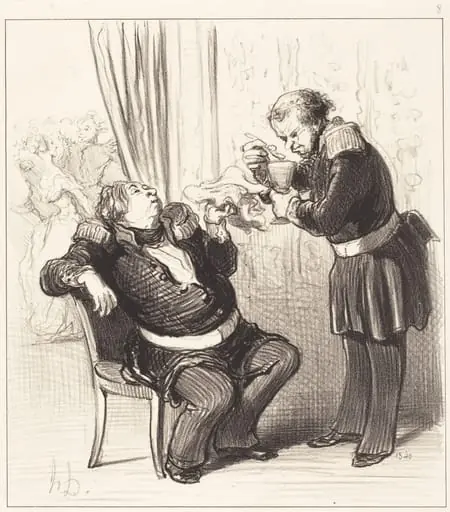 Décidément nous nous amusons trop, Guillochard!...