Artwork
Bookplate: Coat of Arms
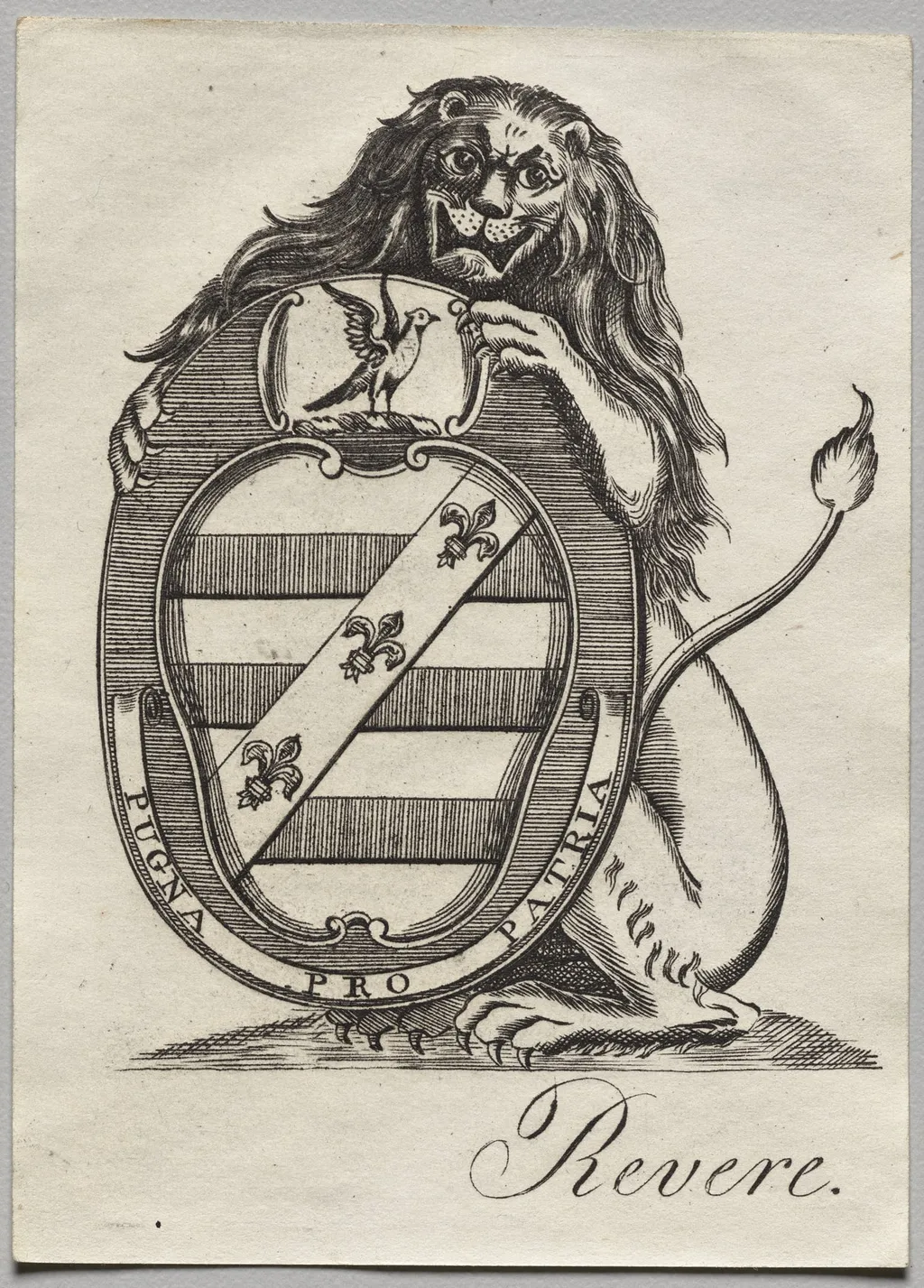
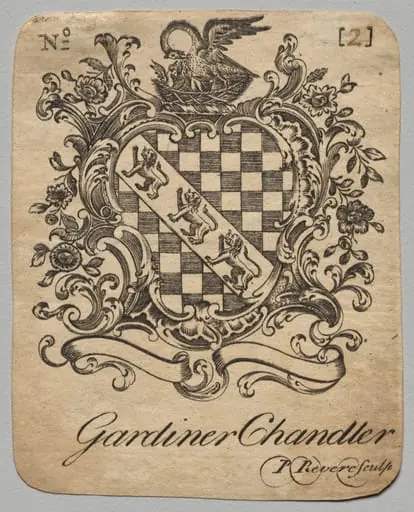
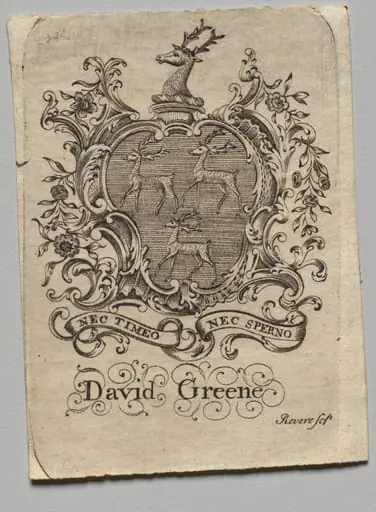
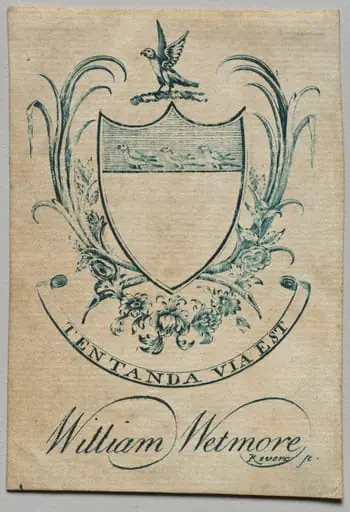
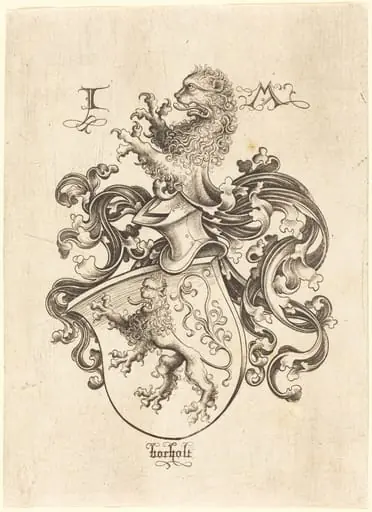
Bookplate: Coat of Arms is a print by Paul Revere II. It dates from 1785 and is held in the collection of the Cleveland Museum of Art.
About this work
The shield is surrounded by a wreath, and there is a banner at the bottom with the words "PUGNA PRO PATRIA" written on it.
This painting shows a coat of arms with a lion and a bird. The lion is sitting on its haunches, facing forward, with its mouth open and its tongue out. It has a long mane and a tuft of hair on the end of its tail. The bird is standing on a shield, which is divided into three sections. The top section has a fleur-de-lis, the middle section has three stripes, and the bottom section has a fleur-de-lis.
The shield is surrounded by a wreath, and there is a banner at the bottom with the words "PUGNA PRO PATRIA" written on it. The background of the painting is a light color, and the overall effect is one of elegance and sophistication.
The artist of this painting is Paul Revere II (American, 1735–1818).
Overview
Created around 1785 by Paul Revere II, this engraved bookplate features a heraldic design intended for personal or familial use. Executed in the tradition of American colonial printmaking, it served as a mark of ownership and social identity, commonly affixed to the inside covers of books. The composition balances symbolic elements with restrained ornamentation, reflecting the values of its time.
Subject & Meaning
The central shield is partitioned into three fields: a fleur-de-lis at top and bottom, and three horizontal stripes in the center, suggesting lineage or territorial ties. A lion, seated and alert, supports the shield, while a bird perches atop it—likely a hawk or eagle, emblematic of vigilance. The Latin motto 'PUGNA PRO PATRIA' ('Fight for Country') underscores civic duty, aligning the design with Revolutionary-era ideals of patriotism and honor.
Technique & Style
Rendered as a line engraving, the plate employs fine, controlled strokes to define texture and form. The lion’s mane and tail tuft are rendered with delicate cross-hatching, while the shield’s divisions and floral motifs are crisply outlined. The background remains untextured, drawing focus to the heraldic elements. The style is formal yet unadorned, typical of colonial American engraving, prioritizing clarity over flamboyance.
History & Provenance
The work is attributed to Paul Revere II, known primarily as a silversmith and engraver, who produced bookplates for Boston’s merchant and professional classes. This example was likely commissioned by a family seeking to assert status through heraldic imagery. It entered the collection of The Cleveland Museum of Art as part of a broader acquisition of early American prints, preserving its role as a material artifact of domestic identity.
Context
In late 18th-century America, bookplates were common among literate elites, functioning as both personal identifiers and symbols of cultural refinement. Heraldic imagery, though rooted in European aristocratic tradition, was adapted by colonial families to signify achievement rather than noble birth. Revere’s work reflects this transition—using established visual language to express new American values of merit and civic responsibility.
Legacy
As one of the few surviving bookplates by Paul Revere II, this piece offers insight into the material culture of early American households. It illustrates how colonial artisans repurposed European heraldic conventions for domestic use, bridging transatlantic traditions with emerging national identity. Its preservation in a major museum underscores its value as a historical document of social self-representation.
Artist & collection