Artwork
Luton Park, Bedfordshire
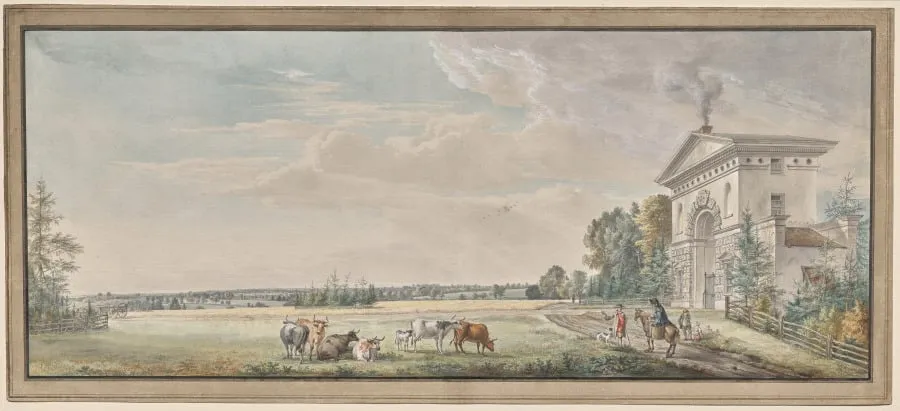
Luton Park, Bedfordshire is a drawing by the Romanticist artist Paul Sandby. It dates from 1764 and is held in the collection of the Cleveland Museum of Art.
About this work
You see a quiet country scene: rolling green fields, a few sheep, and a grand stone gatehouse on the right.
You see a quiet country scene: rolling green fields, a few sheep, and a grand stone gatehouse on the right.
This painting was made for a man who left politics and wanted to remember his estate. The artist, Paul Sandby, worked in watercolor, a medium that lets light shine through layers of paint. The soft glow makes the landscape feel peaceful, not dramatic.
If you like this, look up more paintings of england, 18th century.
Overview
Paul Sandby created Luton Park, Bedfordshire as part of a twelve-part series commissioned by John, 3rd Earl of Bute, in the mid-1760s. The drawings documented Bute’s newly acquired country estate after his withdrawal from public life. Executed in watercolor, the work captures the estate’s landscape with quiet precision, emphasizing natural harmony over theatrical grandeur. The series remained intact in an album at Luton Park until its rediscovery in 1996.
Subject & Meaning
The drawing portrays the pastoral surroundings of Luton Park, focusing on open fields, scattered sheep, and a Palladian gatehouse framed by trees. In the distance, the silhouette of Luton Castle appears, linking the estate to its historical roots. The scene reflects Bute’s desire to preserve the character of his retreat, transforming the land into a personal record of serenity and continuity rather than a statement of power.
Technique & Style
Sandby employed transparent watercolor washes to achieve a luminous, atmospheric effect. His delicate layering allowed light to pass through the pigment, softening edges and enhancing the sense of air and distance. The composition avoids dramatic contrasts, favoring muted tones and gentle transitions that mirror the calm of the countryside. This restrained technique aligns with the observational precision characteristic of 18th-century topographical drawing.
History & Provenance
The drawing remained in the original album compiled for the Earl of Bute, housed at Luton Park for over two centuries. It was not publicly exhibited or separated from the set until its rediscovery in 1996, when the album was identified and studied by scholars. Its preservation in private hands ensured the integrity of the complete series, offering a rare, unaltered glimpse into aristocratic land documentation of the period.
Context
Commissioned during a time when British landowners increasingly valued the aesthetic and sentimental value of their estates, Sandby’s drawings reflect a broader cultural shift toward landscape appreciation. Unlike grand historical paintings, these works served as intimate records—documenting not just architecture, but the daily rhythms of rural life. The choice of watercolor, then still emerging as a serious medium, signaled a preference for immediacy and naturalism.
Legacy
Sandby’s Luton Park series helped establish watercolor as a legitimate medium for topographical and landscape study in Britain. The drawings influenced later artists and collectors who valued detailed, unembellished depictions of the English countryside. Their survival as a unified group offers a unique window into how 18th-century elites perceived and curated their relationship with the land.
Artist & collection
Artist
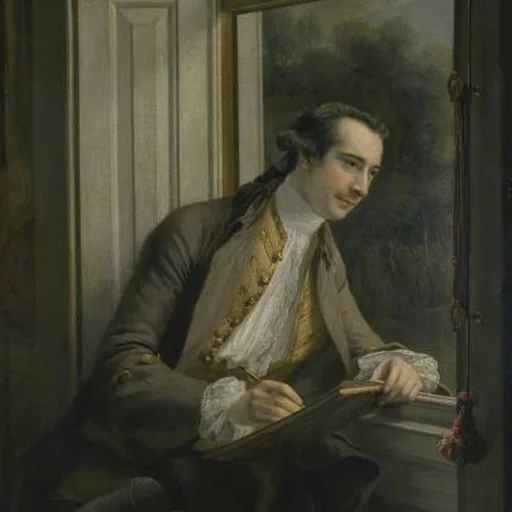
Paul Sandby, (1731 – 7 November 1809) was an English mapmaker and painter who specialised in landscape art. Along with his older brother Thomas Sandby, he was one of the founding members of the Royal Academy in 1768.

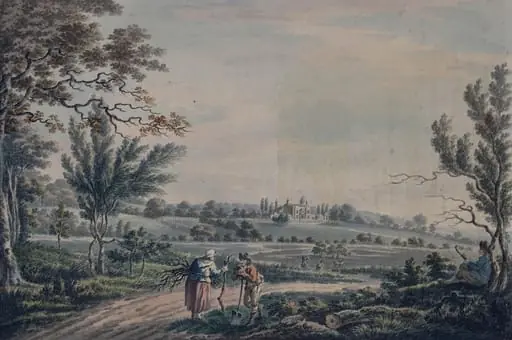 Landscape with a house and countryfolk
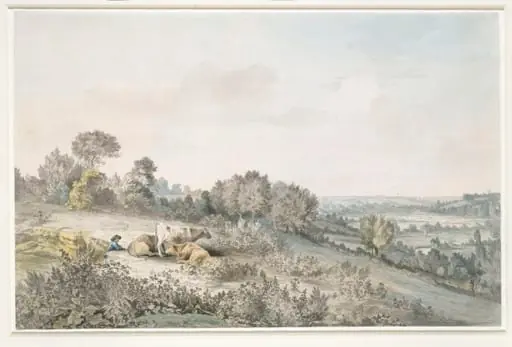 The valley of the Stour, with Langham Church in the distance
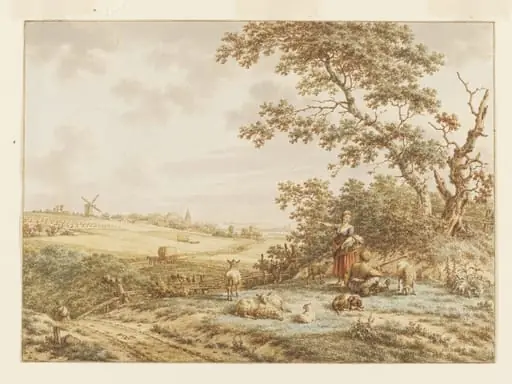 Landscape with Figures and Sheep
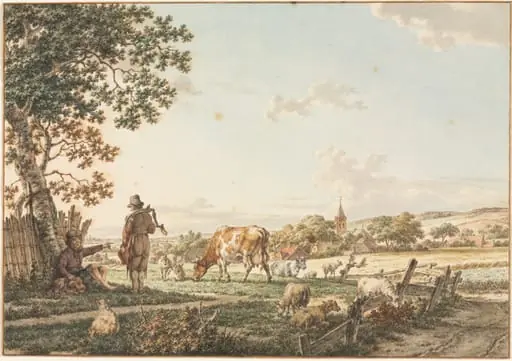 Pastoral Landscape with Village
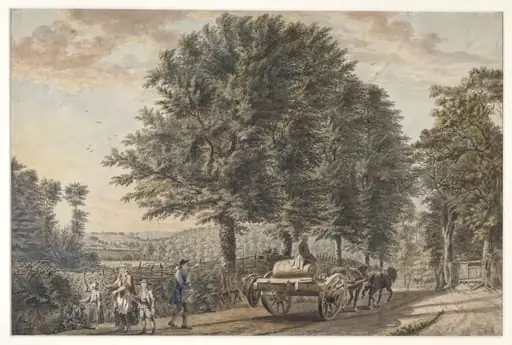 Landscape with Dray and Figures
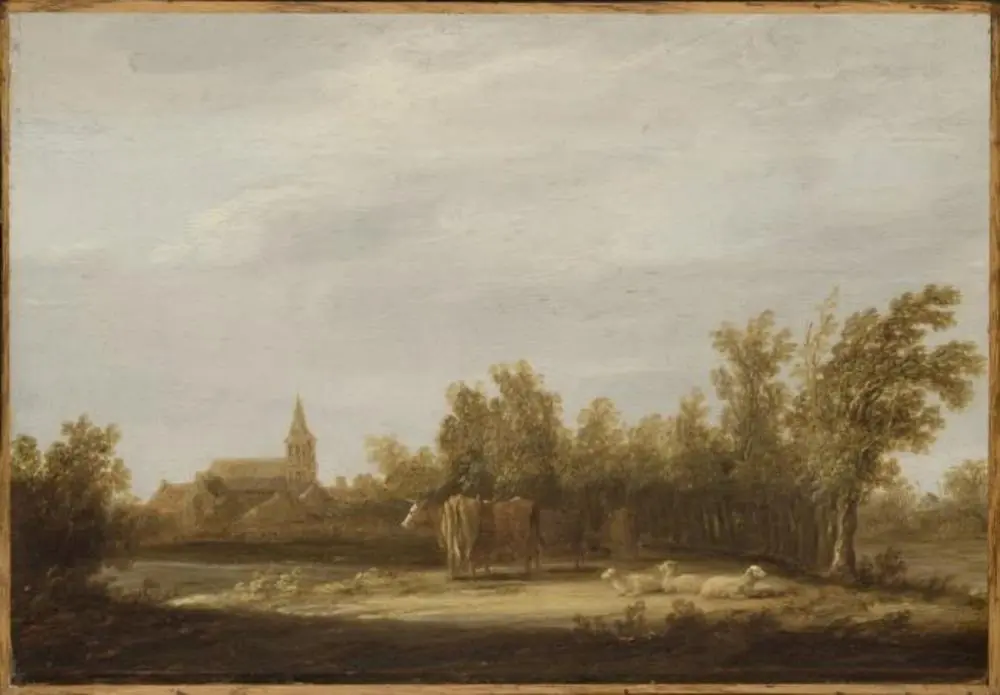 Landscape with Cows and Sheep
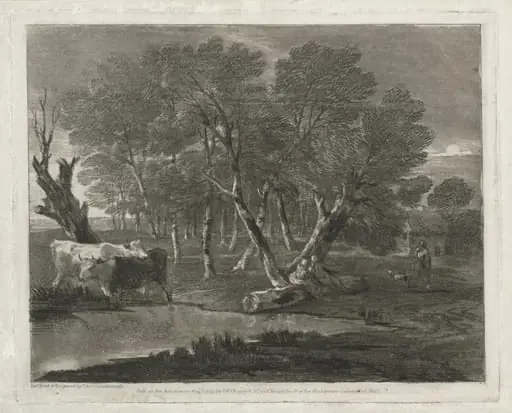 Wooded Landscape with Cows beside a Pool, Figures and Cottage
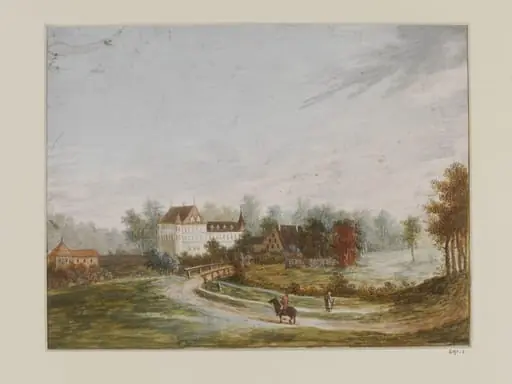 Landscape
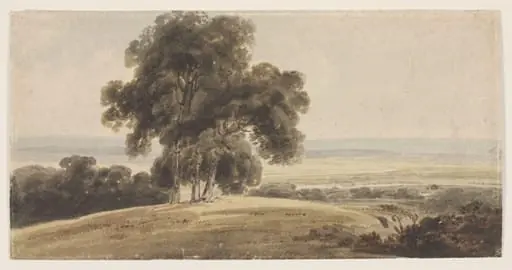 Untitled
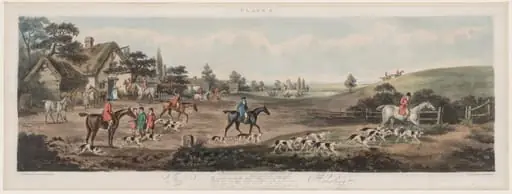 Fox Hunting, No. 4