Artwork
"The fresh cavalier." The 'morning after' of an official who has received his first state order
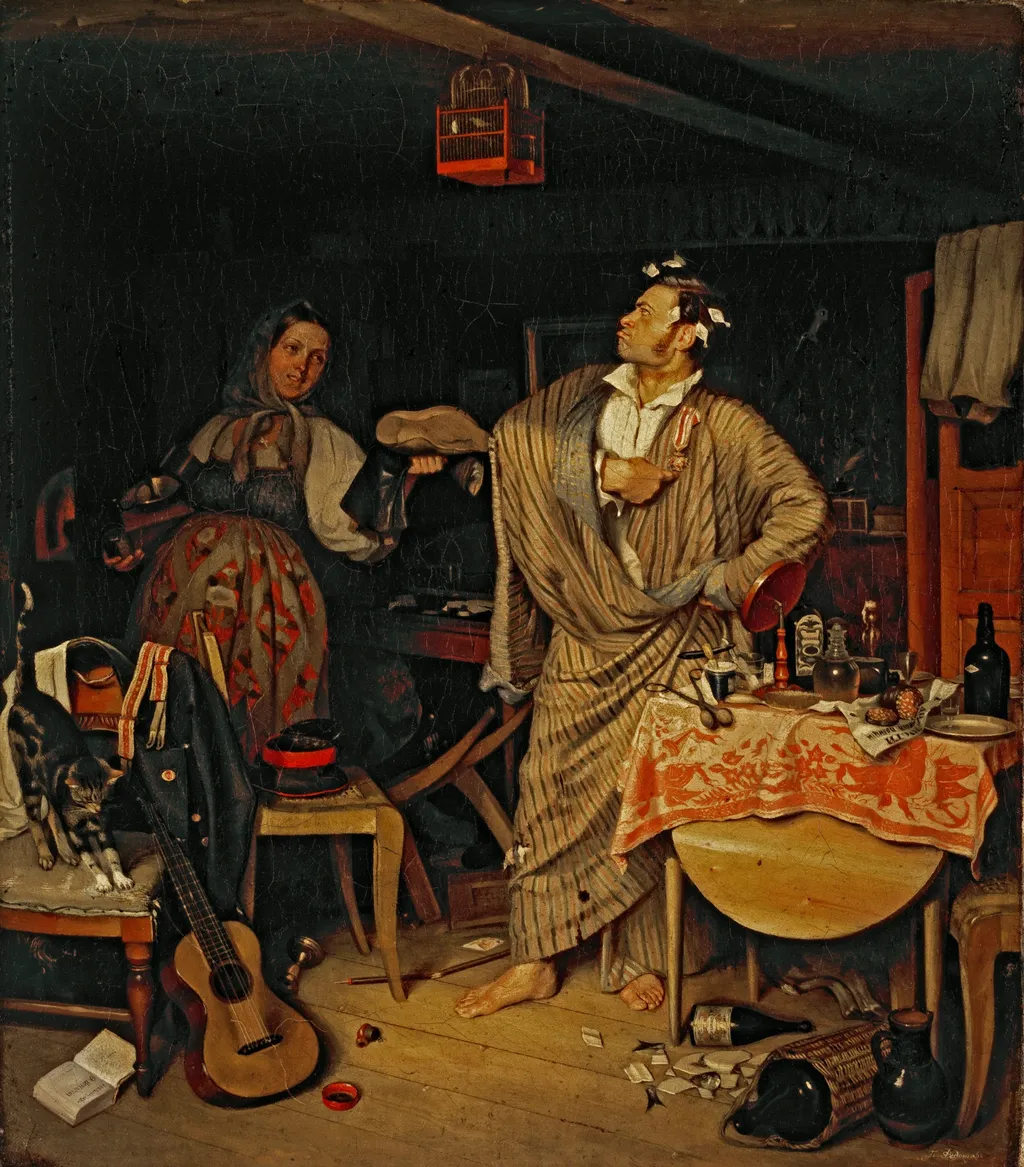
"The fresh cavalier." The 'morning after' of an official who has received his first state order is an oil painting by the Realist artist Pavel Fedotov. It dates from 1846 and is held in the collection of the Tretyakov Gallery.
About this work
Overview
Painted in 1846 by Pavel Fedotov, this oil-on-canvas work captures a quiet, unglamorous moment following the bestowal of a state honor.
Painted in 1846 by Pavel Fedotov, this oil-on-canvas work captures a quiet, unglamorous moment following the bestowal of a state honor. Fedotov, a civil servant turned artist, depicted an ordinary official in the aftermath of ceremonial recognition, avoiding grandeur in favor of intimate realism. The scene reflects a growing interest in everyday life among mid-19th-century Russian artists, who turned away from idealized historical subjects toward psychologically nuanced domestic moments.
Subject & Meaning
The central figure, still dressed in his robe and adorned with a medal and flower, appears physically and emotionally drained. His disheveled state contrasts with the formality of the honor he received, suggesting the hollowness or exhaustion behind bureaucratic recognition. The woman behind him, holding his hat, observes with quiet concern—her presence humanizes the scene, implying personal relationships that exist beyond official duty. The cluttered table and dim lighting reinforce a sense of private unraveling after public performance.
Technique & Style
Fedotov employed chiaroscuro to model form and direct attention toward the figure’s weary posture and the medal on his chest. The brushwork is precise yet unshowy, favoring texture over polish: the fabric of the robe, the glint of the bottle, the softness of the woman’s shawl. The composition is tightly framed, with the birdcage in the upper corner adding a subtle metaphor for confinement. The palette is muted, dominated by browns and grays, enhancing the scene’s somber, introspective tone.
History & Provenance
Created during Fedotov’s brief but intense period of artistic activity, the painting was exhibited in Saint Petersburg and later acquired by the Russian state. It entered the collection of the Russian Museum in the late 19th century, where it remains today. Fedotov’s mental decline and early death in 1852 limited his output, making this work one of his most studied and preserved examples of social observation in Russian art.
Context
In 1840s Russia, the bureaucracy was expanding rapidly under Nicholas I, and state honors became symbols of social mobility. Fedotov, himself a minor official, observed the rituals and consequences of this system firsthand. His work aligned with broader European Realist trends but carried a distinctly Russian inflection—focusing on the quiet psychological toll of institutional conformity rather than overt political critique.
Legacy
Though little known outside Russia, Fedotov’s approach influenced later generations of Russian realists, including Repin and Perov, who adopted his focus on psychological depth in ordinary scenes. His ability to convey irony without caricature, and dignity without glorification, established a model for depicting the inner lives of the middle class. The painting endures as a quiet testament to the gap between public ceremony and private exhaustion.
Own this work as a print
Artist & collection
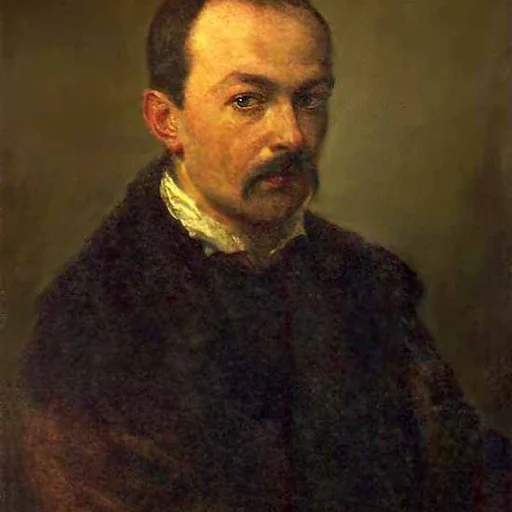
Artist
Pavel Andreyevich Fedotov (Russian: Павел Андреевич Федотов; 4 July 1815 – 26 November 1852) was an amateur Russian painter. He was only 37 years old when he died in a mental clinic. He has been compared to William Hogarth.

 Country Inn
 A Goldsmith Melting Down a Woman's Jewellery in the Presence of a Notary, The Alchemist
 Reservesoldatens afsked med sin familie
 The Drunken Couple
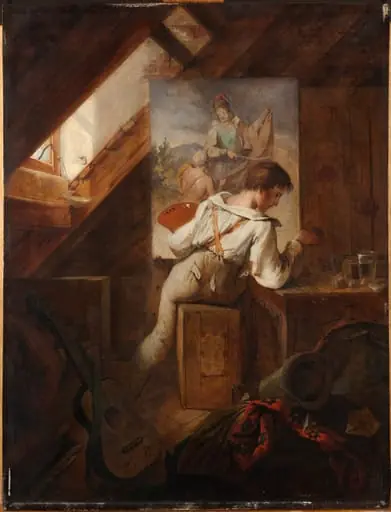 Der Maler im Dachstübchen
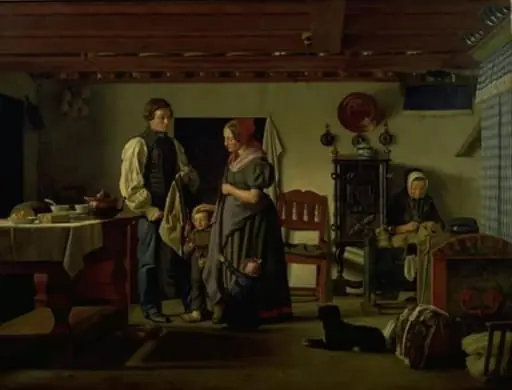 Reservesoldatens afsked med sin familie
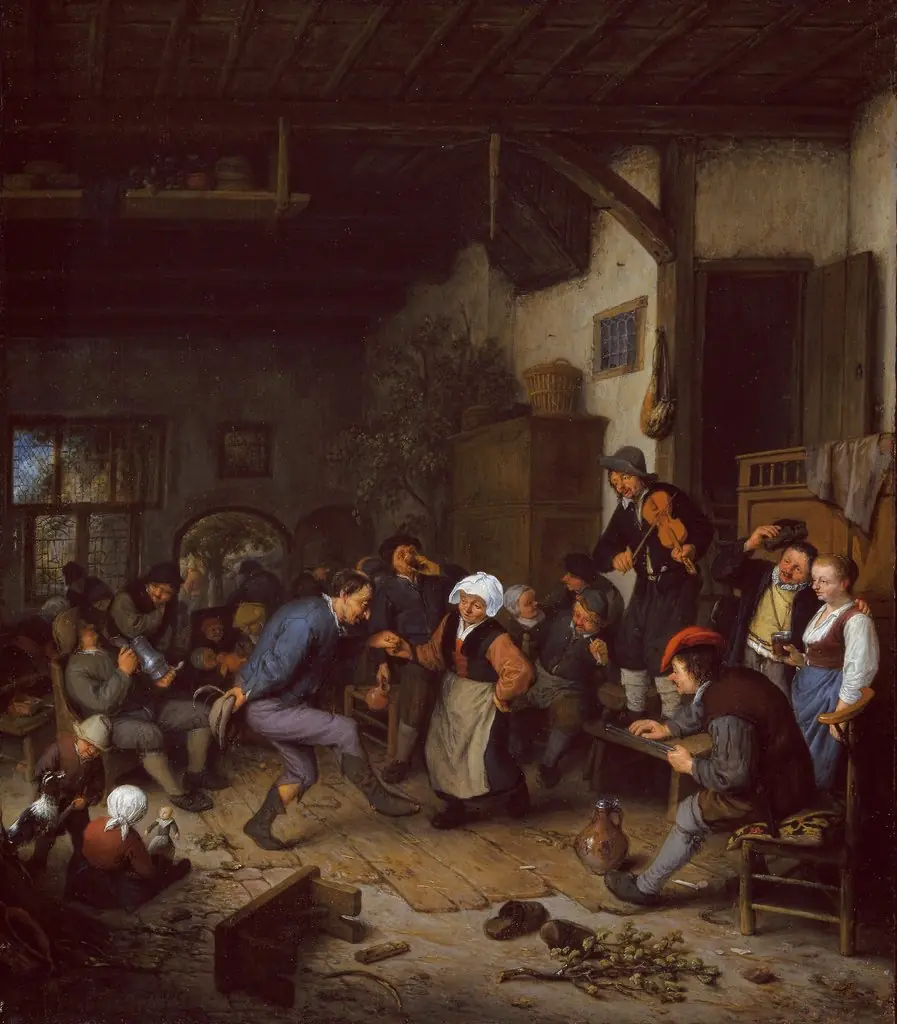 Merrymakers in an Inn
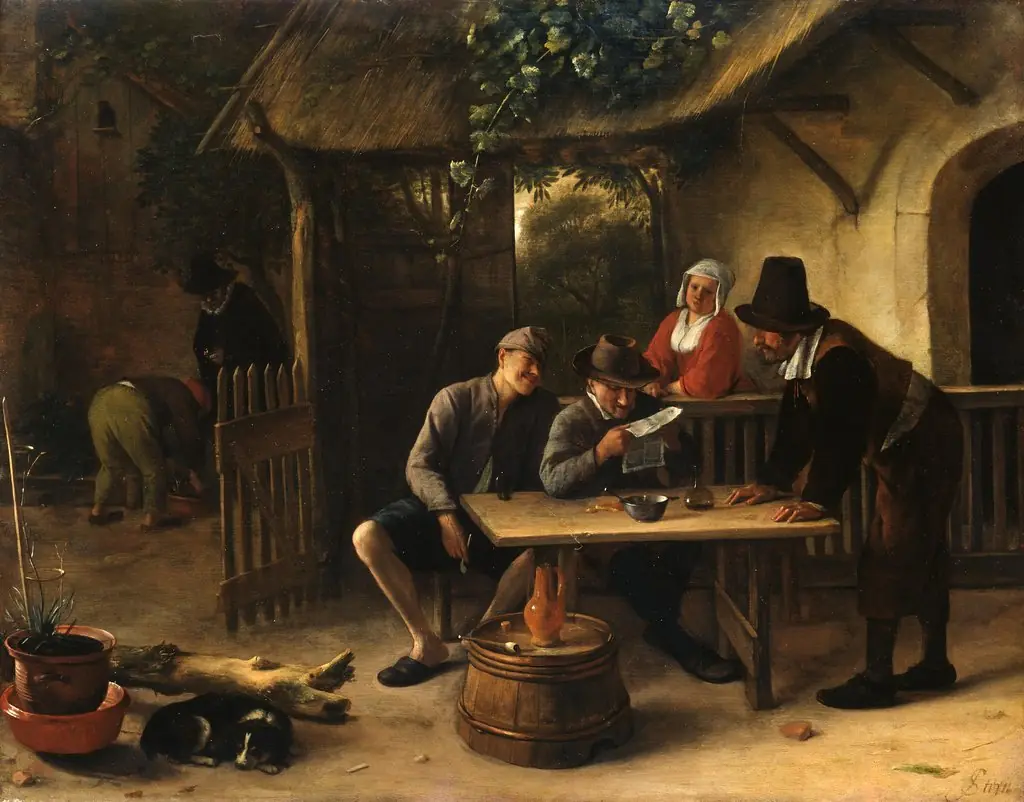 The News Reader
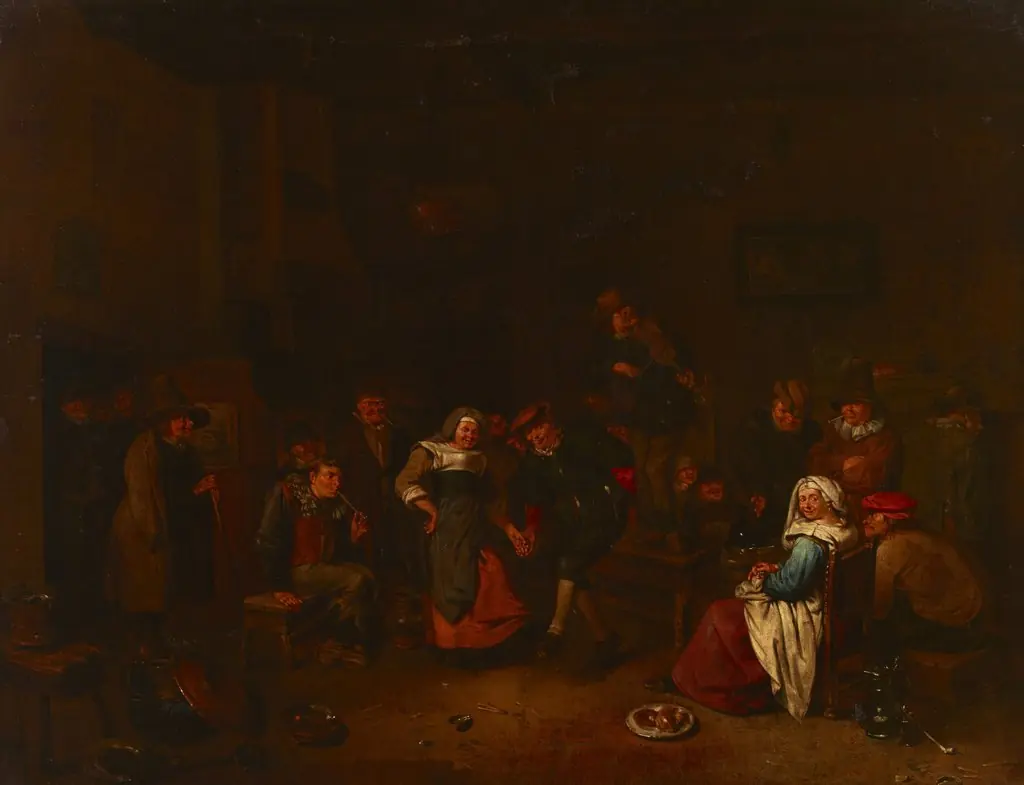 Dance at the Inn
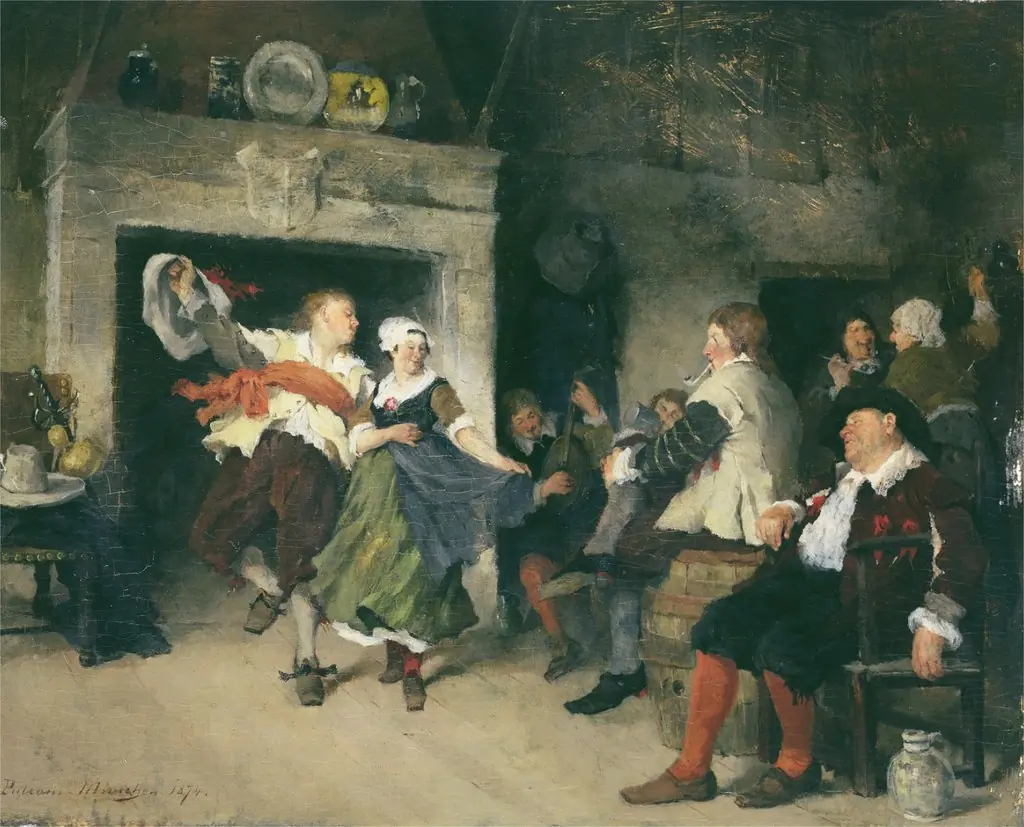 Couple Dancing in a Tavern
 Tavern Scene
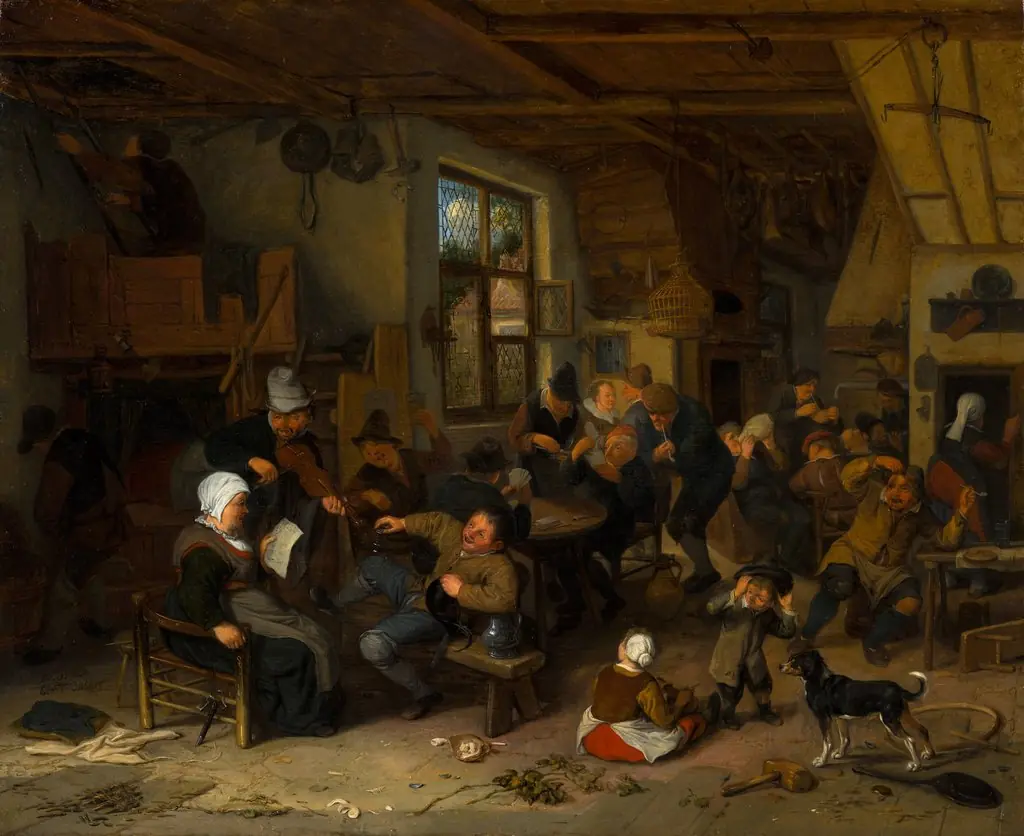 Peasant Inn