Artwork
Untitled
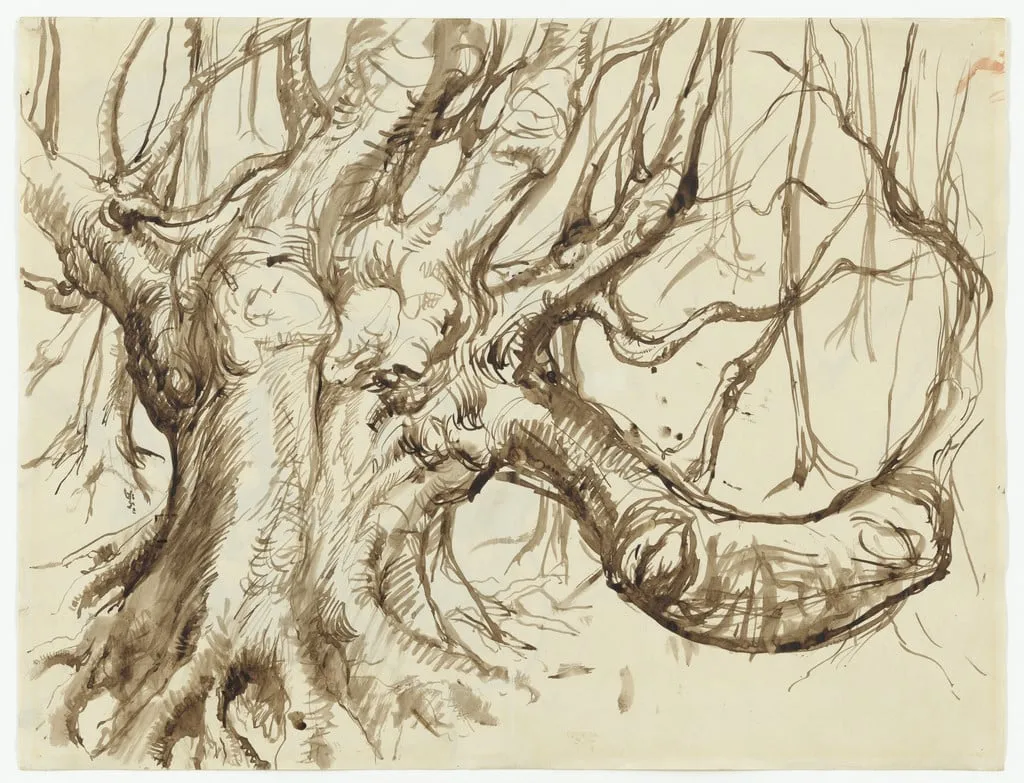
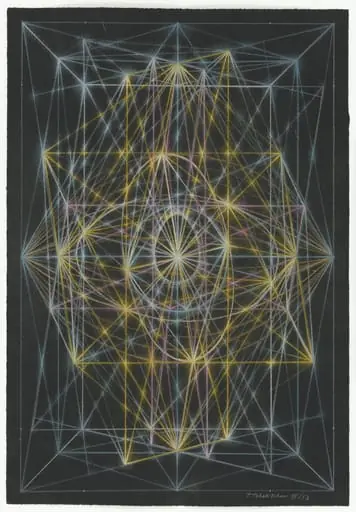
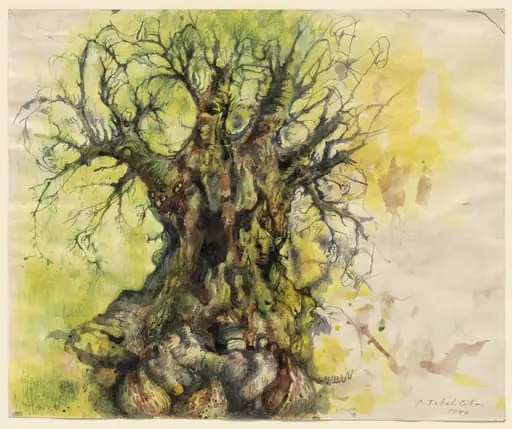
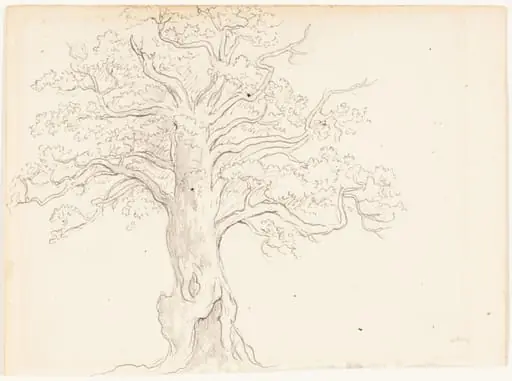
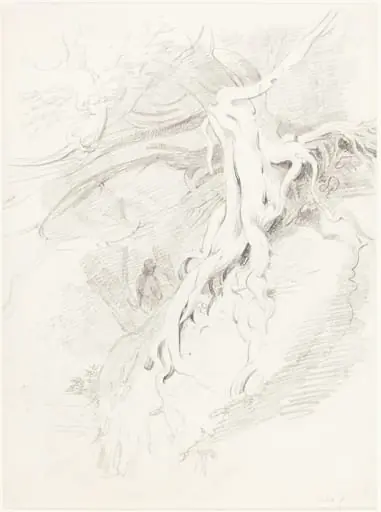
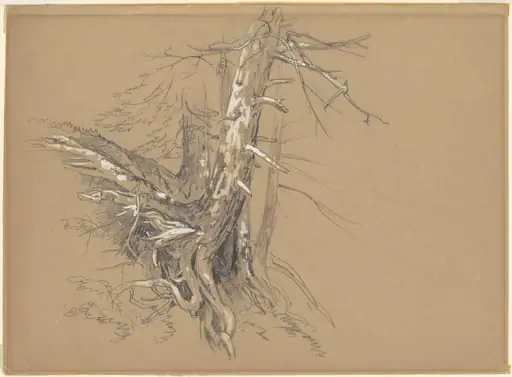
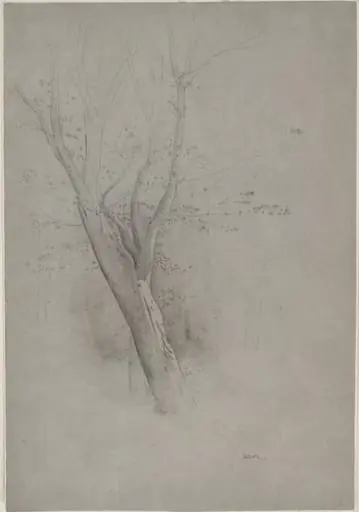
Untitled is an ink drawing by Pavel Tchelitchew. It dates from 1934 and is held in the collection of the Museum of Modern Art.
About this work
Overview
Created in 1934, this drawing by Pavel Tchelitchew is executed in colored ink on paper and resides in the Museum of Modern Art’s collection.
Created in 1934, this drawing by Pavel Tchelitchew is executed in colored ink on paper and resides in the Museum of Modern Art’s collection. Though untitled, it reflects the artist’s engagement with organic forms and expressive line work during his time in Europe before relocating to the United States. The medium’s immediacy aligns with his interest in capturing transient, internal visions through direct mark-making.
Subject & Meaning
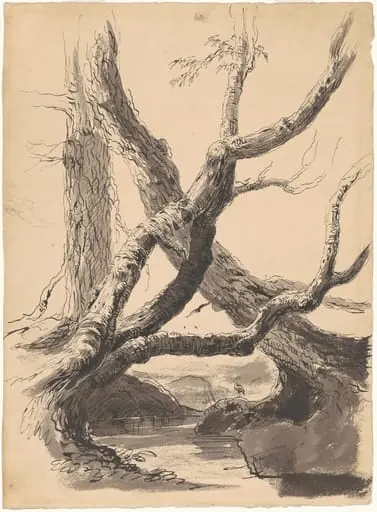
The drawing centers on a tree, rendered with exaggerated, twisting branches that suggest movement rather than botanical accuracy. Rather than a literal representation, the form evokes psychological tension or inner turmoil, consistent with Tchelitchew’s surrealist leanings. The tree becomes a vessel for emotional resonance, its gnarled structure implying growth under strain or the persistence of memory.
Technique & Style
Tchelitchew employed a varied ink line—thin, precise strokes alongside bold, fluid sweeps—to model volume and suggest texture. Color is applied with restraint, enhancing rather than overwhelming the drawing’s structure. The interplay of line weight and ink saturation creates a sense of depth, while the paper’s absorbency allows for subtle gradations, lending the image an intimate, spontaneous quality.
History & Provenance
Made during Tchelitchew’s early years in Paris, the work predates his move to New York and his later theatrical designs. It entered the Museum of Modern Art’s collection in the mid-20th century as part of a broader effort to document European modernist drawing. Its preservation reflects institutional recognition of his contributions beyond painting and stage design.
Context
In the 1930s, Tchelitchew was part of a generation of émigré artists reinterpreting surrealism through personal symbolism. While contemporaries like Dalí emphasized dream logic, Tchelitchew favored biomorphic abstraction rooted in natural forms. This drawing aligns with his broader practice of translating psychological states into vegetal, almost cellular compositions.
Legacy
Though less known than his stage designs, this drawing exemplifies Tchelitchew’s unique synthesis of European modernism and lyrical naturalism. It remains a quiet but significant example of how surrealist principles could be expressed through restrained, intimate media. Its presence in MoMA’s collection ensures its role in understanding the diversity of mid-century drawing practices.
Artist & collection

Artist
Pavel Fyodorovich Tchelitchew ( Che-LIT-chev; Russian: Па́вел Фёдорович Чели́щев) (3 October 1898 – 31 July 1957) was a Russian-born surrealist painter, set designer and costume designer.