Artwork
The Triumph of Chastity
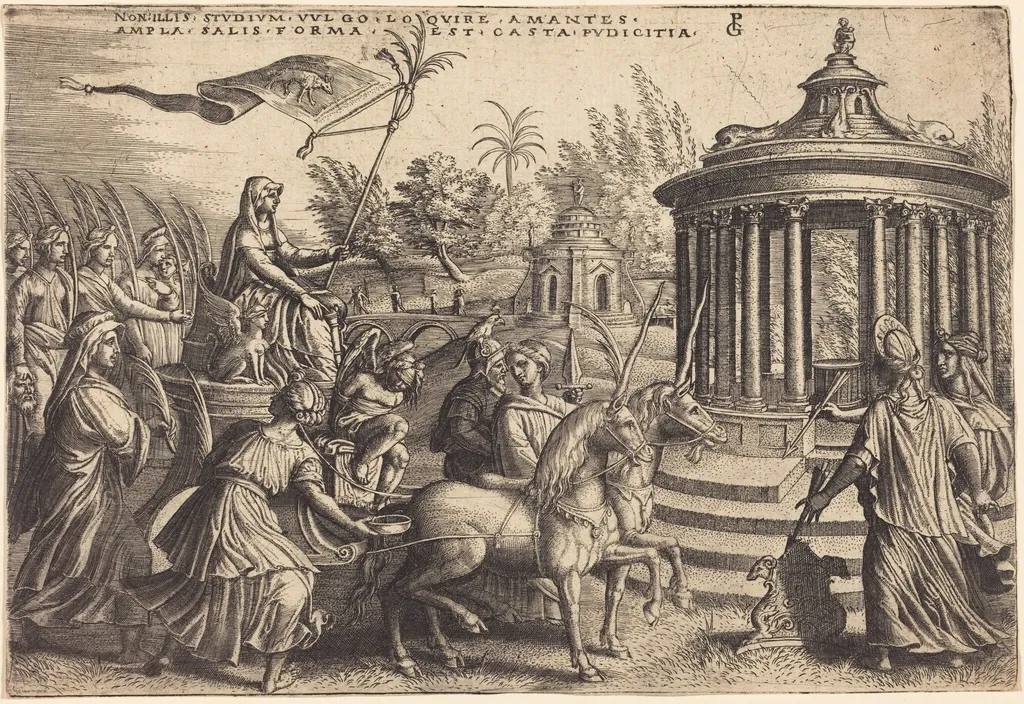
The Triumph of Chastity is an ink print by the Renaissance artist Georg Pencz. It dates from 1539 and is held in the collection of the National Gallery of Art.
About this work
Overview
A classical building, palm trees and a bridge frame the scene, and a Latin inscription crowns the composition.
Georg Pencz’s copperplate engraving titled *The Triumph of Chastity* dates to circa 1539. The print presents a crowded allegorical tableau in which a central female figure, armed with a spear, dominates a fallen male figure, while surrounding characters observe or bear various implements. A classical building, palm trees and a bridge frame the scene, and a Latin inscription crowns the composition.
Subject & Meaning
The work visualises the triumph of the virtue of chastity over licentiousness, a motif frequently employed by Renaissance artists to convey moral instruction. The spear held by the victorious woman signifies her assertive defense of purity, while the prostrate man embodies defeated sensuality. The surrounding figures, some bearing shields or tools, function as witnesses to the moral victory.
Technique & Style
Executed in fine line engraving, the image combines the meticulous hatching characteristic of Northern German printmaking with compositional gestures reminiscent of Venetian painting, reflecting Pencz’s exposure to Italian art during his travels. The dense crowd, architectural backdrop, and use of chiaroscuro through cross‑hatching demonstrate the artist’s skill in rendering depth and narrative within the limits of the medium.
History & Provenance
Pencz, a pupil of Albrecht Dürer in Nuremberg, produced the print during a period when his career spanned both painting and printmaking. The engraving was likely circulated among humanist circles that valued allegorical subjects. Surviving copies are found in several European print collections, indicating its distribution across the continent in the mid‑16th century.
Context
Created at the height of the Renaissance, the print aligns with a broader trend of using portable images to disseminate moral and classical themes. The emphasis on chastity reflects contemporary concerns about virtue in a society negotiating the tensions between medieval piety and emerging humanist ideals. The inclusion of a Latin motto underscores the learned audience for whom such works were intended.
Artist & collection
Artist
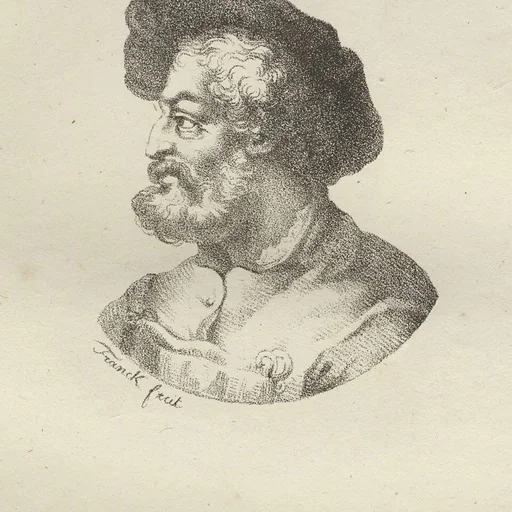
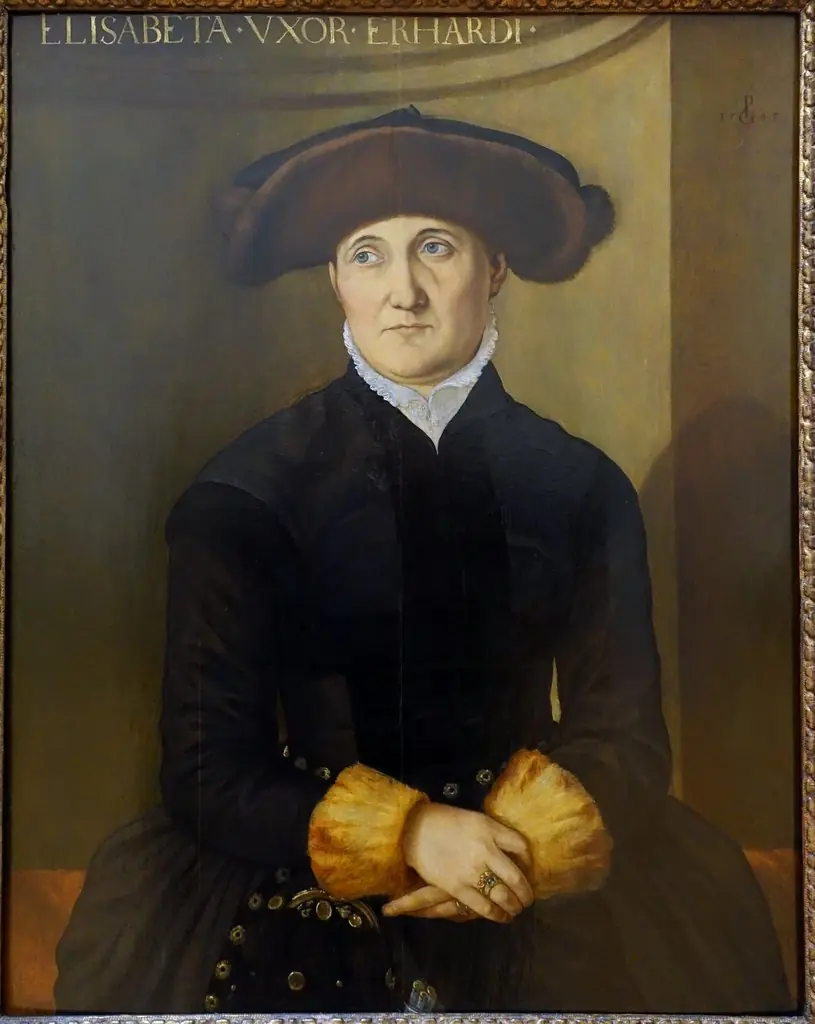
Georg Pencz (c. 1500 – 11 October 1550) was a German engraver, painter and printmaker. Pencz was probably born in Westheim near Bad Windsheim/Franconia. He travelled to Nuremberg in 1523 and joined Albrecht Dürer’s…

![Temporalis Aeternitas [Second Version], by Italian 17th Century](https://artifactworldgallery.com/img/italian-17th-century--temporalis-aeternitas-second-version--2b55857961773f67-w320.webp)