Artwork
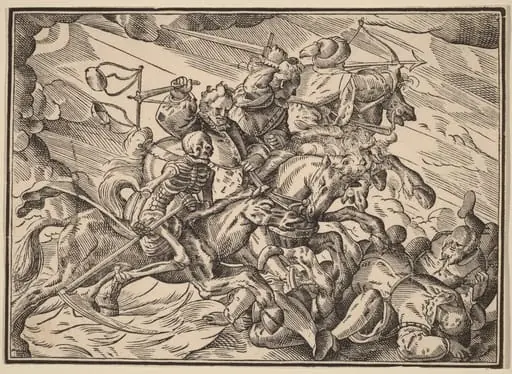
The Triumph of Death
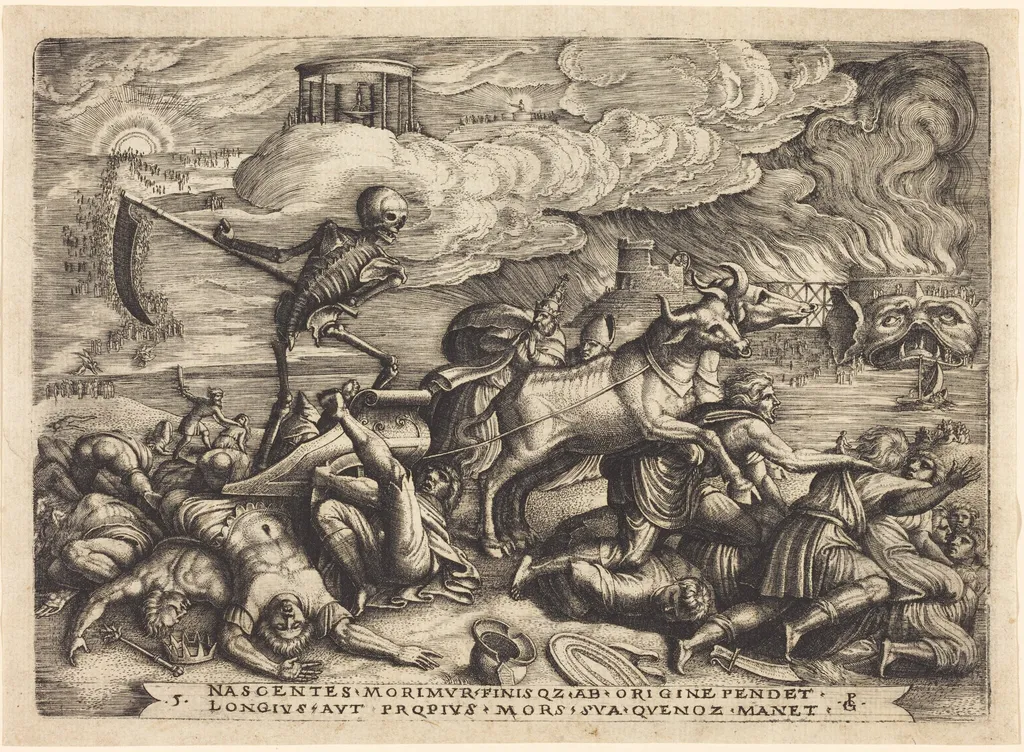
The Triumph of Death is an ink print by the Renaissance artist Georg Pencz. It dates from 1539 and is held in the collection of the National Gallery of Art.
About this work
Overview
Georg Pencz, a German artist active in the early sixteenth century, produced the engraving *The Triumph of Death* circa 1539. The work is a densely populated, somber composition rendered entirely in black ink, typical of the print medium.
Subject & Meaning
The image presents a nightmarish tableau of numerous figures caught in a chaotic, death‑laden landscape. The crowded scene conveys a moralizing vision of mortality that resonated with contemporary religious concerns about the fragility of life.
Technique & Style
Pencz employed fine cross‑hatching, a relatively recent development in printmaking, to model forms and suggest depth. The intricate network of intersecting lines creates subtle tonal variations, allowing the engraving to achieve a remarkable level of detail and atmospheric shading.
History & Provenance
Trained in Nuremberg under Albrecht Dürer, Pencz later traveled to Italy where he encountered Venetian aesthetics and worked with the printmaker Marcantonio Raimondi. These experiences informed the composition and technical execution of *The Triumph of Death*.
Context
The engraving reflects the broader currents of sixteenth‑century German art, where religious reform and apocalyptic imagination often intersected. Its themes align with contemporary preoccupations about death, plague, and moral reckoning.
Artist & collection
Artist
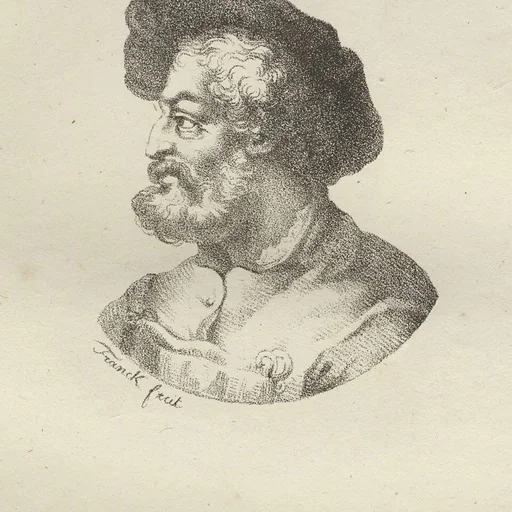
Georg Pencz (c. 1500 – 11 October 1550) was a German engraver, painter and printmaker. Pencz was probably born in Westheim near Bad Windsheim/Franconia. He travelled to Nuremberg in 1523 and joined Albrecht Dürer’s…