Artwork
Der Ritter (The Knight)
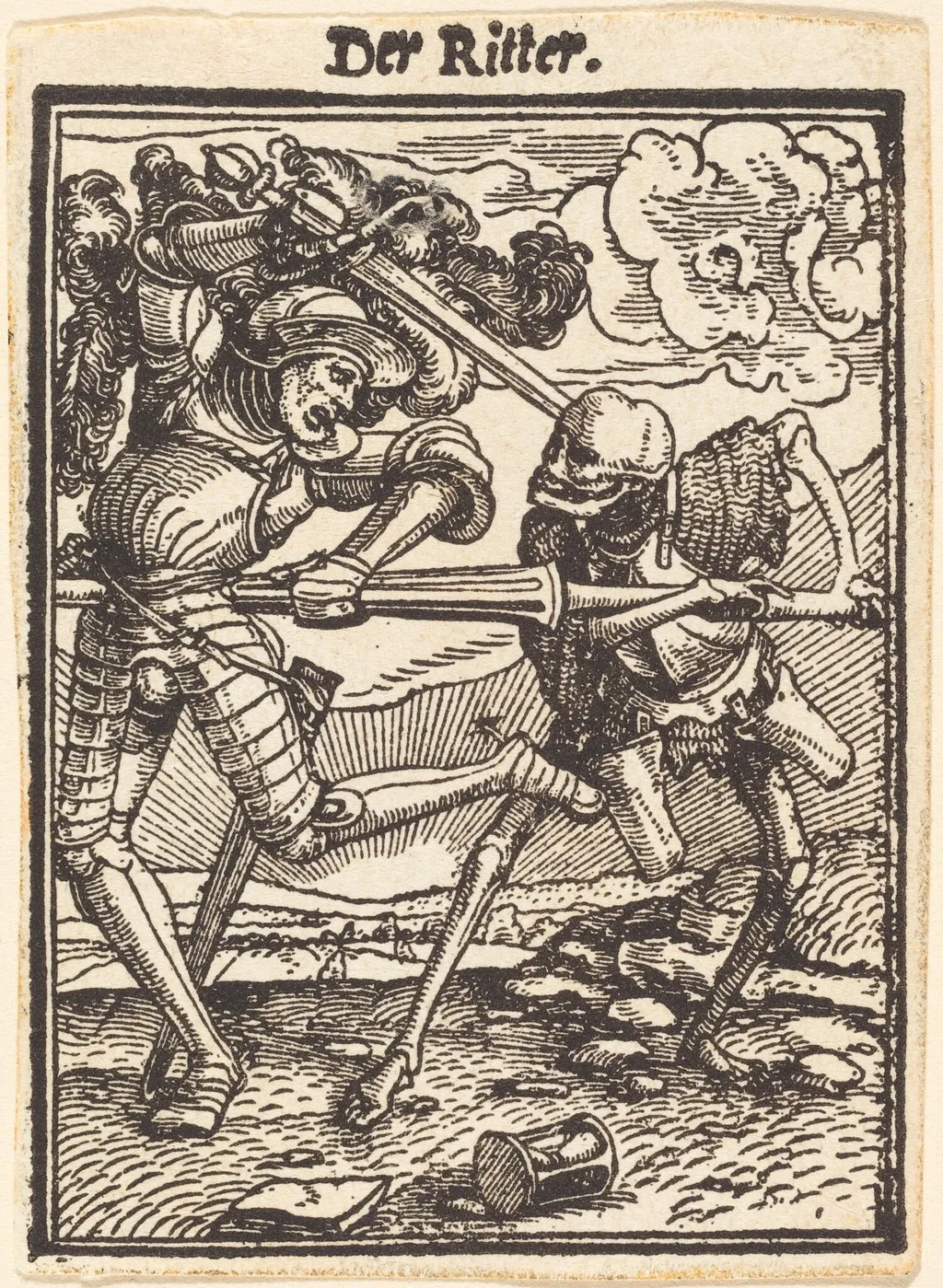
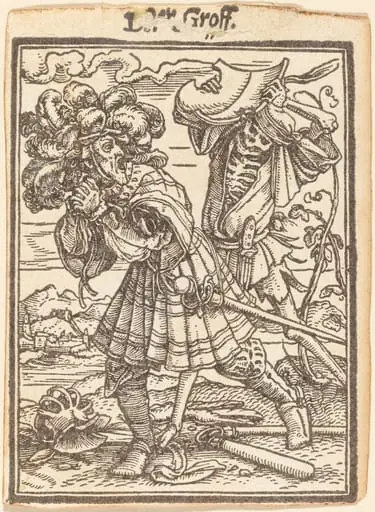
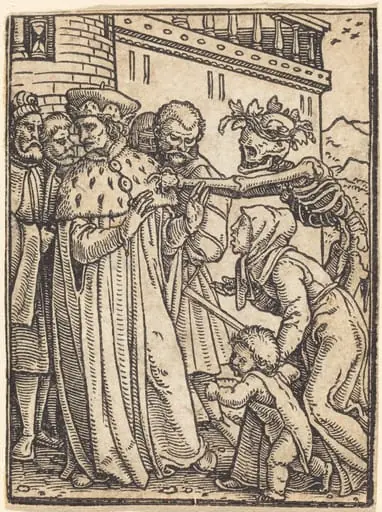
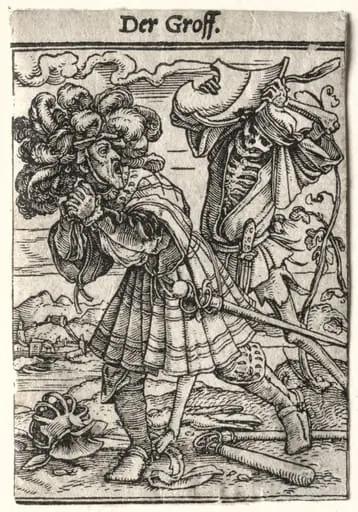
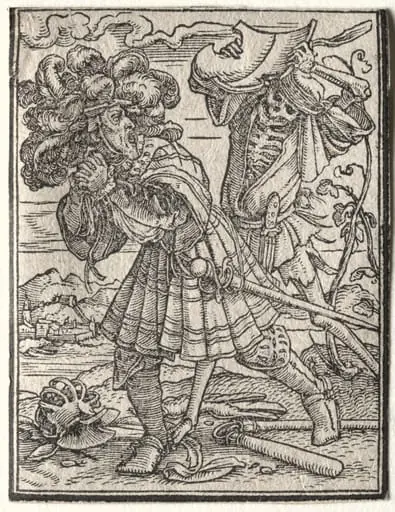
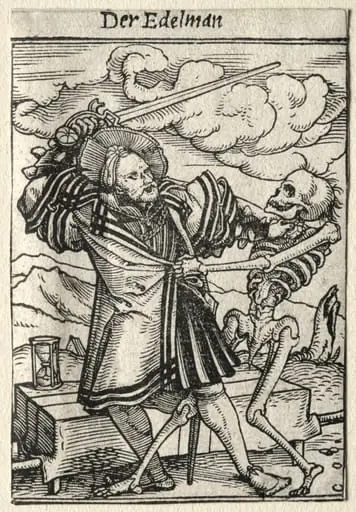
Der Ritter (The Knight) is an ink print by the Renaissance artist Hans Lützelburger. It dates from 1526 and is held in the collection of the National Gallery of Art.
About this work
Overview
Der Ritter (The Knight) is a small woodcut produced around 1526 by Hans Lützelburger, a master blockcutter active in Augsburg.
Der Ritter (The Knight) is a small woodcut produced around 1526 by Hans Lützelburger, a master blockcutter active in Augsburg. Though the design originated with Hans Holbein the Younger, Lützelburger executed the carving with exceptional precision. This print belongs to a series of miniature images intended for book illustration, reflecting the growing demand for finely detailed visual narratives in early 16th-century German publishing.
Subject & Meaning
The scene depicts two armored knights in mid-combat, one swinging a sword, the other thrusting with a lance. Their strained expressions and dynamic postures convey physical exertion and tension. Set against a sparse landscape of hills and clouds, the image evokes chivalric conflict without narrative context. It functions as a standalone vignette, likely meant to illustrate themes of martial virtue or the transience of earthly struggle within a larger moral or literary framework.
Technique & Style
Lützelburger employed fine, controlled lines to render intricate armor textures and the muscular anatomy of the horses. Subtle tonal contrasts, achieved through varying line density, create a sense of volume and shadow—reminiscent of chiaroscuro. The composition is tightly framed, emphasizing the figures’ movement and interaction. Despite its small scale, the print demonstrates technical mastery in preserving fine detail across the entire woodblock surface.
History & Provenance
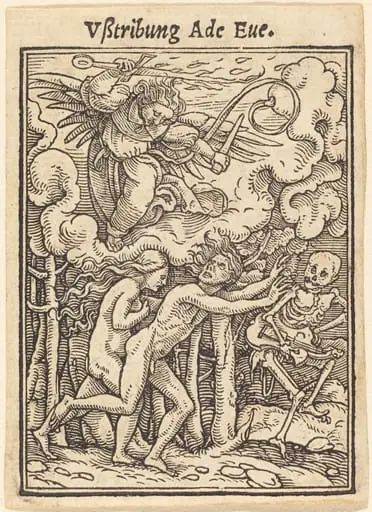
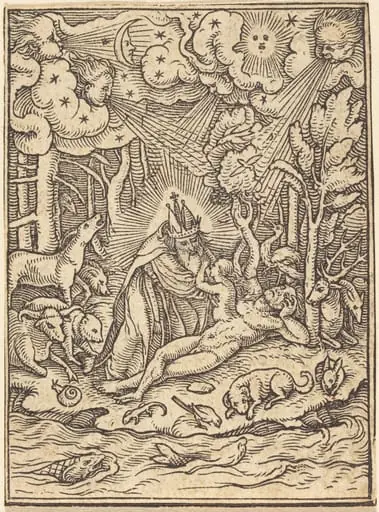
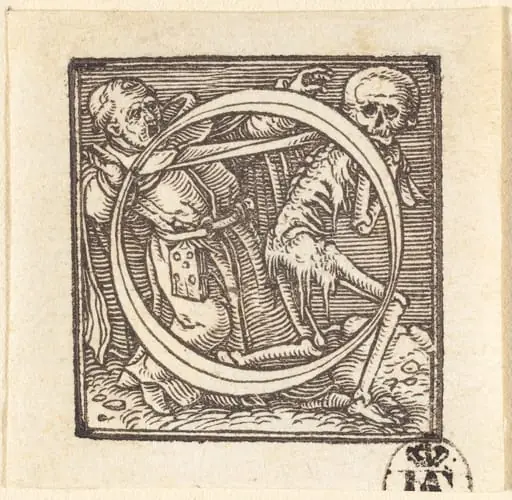
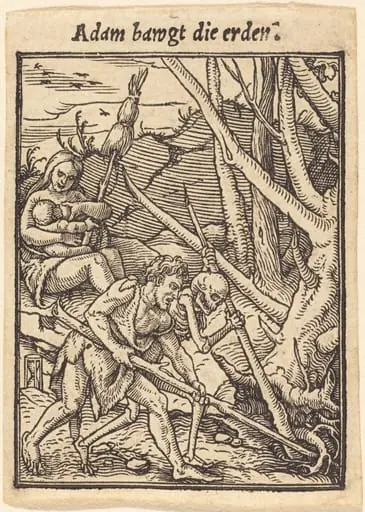
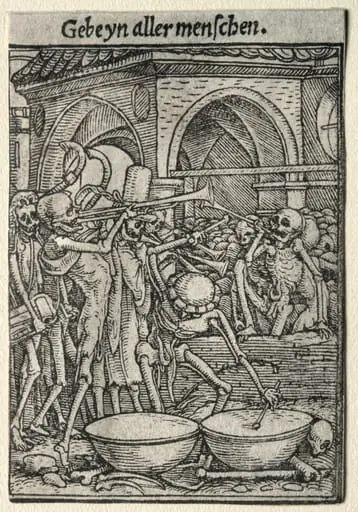
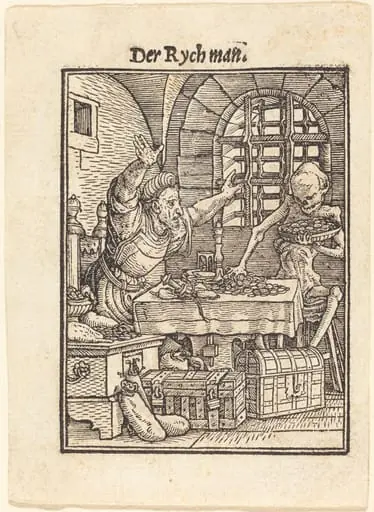
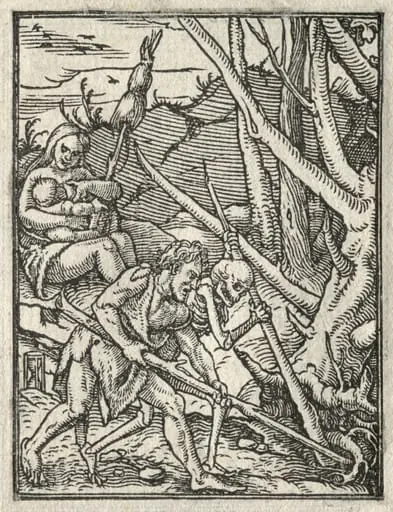
Lützelburger worked in Augsburg from approximately 1516, trained under Jost de Negker and often signed his blocks on the reverse. He was commissioned to carve 41 plates for Holbein’s Dance of Death series, which remained incomplete at his death in June 1526. Der Ritter was likely carved shortly before his passing, placing it among his final works. Its survival reflects the high regard for his craftsmanship in contemporary printmaking circles.
Context
In the 1520s, Augsburg was a hub for illustrated books, where artists and craftsmen collaborated to produce affordable, high-quality prints for a growing literate public. Holbein’s designs, rendered in precise draftsmanship, were ideal for woodcut reproduction. Lützelburger’s skill bridged artistic vision and technical execution, enabling complex imagery to reach audiences beyond elite patrons through printed media.
Legacy
Lützelburger’s work set a benchmark for precision in woodcut carving during the Northern Renaissance. Though he did not originate the designs, his ability to translate Holbein’s drawings into finely detailed blocks influenced later printmakers. His unfinished Dance of Death series, completed by others after his death, continued to circulate widely, cementing his reputation as a craftsman of exceptional technical rigor.
Artist & collection

Artist
Hans Lützelburger (died June 1526), also known as Hans Franck, was a German blockcutter ("formschneider") for woodcuts, regarded as one of the finest of his day.