Artwork
Paestum, Evening
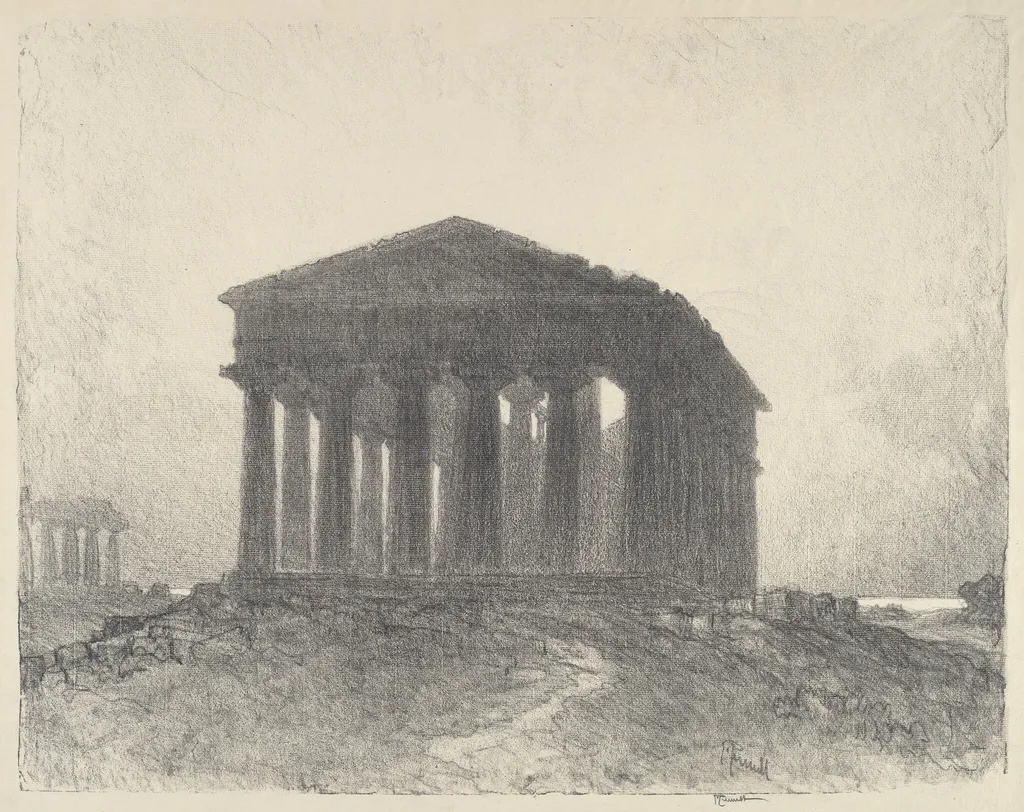
Paestum, Evening is an ink print by Joseph Pennell. It dates from 1913 and is held in the collection of the National Gallery of Art.
About this work
Overview
Joseph Pennell’s 1913 lithograph *Paestur, Evening* captures the ancient Greek temple complex at Paestum, a coastal site in southern Italy, as the light wanes. The image presents a solitary, deteriorating structure whose columns and flat roof are silhouetted against a dimming sky, emphasizing the passage of time and the quiet of twilight.
Subject & Meaning
The work focuses on the ruins of a classical temple, highlighting the contrast between the enduring stone forms and the surrounding debris. By portraying the building in a state of partial collapse yet retaining a sense of solidity, Pennell suggests both the fragility and resilience of antiquity.
Technique & Style
Executed in lithography, the print relies on loose, sketch‑like lines that convey texture and erosion in the stone. The tonal gradation, with light receding from the left, creates deep shadows that reinforce the evening atmosphere while the uneven ground and scattered rocks add a tactile quality to the composition.
History & Provenance
Pennell, an American artist trained under James Lambdin and Thomas Eakins, spent much of his career abroad, documenting historic sites and industrial scenes. *Paestur, Evening* was produced during his European period, reflecting his interest in architectural landmarks and his mastery of print media.
Context
The lithograph belongs to a broader body of work in which Pennell recorded European monuments, often employing a realist eye influenced by James McNeill Whistler. The piece aligns with early‑20th‑century interests in classical heritage and the romantic allure of ruins.
Own this work as a print
Artist & collection
Artist
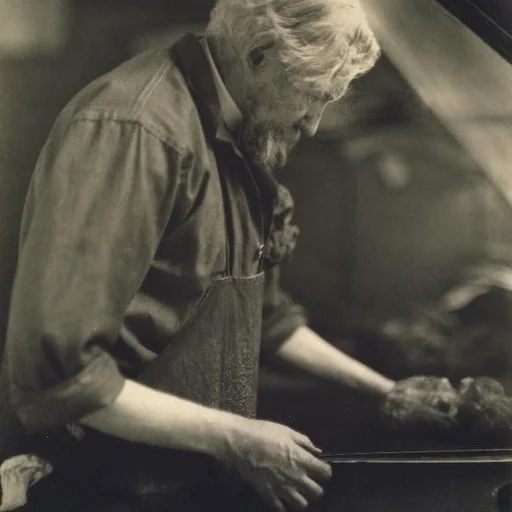
Joseph Pennell (July 4, 1857 – April 23, 1926) was an American draftsman, etcher, lithographer, and illustrator for books and magazines.

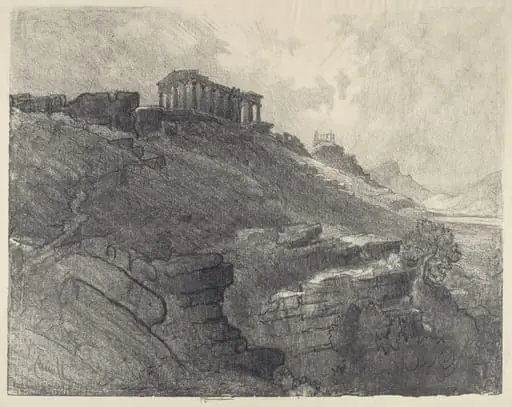 The Temples on the Wall, Girgenti
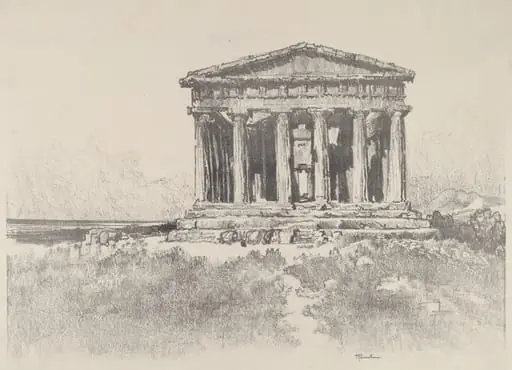 The Temple by the Sea, Temple of Concord, Girgenti
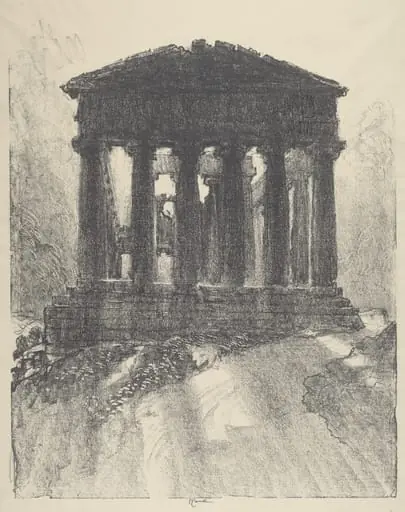 Sunrise Behind Temple of Concord, Girgenti
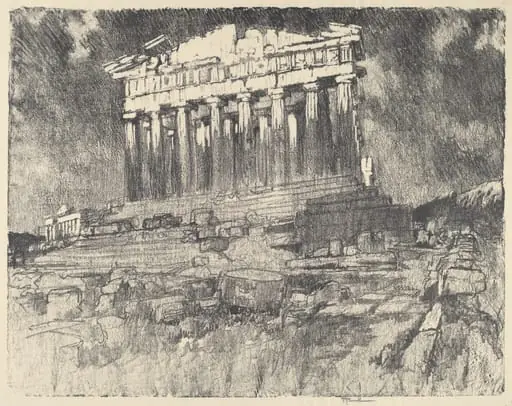 The Facade of the Parthenon, Sunset
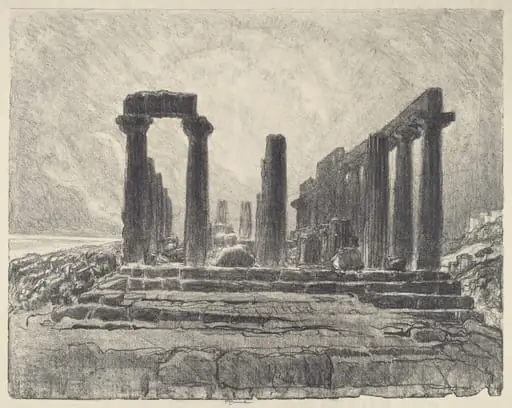 Columns of the Temple of Juno, Girgenti
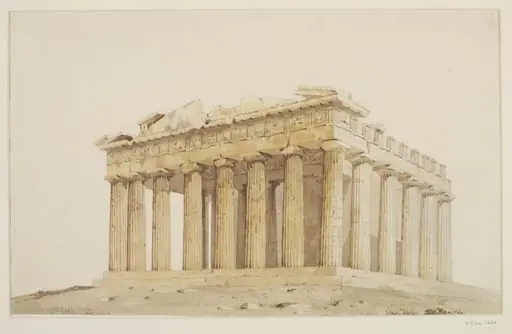 Untitled
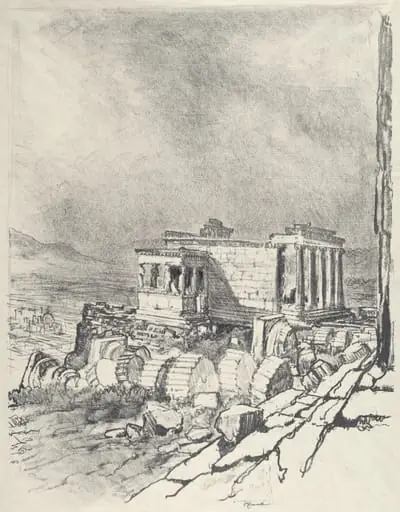 The Erechtheum
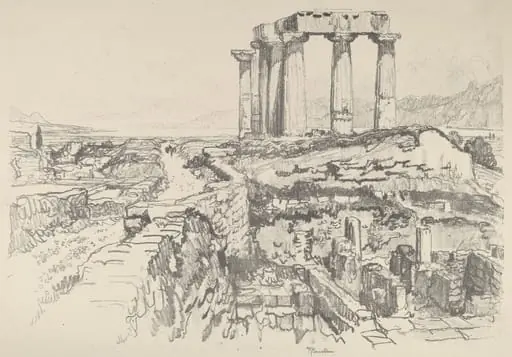 Corinth, towards the Gulf
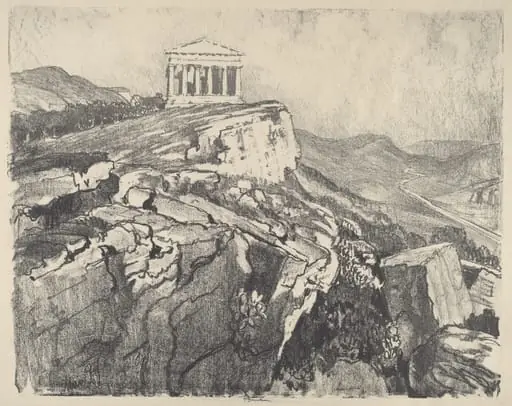 The Temple of Concord on the Wall, Girgenti
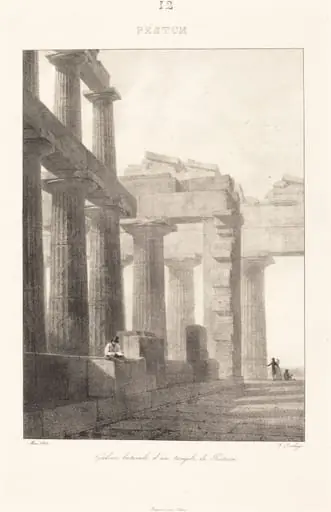 Galerie latérale d'un temple de Pestum
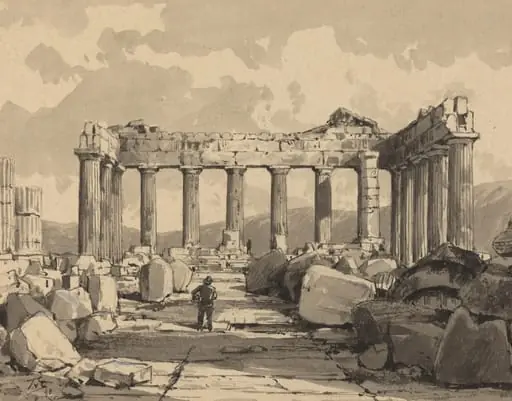 Parthenon, Inside
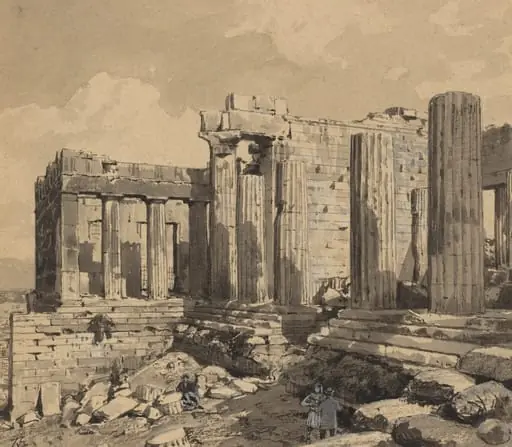 Propylaeum