Artwork
Rossetti's House
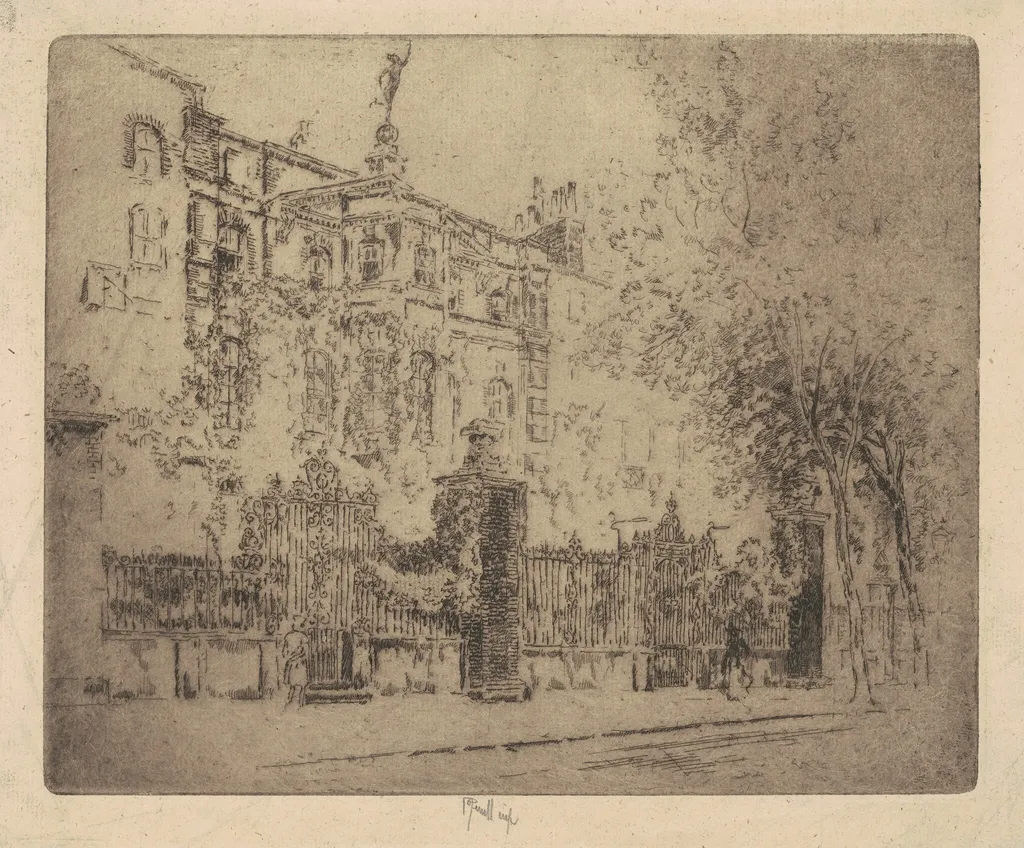
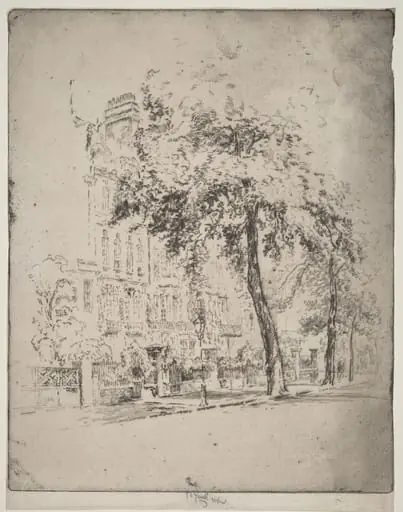
Rossetti's House is an ink print by Joseph Pennell. It dates from 1906 and is held in the collection of the National Gallery of Art.
About this work
Overview
Joseph Pennell's etching depicts a stately residence viewed from the street, its facade softened by surrounding foliage and enclosed by intricate ironwork.
Joseph Pennell's etching depicts a stately residence viewed from the street, its facade softened by surrounding foliage and enclosed by intricate ironwork. Rendered in monochrome sepia, the print emphasizes texture and form through precise line work. Executed as a drypoint, the image was created by scratching directly into a metal plate, then inked and pressed onto laid paper to produce a single impression with delicate tonal gradations.
Subject & Meaning
The subject is a private residence, likely in London, suggesting a quiet urban sanctuary amid the city’s growth. The framing trees and gated entrance imply seclusion and permanence, while the statue atop the roof adds a classical note, hinting at the homeowner’s cultural aspirations. Pennell’s focus on ordinary architecture elevates the mundane into a contemplative scene, free from narrative or drama.
Technique & Style
Pennell employed drypoint etching, a method involving direct incision into a metal plate with a hardened needle. This technique produces rich, velvety lines that retain ink well, allowing subtle shading and fine detail. The monochromatic palette enhances the interplay of light and shadow across stone, iron, and foliage, reflecting Pennell’s preference for atmospheric realism over bold contrast.
History & Provenance
Created in the late 19th or early 20th century, the print belongs to Pennell’s series documenting urban architecture and domestic spaces. It was likely made during a period when he traveled extensively through Britain and Europe, recording buildings with precision and restraint. The work remained in private collections until entering institutional holdings, where it is now preserved as part of his architectural oeuvre.
Context
Pennell worked during a time of rapid urban change, when industrialization reshaped cityscapes. His etchings often captured buildings that stood as quiet witnesses to modernization. Unlike contemporaries who emphasized movement or social commentary, he favored stillness and detail, aligning his work with the tradition of topographical printmaking and the growing interest in architectural preservation.
Legacy
Pennell’s etchings, including this one, contributed to a renewed appreciation for architectural detail in printmaking. His method influenced later artists interested in the interplay of structure and environment. Though not widely exhibited today, his works remain referenced in studies of late-Victorian and Edwardian urban documentation, valued for their technical restraint and observational clarity.
Artist & collection
Artist
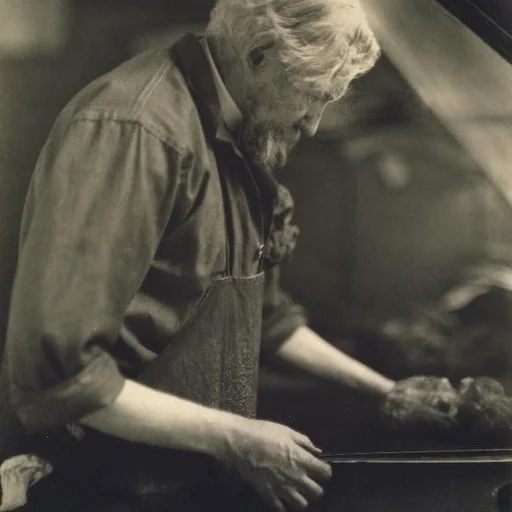
Joseph Pennell (July 4, 1857 – April 23, 1926) was an American draftsman, etcher, lithographer, and illustrator for books and magazines.

 House Where Whistler Died
 Big Tree, Cheyne Walk
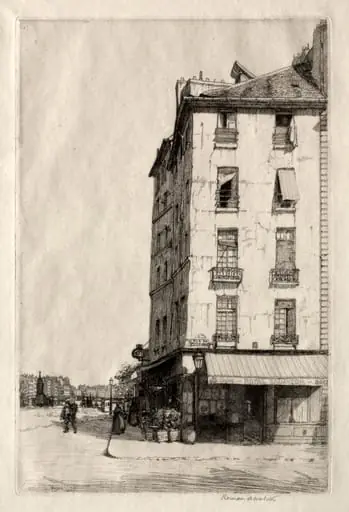 Quay Montebello
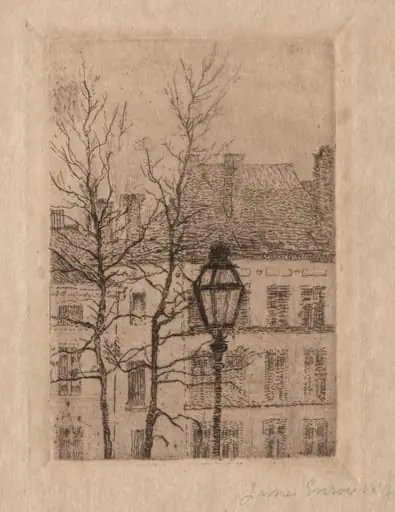 The Street Lamp
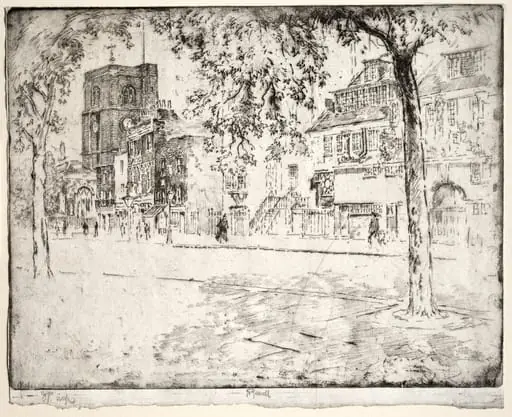 House Where Whistler Died
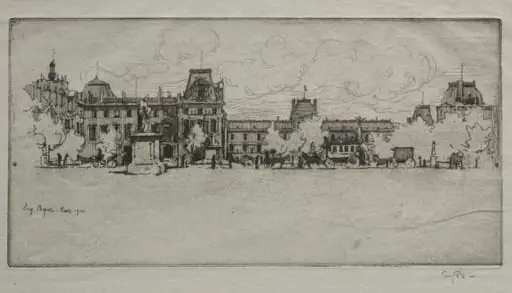 Les Tuileries
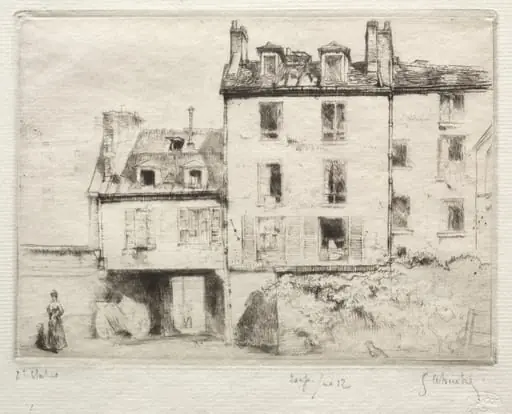 La rue Lacépède: le cour de l'Aciereur Cottens
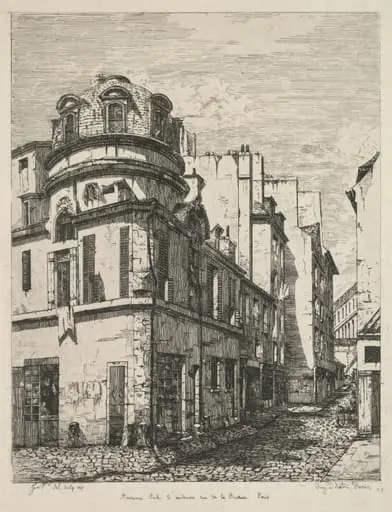 Eaux-Fortes sur le Vieux Paris: Ancienne école de médecine rue de la Bûcherie (Etchings of Old Paris: Former Medical School, rue de la Bucherie)
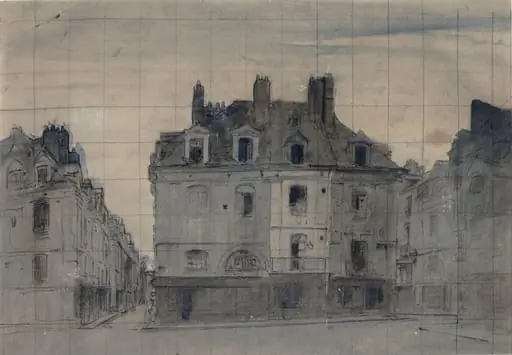 The Haunted House, Dieppe
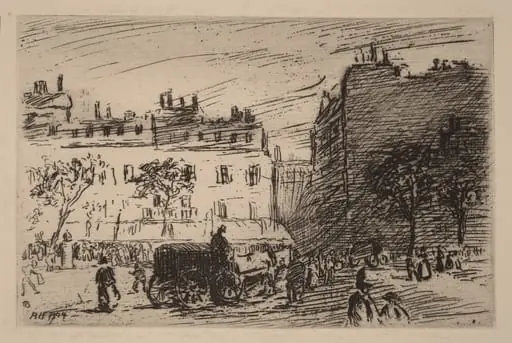 Paris Street Scene