Artwork
Unloading Ore
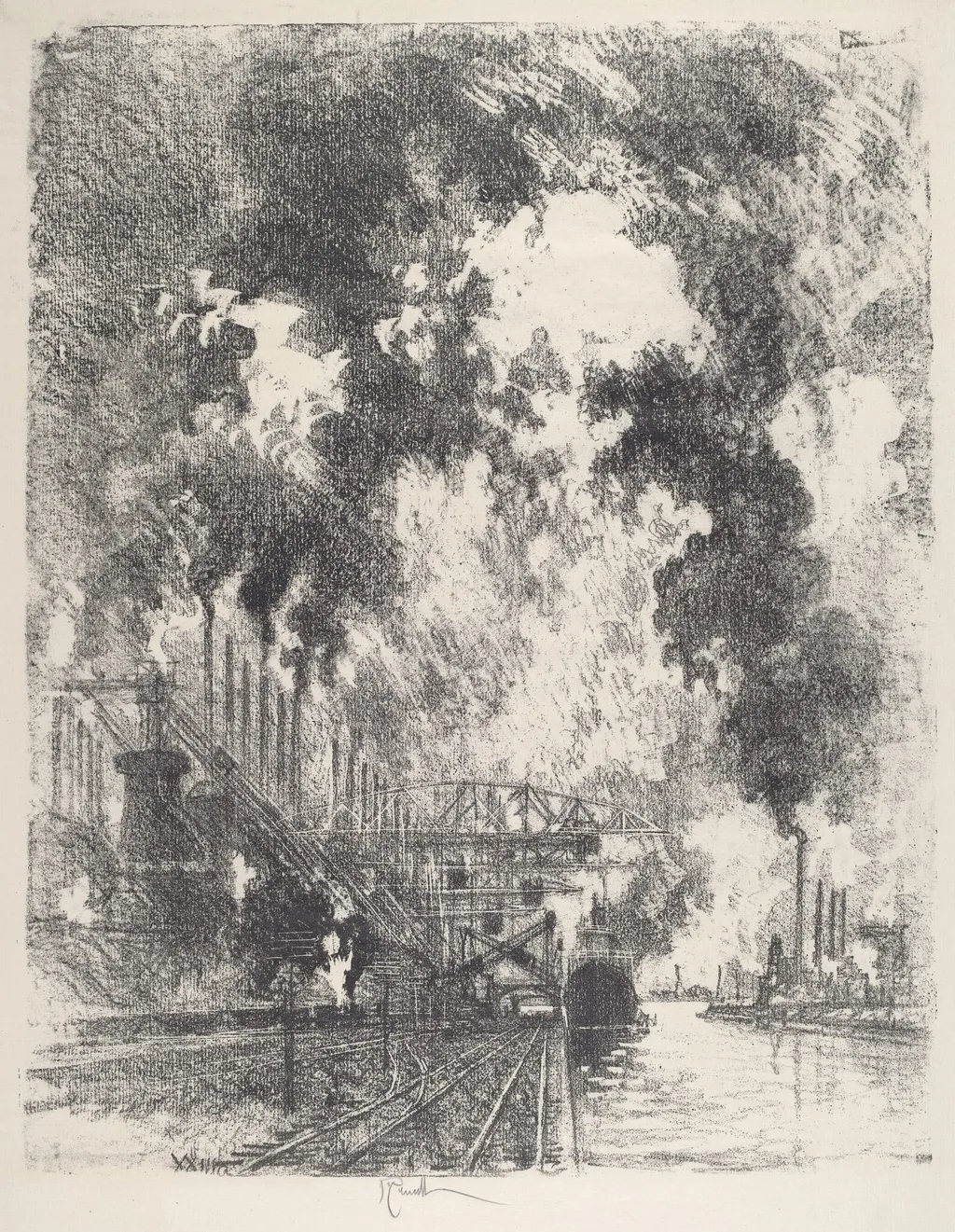
Unloading Ore is an ink print by Joseph Pennell. It dates from 1917 and is held in the collection of the National Gallery of Art.
About this work
Overview
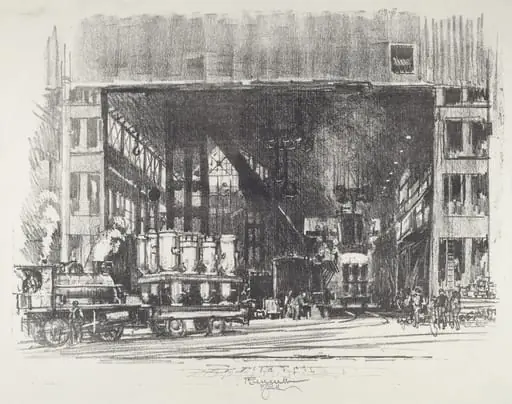
Created in 1917, *Unloading Ore* is a lithographic print by American artist Joseph Pennell. The image captures a bustling dock where a vessel is being emptied of its cargo, with workers, ropes, and stacked crates dominating the foreground. The composition balances industrial activity with a muted natural backdrop, featuring tangled trees and a faint sky.
Subject & Meaning
The work documents a moment of labor-intensive loading operations, emphasizing the scale of early twentieth‑century maritime commerce. By foregrounding the physical effort of dockworkers and the mass of goods, Pennell highlights the visual power of modern industry within a landscape context.
Technique & Style
Executed in lithography, the print employs a rough, textured line quality that suggests rapid, gestural drawing. The scratched, uneven strokes convey movement and immediacy, reinforcing the sense of a busy, transient scene.
History & Provenance
Pennell produced the piece while residing in Europe, a period during which he frequently rendered industrial subjects alongside European vistas. Trained under James Lambdin and Thomas Eakins and later influenced by James McNeill Whistler, he was known for his draftsman’s precision and his collaborations with his wife, writer Elizabeth Robins.
Context
*Unloading Ore* reflects Pennell’s broader interest in the visual impact of contemporary industry, a theme that appears throughout his oeuvre of prints, etchings, and drawings. The work aligns with early twentieth‑century artistic explorations of mechanization and urban labor.
Own this work as a print
Artist & collection
Artist
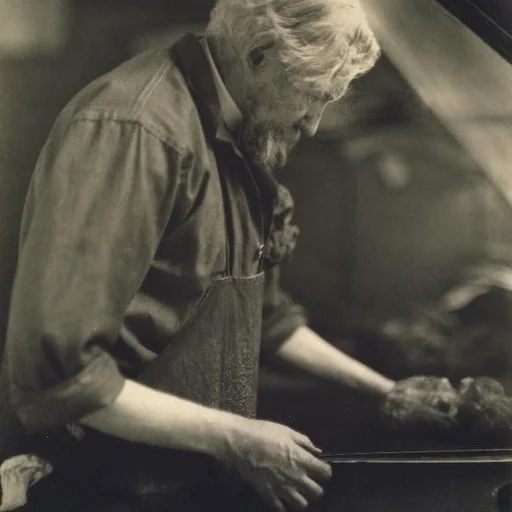
Joseph Pennell (July 4, 1857 – April 23, 1926) was an American draftsman, etcher, lithographer, and illustrator for books and magazines.

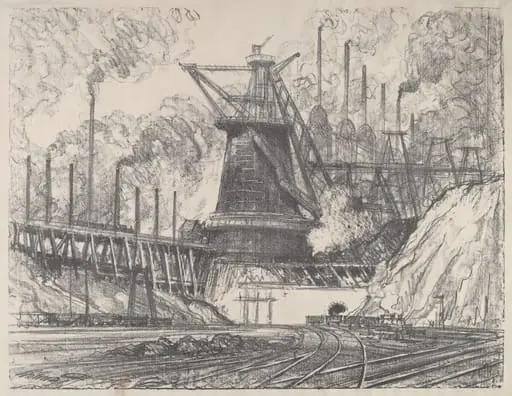 The Big Mill, Gary, Indiana
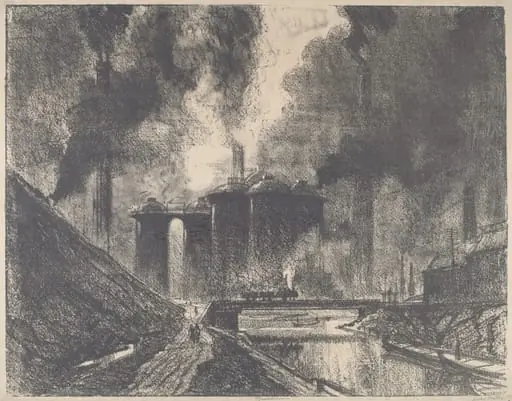 Work Castles, Wolverhampton
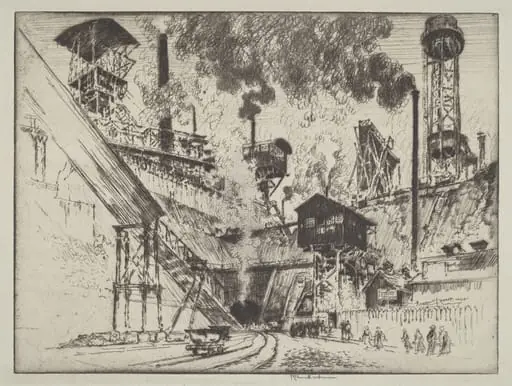 Mouth of the Mine, Ruhrort near Oberhausen
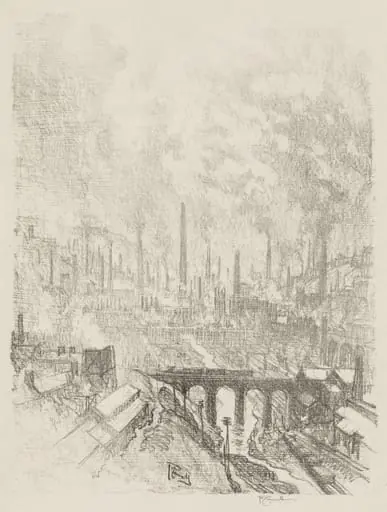 English War Work: Munitions City, No. 1
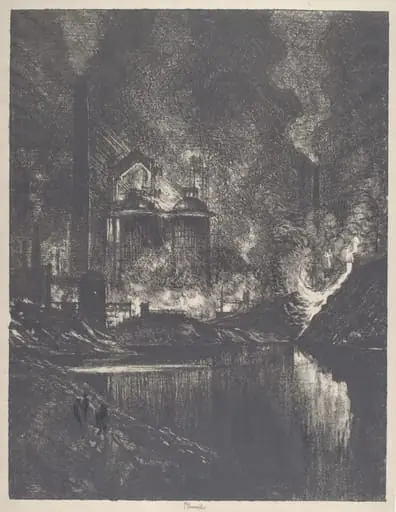 The Lake of Fire, Charleroi
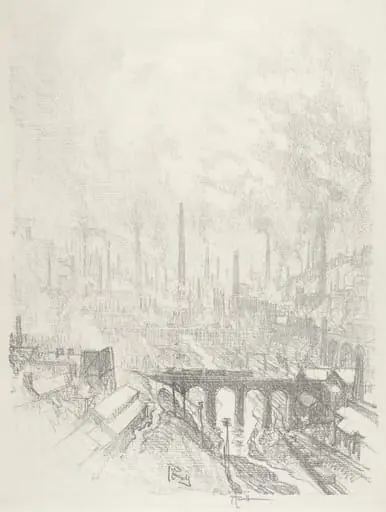 Munitions City, No.I
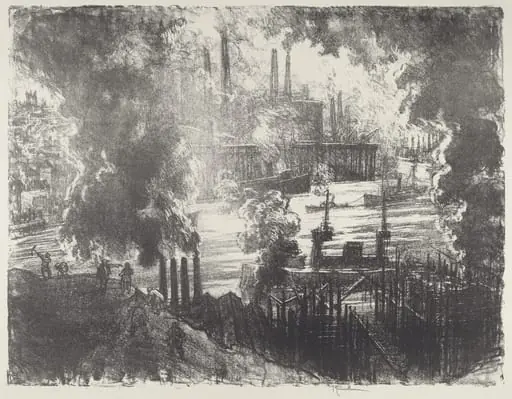 Munitions River
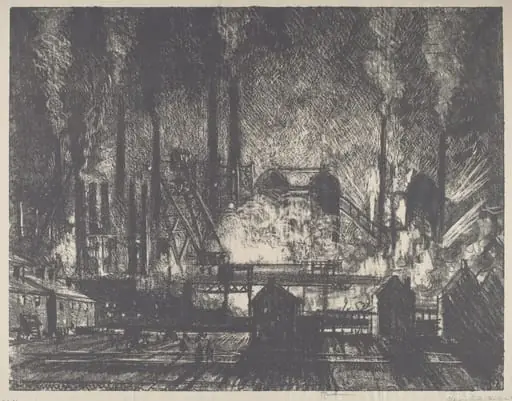 Changing Shifts, Charleroi
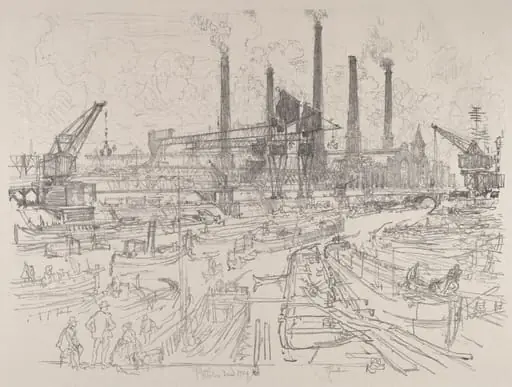 Power-House, Berlin
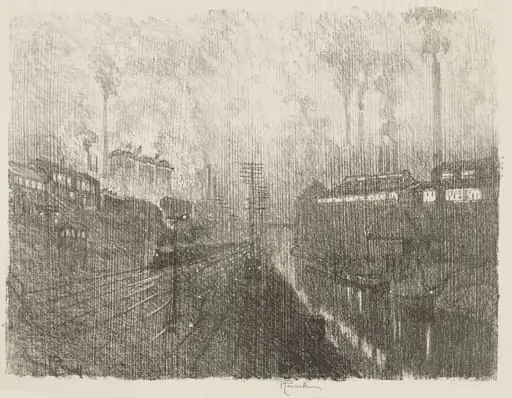 English War Work: Evening in the Munitions Country
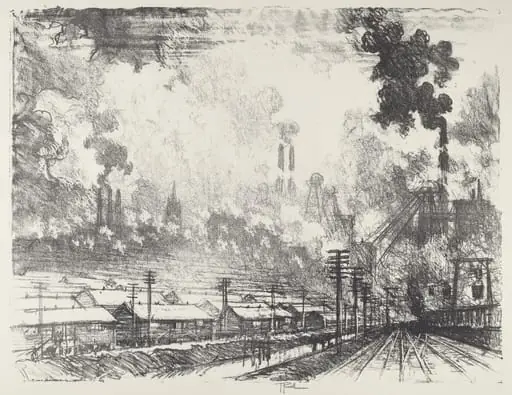 The Coal Mine
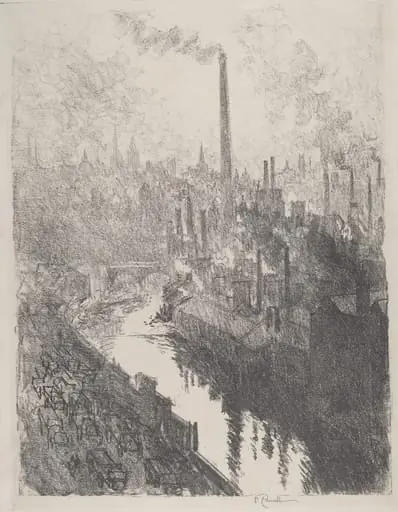 The Great Chimney, the Motor Park