Artwork
Saviour
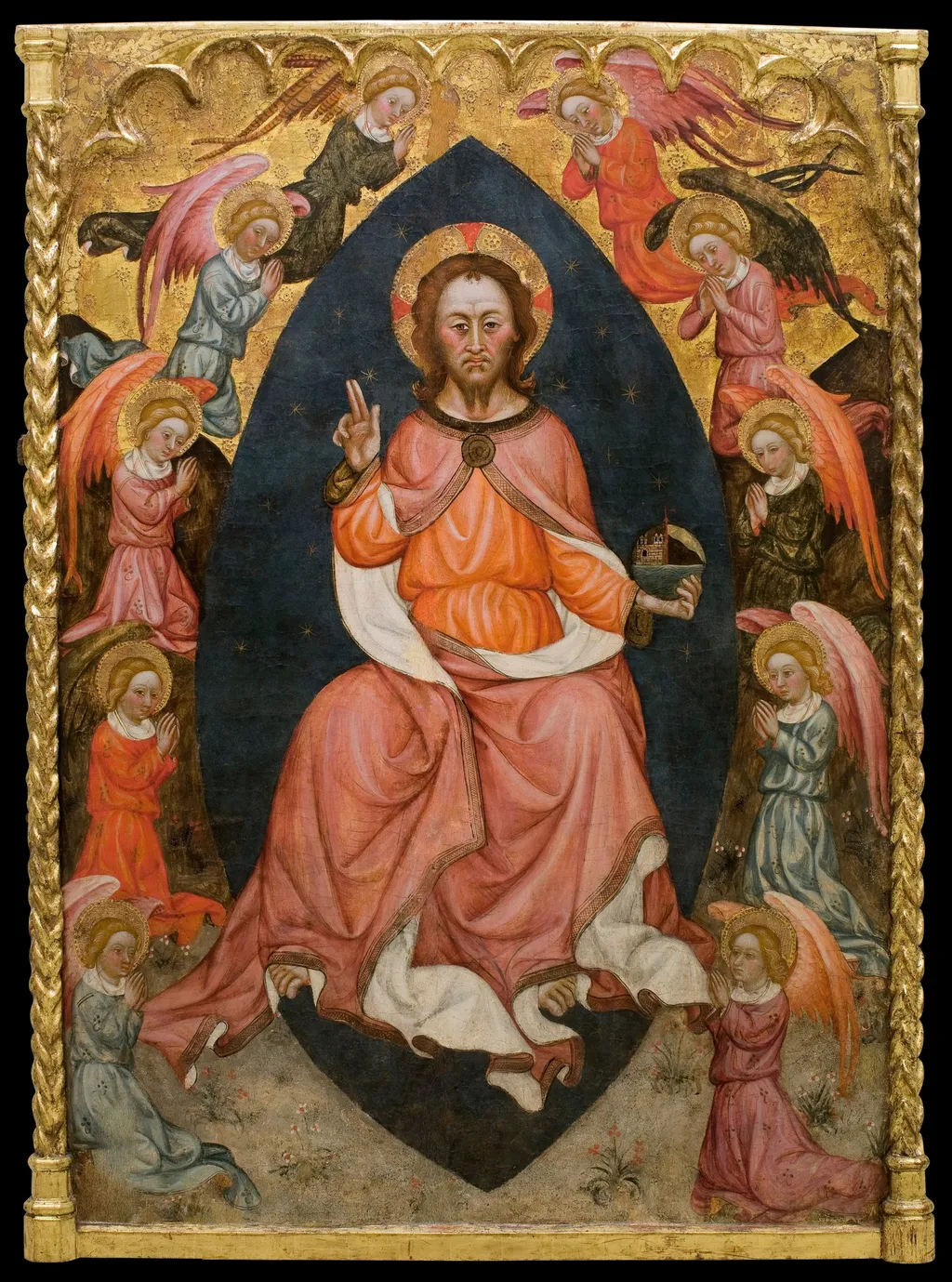
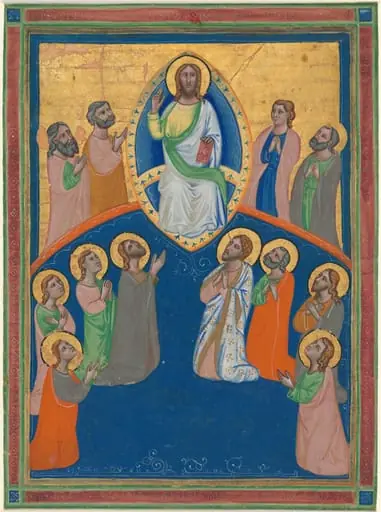
Saviour is an unspecified painting by the Early Renaissance artist Pere Teixidor. It dates from 1425 and is held in the collection of the Museu Nacional d'Art de Catalunya.
About this work
Overview
The work is part of the collection at the Museu Nacional d'Art de Catalunya and exemplifies the late Gothic religious painting tradition in Catalonia.
Painted in 1425 by Pere Teixidor, this devotional image depicts Christ as the Saviour, enclosed within an oval frame. The work is part of the collection at the Museu Nacional d'Art de Catalunya and exemplifies the late Gothic religious painting tradition in Catalonia. Its composition centers on Christ’s serene presence, framed by angels and ornamental gold detailing, reflecting its liturgical function.
Subject & Meaning
Christ is portrayed holding a miniature church, symbolizing his role as founder and protector of the Christian faith. His raised left hand conveys blessing or peace, while the surrounding angels, in varied hues, express reverence through clasped hands. The oval shape, common in medieval iconography, isolates Christ as a divine figure beyond earthly space, reinforcing his spiritual authority and mediating presence.
Technique & Style
The painting employs tempera on wood, with delicate brushwork and layered pigments to achieve subtle color transitions. Gold leaf outlines the oval and accents the angels’ garments, enhancing luminosity against a deep blue background. The figures are rendered with restrained naturalism, typical of early 15th-century Catalan panels, prioritizing symbolic clarity over spatial depth.
History & Provenance
The painting was likely created for private devotion or a small chapel, given its intimate scale and devotional focus. It entered the Museu Nacional d'Art de Catalunya through regional collections consolidated in the late 19th and early 20th centuries. Its attribution to Pere Teixidor is based on stylistic parallels with other documented works from his workshop in the region.
Context
Produced during a period of flourishing religious art in Catalonia, the work reflects the influence of both local traditions and broader Iberian and Italian devotional imagery. The emphasis on Christ’s benevolent authority aligns with contemporary liturgical practices and the growing popularity of personal piety among the laity in the early 1400s.
Legacy
Though not widely known outside regional art history, the painting remains a representative example of Catalan Gothic devotional panels. It contributes to understanding the visual language of faith in medieval Catalonia and continues to inform scholarly study of religious iconography in the Iberian Peninsula during the transition from medieval to early Renaissance aesthetics.
Artist & collection

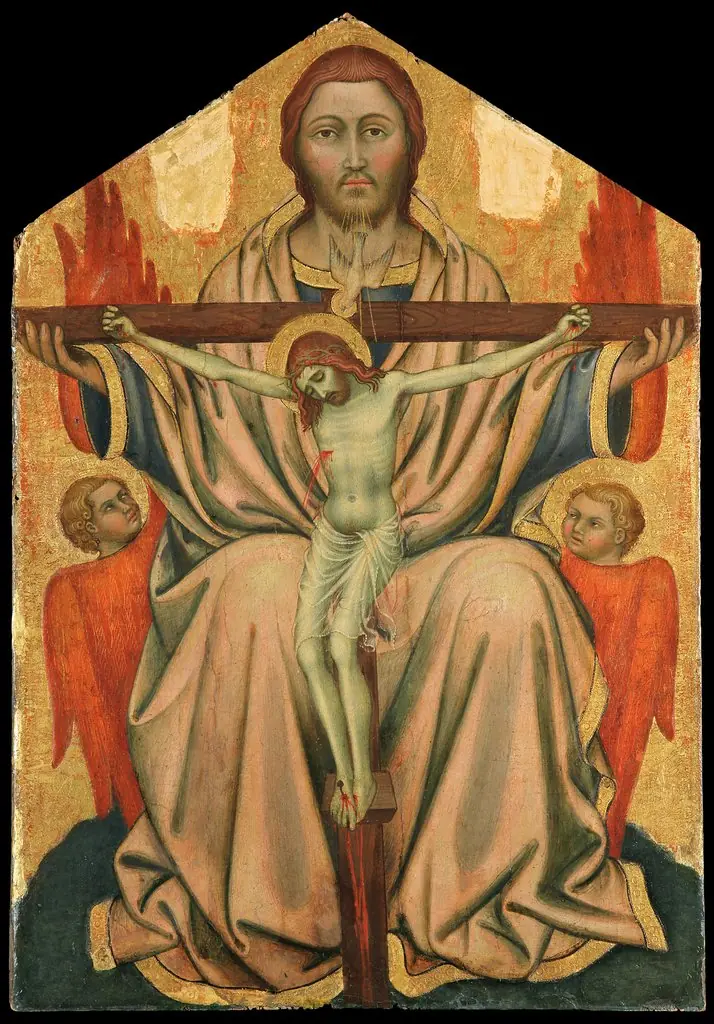 The Holy Trinity (Seat of Mercy)
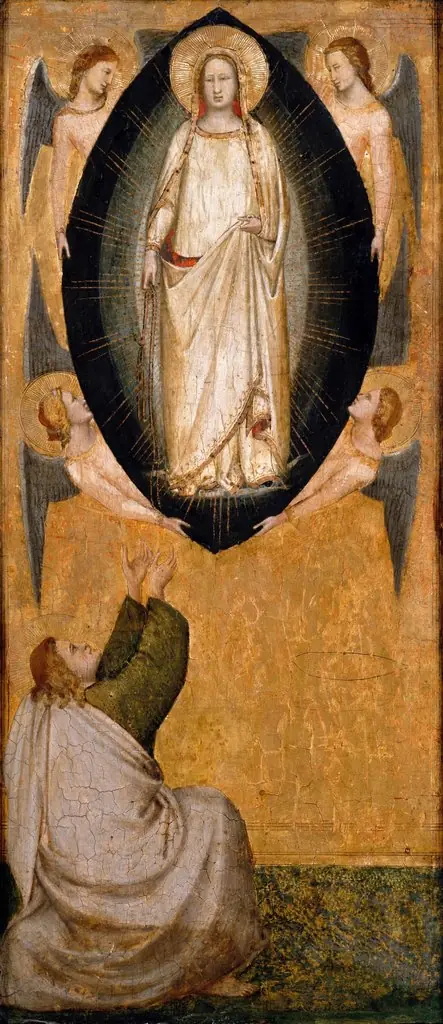 Descent of Mary's Girdle to the Apostle Thomas
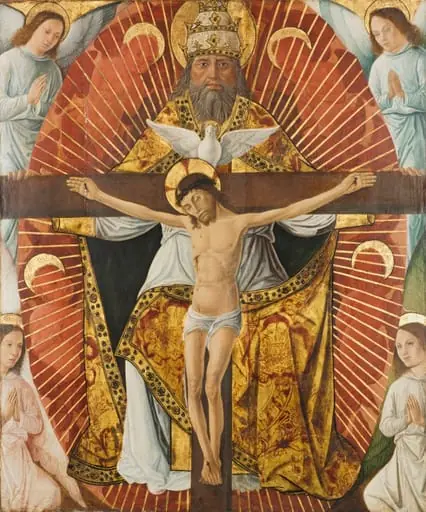 The Trinity
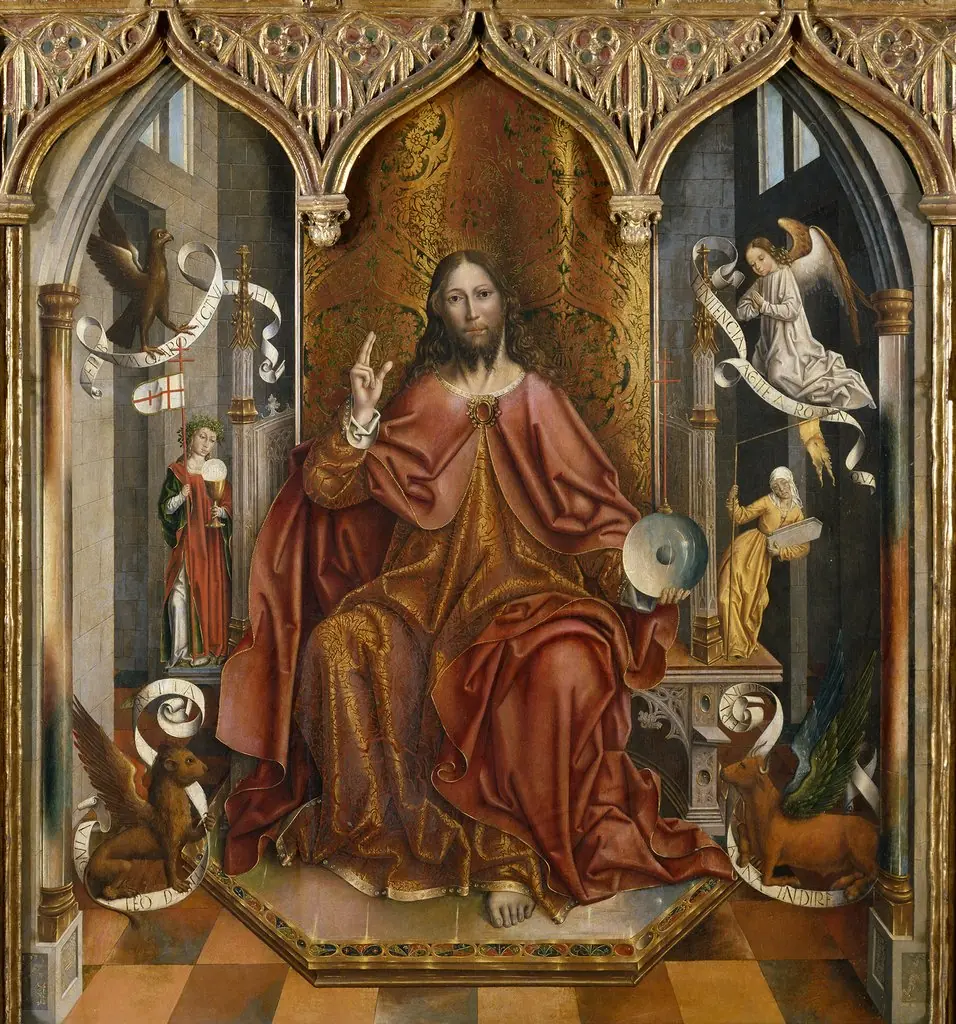 Christ Blessing
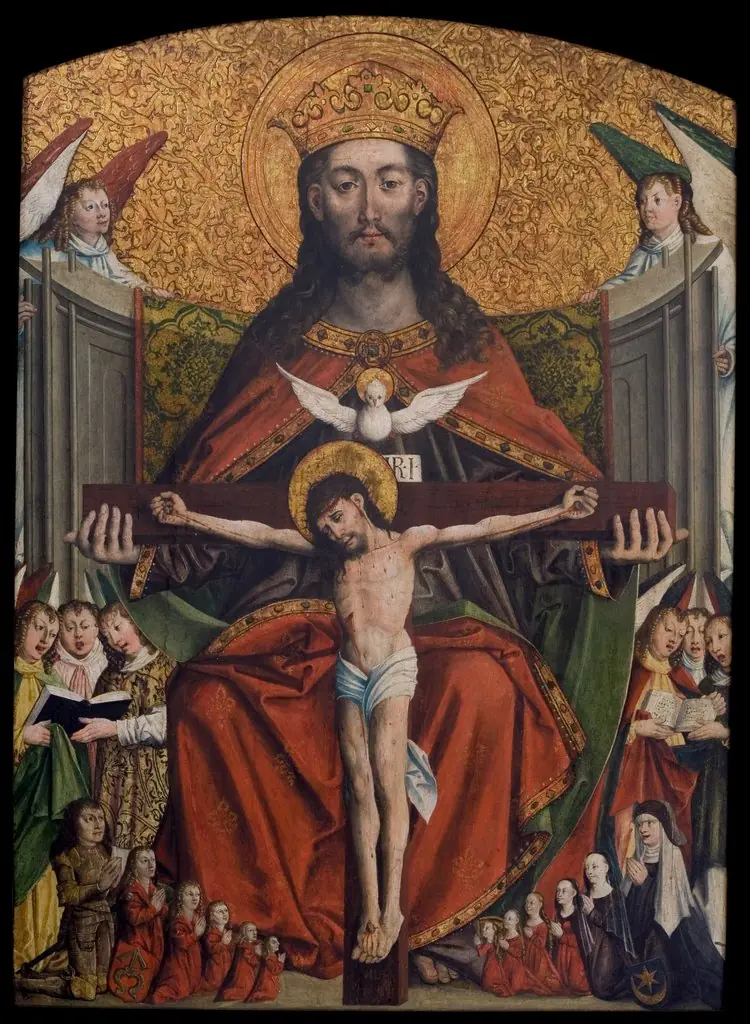 Holy Trinity. Votive painting of Jakub Dębiński, from the Parish Church of St Margaret in Dębno near Brzesko
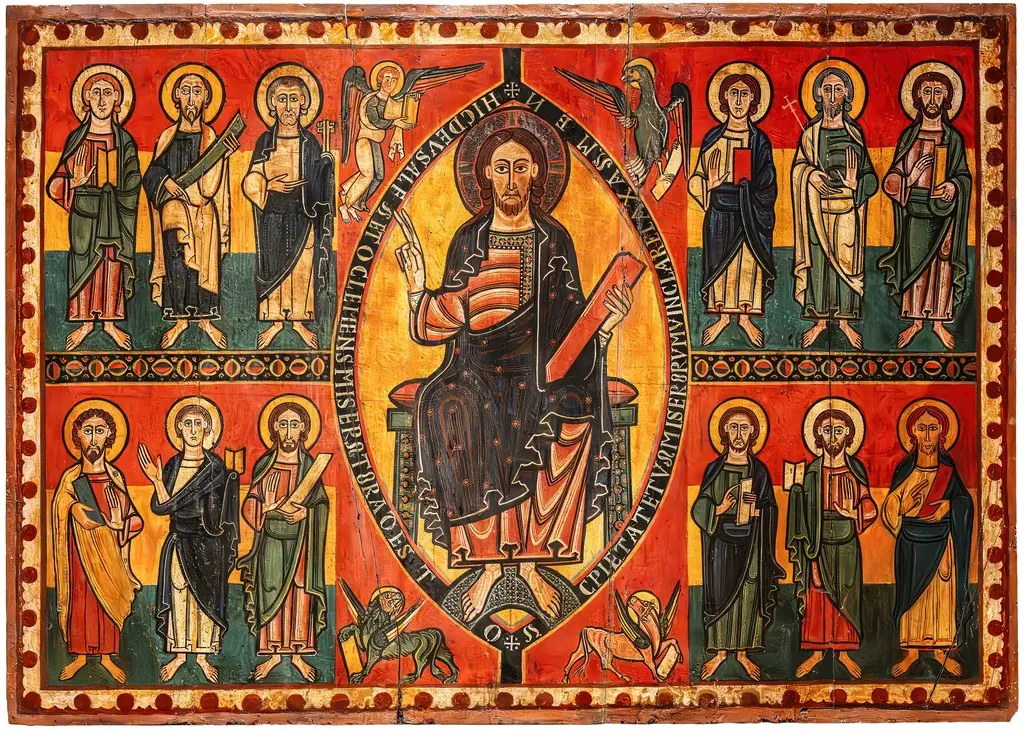 Altar frontal from Esquius
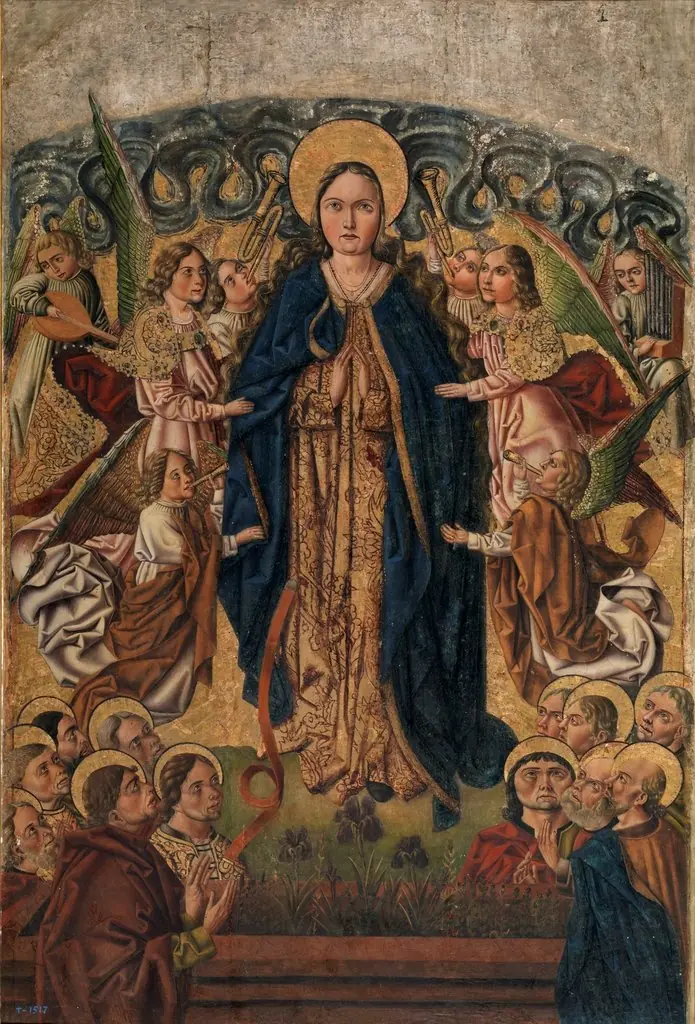 The Assumption of the Virgin
 The Trinity
 The ascension of Mary
 Iisus Hristos Învățător, flancat de apostoli
 Processional Banner
 Christ in Majesty with Twelve Apostles