Artwork
Abraham and Isaac on Their Way to Mount Moriah
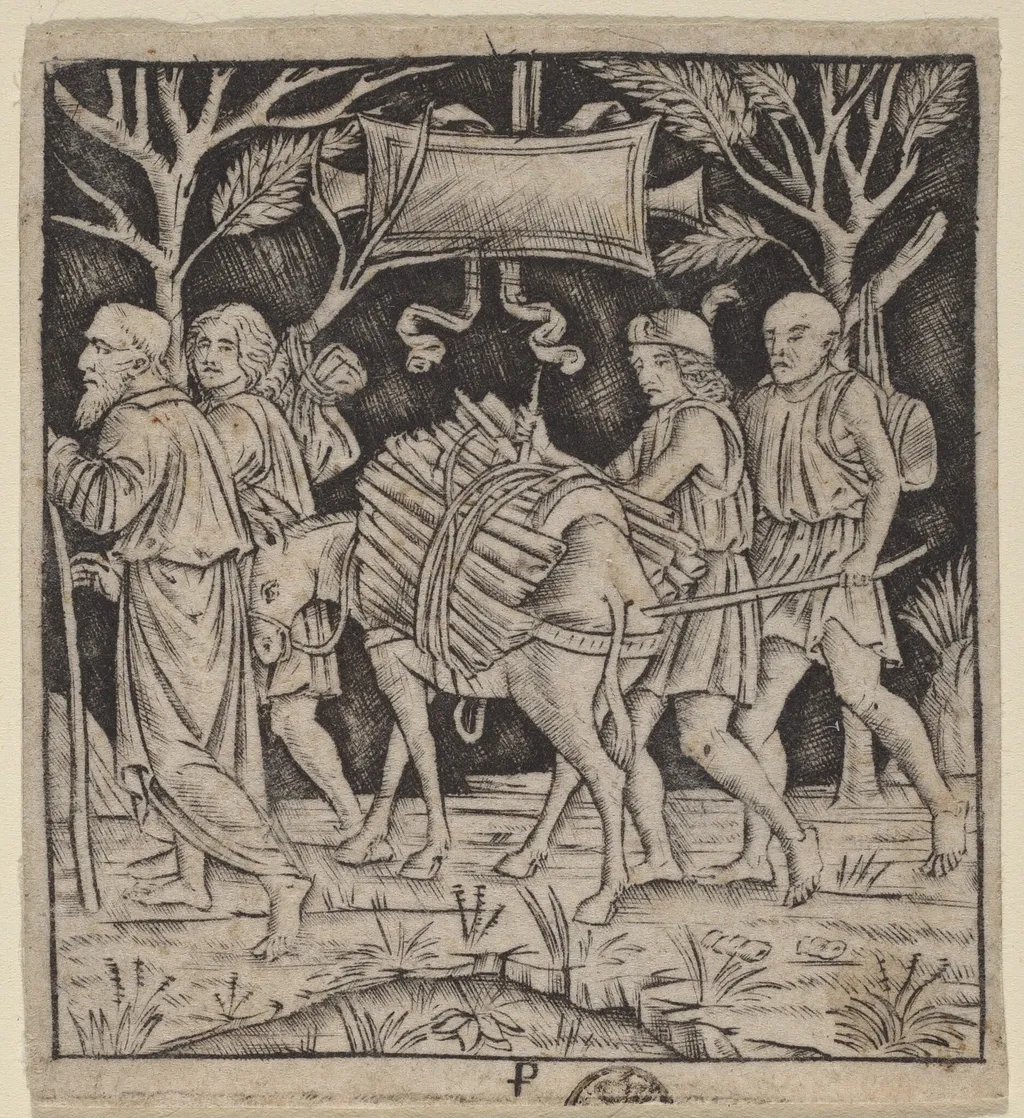
Abraham and Isaac on Their Way to Mount Moriah is a print by the Renaissance artist Peregrino da Cesena. It dates from 1500 and is held in the collection of the National Gallery of Art.
About this work
Overview
Abraham and Isaac on Their Way to Mount Moriah is a niello print executed around 1500 by the Italian artist Peregrino da Cesena. The work belongs to the early Renaissance period and presents a narrative scene drawn from the biblical account of Abraham’s near‑sacrifice of his son.
Subject & Meaning
The composition depicts a group of men transporting a large, curved frame that serves as a stretcher, within which a bound figure is concealed. The concealed figure alludes to the sacrificial victim, echoing the story of Abraham’s test of faith on Mount Moriah. The solemn expressions of the carriers reinforce the gravity of the episode.
Technique & Style
Created with the niello technique, the print combines engraved lines with a blackened inlay that yields deep, velvety shadows. The figures are rendered with a restrained linearity typical of early sixteenth‑century prints, while the surrounding foliage is suggested through simplified, rhythmic strokes that frame the central action.
History & Provenance
The print originates from the workshop of Peregrino da Cesena, a lesser‑known practitioner of the Venetian printmaking tradition. Surviving copies are documented in several European collections, though the work’s early ownership remains largely unrecorded.
Context
During the Renaissance, biblical narratives were frequently reproduced in prints to disseminate religious stories beyond the confines of painted altarpieces. This image reflects that trend, translating a dramatic scriptural moment into a portable, reproducible format for devotional use.
Artist & collection


 The Flight into Egypt
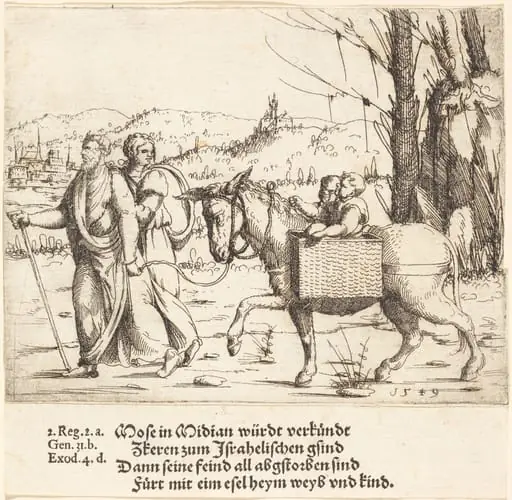 Moses Returns to Egypt from Midian
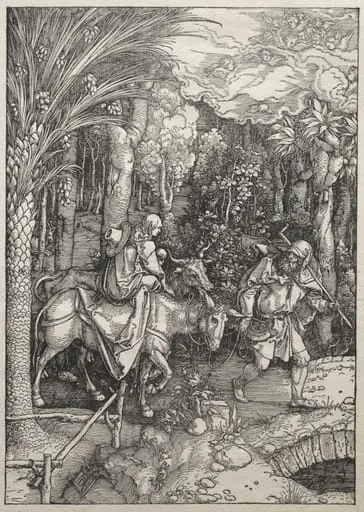 Life of the Virgin: Flight into Egypt
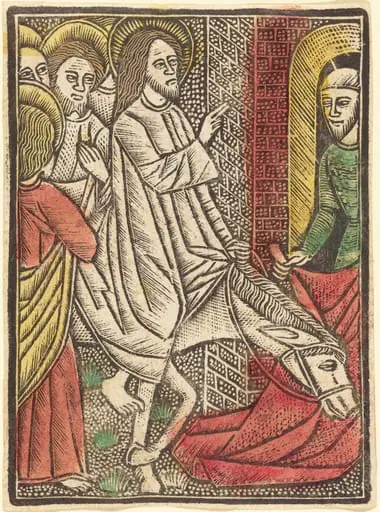 The Entry into Jerusalem
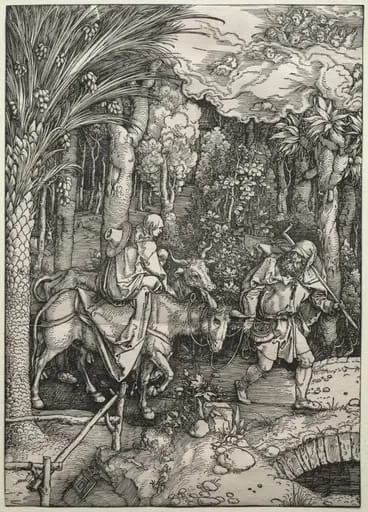 The Flight into Egypt
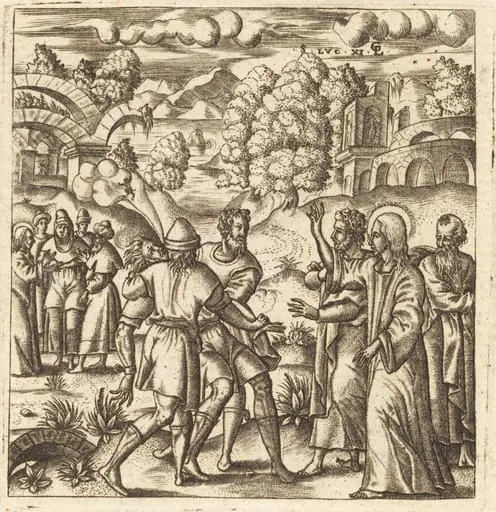 Christ Heals a Dumb Man
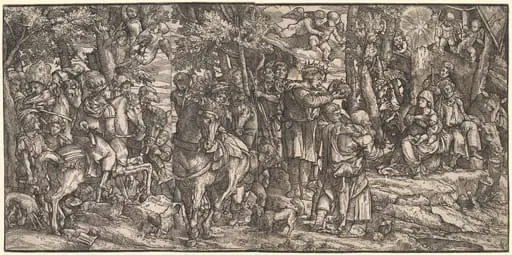 The Adoration of the Magi
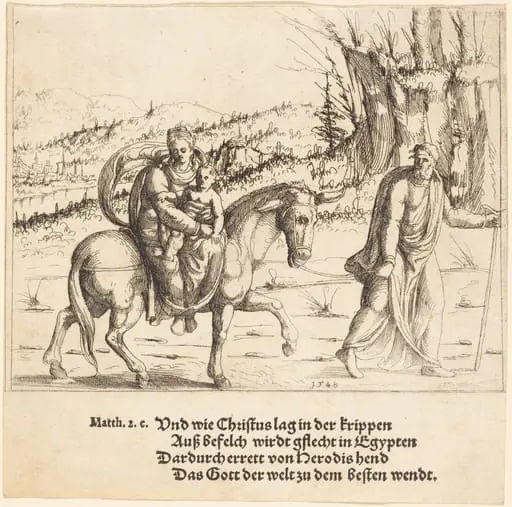 The Flight into Egypt
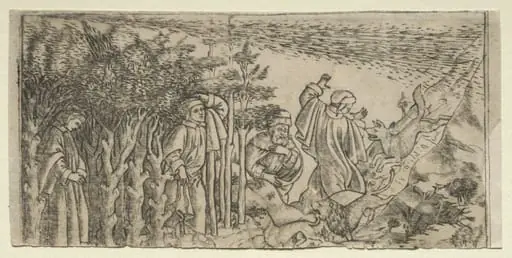 Dante Lost in the Wood: Escaping and Meeting Virgil, Canto I
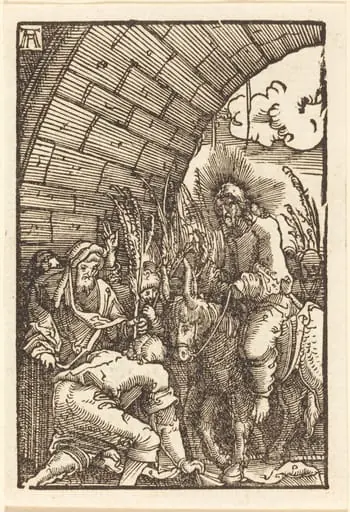 The Entry into Jerusalem
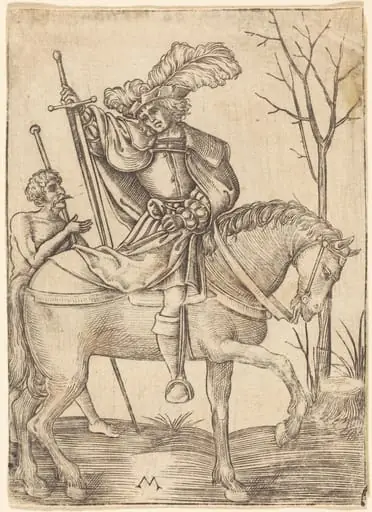 Lansquenet
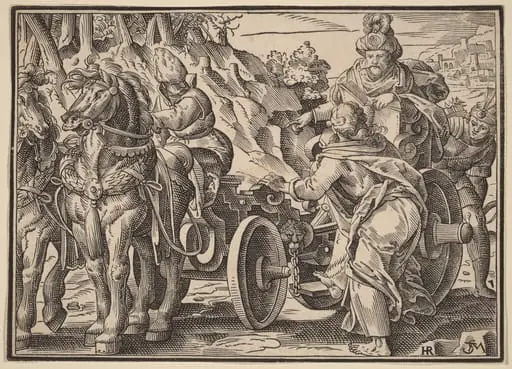 Christ Tells His Disciples of the Last Judgment