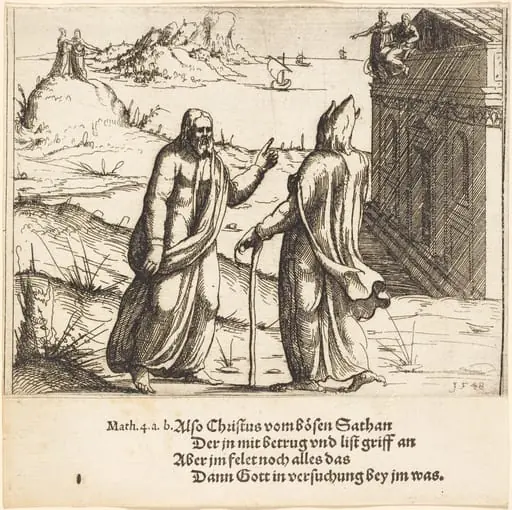
Artwork
The Flight into Egypt
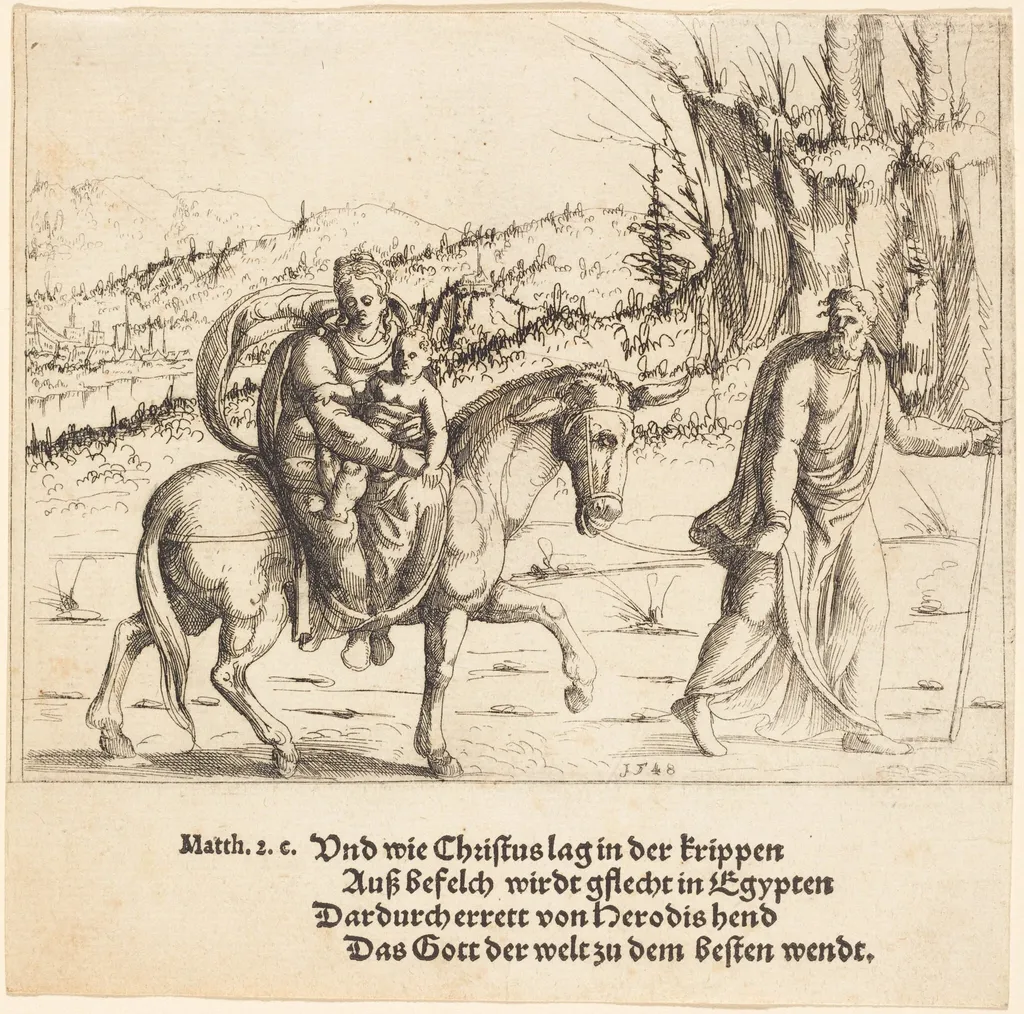
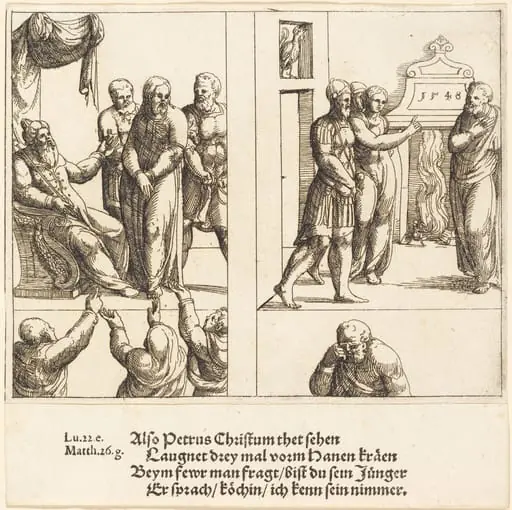
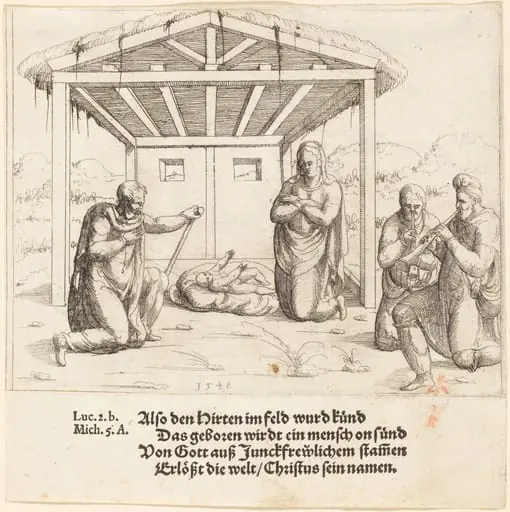
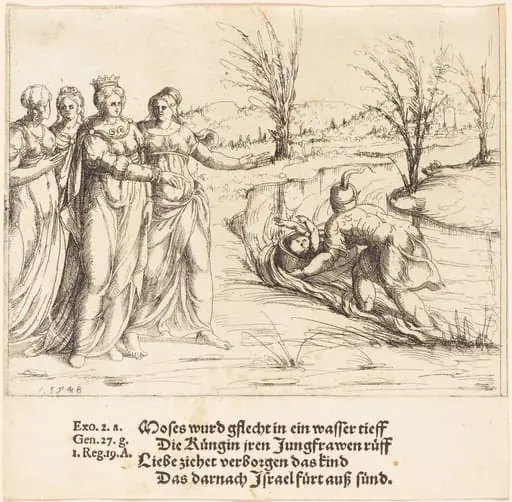
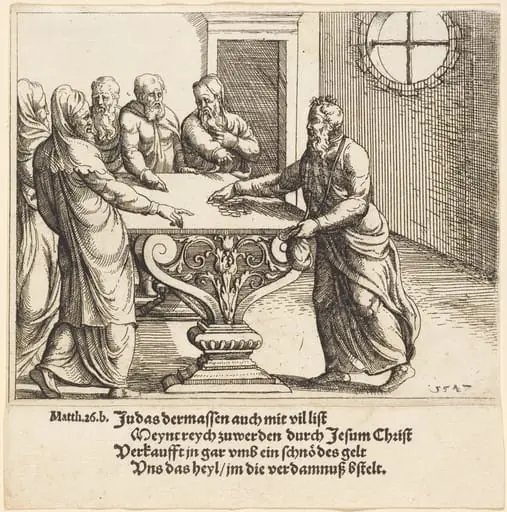
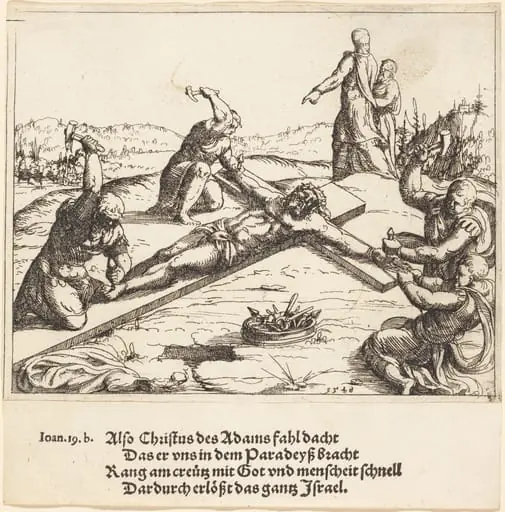
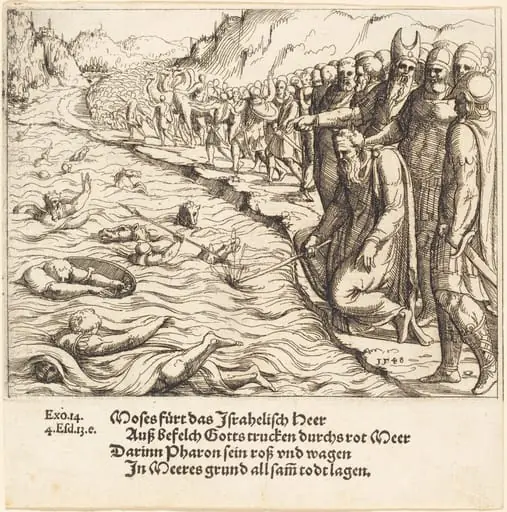
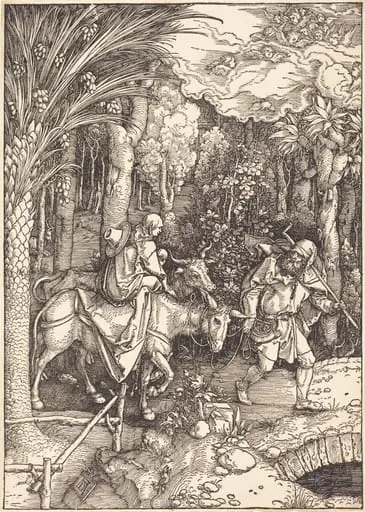
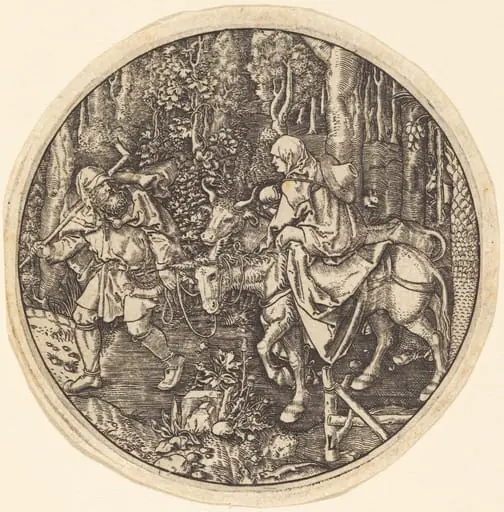
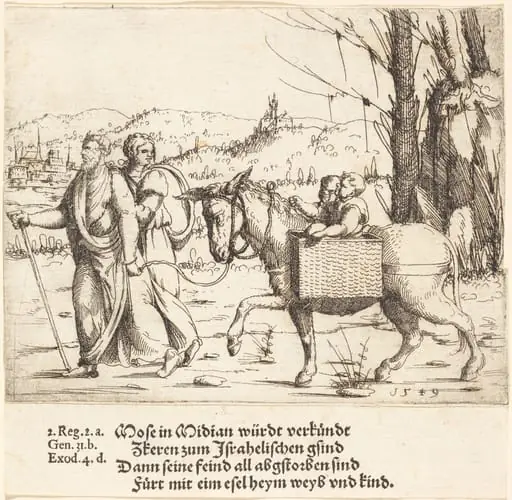
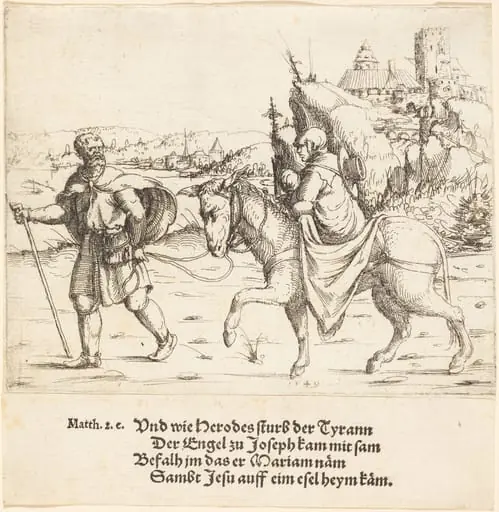
The Flight into Egypt is an ink print by the Renaissance artist Augustin Hirschvogel. It dates from 1548 and is held in the collection of the National Gallery of Art.
About this work
Overview
This piece exemplifies his skill in translating narrative scenes into the intimate medium of etching, blending topographical precision with emotional urgency.
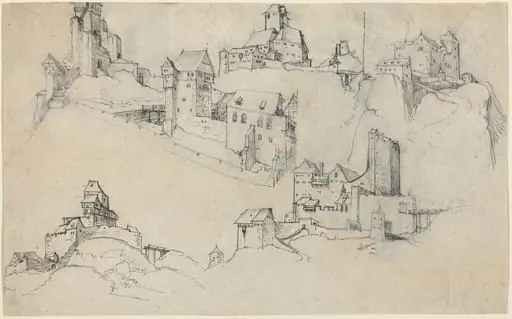
Created in 1548 by the German artist and cartographer Augustin Hirschvogel, this etching depicts the biblical episode of the Holy Family’s flight into Egypt. As a printmaker active in the Danube School, Hirschvogel specialized in small-scale, finely detailed works. This piece exemplifies his skill in translating narrative scenes into the intimate medium of etching, blending topographical precision with emotional urgency.
Subject & Meaning
The scene illustrates the Gospel account of Joseph, Mary, and the infant Jesus fleeing Herod’s persecution, guided by divine warning. A mounted soldier follows in the distance, suggesting imminent threat. The figures move through a rugged landscape, their posture conveying haste and vulnerability. The inclusion of German text reinforces the devotional purpose, anchoring the image in contemporary religious practice and personal piety.
Technique & Style
Hirschvogel employed etching to achieve fine, expressive lines that capture motion and terrain with economy. Jagged, rapid strokes define trees and uneven ground, while loose contours suggest the figures’ urgency. The absence of heavy shading emphasizes line over tone, characteristic of Northern Renaissance printmaking. The technique allowed for multiple impressions, making the scene accessible beyond elite circles.
History & Provenance
Hirschvogel produced this work during his time in Nuremberg, a hub for print culture in mid-16th-century Germany. Though specific early owners are unrecorded, the print circulated among collectors and religious households familiar with biblical narratives. Its survival in multiple institutional collections suggests sustained interest in his detailed, narrative-driven prints during and after his lifetime.
Context
This etching emerged within the Danube School’s tradition, which emphasized landscape and emotional atmosphere in religious subjects. Unlike Italian Renaissance prints, Northern artists like Hirschvogel favored intimate scale and intricate detail. The work reflects the Reformation-era shift toward personal devotion, where biblical stories were rendered for private contemplation rather than public altarpieces.
Legacy
Hirschvogel’s *Flight into Egypt* contributed to the broader acceptance of etching as a vehicle for narrative and spiritual themes in Northern Europe. His fusion of cartographic precision with expressive line influenced later printmakers. While not widely celebrated in his time, his works remain studied for their technical discipline and quiet emotional resonance in the context of 16th-century print culture.
Artist & collection
Artist
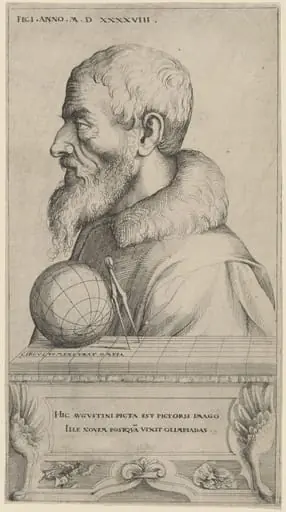
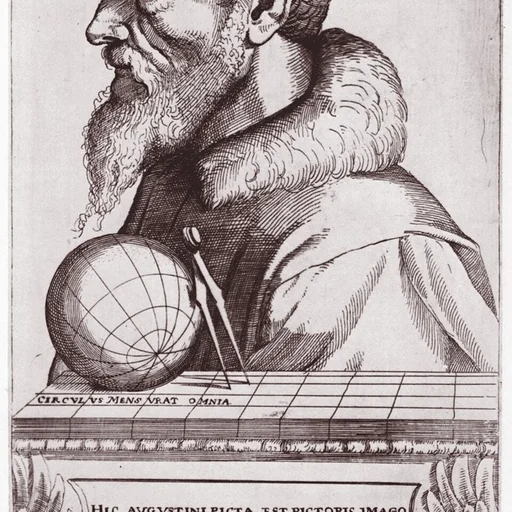
Augustin Hirschvogel (1503 – February 1553) was a German artist, mathematician, and cartographer known primarily for his etchings.