Artwork
The Entry into Jerusalem
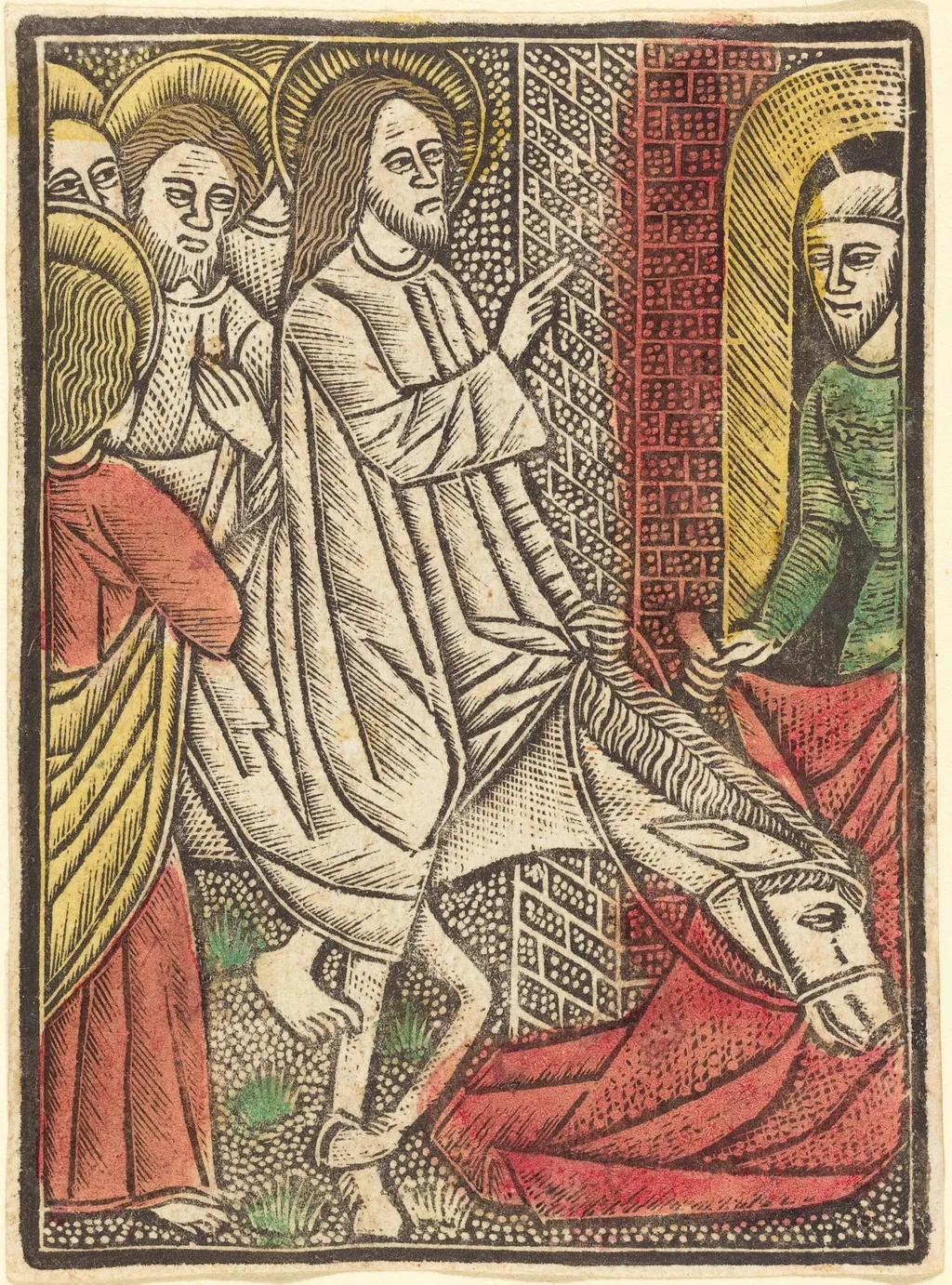
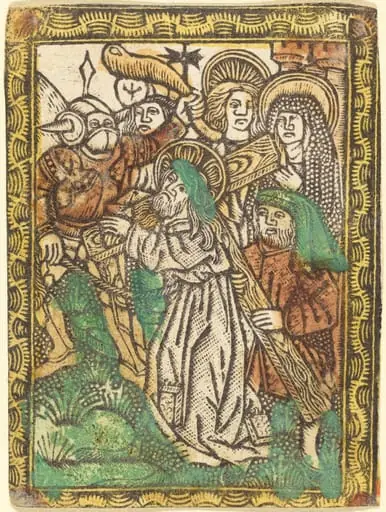
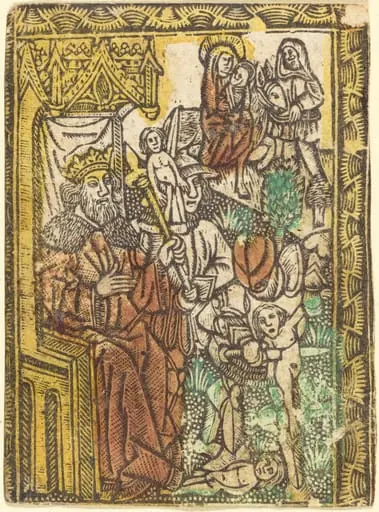
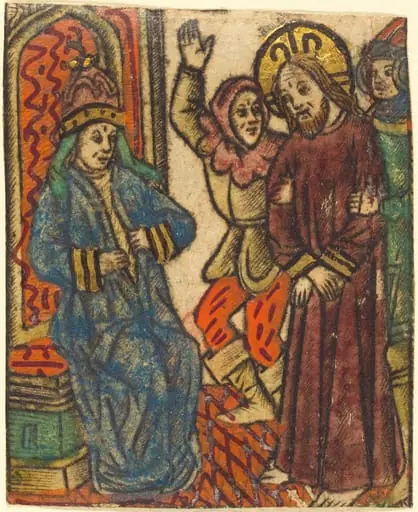
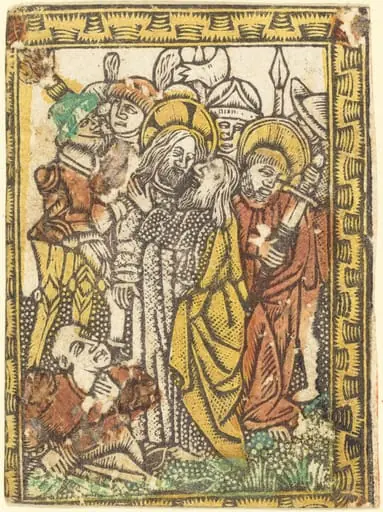
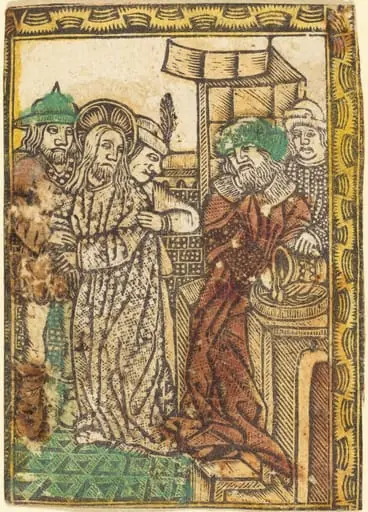
The Entry into Jerusalem is a paint print by the Renaissance artist German 15th Century. It dates from 1480 and is held in the collection of the National Gallery of Art. This print depicts the biblical moment of Christ’s entry into Jerusalem, rendered as a metalcut with hand-applied pigments.
About this work
Overview
The composition features a central figure of Jesus on a donkey, surrounded by a dense group of onlookers, all set against a patterned architectural backdrop.
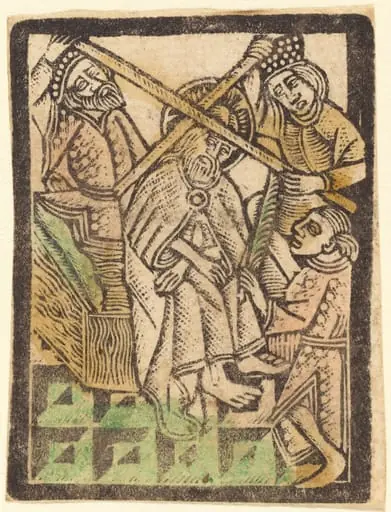
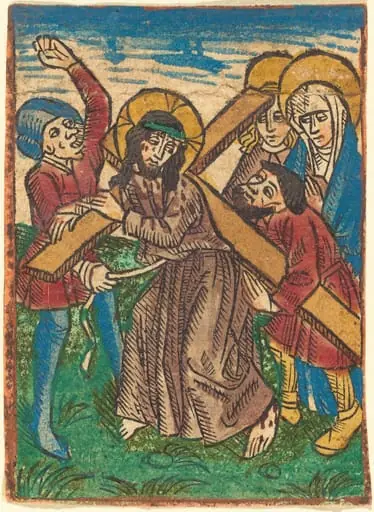
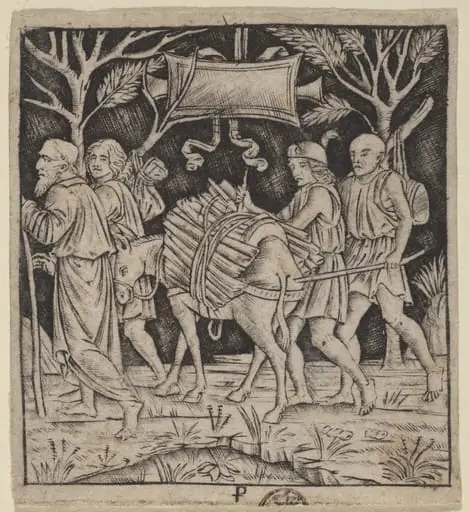
This print depicts the biblical moment of Christ’s entry into Jerusalem, rendered as a metalcut with hand-applied pigments. The composition features a central figure of Jesus on a donkey, surrounded by a dense group of onlookers, all set against a patterned architectural backdrop. The use of red lake, yellow, and green washes enhances the visual impact, while the medium’s sharp lines suggest a precision typical of early printed images from the late 15th or early 16th century.
Subject & Meaning
The scene illustrates the Gospel account of Jesus’s arrival in Jerusalem, where crowds welcomed him by laying down garments and branches. The halo identifies his divine status, while raised hands and varied postures convey reverence and celebration. The inclusion of urban architecture situates the event in a recognizable earthly setting, reinforcing the theological blend of the sacred and the mundane central to Christian narrative art of the period.
Technique & Style
Executed in metalcut, the image relies on incised metal plates to produce bold, linear forms, later enhanced with hand-coloring. The flat yet rhythmic arrangement of figures and the use of saturated, non-naturalistic hues reflect Northern Renaissance conventions, where symbolic clarity often outweighed spatial realism. The textured patterning of the background wall adds decorative emphasis, distinguishing it from purely painterly approaches.
History & Provenance
Few details of the print’s origin are documented, but its style aligns with German or Netherlandish workshops active around 1500. Such prints were often produced in small editions for private devotion or educational use. The survival of hand-colored examples suggests they were valued as objects of personal piety, possibly owned by clergy or affluent laypersons interested in devotional imagery.
Context
This work emerged during a period when printed images circulated widely alongside manuscripts and altarpieces. Metalcuts offered a durable, reproducible format for religious scenes, meeting growing demand for accessible devotional aids. While Italian painters explored perspective and anatomy, Northern artists retained emphasis on line and symbolic detail, preserving medieval traditions even as Renaissance ideas spread.
Legacy
Though overshadowed by later engraving and etching techniques, metalcuts like this one played a crucial role in the early dissemination of religious imagery. Their combination of craftsmanship and affordability helped standardize visual narratives across regions. Surviving examples remain important for understanding how devotional content was reproduced and consumed before the dominance of the printing press.
Artist & collection

Artist
This 15th-century German artist carved vivid religious scenes into metal and wood, then hand-painted them in bright, symbolic colors.

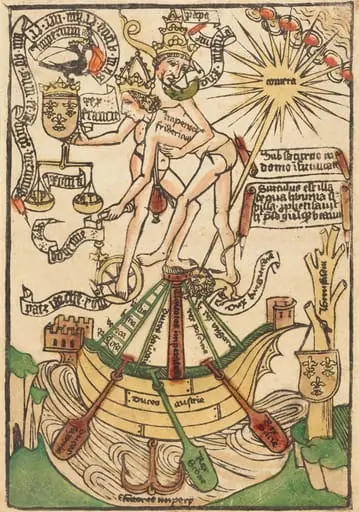 Allegory of the Meeting of Pope Paul II and Emperor Frederick III
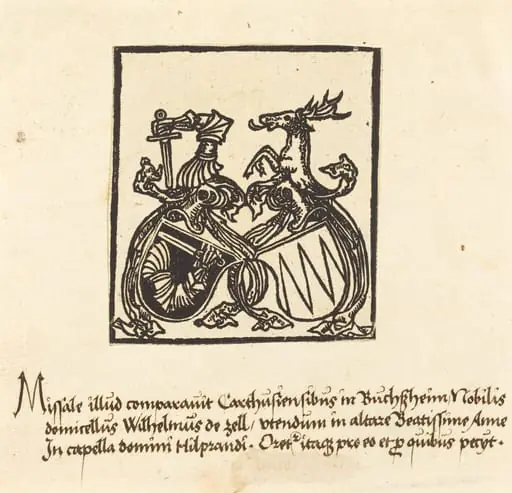 Bookplate of Wilhelm von Zell
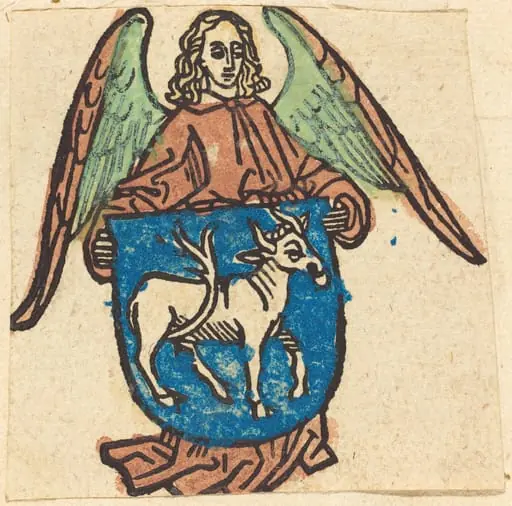 Bookplate of Hilprand Brandenburg of Bibrach
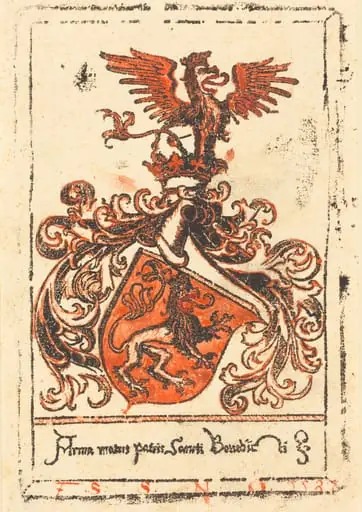 Bookplate of the Abbey of Ottobeuren
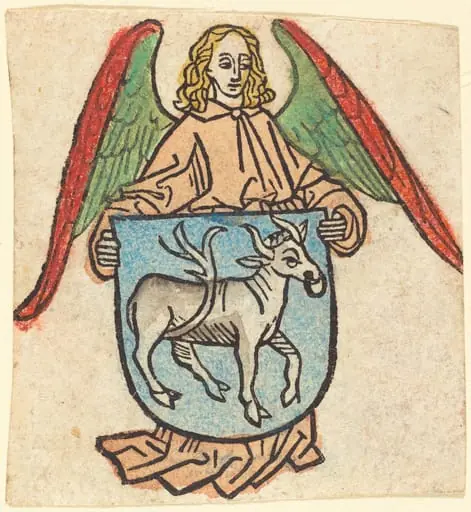 Bookplate of Hilprand Brandenburg of Bibrach
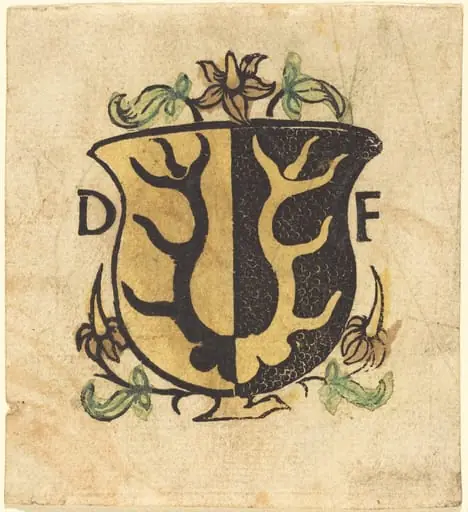 Bookplate of Dominicus Frauenfelder
![Studies for Six Figures (sheet from a model book) [recto], by German 15th Century](https://artifactworldgallery.com/img/german-15th-century--studies-for-six-figures-sheet-from-a-model-book-recto--4837429e0755bc3f-w320.webp) Studies for Six Figures (sheet from a model book) [recto]
Studies for Six Figures (sheet from a model book) [recto]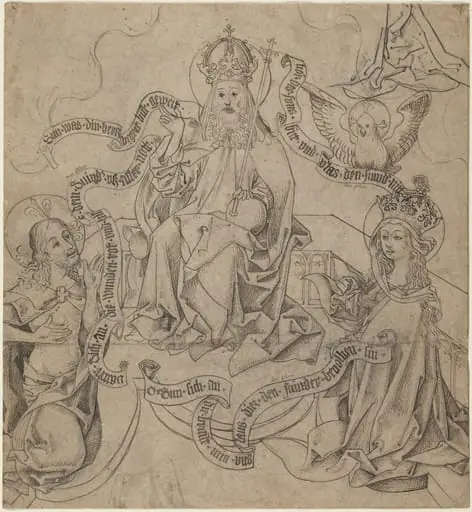 Christ and Mary Interceding with God the Father