Artwork
Moses Returns to Egypt from Midian
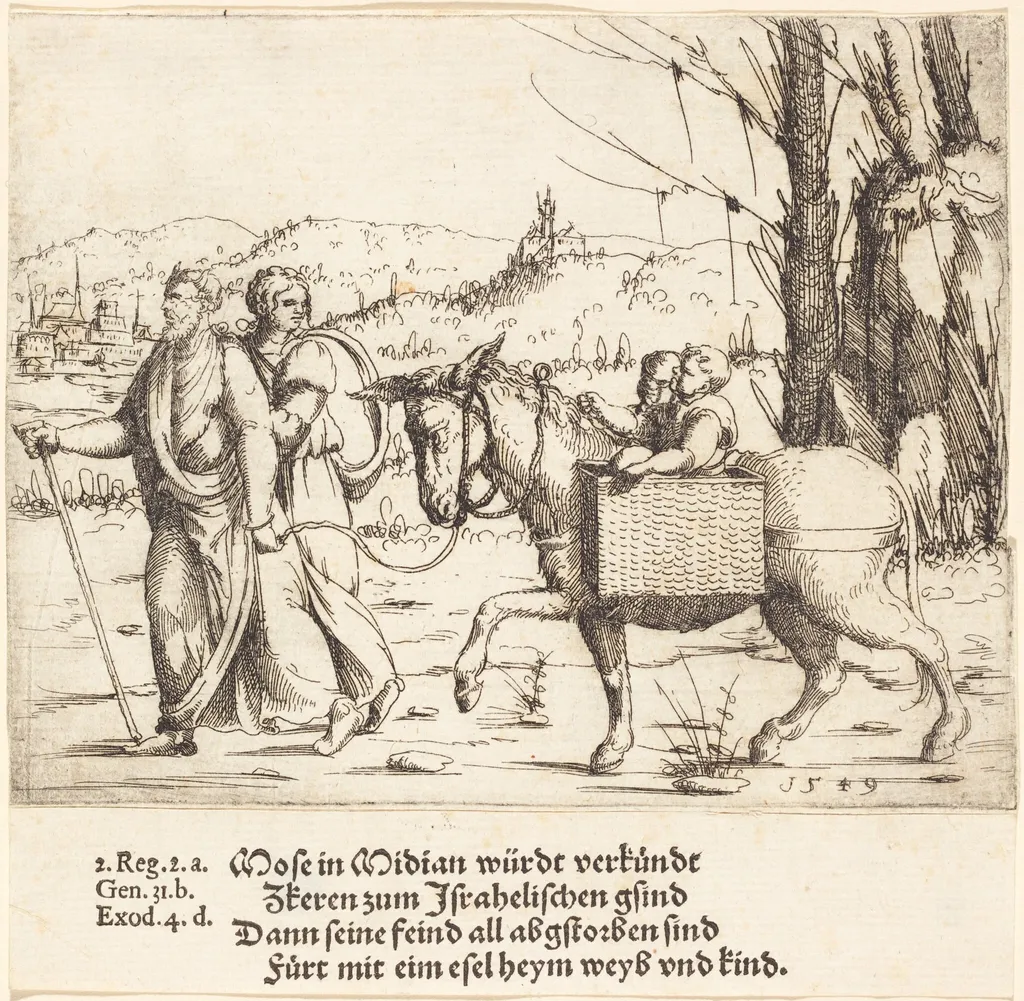
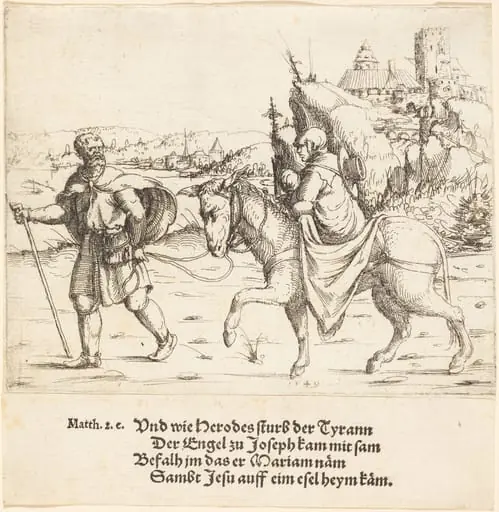
Moses Returns to Egypt from Midian is an ink print by the Renaissance artist Augustin Hirschvogel. It dates from 1549 and is held in the collection of the National Gallery of Art.
About this work
Overview
Moses Returns to Egypt from Midian is a 1549 etching by Augustin Hirschvogel, a German artist known for his contributions to etching, mathematics, and cartography. This small landscape etching is one of thirty-five produced by Hirschvogel between 1545 and 1549.
Subject & Meaning
The etching depicts a scene from the biblical narrative of Moses' return to Egypt from Midian. The composition shows a procession led by a man guiding a donkey carrying a woman and child, accompanied by two additional men, one with a staff, traversing a rugged landscape with trees, boats, and distant structures.
Technique & Style
Executed in simple yet dynamic lines, the etching conveys a sense of movement, evoking the spontaneity of a quick sketch. The style aligns with the Danube School, a 16th-century artistic movement in Bavaria and Austria, to which Hirschvogel is associated.
History & Provenance
Created in 1549, the etching is part of a series that solidified Hirschvogel's connection to the Danube School. The work features a German inscription narrating the scene of Moses' return.
Context
As part of a series of thirty-five small landscape etchings, Moses Returns to Egypt from Midian reflects Hirschvogel's exploration of biblical themes within the broader context of 16th-century German art.
Legacy
While specific legacy details of this etching are not highlighted, Hirschvogel's overall body of work, including this piece, contributes to the historical record of etching techniques and the Danube School's artistic influence.
Artist & collection
Artist
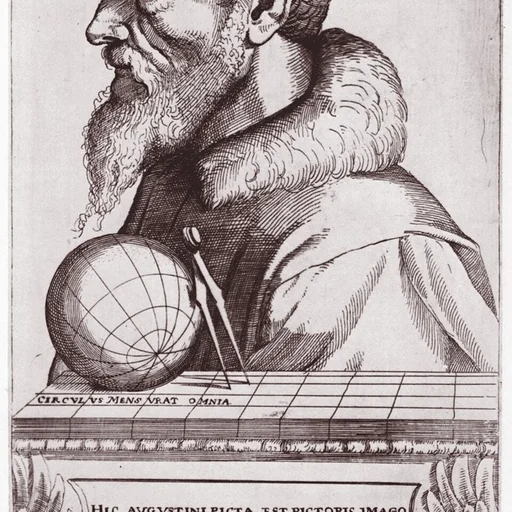
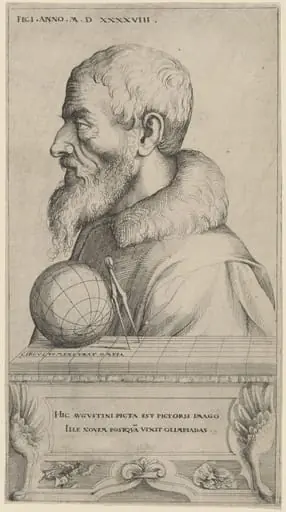
Augustin Hirschvogel (1503 – February 1553) was a German artist, mathematician, and cartographer known primarily for his etchings.

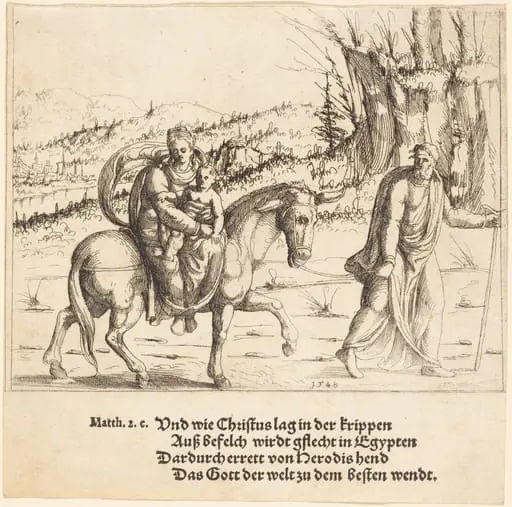 The Flight into Egypt
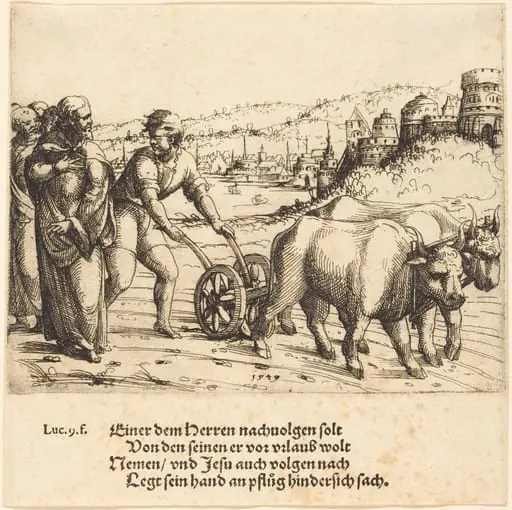 No One Who Puts His Hand on the Plow and Looks Back ia a Follower of Christ
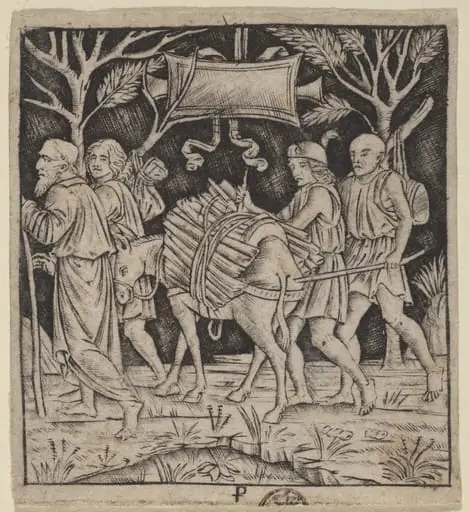 Abraham and Isaac on Their Way to Mount Moriah
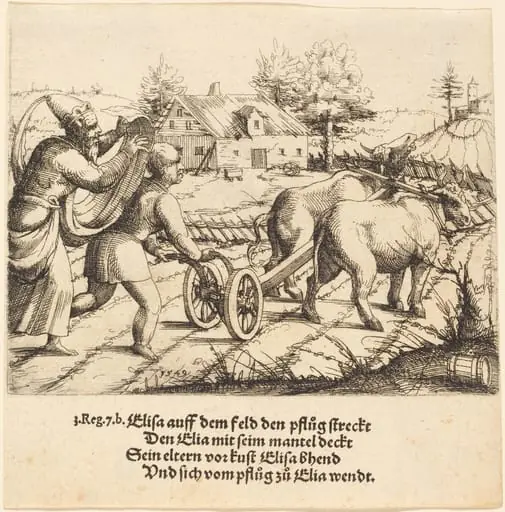 Elijah Anoints Elisha
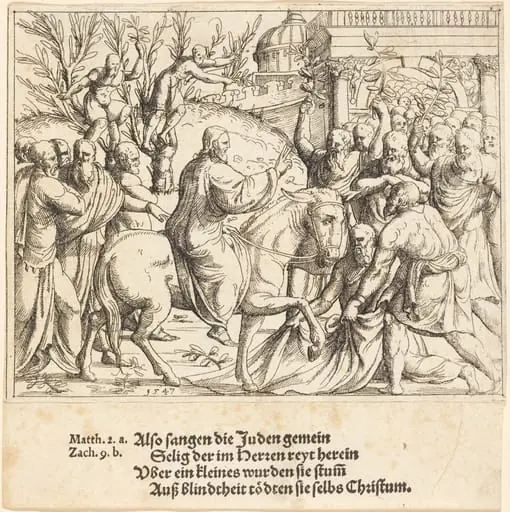 The Entry into Jerusalem
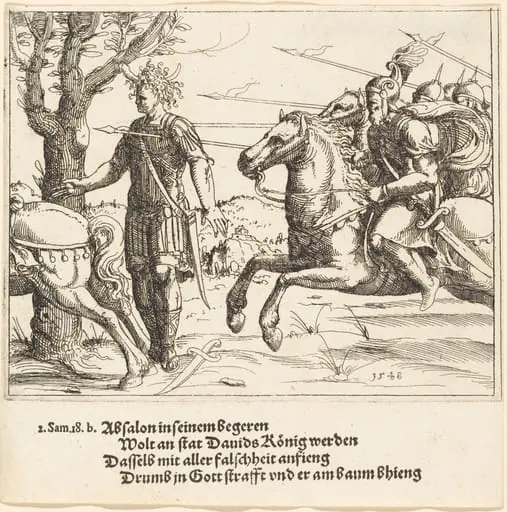 Absalom Slain by Joab
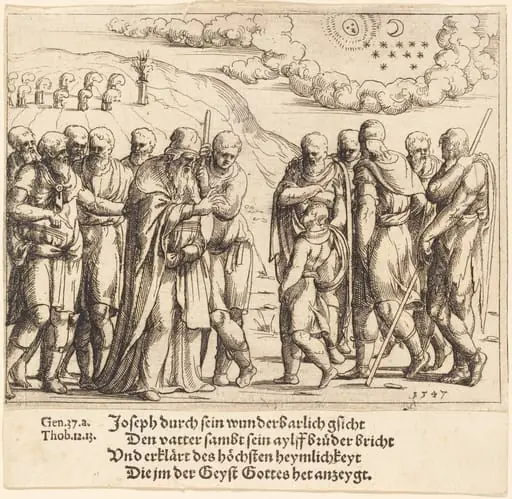 Joseph Recounts His Dreams
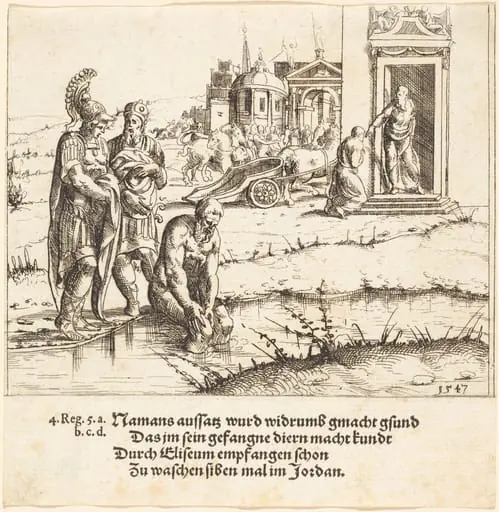 Naaman is Cured of Leprosy
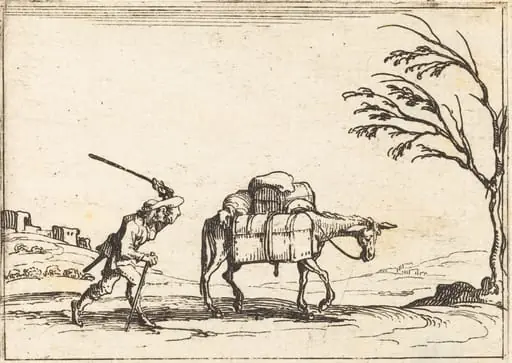 Peasant Whipping his Donkey
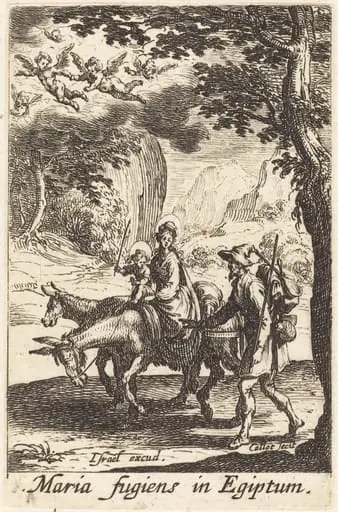 The Flight into Egypt
 The Flight to Egypt
 The Holy Family Returns from Egypt