Artwork
Roman General Addressing His Troops
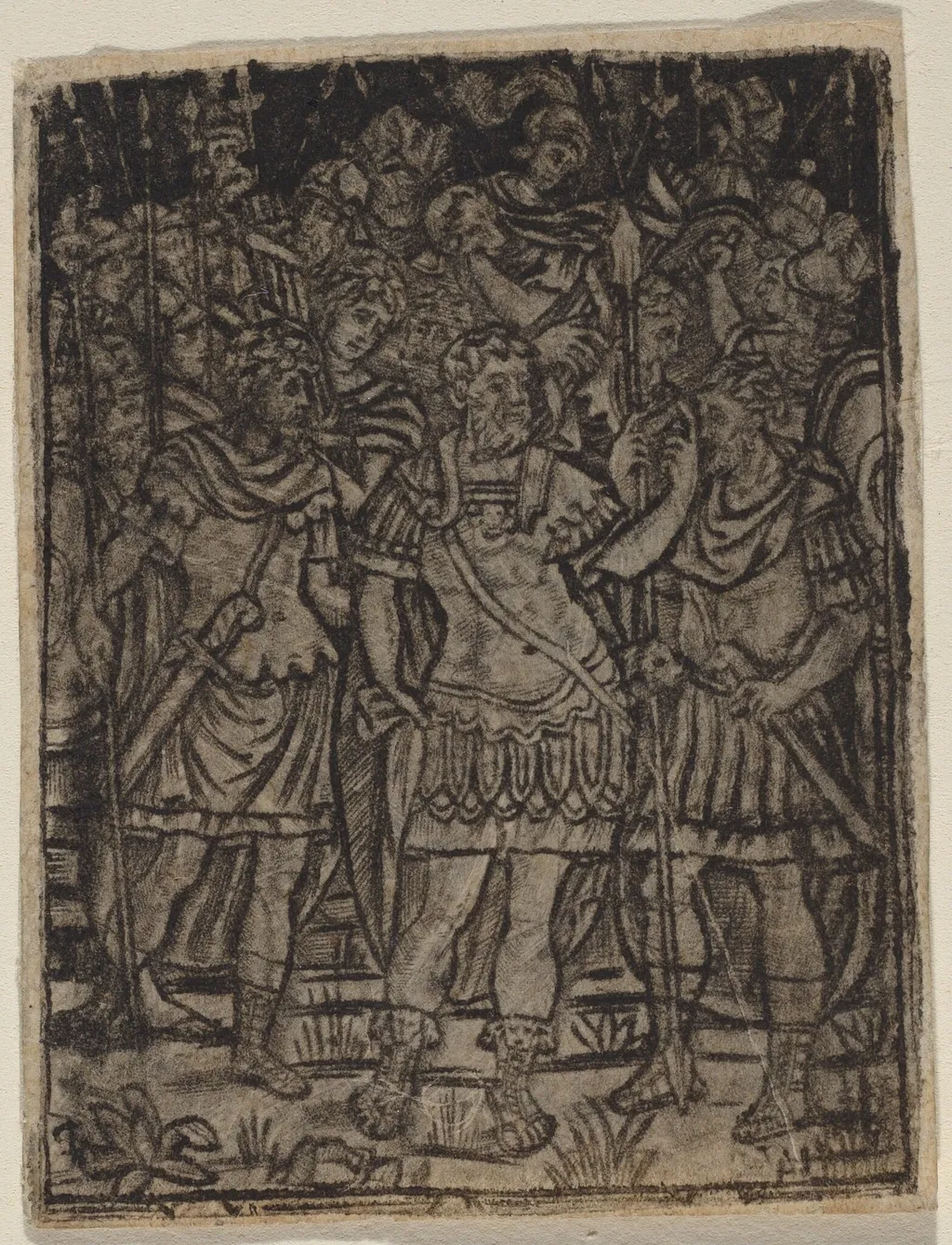
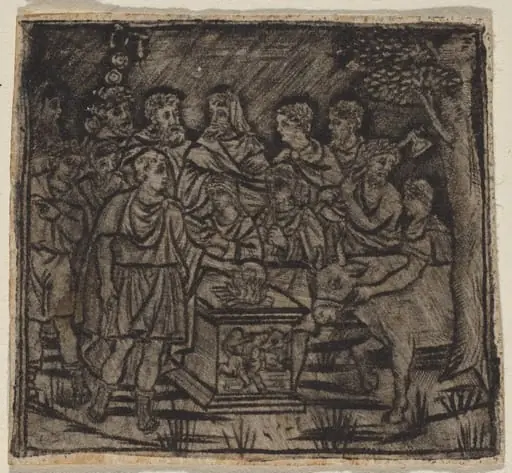
Roman General Addressing His Troops is a print by the Renaissance artist Italian 16th Century. It dates from 1520 and is held in the collection of the National Gallery of Art. The work is a niello print depicting a Roman general positioned centrally, gesturing to a line of soldiers.
About this work
Overview
The work is a niello print depicting a Roman general positioned centrally, gesturing to a line of soldiers. He is dressed in a toga and holds a spear, while the troops, armed and attentive, surround him. Behind the figures, elements of classical architecture suggest an ancient Roman setting. The composition emphasizes the interaction between leader and legionaries.
Subject & Meaning
The image presents a moment of military address, likely a rallying speech before engagement. The general’s central placement and the soldiers’ focused gazes convey authority and collective readiness. The scene reflects themes of leadership, civic duty, and the martial culture of Rome, inviting viewers to contemplate the dynamics of command and obedience.
Technique & Style
Executed in the niello method, the print combines engraved lines with a blackened alloy inlay, producing stark contrasts and fine detail. The artist rendered intricate patterns on armor and clothing, achieving a textured surface that highlights the materiality of the figures. The stylization aligns with Renaissance interests in classical antiquity and precise anatomical representation.
Context
Created during the Renaissance, the work participates in the period’s revival of ancient Roman subjects. Artists of the era often employed classical motifs to explore contemporary ideas about governance and virtue. The inclusion of architectural elements underscores the Renaissance fascination with reconstructing and idealizing the built environment of antiquity.
Legacy
While specific provenance details are scarce, the print exemplifies the Renaissance’s engagement with historical narrative through printmaking. Its technical execution in niello contributes to the study of metal-based print techniques, and its subject matter continues to inform modern interpretations of Roman military iconography.
Artist & collection

Artist
A 16th-century Italian sculptor left us small bronze works in dark brown and gold.

 Mucius Scaevola
 Artaxerxes Receiving the Head of Cyrus
 The Betrayal
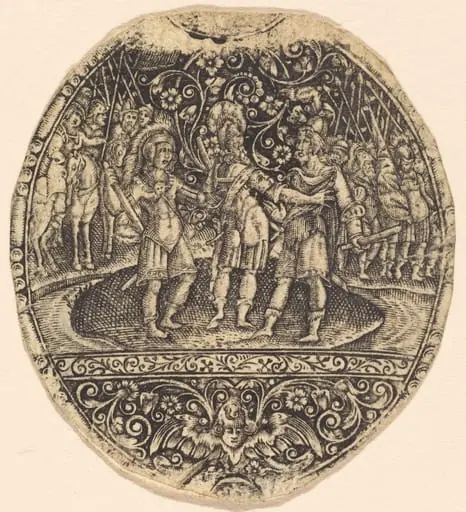 The Three Horatii
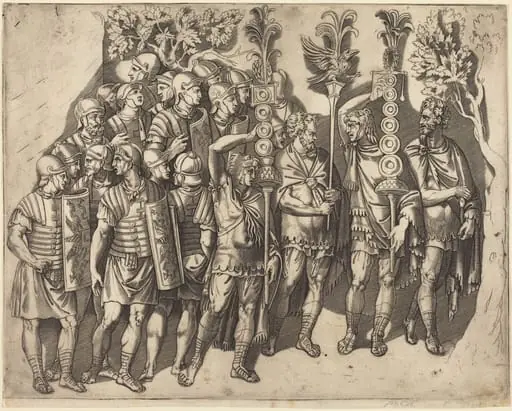 A Roman Legion
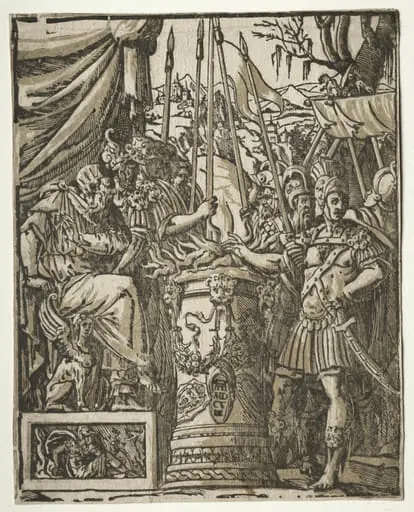 Mucius Scaevola
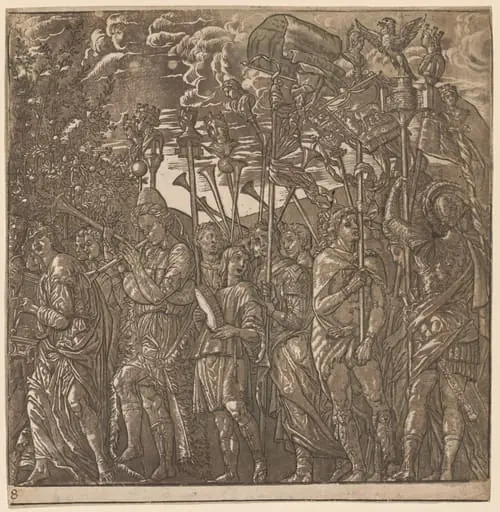 The Triumph of Julius Caesar: Soldiers Carrying Banners and Standards
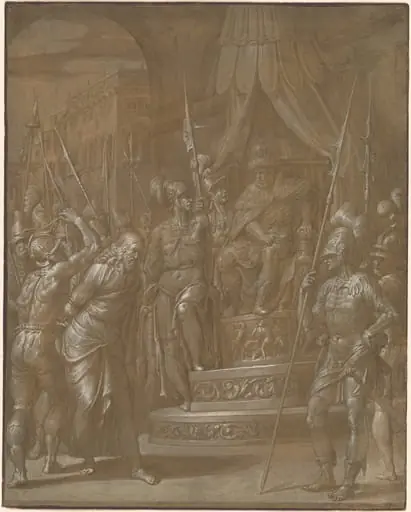 Christ before Herod
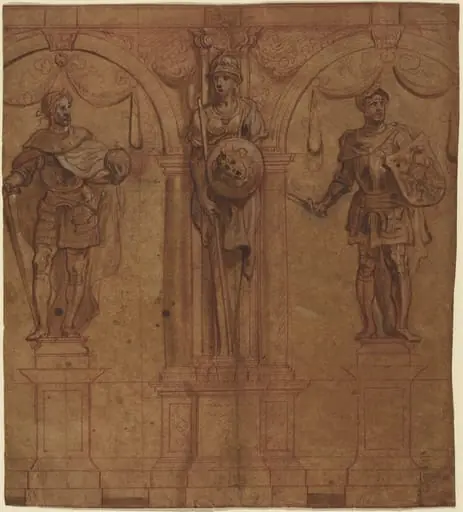 Rudolf I and Albert I with Pallas
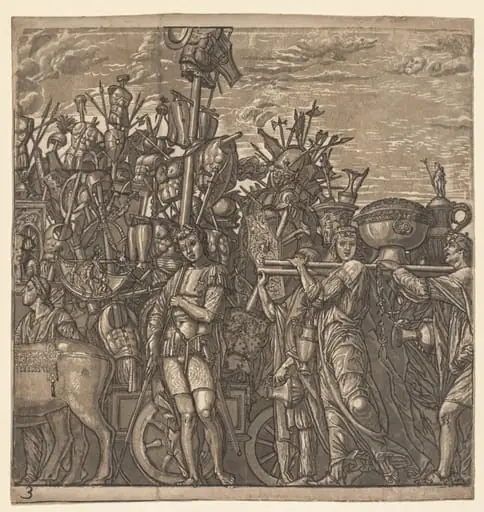 The Triumph of Julius Caesar: Soldiers Marching with Trophies of War
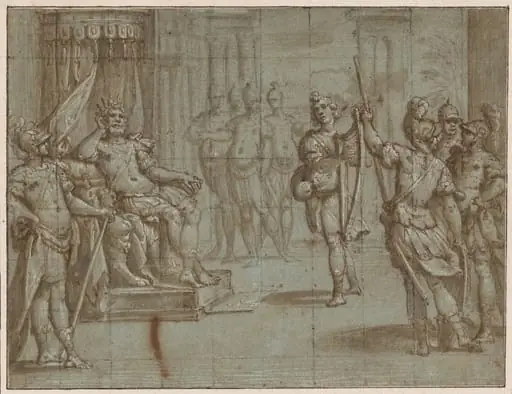 David Playing the Harp Before Saul
 Sacrifice