Artwork
Saints Connected with the House of Habsburg: A General Account of the Ancestry of Emperor Maximilian I
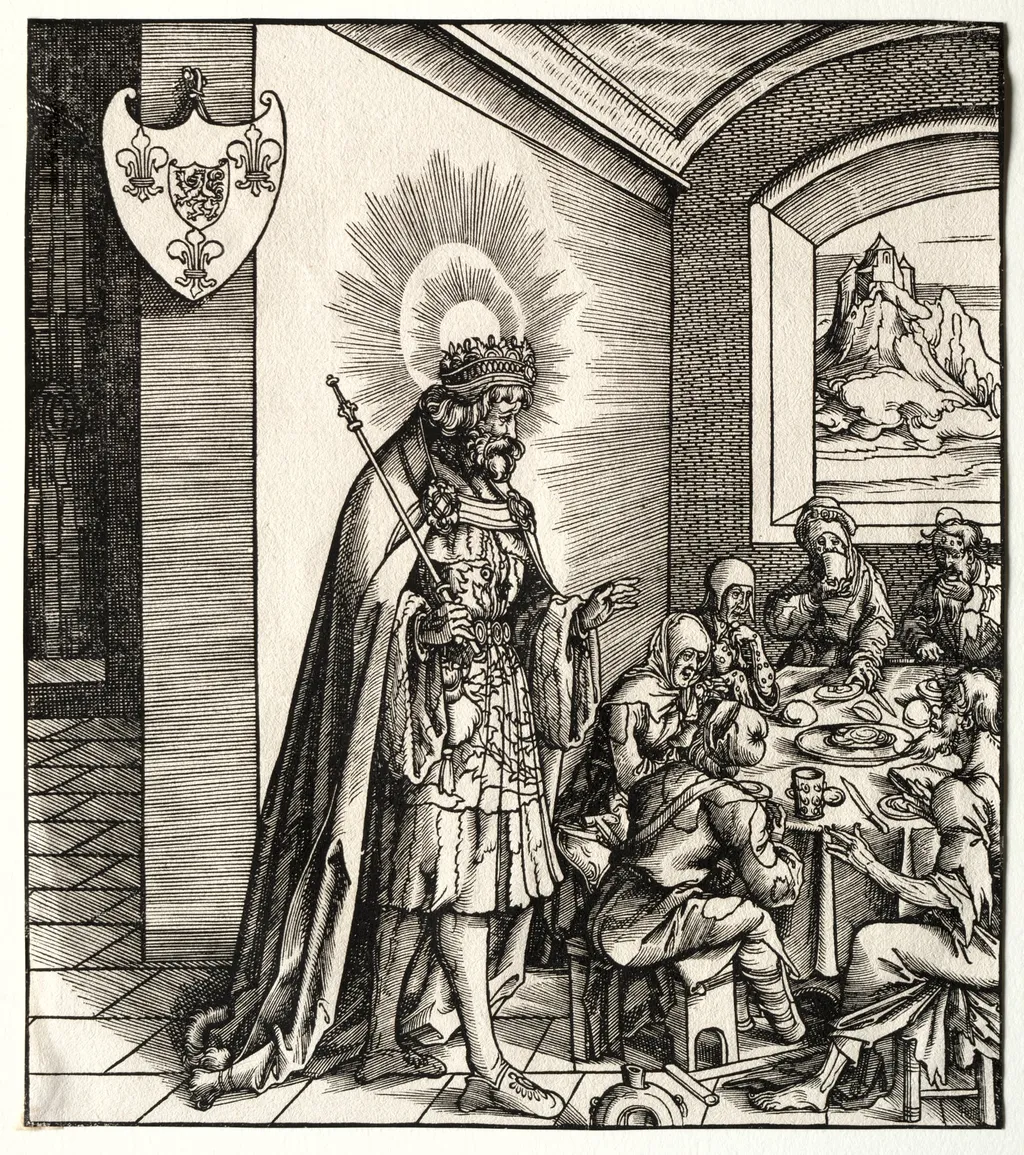
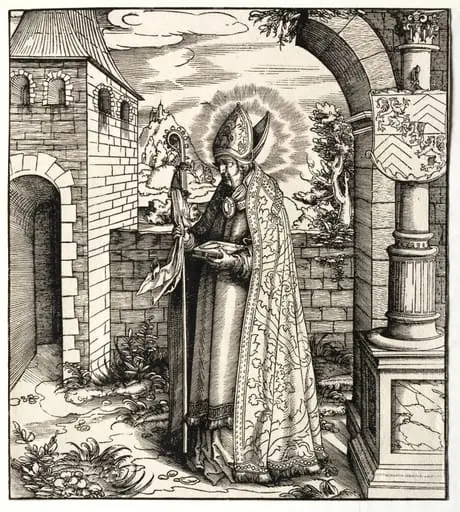
Saints Connected with the House of Habsburg: A General Account of the Ancestry of Emperor Maximilian I is a print by Leonhard Beck. It dates from 1521 and is held in the collection of the Cleveland Museum of Art.
About this work
Overview
Created around 1521 by Leonhard Beck, this woodcut is part of a series commissioned to trace the sacred lineage of Emperor Maximilian I.
Created around 1521 by Leonhard Beck, this woodcut is part of a series commissioned to trace the sacred lineage of Emperor Maximilian I. Beck, trained in Augsburg and influenced by Hans Holbein the Elder, employed the medium of print to disseminate dynastic narratives. The work functions as both devotional imagery and political assertion, aligning Habsburg ancestry with saintly intercession to bolster imperial authority through visual genealogy.
Subject & Meaning
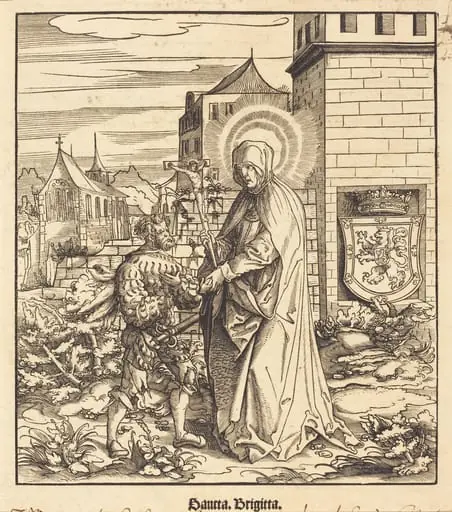
The print presents a constellation of saints linked by blood, patronage, or legend to the Habsburg family. Rather than depicting a single narrative scene, it arranges holy figures in a structured hierarchy, suggesting divine endorsement of the dynasty’s rule. Each saint serves as a spiritual ancestor, reinforcing the idea that Habsburg power was not merely earthly but ordained by sacred tradition and heavenly favor.
Technique & Style
Beck utilized the precision of woodcut engraving to render fine linear details and subtle tonal contrasts. His figures are arranged with formal symmetry, their drapery and attributes rendered with meticulous clarity. While the composition avoids illusionistic depth, the interplay of light and shadow, achieved through controlled line density, lends a sculptural weight to the saints, enhancing their solemn, iconic presence.
History & Provenance
Commissioned during Maximilian I’s reign, the print was part of a broader campaign to legitimize Habsburg claims through visual propaganda. Beck’s association with the imperial court ensured access to archival genealogies and ecclesiastical sources. The work circulated among nobility and clergy, reinforcing dynastic ideology. It entered the Cleveland Museum of Art’s collection in the 20th century, preserved as a key example of early 16th-century German printmaking.
Context
In the early 1500s, print culture expanded the reach of political messaging beyond manuscript elites. Beck’s woodcuts responded to the Reformation’s challenge to traditional authority by anchoring Habsburg legitimacy in unbroken sacred lineage. Similar series were produced across Europe, but this one uniquely fused genealogical record with hagiography, reflecting the fusion of religious devotion and dynastic ambition in late medieval imperial ideology.
Legacy
Beck’s series influenced later imperial iconography, setting a precedent for combining saintly portraiture with genealogical display. Though less celebrated than his contemporaries, his work exemplifies how print technology transformed political messaging. The clarity and structure of his compositions endured in Habsburg visual culture, shaping how dynastic identity was communicated through imagery for generations.
Artist & collection
Artist
Leonhard Beck (c. 1480 – 1542) was a painter and woodcuts designer in Augsburg, Germany. He was the son of Georg Beck, a miniaturist who was active in Augsburg c. 1490–1512/15. Leonhard collaborated with his father on…

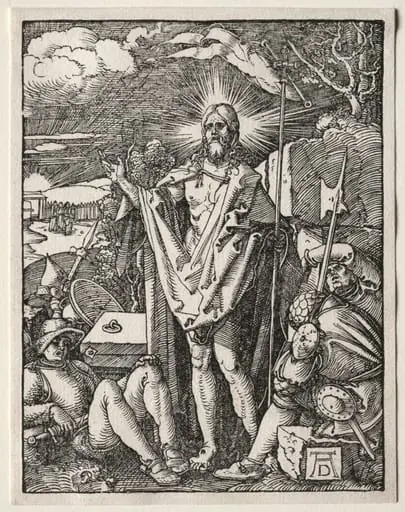 The Small Passion: The Resurrection
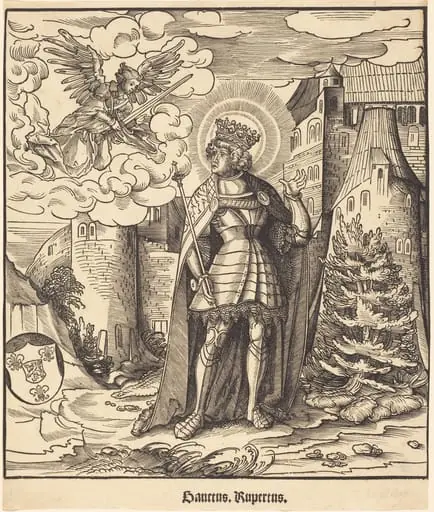 Saint Rupertus
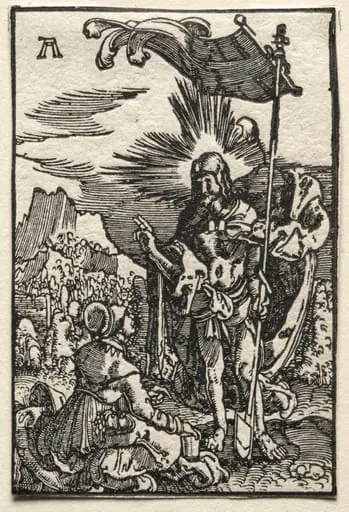 The Fall and Redemption of Man: Christ Appearing to St. Mary Magdalen
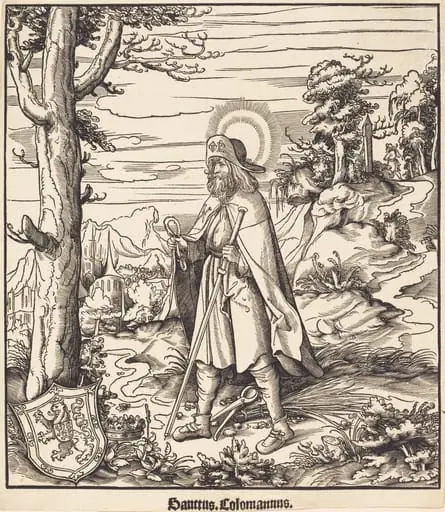 Saint Colomannus
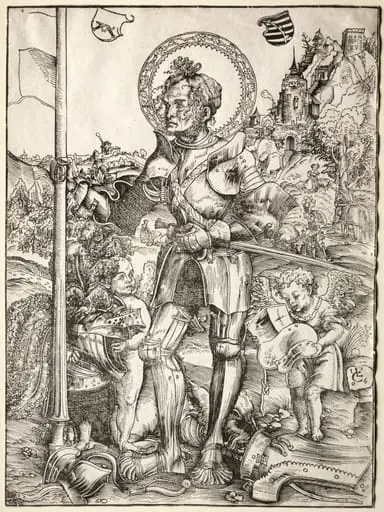 Saint George Standing
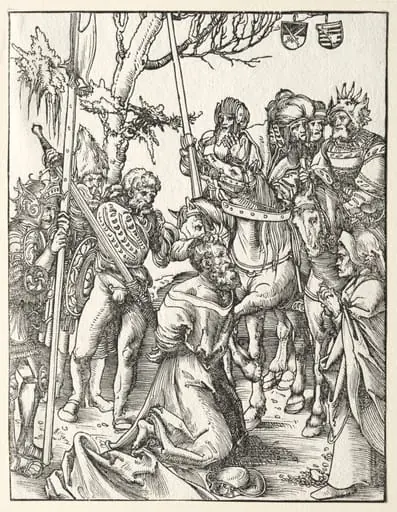 Martyrdom of St. James the Greater
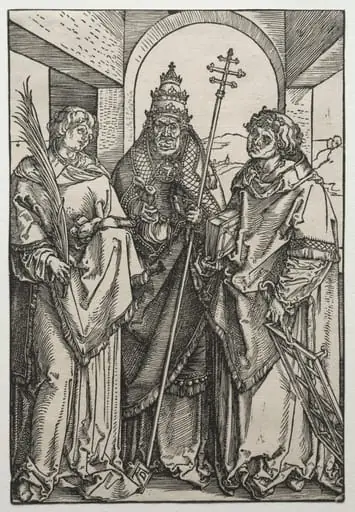 Saints Stephen, Sixtus and Laurence
 A king Enthroned
 The Bad Advice of One Little Man to Another
 Saints Connected with the House of Hapsburg: A General Account of the Ancestry of Emperor Maximilian I