Artwork
A Winter's Sunrise
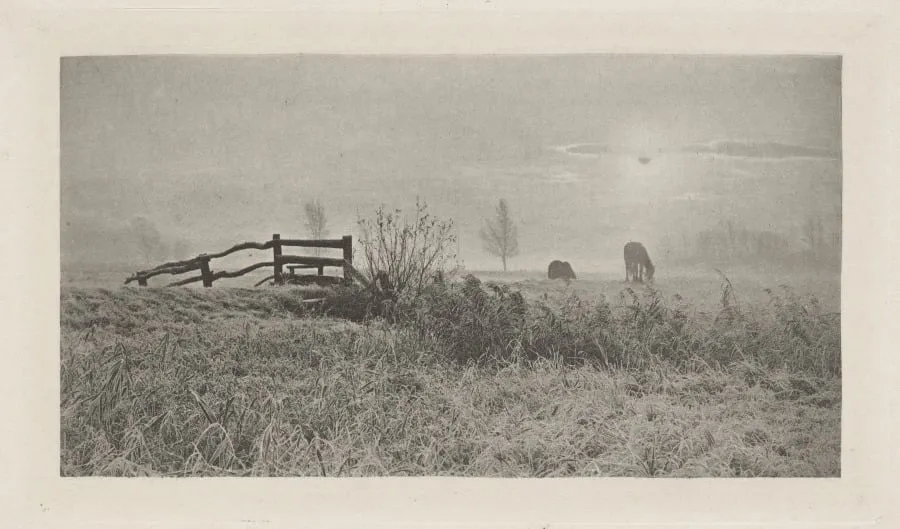
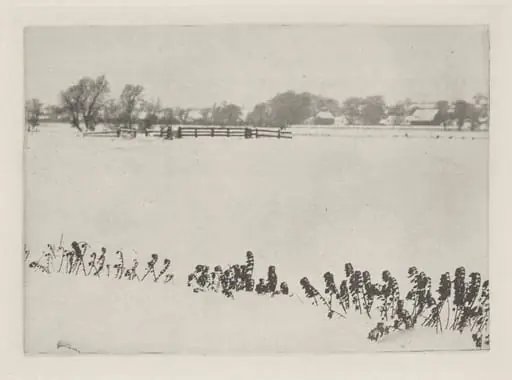
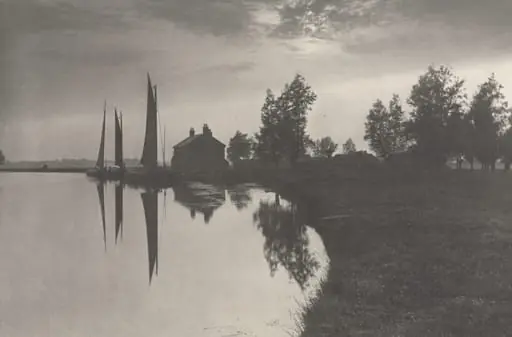
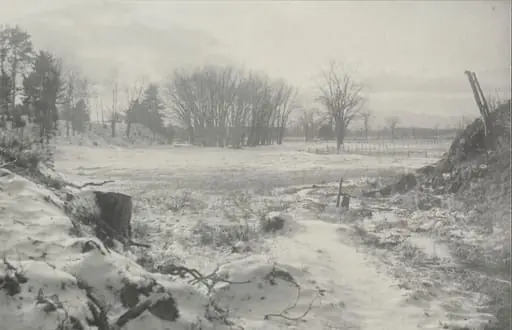
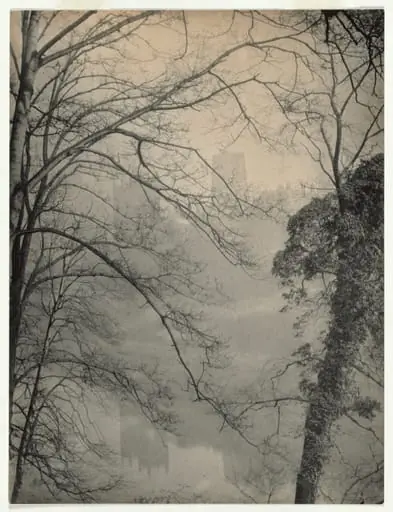
A Winter's Sunrise is a photography by the Impressionist artist Peter Henry Emerson. It dates from 1891 and is held in the collection of the Cleveland Museum of Art.
About this work
Overview
It marks a decisive shift from his earlier commitment to documentary precision toward a more interpretive approach.
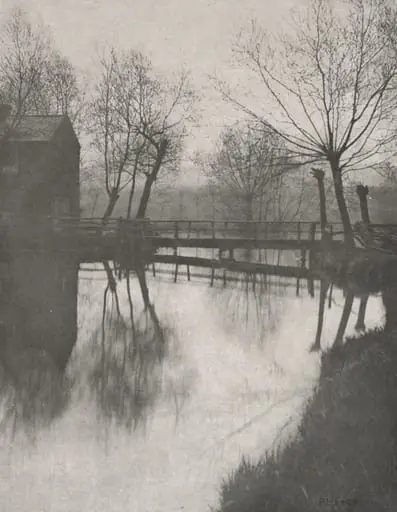
Taken in 1895, this photograph is part of Peter Henry Emerson’s final published collection, *Marsh Leaves*. It marks a decisive shift from his earlier commitment to documentary precision toward a more interpretive approach. The image captures a quiet rural landscape at dawn, rendered with deliberate softness and tonal contrast, signaling Emerson’s departure from strict naturalism and his embrace of atmospheric expression.
Subject & Meaning
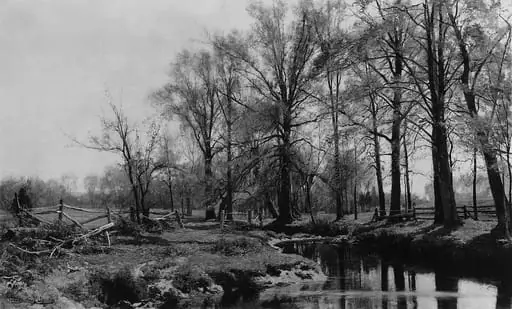
The scene depicts a winter morning in a marshland of eastern England, where bare trees frame a still waterway and mist hovers near the ground. The pale, diffused light suggests stillness and solitude, evoking a meditative mood rather than a topographical record. Emerson uses the landscape not to document, but to convey emotional resonance—transforming nature into a vessel for quiet contemplation.
Technique & Style
Emerson abandoned sharp focus in favor of a hazy, painterly effect, using soft focus and strong chiaroscuro to dissolve detail and emphasize tone. The contrast between the dim foreground and the luminous sky creates depth without clarity, blurring boundaries between earth, water, and air. This technique prioritized emotional impact over optical accuracy, aligning his work with emerging Pictorialist ideals.
History & Provenance
The photograph was included in *Marsh Leaves*, published in 1895 as Emerson’s last major photographic project. By this point, he had grown disillusioned with photography as a purely scientific medium. The book represented his final attempt to elevate the medium through aesthetic experimentation, after which he largely withdrew from photography to focus on writing and social reform.
Context
In the 1890s, photography was contested as an art form. Emerson’s earlier writings championed truthfulness, but his late work responded to broader artistic currents favoring subjectivity. His use of soft focus and tonal gradation paralleled trends in painting and printmaking, positioning his images as intermediaries between photography and the decorative arts, rather than mere records of reality.
Legacy
Though Emerson later renounced photography, his late style influenced the Pictorialist movement that flourished in the early 20th century. His willingness to manipulate focus and contrast to evoke mood helped legitimize photography as a medium for personal expression. *Marsh Leaves* remains a pivotal reference in the transition from documentary to artistic photography.
Artist & collection

Artist
Peter Henry Emerson was a British writer and photographer. His photographs are early examples of promoting straight photography as an art form. He is known for taking photographs that displayed rural settings and for…