Artwork
Rowing Home the Schoof-Stuff
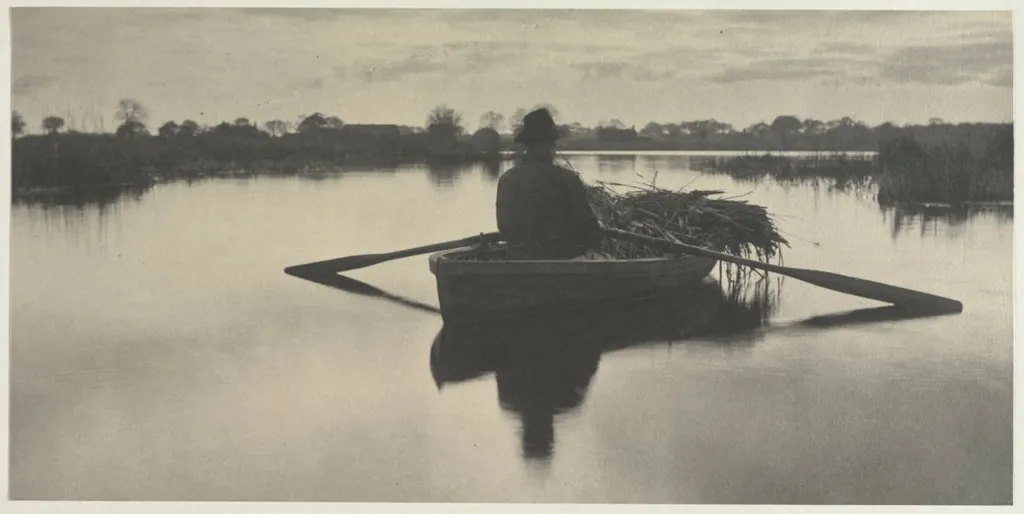
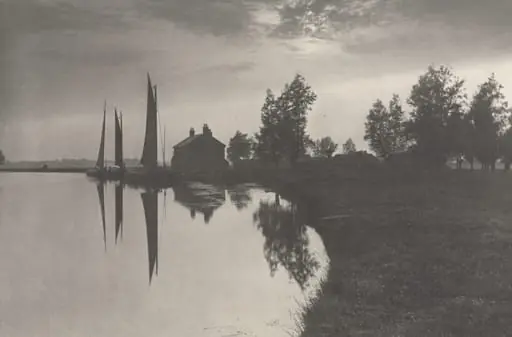
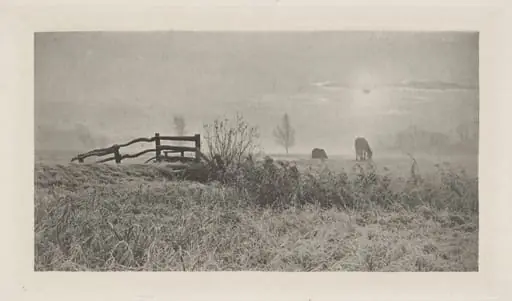
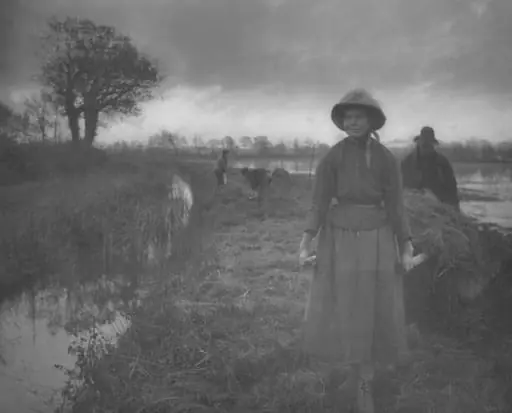
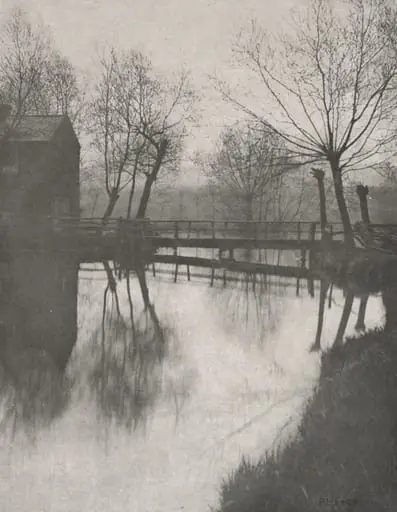
Rowing Home the Schoof-Stuff is a photography by the Impressionist artist Peter Henry Emerson. It dates from 1886 and is held in the collection of the Cleveland Museum of Art.
About this work
Overview
Created in the late 19th century, it reflects his rejection of staged, dramatic photography in favor of unposed, authentic scenes.
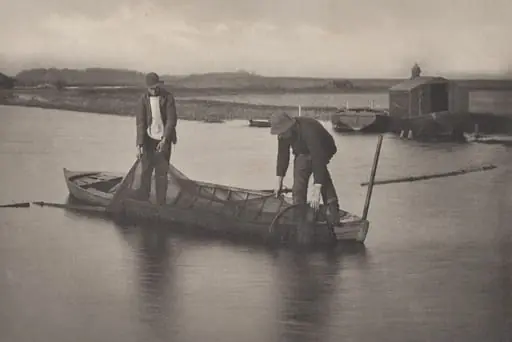
Peter Henry Emerson’s photograph 'Rowing Home the Schoof-Stuff' captures a quiet moment of rural labor on the Norfolk Broads. Created in the late 19th century, it reflects his rejection of staged, dramatic photography in favor of unposed, authentic scenes. The image is one of forty included in his 1886 book *Life and Landscape on the Norfolk Broads*, which documented the lives of marshland communities through direct observation and natural light.
Subject & Meaning
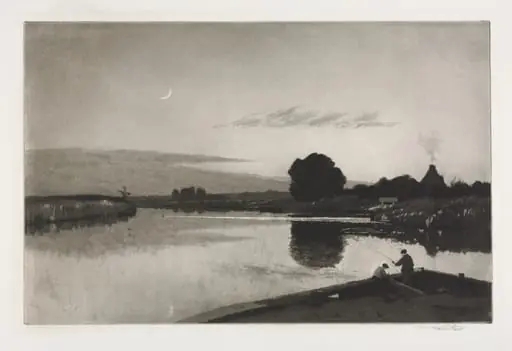
The photograph depicts three men rowing a boat laden with 'schoof'—bundles of cut reeds harvested from the marshes for use as winter fodder. The scene conveys the rhythm of seasonal work in East Anglia’s wetlands, emphasizing labor as an integral part of daily life rather than a theatrical spectacle. The absence of posed gestures or emotional dramatization underscores Emerson’s commitment to documenting reality as it unfolded.
Technique & Style
Emerson used a large-format camera and long exposures to render fine detail in natural light, avoiding artificial manipulation. The composition relies on horizontal lines—the water, the reeds, the boat’s hull—to create calm visual harmony. Soft focus and tonal gradations mimic the hazy atmosphere of the Broads, reinforcing the sense of place without idealization. His technique prioritized fidelity to the environment over aesthetic embellishment.
History & Provenance
The photograph was produced as part of Emerson’s broader project to record the vanishing way of life in the Norfolk Broads. It was published in his 1886 volume, which helped establish his reputation as a pioneer of photographic realism. The image remained within the context of his publications and exhibitions until entering institutional collections, including The Cleveland Museum of Art, where it is now held as part of his documented legacy.
Context
In the 1880s, most photographic subjects were staged or romanticized, often imitating painting. Emerson’s work stood apart by focusing on ordinary people engaged in routine tasks, using the landscape not as backdrop but as a living, shaping force. His approach aligned with emerging naturalist movements in literature and science, emphasizing observation over invention and local knowledge over grand narrative.
Legacy
Emerson’s insistence on photographic truth influenced later documentary practices, though his theories were later challenged by modernist abstraction. His books and images remain important records of rural England’s ecological and social history. The quiet dignity of works like 'Rowing Home the Schoof-Stuff' continues to inform discussions on authenticity in visual representation, even as photographic conventions have evolved.
Artist & collection

Artist
Peter Henry Emerson was a British writer and photographer. His photographs are early examples of promoting straight photography as an art form. He is known for taking photographs that displayed rural settings and for…