Artwork
Footbridge Near Chingford
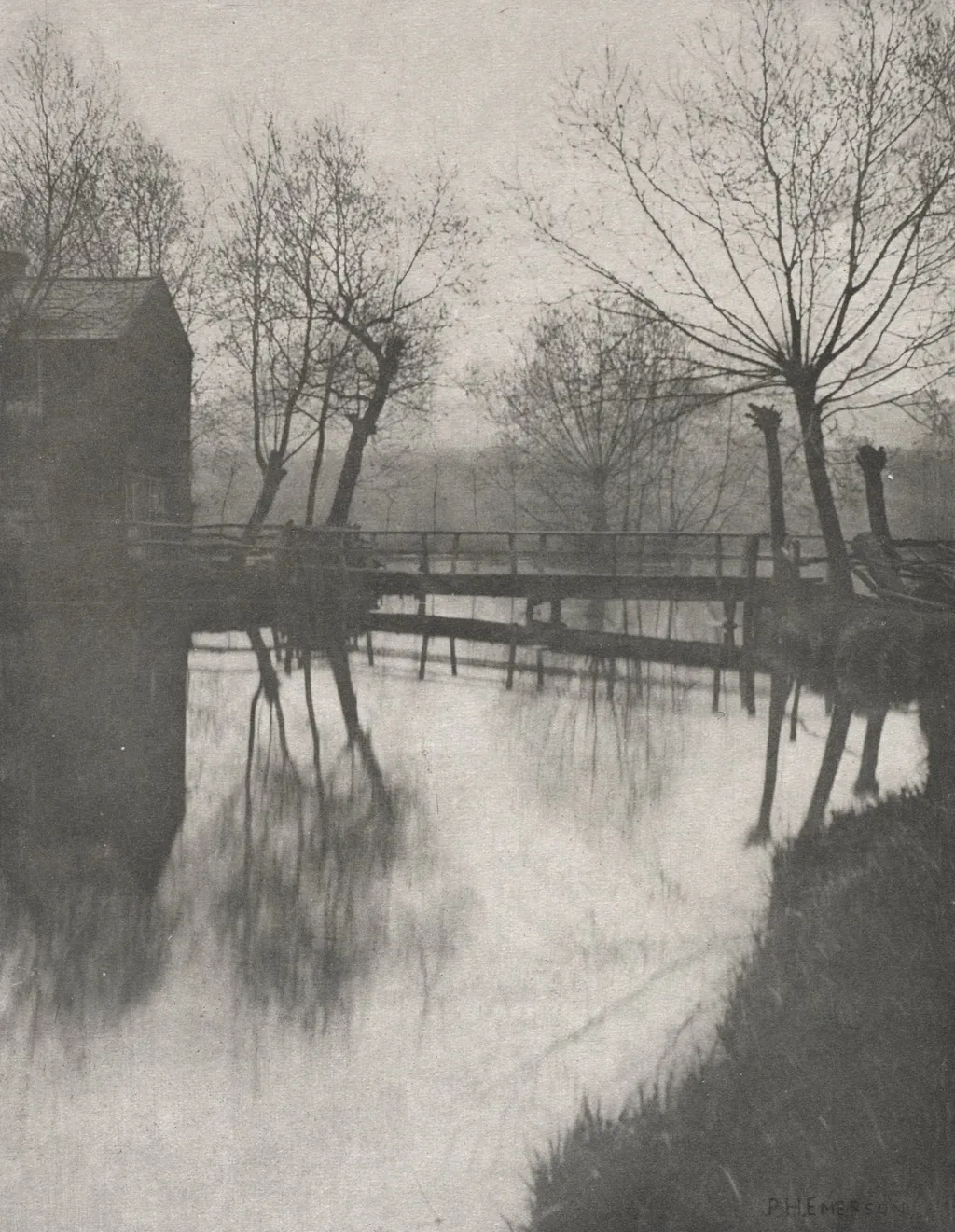
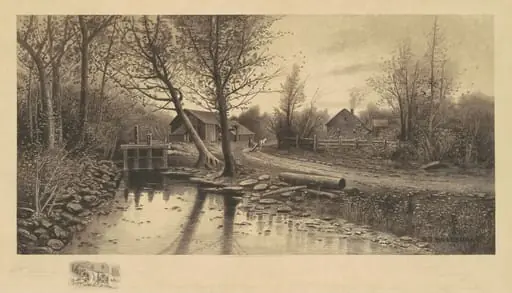
Footbridge Near Chingford is a photography by the Impressionist artist Peter Henry Emerson. It dates from 1888 and is held in the collection of the Cleveland Museum of Art.
About this work
Overview
The image is part of a series documenting the natural surroundings of Essex, reflecting Emerson’s commitment to portraying the quiet rhythms of everyday life.
Taken in 1888, Footbridge Near Chingford is a photographic work by Peter Henry Emerson, capturing a rural English landscape in winter. The image is part of a series documenting the natural surroundings of Essex, reflecting Emerson’s commitment to portraying the quiet rhythms of everyday life. It resides in the collection of The Cleveland Museum of Art, where it is recognized for its restrained composition and atmospheric tone.
Subject & Meaning
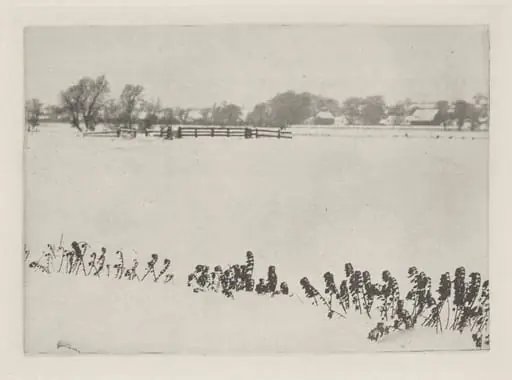
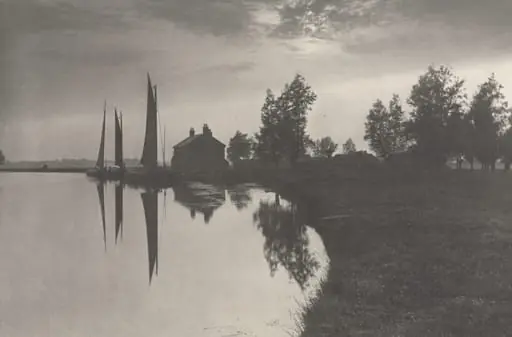
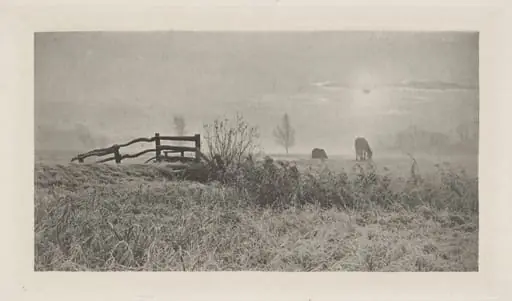
The photograph depicts a modest wooden footbridge spanning a frozen pond, with bare trees mirrored in the ice and a small structure visible in the distance. There is no human presence, emphasizing solitude and stillness. Emerson sought to elevate ordinary rural scenes, suggesting that beauty resides in unembellished, transient moments rather than staged or dramatic subjects.
Technique & Style
Emerson used a soft-focus lens and natural winter light to create a hazy, tonal harmony across the scene. The long shadows and muted contrasts enhance the sense of calm, avoiding sharp detail in favor of mood. This approach aligned with his rejection of overly manipulated photography, favoring instead a direct, unaltered response to the environment as perceived by the eye.
History & Provenance
Created during Emerson’s active period as a photographic reformer, the work was made shortly before he abandoned photography in favor of writing. It was likely produced in the late 1880s near his home in Essex. The photograph entered the Cleveland Museum of Art’s collection in the 20th century, where it remains as a key example of early photographic realism.
Context
This image emerged alongside the broader Realist movement in art, which prioritized unidealized depictions of daily life. Emerson positioned photography as a legitimate art form capable of capturing truth without theatricality. His work contrasted with the pictorialist trend of the time, which favored painterly effects, instead advocating for photography’s unique capacity to record nature faithfully.
Legacy
Footbridge Near Chingford exemplifies Emerson’s influence on the evolution of photographic aesthetics. Though he later renounced the medium, his emphasis on naturalism and compositional restraint inspired later photographers to value subtlety over spectacle. The work remains a touchstone in discussions of photography’s role in documenting the ordinary with dignity.
Artist & collection

Artist
Peter Henry Emerson was a British writer and photographer. His photographs are early examples of promoting straight photography as an art form. He is known for taking photographs that displayed rural settings and for…