Artwork
Historical Scene
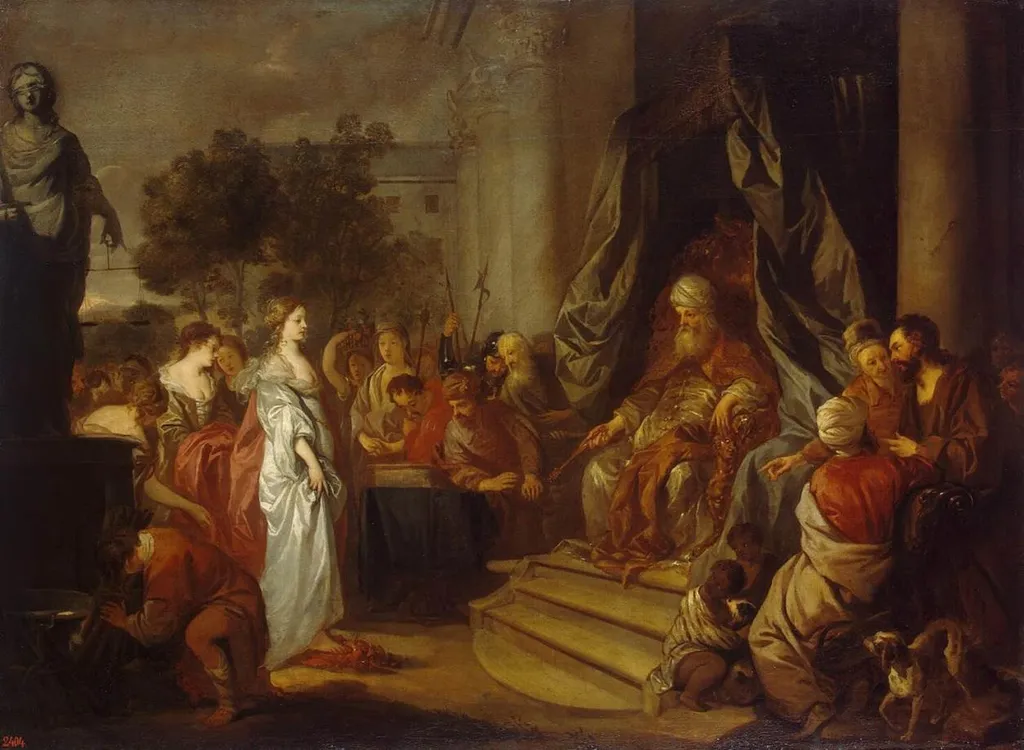
Historical Scene is an oil painting by the Flemish Baroque painting artist Peter Lely. It dates from 1650 and is held in the collection of the Hermitage Museum.
About this work
Overview
Created circa 1650, *Historical Scene* is an oil painting by Peter Lely, a Dutch-born artist who spent the bulk of his professional life in England. Though best known for his court portraits, Lely worked within the Flemish Baroque tradition, and this work belongs to the history‑painting genre. It is presently part of the collection of the State Hermitage Museum.
Subject & Meaning
A woman in a luminous white dress stands near a table, while several figures sit or kneel around her, some gazing upward, others downward.
The composition depicts a small group gathered in a dim interior. A woman in a luminous white dress stands near a table, while several figures sit or kneel around her, some gazing upward, others downward. A bearded man seated in a chair holds a scroll, and a small dog lies at the floor level. Beyond a window, faint outlines of trees and a building suggest an external setting, hinting at a narrative beyond the immediate scene.
Technique & Style
Lely employs a chiaroscuro scheme that juxtaposes warm and cool tones, producing strong contrasts between light and shadow. The bright white garment of the central woman stands out against the darker surroundings, drawing the viewer’s eye. The handling of oil paint renders the textures of fabric, skin, and fur with a tactile quality typical of Flemish Baroque painting.
History & Provenance
Although Lely achieved his greatest fame as the principal painter to the English court, this work reflects his broader engagement with historical subjects. The painting entered the State Hermitage Museum’s holdings at an unspecified date, where it remains on display as part of the museum’s European Baroque collection.
Artist & collection
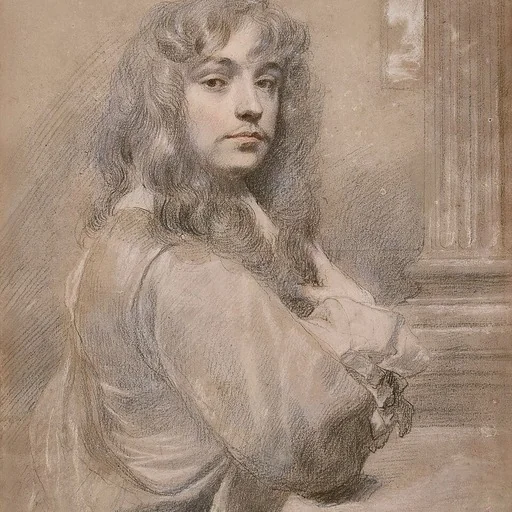
Artist
Sir Peter Lely (Dutch: ; 14 September 1618 – 30 November 1680) was a painter of Dutch origin whose career was nearly all spent in England, where he became the dominant portrait painter to the court.

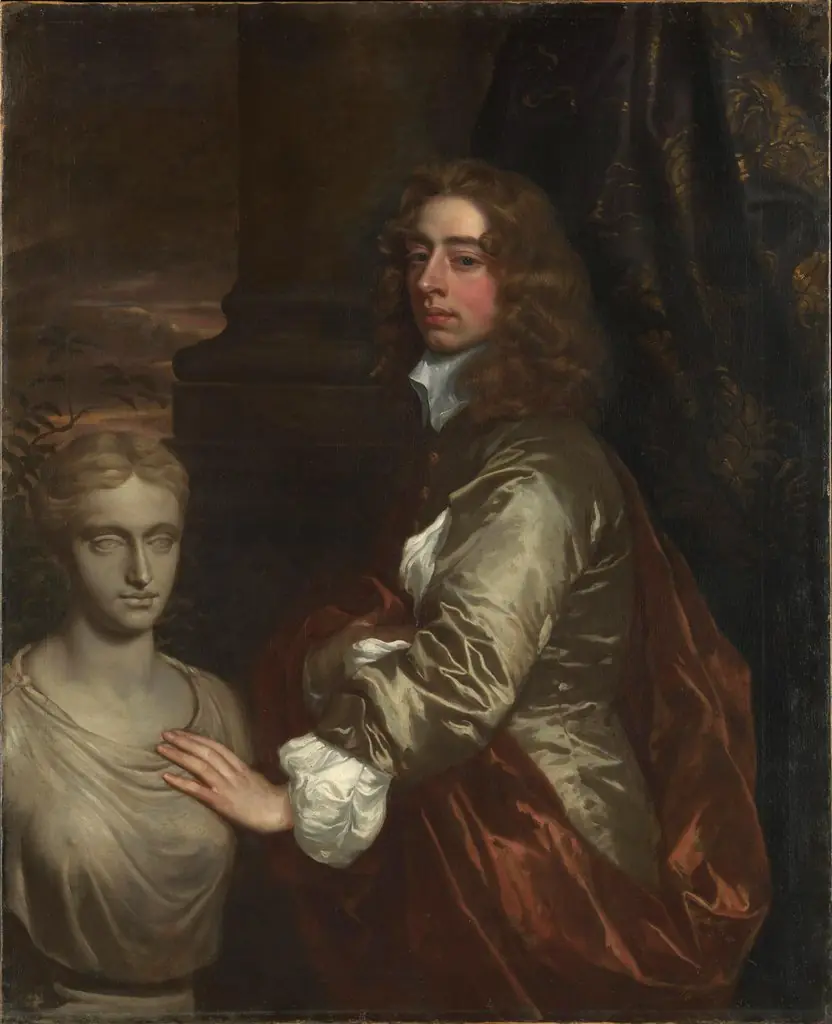 Sir Henry Capel (1638–1696)
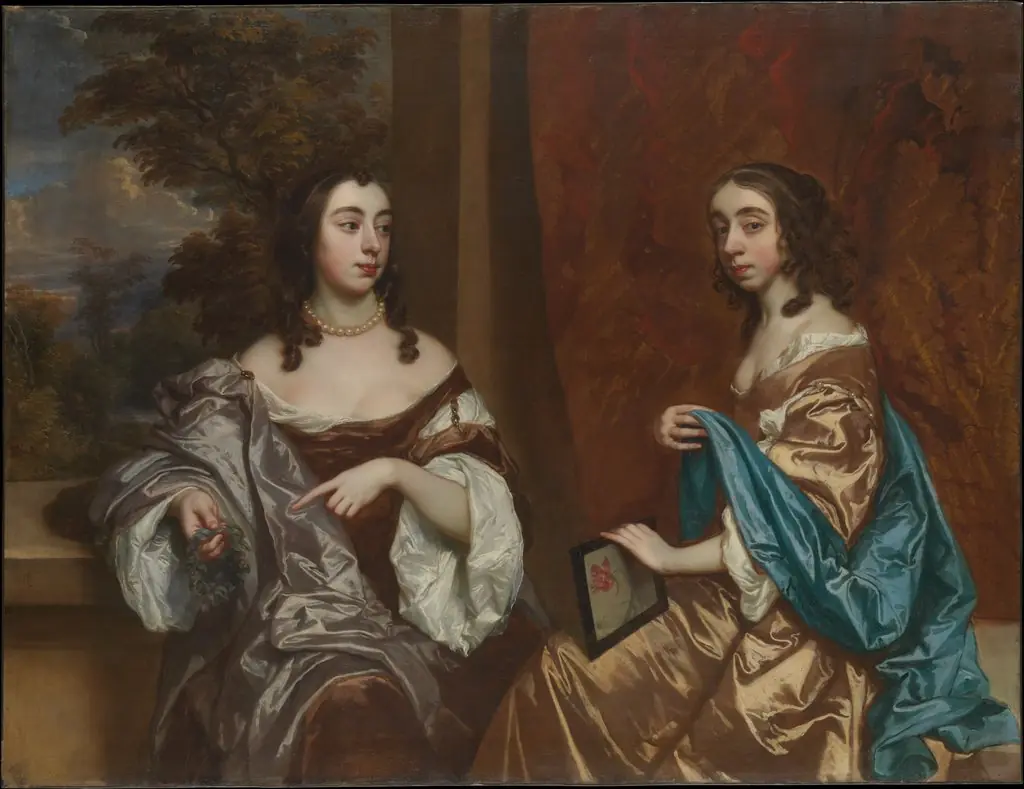 Mary Capel (1630–1715), Later Duchess of Beaufort, and Her Sister Elizabeth (1633–1678), Countess of Carnarvon
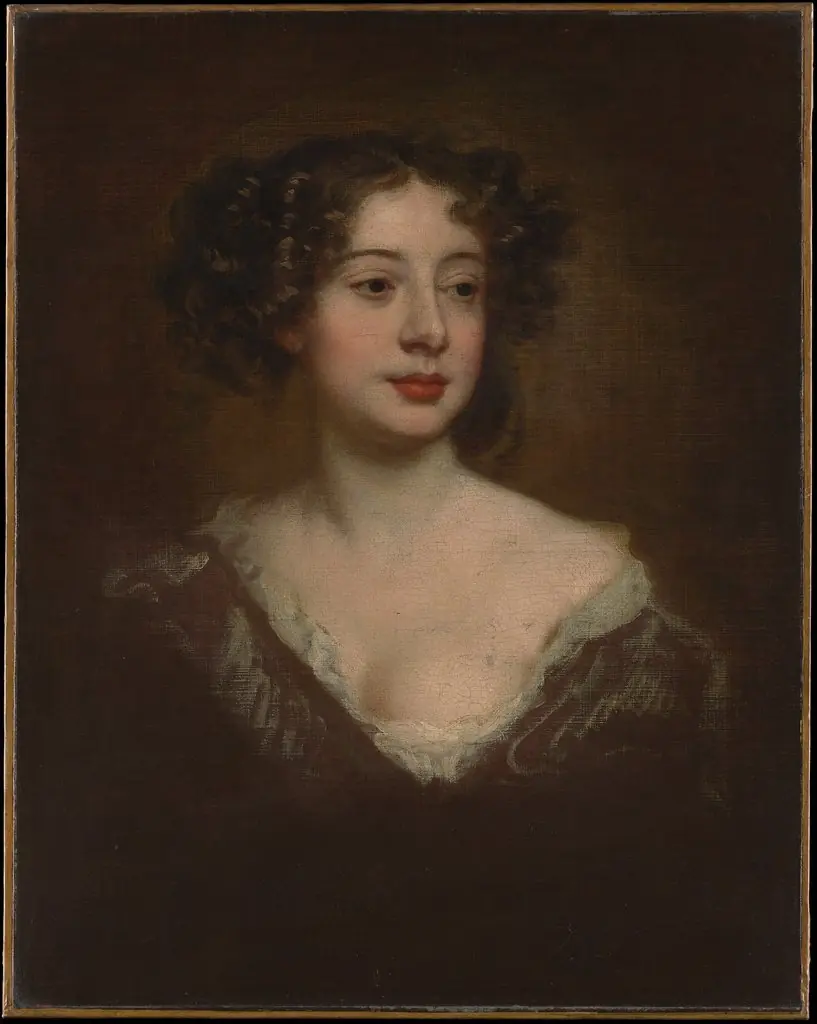 Study for a Portrait of a Woman
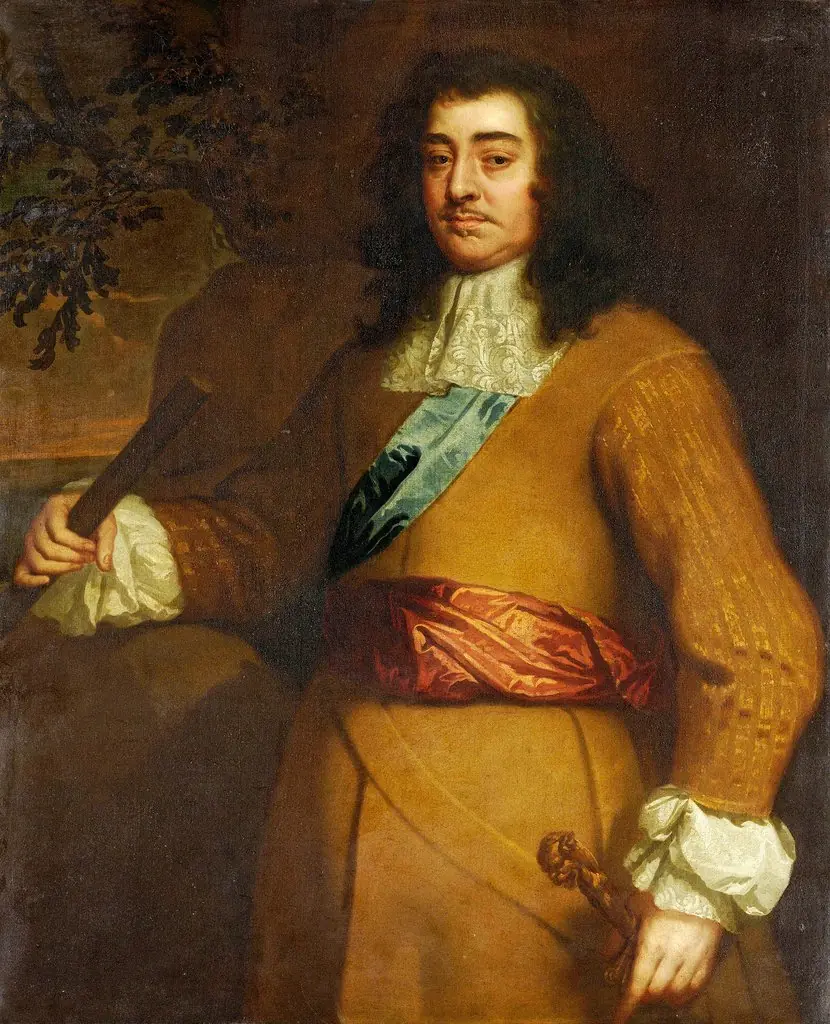 Portrait of George Monck, 1st Duke of Albemarle, English Admiral and Statesman
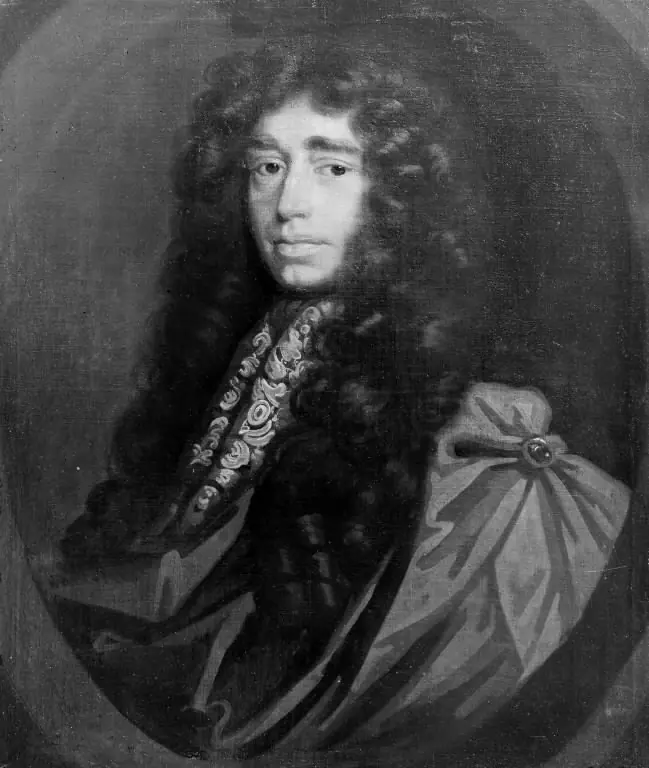 Portrait of a Man
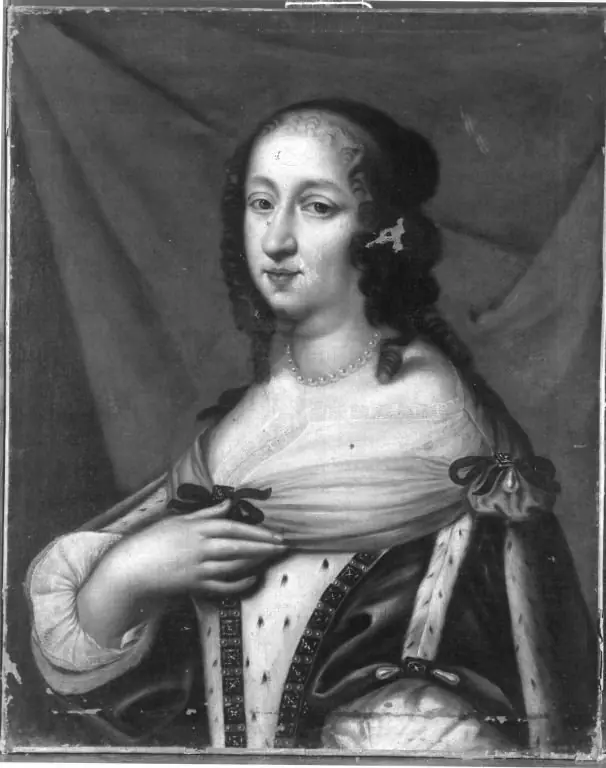 Portrait of a Woman
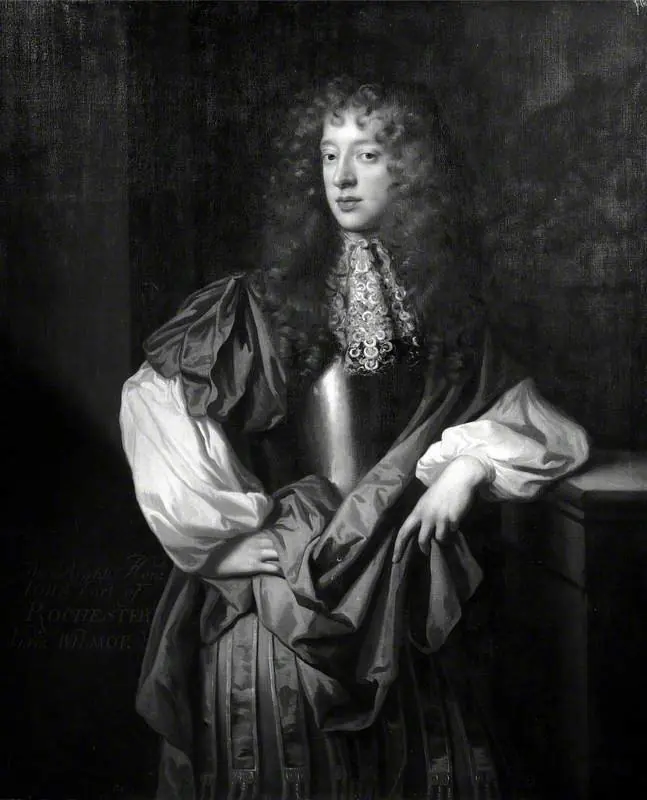 John Wilmot (1647–1680), 2nd Earl of Rochester
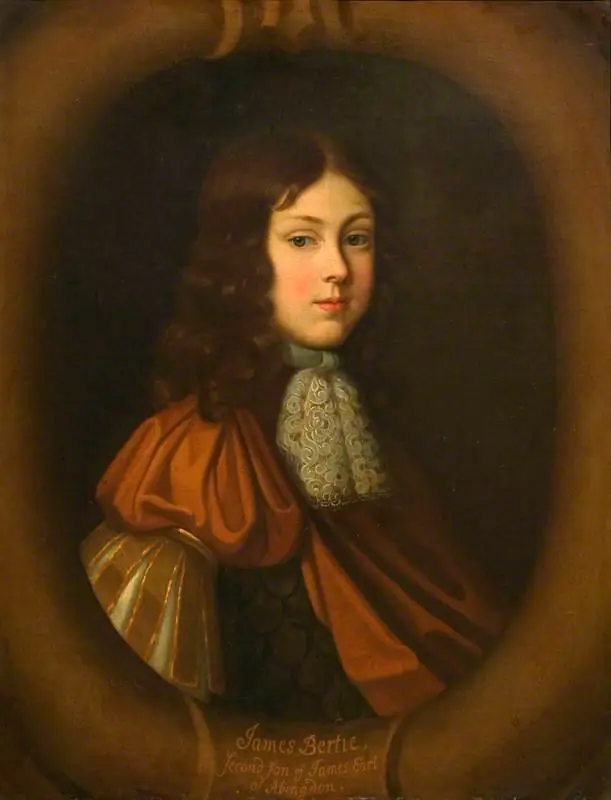 James Bertie (1653–1699), 2nd Son of James, Earl of Abingdon
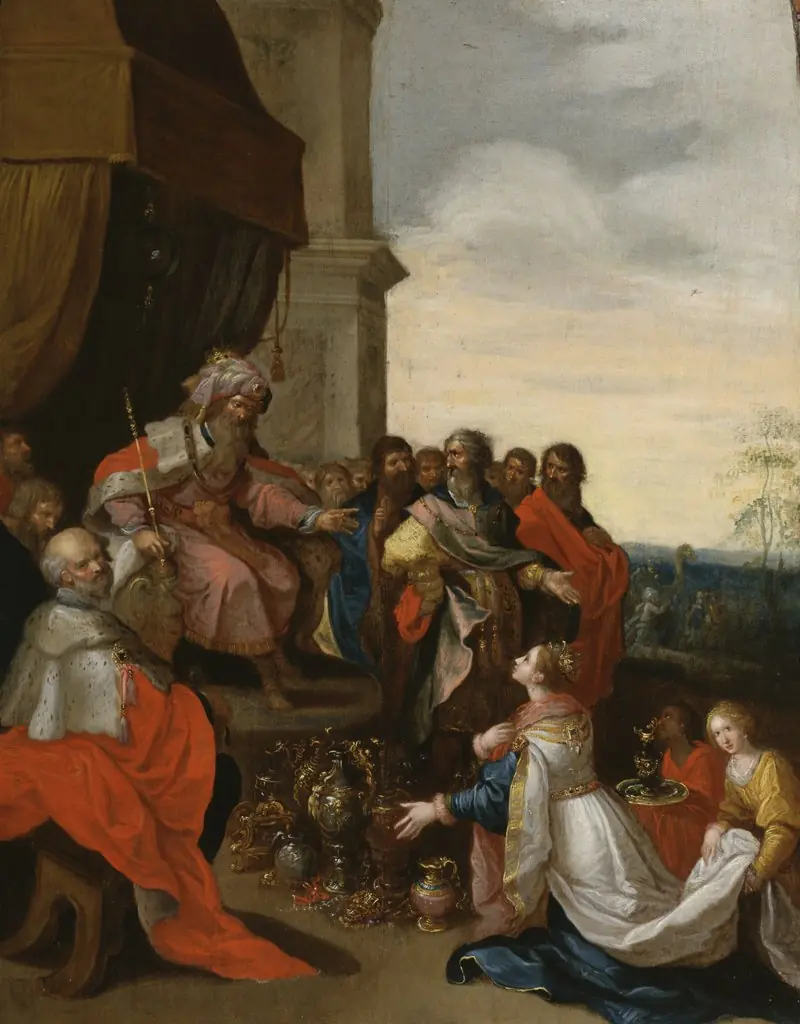 King Solomon Receiving the Queen of Sheba
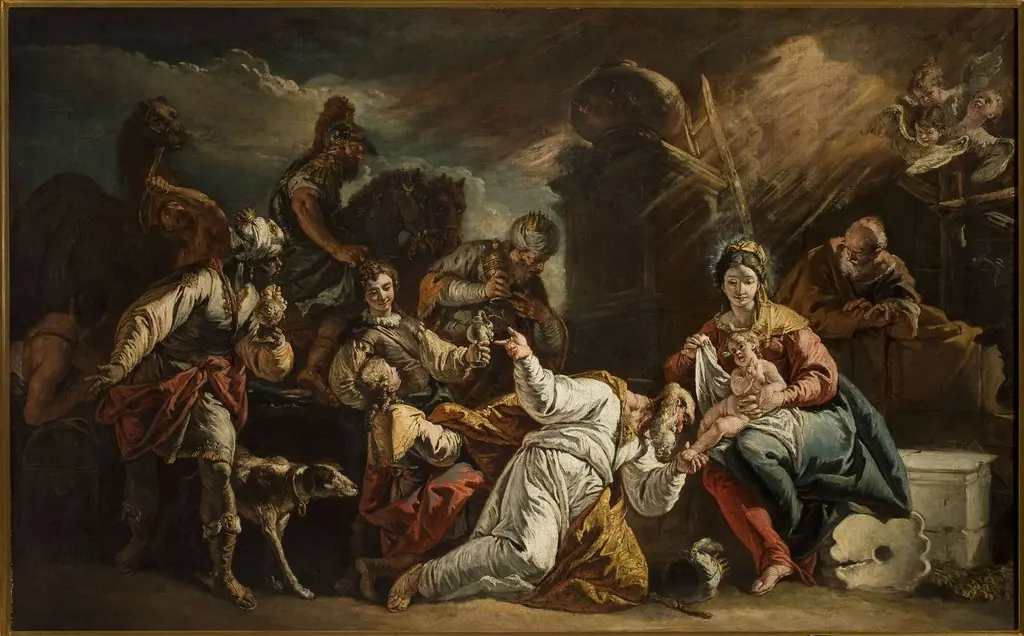 Adoration of the Magi
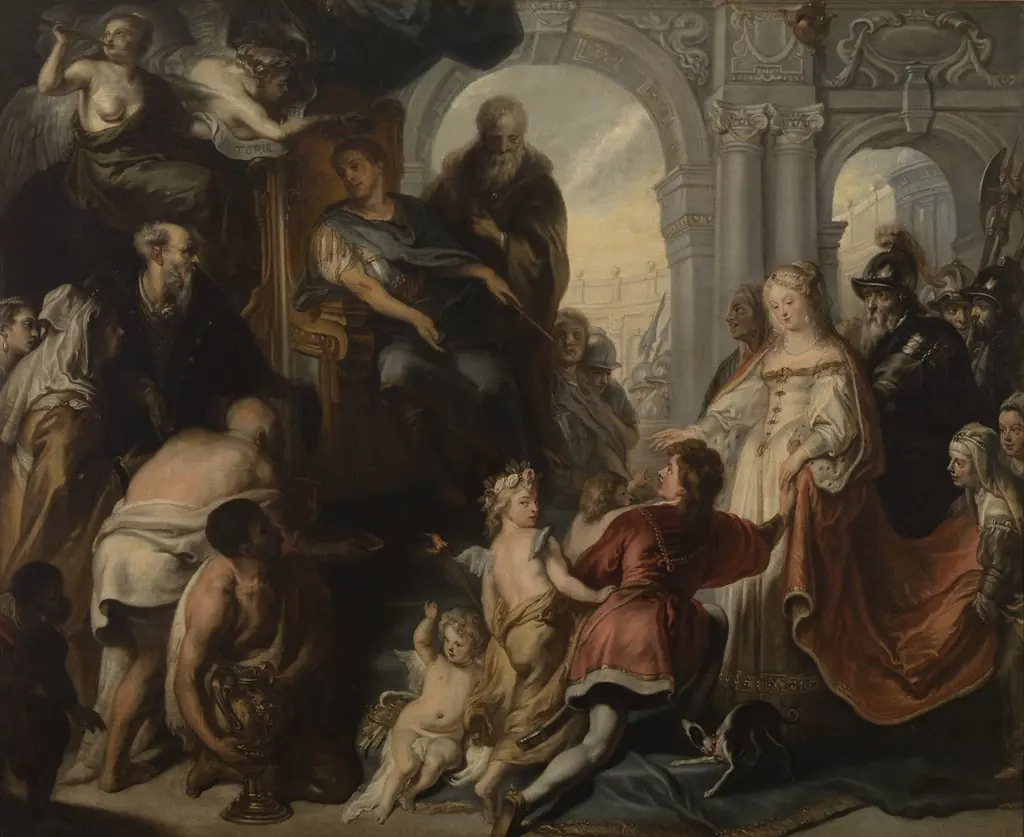 The Continence of Scipio Africanus
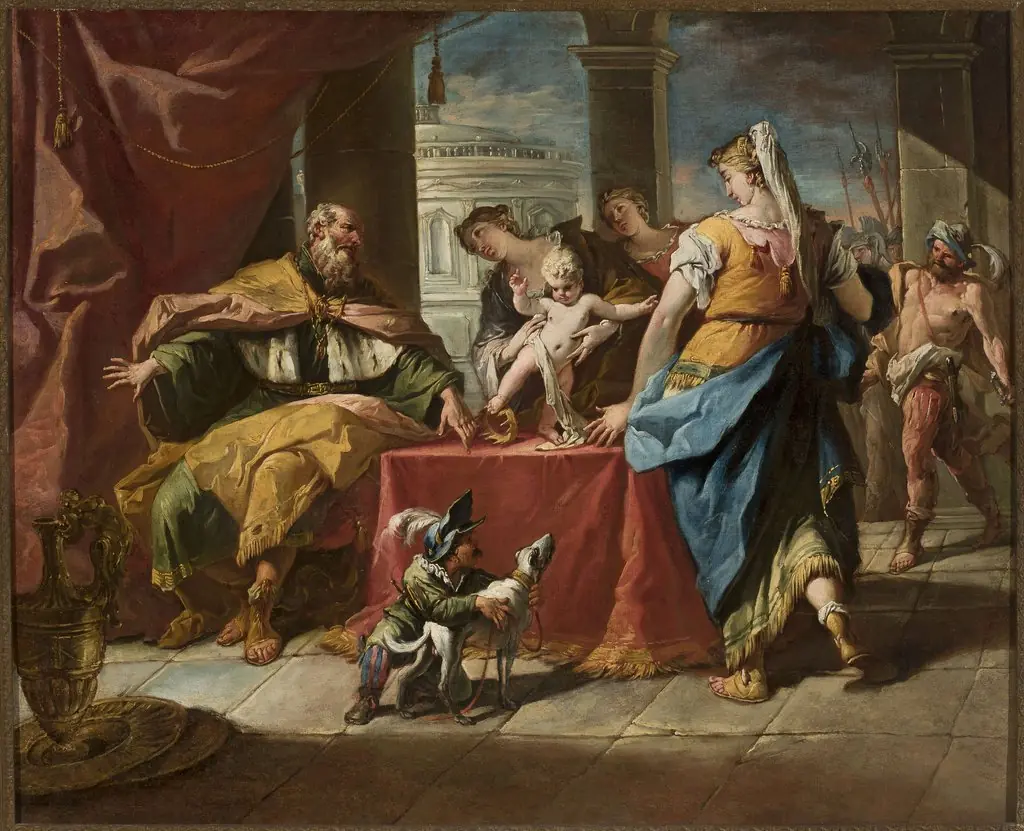 Moses trampling on the Pharaoh’s crown
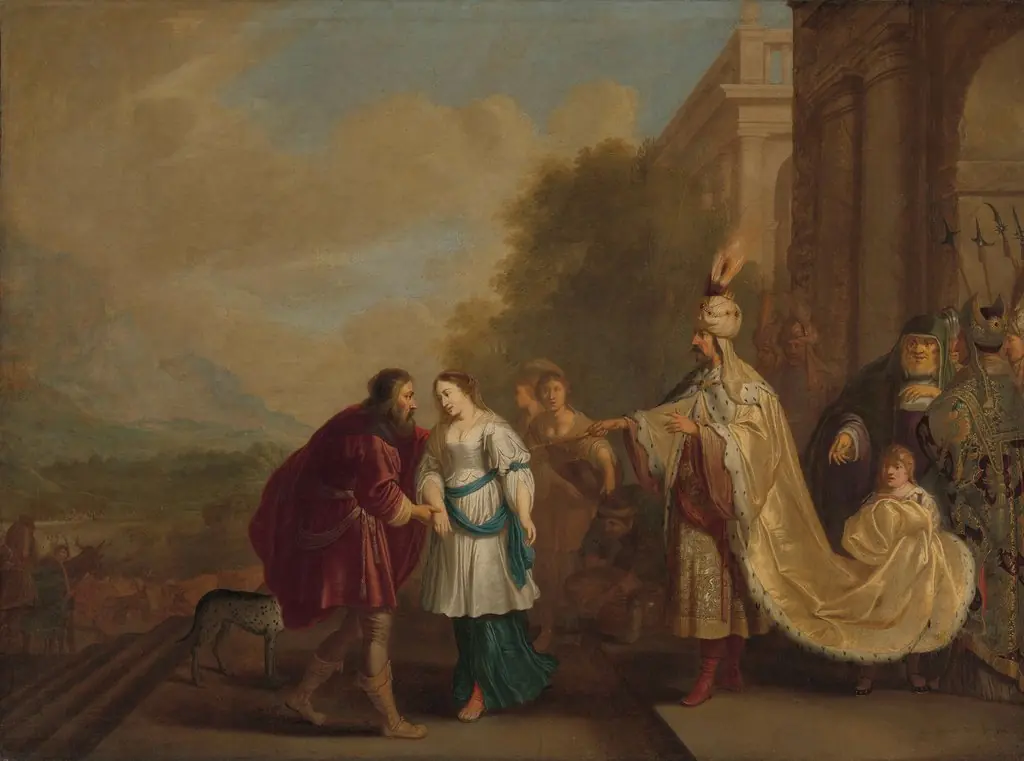 Pharaoh gives Sarah back to Abraham
 Untitled
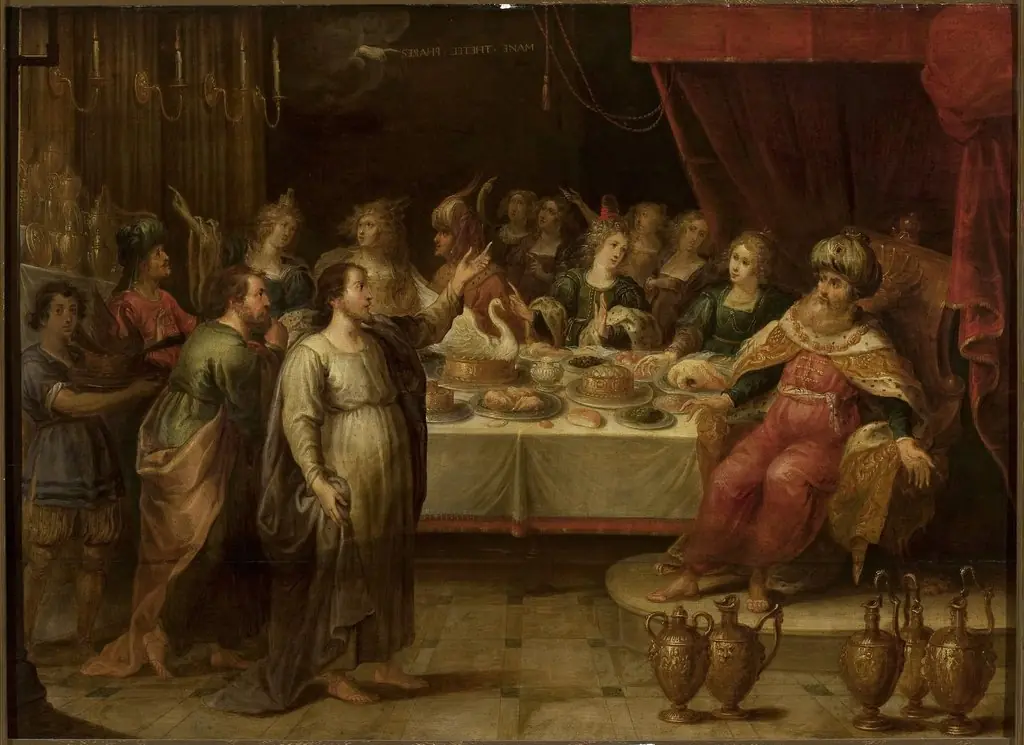 Belshazzar's feast (Daniel 5:1-31)
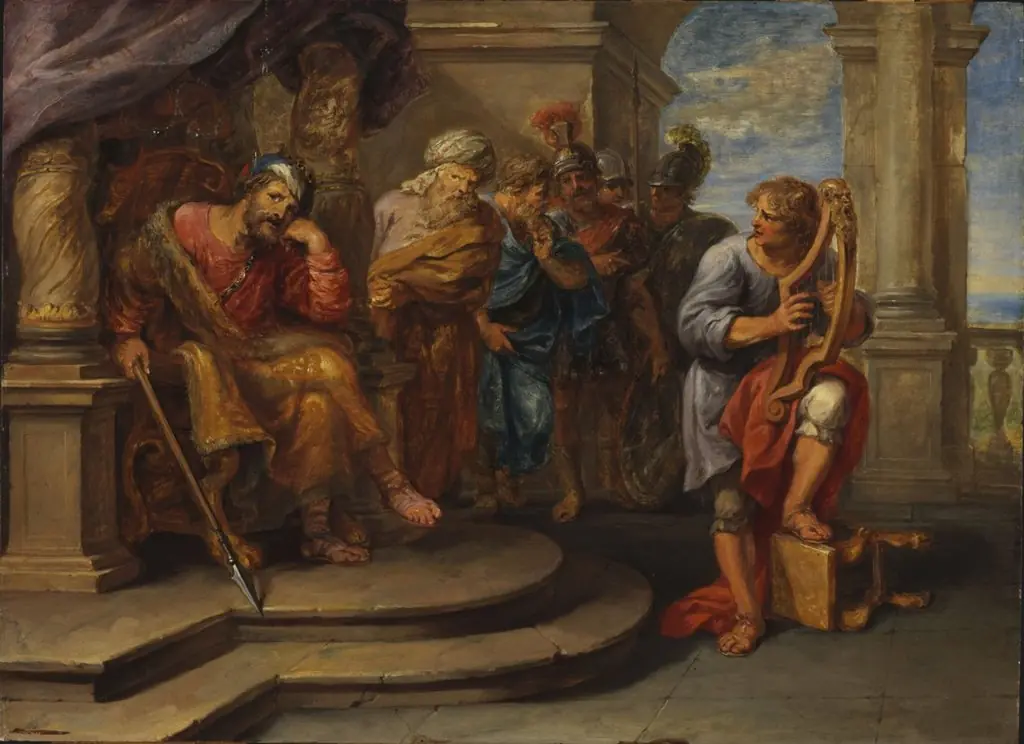 David Playing the Harp for King Saul
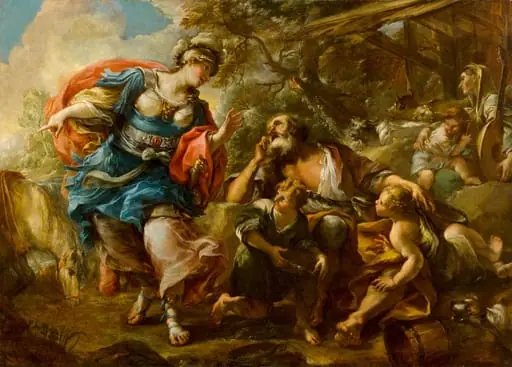 Erminia ja paimenet
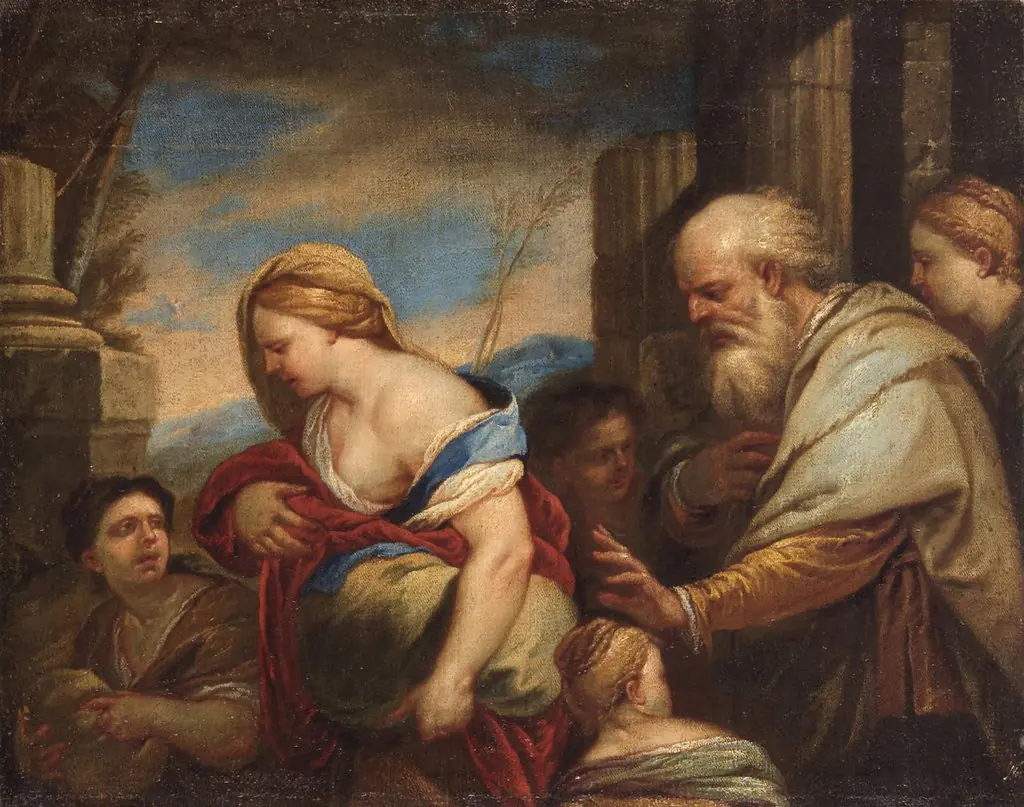 Expulsion of Hagar by Abraham
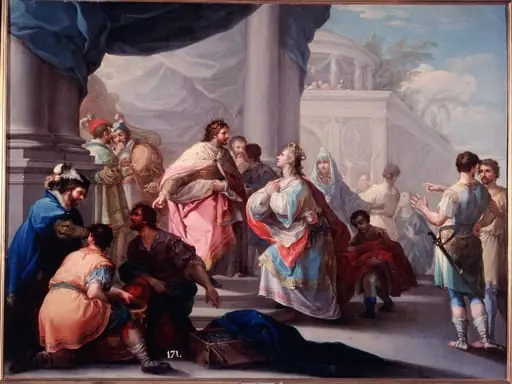 The Empress Marta de Constantinople before Alfonso X. Ramón Bayeu and Subías
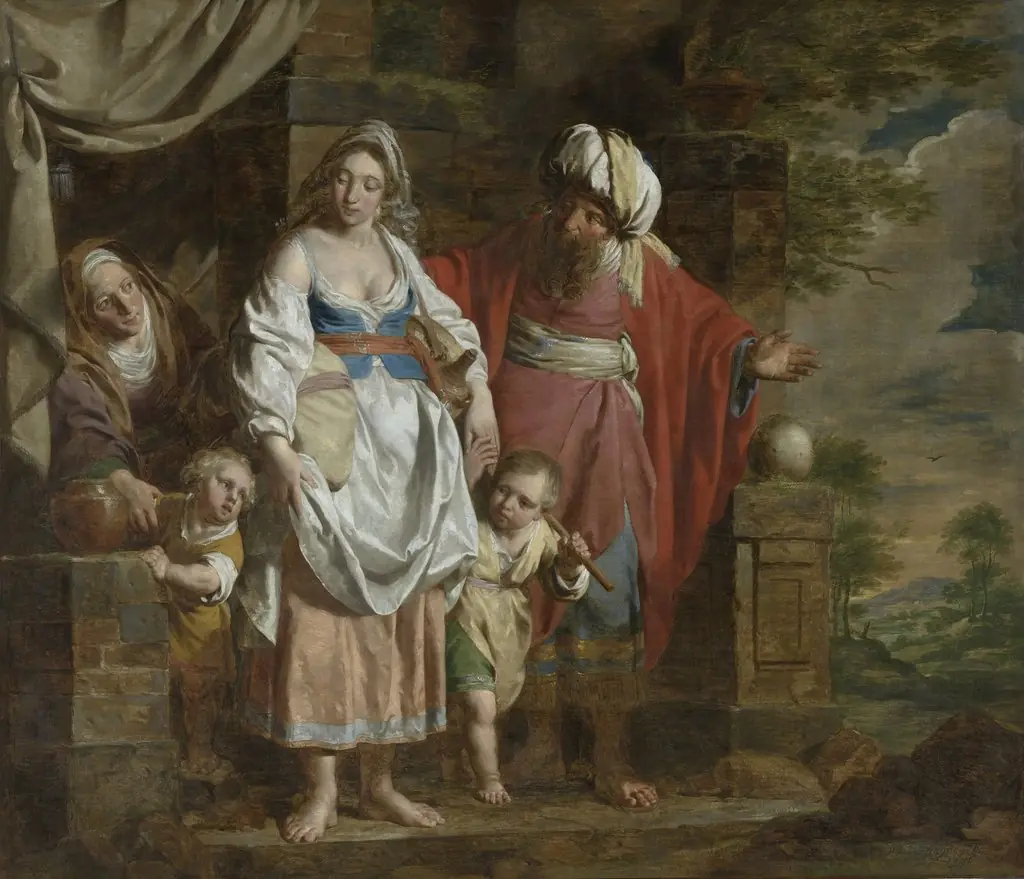 Hagar and Ishmael Banished by Abraham