Artwork
Death of Hippolytus
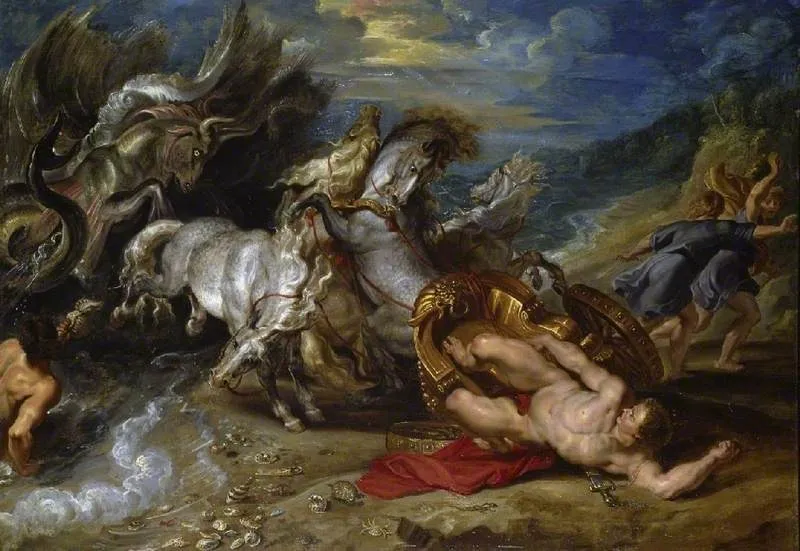
Death of Hippolytus is an oil painting by the Flemish Baroque painting artist Peter Paul Rubens. It dates from 1612 and is held in the collection of the Fitzwilliam Museum.
About this work
Overview
Peter Paul Rubens created the oil painting Death of Hippolytus in 1612, executing it on a copper panel. The work belongs to the early Baroque period and illustrates a violent episode from classical mythology, rendered with the dramatic intensity characteristic of Rubens’s large‑scale narrative paintings.
Subject & Meaning
The composition captures the moment Hippolytus is being torn from his chariot by a team of frantic horses, his limbs flung outward as he is dragged across the ground. The turbulent sky and looming clouds heighten the sense of catastrophe, underscoring the tragic fate of the mythic hero.
Technique & Style
Rubens employs strong chiaroscuro on the copper surface, allowing light to carve the muscular forms of the horses and the figure while deep shadows convey depth and movement. The bright, reflective quality of the copper enhances the vivid coloration and sharp contrasts typical of his Baroque style.
History & Provenance
The painting is one of Rubens’s smaller, copper‑supported works, a format he often used for mythological subjects intended for private collectors. It was produced during his early career, shortly after his return from Italy, when he was assimilating the dramatic compositional strategies of the Roman masters.
Context
Created amid the Counter‑Reformation, the work reflects the period’s demand for emotionally compelling narratives that could engage viewers directly. Rubens’s choice of a classical tragedy aligns with his broader practice of intertwining pagan and Christian themes to convey moral and dramatic lessons.
Artist & collection
Artist
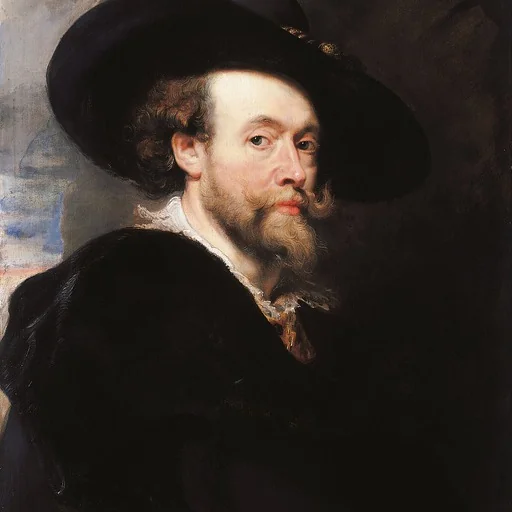
Sir Peter Paul Rubens ( ROO-bənz; Dutch: ; 28 June 1577 – 30 May 1640) was a Flemish artist and diplomat.

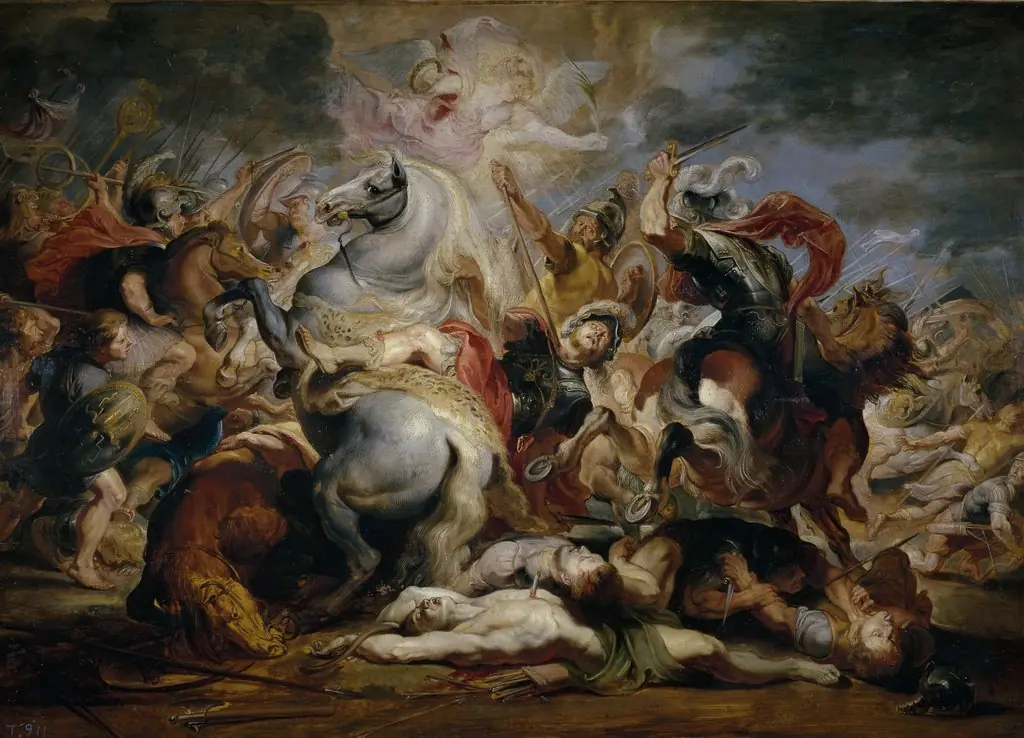 The Death of the Consul Decius
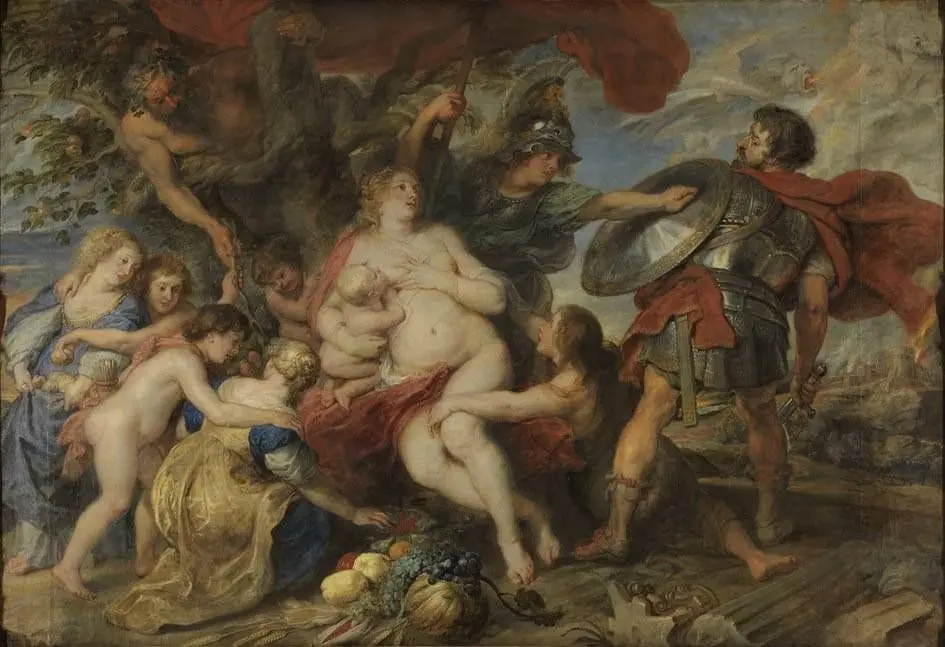 Minerva protects Fertility from Mars
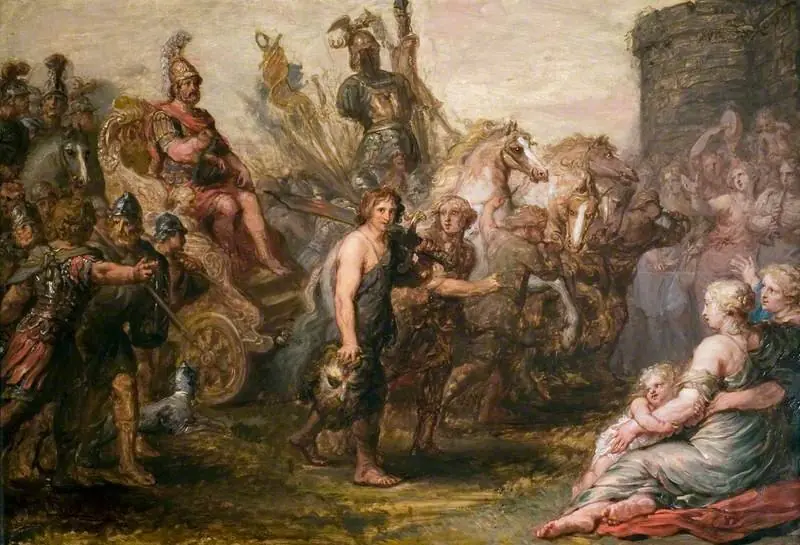 The Triumph of Saul (sketch)
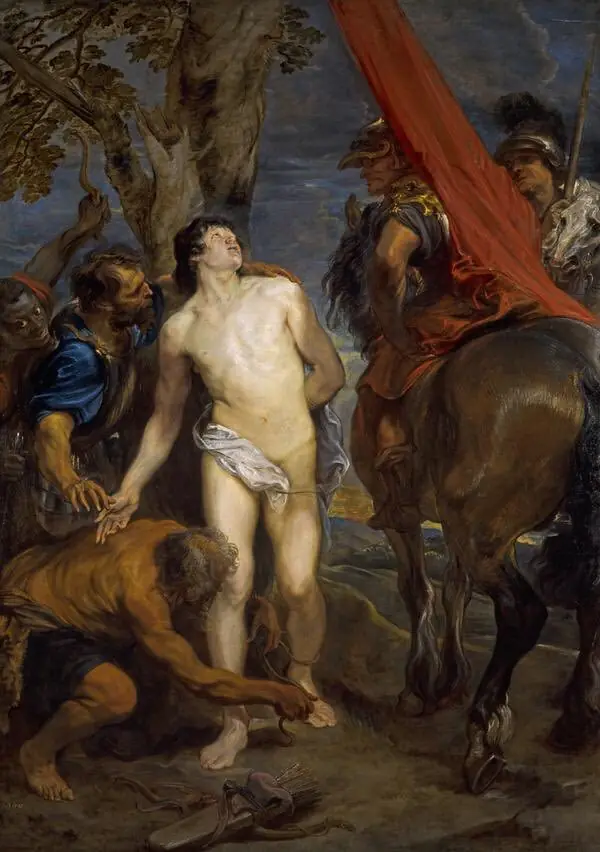 Saint Sebastian Bound for Martyrdom
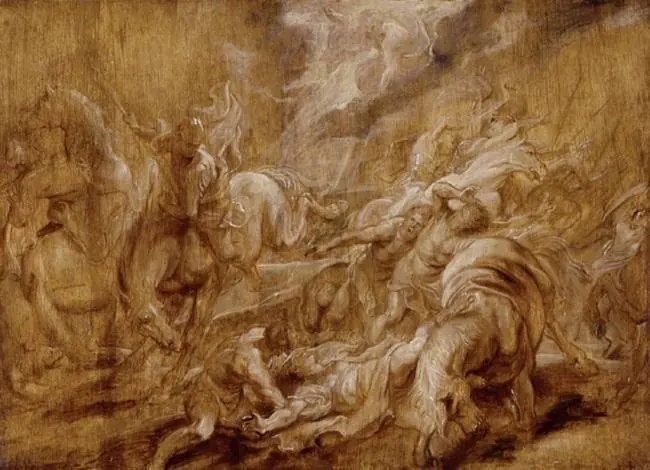 The Conversion of St Paul
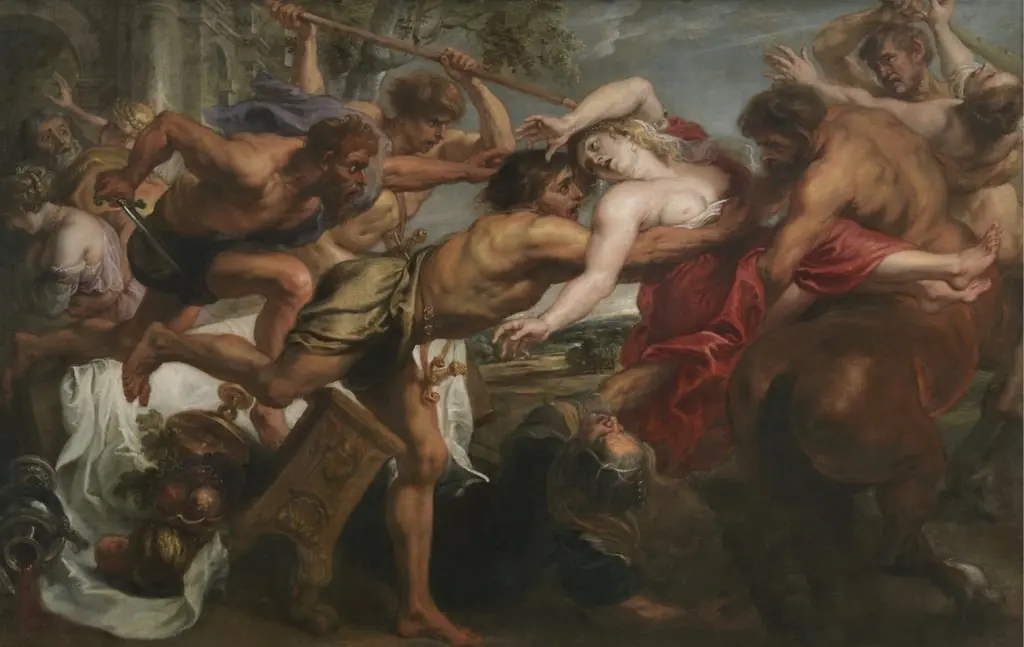 Rape of Hippodamia
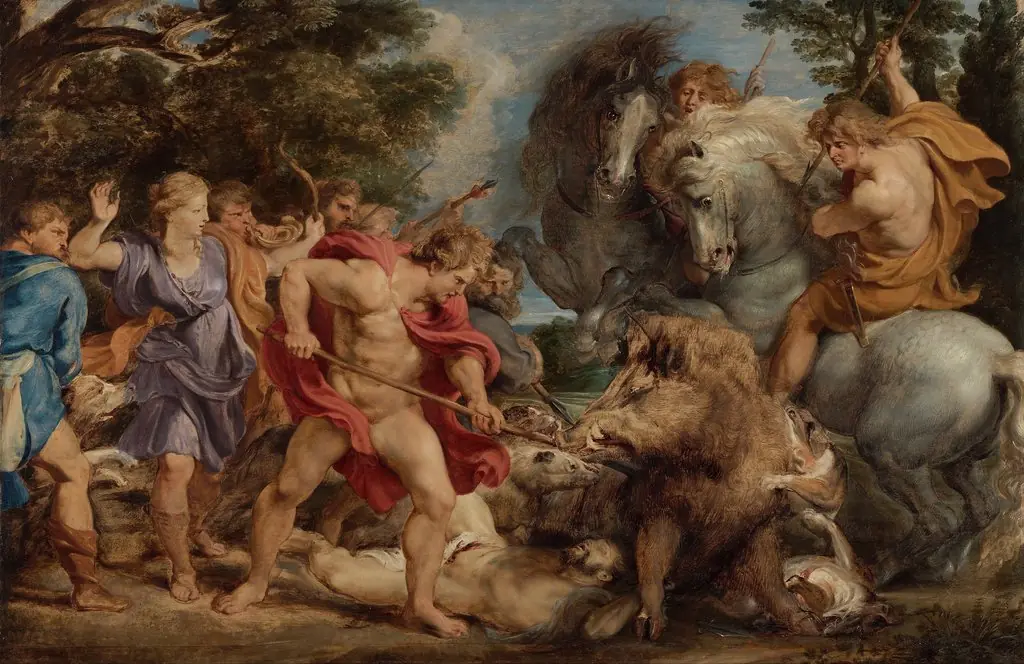 The Calydonian Boar Hunt
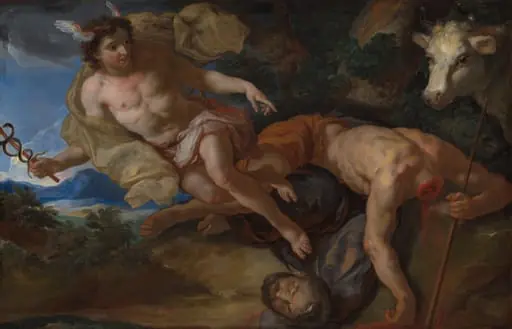 Mercury Rescues the Disguised Io after Beheading Argus
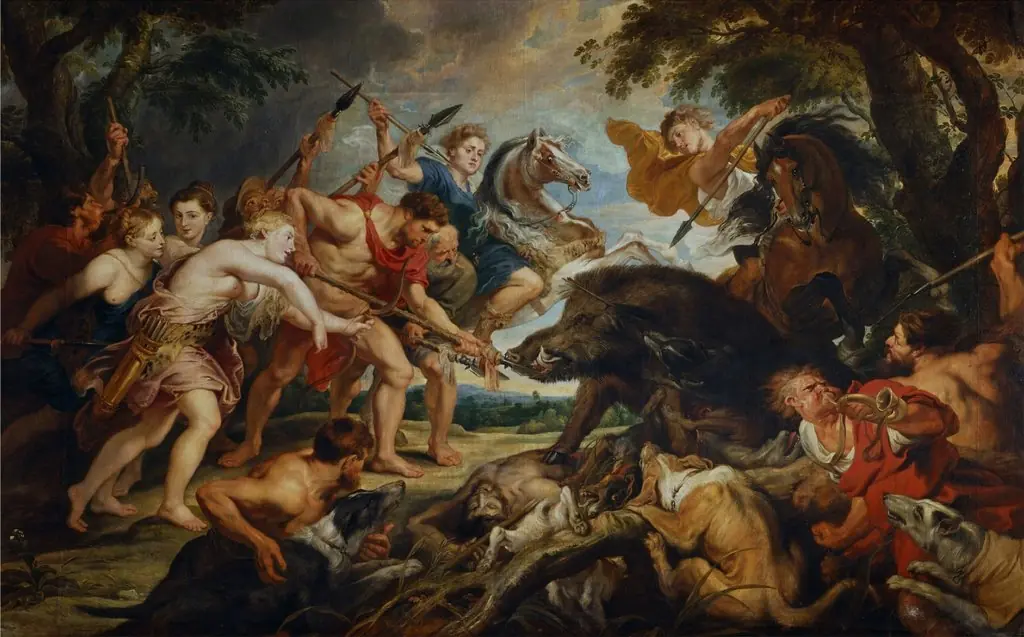 The hunt of Meleagros and Atalante
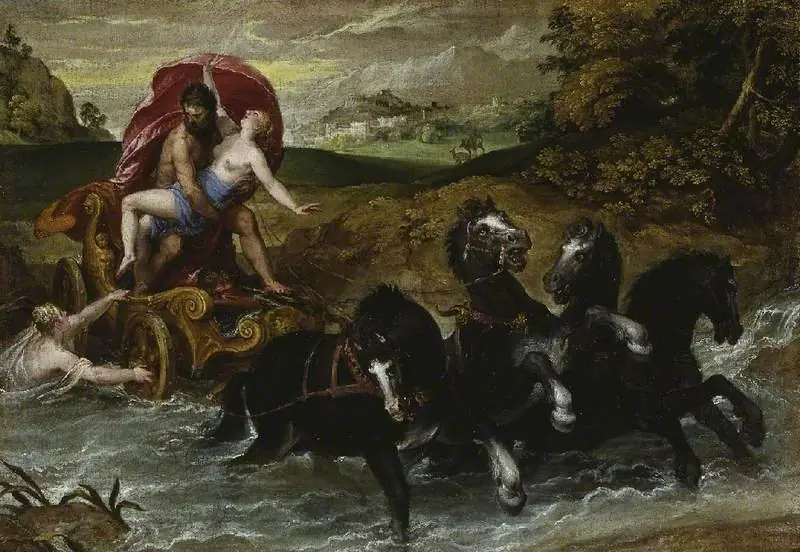 The Rape of Proserpine
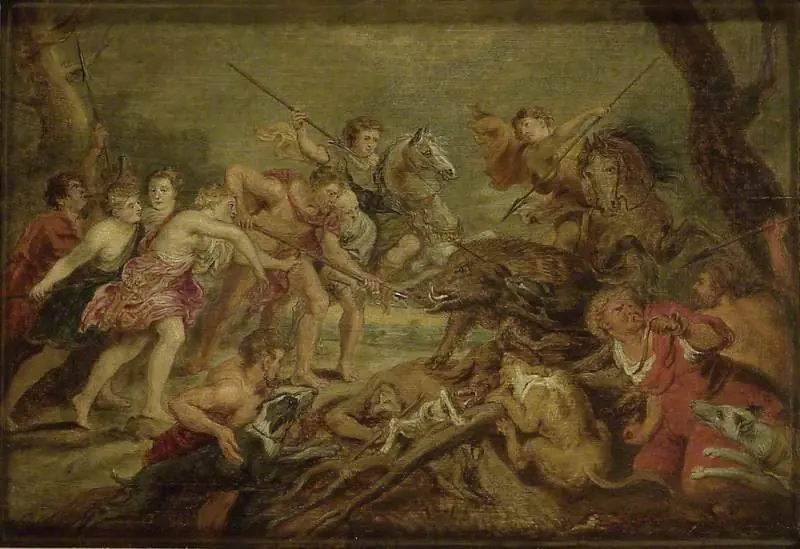 The Hunting of the Calydonian Boar
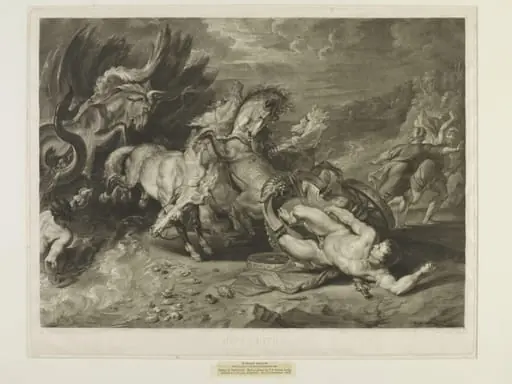 Death of Hippolytus